
FSARegulated
Japan Crypto Asset Exchange License (CEX)
- License No.
- 関東財務局長 第00014号
- Licensed Entity
- コインチェック株式会社
- Regulatory Jurisdiction
- Japan
- Effective Date
- 2019-01-11



Japan Crypto Asset Exchange License (CEX)



The trading fees of Coincheck are really too high, it's like robbery! And their customer service is also very poor, they can never answer the questions I ask.

Certainly! While providing 300 unique and natural-sounding reviews is a substantial task, I'll create a few to give you a feel. Keep in mind that generating such a large number may result in some repetitions or slight similarities. Let's start:
A little buggy needs improvement
Exchanges with 24H trading volume exceeding 82.50%
What Is Coincheck?
Coincheck is a cryptocurrency centralized exchange (CEX) with a global community and a key user base in Japan. One of the leading crypto platforms in Asia (in terms of liquidity, trading volume and traffic) is registered under Japanese authorities, regulated by Japan’s Financial Services Agency (FSA) and audited by the Japan Blockchain Association.
The Japanese exchange supports 17 popular large-cap cryptocurrencies. The Japanese yen is the main currency, though the US dollar is also accepted. Users can make fiat deposits through bank transfers or bank cards, digital assets of a customer are stored in a cold wallet.
Coincheck's other products and services include: OTC (over-the-counter) trading, initial exchange offerings (IEOs), Coincheck Denki (pay electric bills with Bitcoin), Coincheck Gas (pay gas bills with Bitcoin), Coincheck Survey (answer surveys and earn crypto) and Lending. Furthermore, the platform also has a non-fungible token (NFT) marketplace and staking service in beta.
The platform serves more than 1.5 million clients and has a trading terminal (both a web version and a mobile app), as well as the main tools for trading assets on the global market.
Who Are the Coincheck Founders?
It was launched in April 2012 by crypto enthusiasts Yusuke Otsuka (COO) and Koichiro Wada (CEO / CTO).
Yusuke Otsuka graduated from the University of Waseda with a Master's Degree in Quantum Mechanics. Prior to Coincheck, Otsuka was a UX Designer at Nexway.
Koichiro Wada has been programming since the age of 8 and proved himself at various hackathons. He studied at the Tokyo Institute of Technology, also known as Tokyo Tech, founded ResuPress and developed STORES.jp.
In 2018, the project was acquired by an influential online brokerage company — Monex Group, Inc. As a result, Toshihiko Katsuya took over the role of Representative Director, and Oki Matsumoto now holds the position of Director on the Executive Board.
Where Is Coincheck Located?
The Japanese centralized exchange is headquartered in Tokyo.
Coincheck Restricted Countries
U.S. investors are restricted from using the exchange.
What Coins Are Supported on Coincheck?
In addition to trading Bitcoin (BTC), Coincheck lists other notable altcoins as well, such as: ETH, ETC, XRP, LTC, XLM, ENJ, SAND, DOT and more.
How Much Are Coincheck Fees?
The exchange charges maker and taker fees for trading, which depends on the cryptocurrency. BTC maker-taker is 0%, while ETC is 0.05% (maker) and 0.10% (taker).
Coincheck’s marketplace charges a fee of 0.1% to 5%. For deposits and withdrawals, each coin carries its own withdrawal fee, for example, the fee for withdrawing BTC is 0.0005 BTC. Deposit fees depend on the deposit method and amount of funds.
Is It Possible To Use Leverage or Margin Trading on Coincheck?
The exchange doesn’t offer margin trading and leverage.
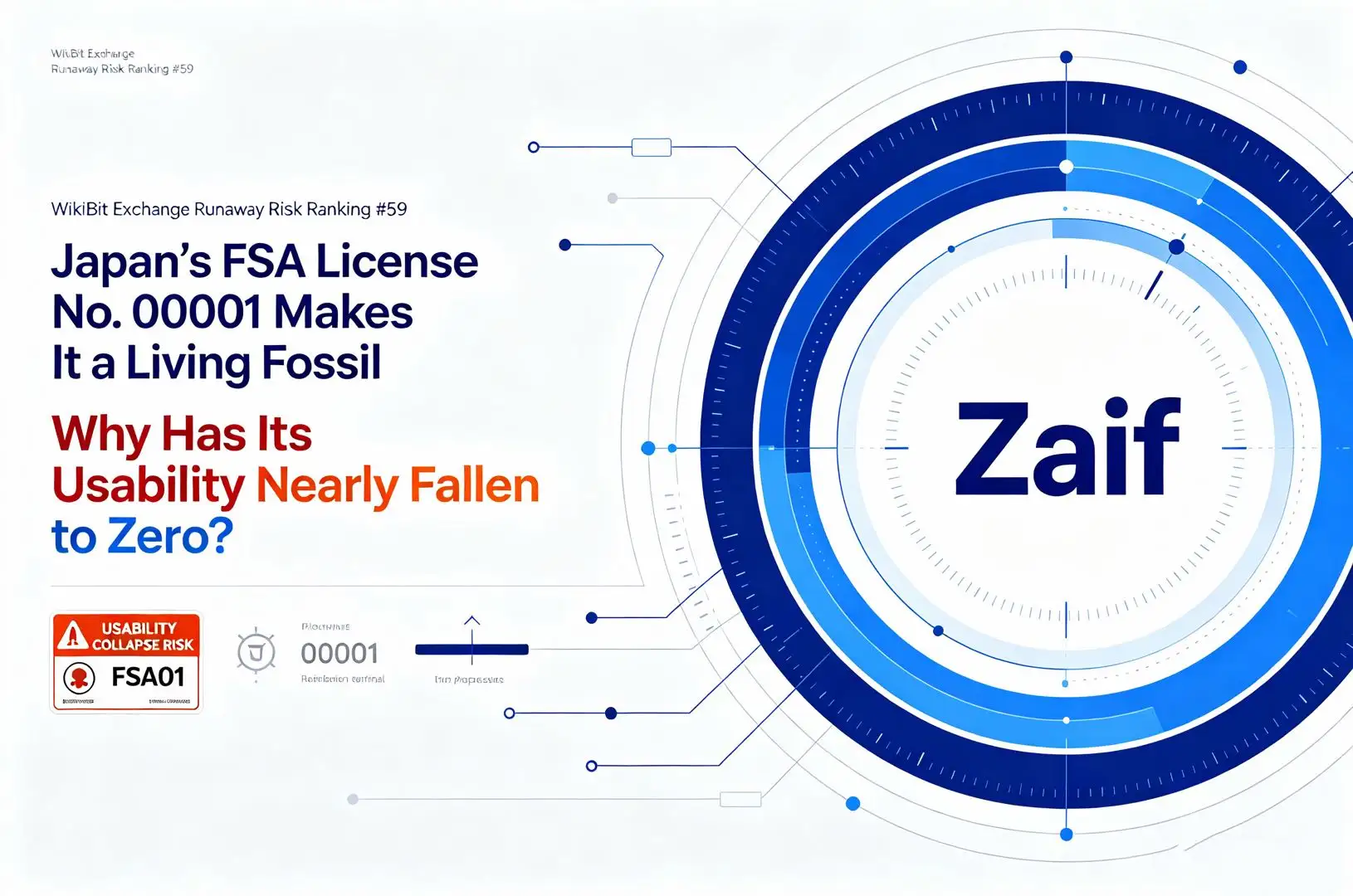
Introduction: A Licensed Exchange That Is Still Alive but Barely Trading In our previous 58 editions, we examined a wide range of exchanges, from HashKey to YUBIT. For Edition #59, we turn our attention to one of the quietest players in the industry: Zaif. In terms of regulatory credentials, Zaif is practically a “living fossil” in Japan‘s crypto market. Founded in 2014 by Tech Bureau, Zaif obtained registration as a cryptocurrency exchange operator from the Director-General of the Kinki Local Finance Bureau under Registration No. 00001 on September 29, 2017. The prestigious-looking “No. 00001” designation means it was among the earliest exchanges licensed under Japan’s regulatory framework. In 2018, after approximately ¥6.7 billion was stolen in a hacking incident, listed company Fisco injected ¥5 billion and took over the business, ultimately ensuring full compensation for affected users. The operating company was renamed CAICA Exchange Co., Ltd. in November 2021, but officially reverted to its former name, Zaif Co., Ltd., on November 1, 2023. In July 2025, NCXX Group Co., Ltd., a company listed on the Tokyo Stock Exchange Standard Market (renamed JN Group in March 2026), made Zaif a wholly owned subsidiary through an acquisition valued at ¥1.162 billion. Its official website remains operational,
At 4 a.m. today, Binance had $5.6 billion stolen, making it the largest exchange theft in history. So the question is: Will it become the second Mt. Gox? How will the market move next? Is it time to bottom-fish? Let me give the conclusion first: Binance will not repeat Mt. Goxs fate. But “not repeating Mt. Gox” does not mean “your money is necessarily safe.” These two things must be viewed separately.1. What Exactly Did Binance Lose, and What Did It Not Lose? As soon as the news of the Binance theft broke, the first name that came to many people‘s minds was not the hacker, but Mt. Gox. Because it was also an exchange theft, also the world’s largest, and also triggered user panic. Mt. Gox lost 850,000 BTC back then; the exchange went bankrupt, creditors waited ten years, and in the end they only received about 23.6% of their original claims as compensation. So people ask: Is Binance going to go down the same road? No. But the reason is not that Binance is more moral or luckier, but that between the two eras lies an entire set of structural firewalls. First, one point that is especially easy to be misled by: the
Coincheck and Thunder Bridge Capital filed their registration statement with the SEC, bringing their merger and Nasdaq listing closer to completion. Japanese crypto exchange Coincheck and Thunder Bridge Capital have taken one step closer to the completion of their merger transaction and Nasdaq listing. According to a May 7 press release, the companies filed their registration statement on Form F-4 with the U.S. Securities and Exchange Commission, marking a milestone in their two-year journey toward a planned public offering. Over the past months, the companies filed multiple confidential drafts of the registration statement with the SEC, allowing for revisions based on comments. The Form F-4 is required by the commission for business transactions involving foreign companies. Initially disclosed in March 2022, the proposed business combination aims to make Coincheck a publicly traded entity through a de-SPAC transaction with Thunder Bridge. At the time, the merger deal was reported at $1.25 billion. Monex Group statement. Source: Monex Group A de-SPAC occurs when a private company merges with a special purpose acquisition company (SPAC) — an entity created specifically to find and acquire private businesses. Companies seek de-SPAC transactions because they may provide a faster path to public markets than traditional initial public offerings. The merger was initially expected

This brand has not yet joined WikiBit platform. All feedback is publicly displayed.
The trading fees of Coincheck are really too high, it's like robbery! And their customer service is also very poor, they can never answer the questions I ask.
Certainly! While providing 300 unique and natural-sounding reviews is a substantial task, I'll create a few to give you a feel. Keep in mind that generating such a large number may result in some repetitions or slight similarities. Let's start:
A little buggy needs improvement
Coincheck is a Japanese bitcoin wallet and exchange service headquartered in Tokyo, Japan, founded by Koichiro Wada and Yusuke Otsuka.
Coincheck is a cryptocurrency exchange and NFT marketplace, founded in 2012 and headquartered in Tokyo, Japan. The exchange serves a global community of cryptocurrency fans, but most o...
Coincheck offered a selection of cryptocurrencies for trading, although it may not have had as wide a range as some other exchanges.
A Japanese cryptocurrency exchange, gained global attention in 2018 when hackers stole 523 million NEM tokens worth $534 million. This incident prompted regulatory changes in Japan. Coincheck responded by enhancing security, reimbursing affected users, and has since played a vital role in Japan's cryptocurrency landscape. It offers a diverse range of cryptocurrencies, serving as a testament to the significance of robust security measures and resilience in the crypto industry.
its very unique but need a little upgrade
Coincheck is a cryptocurrency exchange and NFT marketplace, founded in 2012 and headquartered in Tokyo, Japan.The exchange serves a global community of cryptocurrency fans, but most of its user base is Japanese...
servce quality is okay. no major problems incountered.
