Binance launches 11-ETF wealth product for TradFi access

Binance has launched ETF Wealth Management on Sept. 15 with an initial lineup of 11 U.S.-listed funds focused mainly on Treasury securities and investment-grade bonds.  SummaryBinance launched ETF Wealth Management with 11 U.S.-listed ETFs focused on cash management investment strategies.Users hold actual ETF shares while Alpaca handles execution, clearing, settlement and custody through brokerage.Binance groups ETFs into three horizons covering under six months through more than one year.Nest Trading routes securities orders to Alpaca Securities while Binance says it does not custody.Binance says ETF Wealth Management is not savings and offers no fixed returns to investors.  According to Binances Sept. 15 announcement, the service sits within its Earn section and gives eligible users a dedicated channel for traditional-finance products focused on cash management and income-oriented strategies. Orders are placed through Binance Stock Trading, while customers receive the economic benefits attached to the ETF shares they hold.  The launch expands a stock-trading service Binance introduced in June, when it opened access to more than 7,000 U.S.-listed stocks and ETFs for eligible customers. ETF Wealth Management narrows that larger product universe into a smaller group organized around different holding periods and fixed-income strategies.  FT: CEE Energy Giant Orlen Lost $424 Million in Venezuela Oil Deal Involving

09-15Industry

CLARITY Act Odds Fall From 47% to 32% Across Senate Ladder

Clarity Act odds took a hit this week. Polymarket traders now assign a 53% probability that more than 50 senators will vote “Yes” on the first Senate final-passage vote for the CLARITY Act, down 8 points, according to the platforms “How many Senators will vote for the Clarity Act?” market. The odds of clearing 60 votes sit at 32%. Total volume is $39,633, with the market running through December 31, 2026.  This isn‘t simply a bet on whether the bill clears the Senate. It’s a read on how big a coalition traders expect, and the gap between 53% and 32% is the story.  How many Senators will vote for the Clarity Act? Polymarket  Supercharge Your Trading in 2026 With BloFin AI Trading BotsClarity Act Odds Slip: How The 60-Vote Wall Works  The contracts language is precise: “Above” means strictly greater, so Above 50 requires 51 senators and Above 60 requires 61.  The ladder falls off fast above the majority line. Above 55 prices at 39% and above 58 at 37%, both down more than 10 points: the steepest declines anywhere in the market. Traders aren‘t abandoning the bill; they’re trimming expectations for a broad bipartisan coalition. A simple majority and a filibuster-proof one are structurally

09-15Industry

Ethereum, Base wallet standards talks fail, Ethlabs researcher says

Ethereum and Base are set to implement different account abstraction standards after efforts to agree on a shared account abstraction standard broke down last week.  Interoperability standards became secondary to each chain‘s core goals, leading both to go their separate ways and “putting the burden on wallets,” Derek Chiang, founding member and researcher at Ethlabs, as well as a co-author of Ethereum’s EIP-8141 proposal, said in a Monday X post.  The divergence could require wallet developers to support separate transaction formats to provide a consistent experience across networks. Account abstraction allows programmable rules for authorizing transactions and paying fees.  Ethereum is now advancing Frame Transactions under EIP-8141 as a “headliner” item under its Hegotá upgrade, which would introduce native account abstraction and create a path toward post-quantum authentication. Separately, Base is developing native account abstraction via Keystore under EIP-8130, currently live on devnet.  The divergence also highlights different priorities between layer-1 and layer-2 blockchain networks. Chiang said L1s are increasingly focused on censorship, capture-resistance, open-source, privacy and security features, favoring different account standards, while scalability-focused L2s are more aligned with standards such as EIP-8130.  The researcher argued that the separation wont necessarily result in a bad outcome, as both Ethereum and Base are now “free

09-15Industry

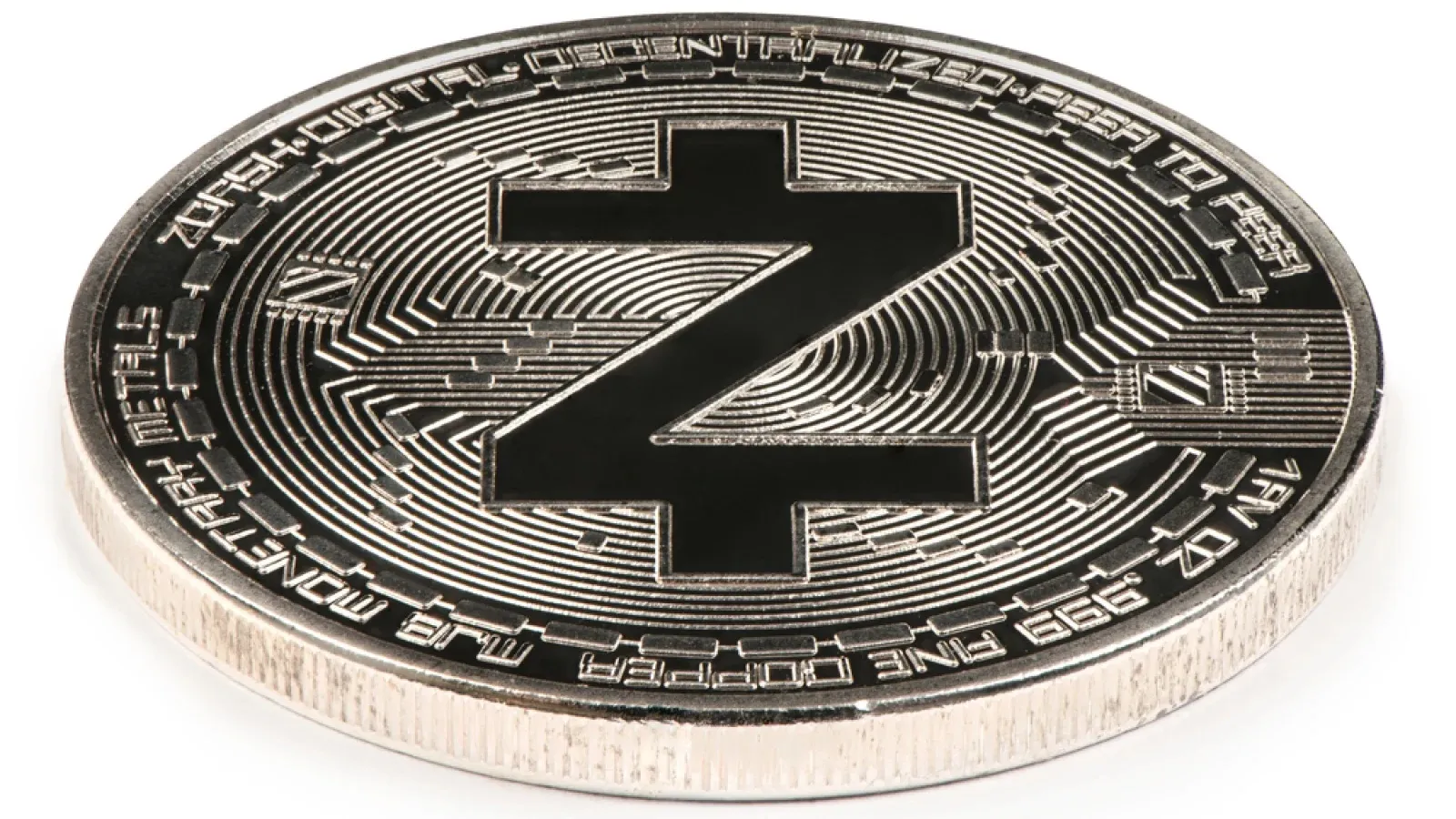
Zcash (ZEC) Poised to Break Top-10 Barrier, Overtaking Hyperliquid (HYPE)

After its remarkable surge propelled ZEC into the top 10 of the cryptocurrency market, Zcash is about to reach another significant milestone. By market capitalization, the privacy coin is currently almost exactly behind Hyperliquid, with only a tiny difference between the two assets.  Can Zcash push Hype away?  As of today, Hyperliquids market capitalization is $19.87 billion, while ZECs is roughly $19.3 billion. Less than 3% of HYPEs current valuation, or roughly $570 million, separates the two. ZEC would need to trade between $1,178 and $1,180 to surpass HYPE if its capitalization stays the same.  ZEC/USDT Chart by TradingView  That target is not far away. At the moment, ZEC trades for about $1,144, and its 24-hour trading volume surpasses $1.07 billion. Over the past seven days, the token has also increased by about 1.15 percent, whereas HYPE has decreased by more than 6 percent. The capitalization gap is closing quickly as a result of this combination. The chart from Zcash demonstrates how aggressive the repricing has been.  ZEC stays up  As recently as August, ZEC was trading at about $500 before soaring to $600, $800, and ultimately $1,000. Before beginning its current erratic consolidation, the rally peaked at $1,280. Significantly, despite numerous corrections, ZEC has managed

09-15Industry

Ripple News: Batch V1.1 Upgrade Needs One Validator

Following today‘s Ripple news, XRP Ledger’s Batch V1.1 amendment has secured backing from 27 of the networks 35 trusted validators, or arounf 77%. That leaves the upgrade one validator vote short of the 80% threshold XRPL requires to begin a 14-day activation countdown.  Batch V1.1 would let users bundle as many as eight linked transactions into a single atomic transaction operation, a change relevant to anyone tracking XRPL payment activity.  This is not simply a vote count creeping toward a number. Clearing 28 votes would only start the countdown clock, not switch the feature on. Support has to stay above 80% for the full two weeks, and validators can change their votes during that window, so the current tally is a trigger point rather than a confirmed outcome.  Amendments XRPSCAN  DISCOVER: Meme coin supercycle: Top performers this week  XRPL Upgrade News: What The Validator Vote Actually Unlocks  The mechanism functions as follows: once 80% of the 35 trusted validators back Batch V1.1, the amendment enters its 14-day majority period. If support holds, the change activates; if it drops below the threshold before the window closes, the countdown resets. The amendment has not yet gone live on the main network, though it shipped in xrpld 3.3.0 and

09-15Industry

NYSE-Listed Broadridge Brings Crypto Platform to U.S. Wealth Firms

Broadridge has expanded its digital asset platform into the U.S., allowing wealth firms to place cryptocurrencies and tokenized securities within systems already used for traditional investments.  SummaryBroadridge expanded its digital asset platform to U.S. wealth firms after launching it in Canada.Anchorage Digital and Galaxy provide initial custody, wallet, liquidity and market infrastructure support for clients.DLX supports cryptocurrencies and tokenized equities, funds and private assets alongside existing traditional investment systems.Broadridge says its DLR platform processes more than $351 billion in tokenized real assets daily.U.S. broker-dealers, RIAs and wealth managers can integrate digital assets into existing books and records.  According to Broadridges Sept. 14 announcement, U.S. broker-dealers, registered investment advisers and wealth managers can use the platform across trading, custody, servicing, governance and client reporting. Anchorage Digital and Galaxy Digital are the first named infrastructure providers supporting the U.S. rollout.  Broadridge Financial Solutions trades on the NYSE under BR, according to its SEC filings. The company is not Nasdaq-listed, as some secondary reports described it.  You might also like:  NYSE advances onchain settlement for tokenized securities  Broadridge combines crypto with existing wealth systems  The platform is designed to let firms support cryptocurrencies and tokenized real-world assets without creating a separate books-and-records environment. Broadridge said customers can connect the service

09-15Industry

House crypto tax bill offers $10 fee exemption, tightens wash sale rules

The House Ways and Means Committee has released a 114-page crypto tax package that would exempt certain network fees under $10 from tax while extending wash-sale rules to digital assets ahead of a Sept. 16 committee markup.  Bloomberg Government reported on Sept. 15 that committee Chair Jason Smith, a Missouri Republican, released the Digital Asset Tax Certainty Act on Monday night after lawmakers spent months working on separate proposals covering the tax treatment of digital assets.  The package incorporates provisions developed through earlier Republican proposals and bipartisan legislation from Reps. Steven Horsford, D-Nev., and Max Miller, R-Ohio. It covers small crypto transactions, gain and loss calculations, transfers, wash sales, mining, staking and broker requirements.  Committee documents show H.R. 10357 is scheduled for markup at 10 a.m. ET on Wednesday. Lawmakers will consider it alongside several unrelated tax and health care measures before deciding whether to advance the legislation.  Crypto tax bill would exempt some fees under $10  One provision would remove tax on qualifying network and transaction fees worth less than $10, addressing small blockchain costs that can currently create tax reporting requirements.  The exemption would not be available to every user. Anyone who completed more than 5,000 transfers during the previous year would be excluded,

09-15Industry

Bitcoin self-custody creates a massive cost-basis blind spot on your 2026 crypto tax forms

A Bitcoin investor can withdraw coins from an exchange, return them to the same account, and still fall outside mandatory cost-basis reporting when those coins are sold.  Related Asset Bitcoin #1 BTC · $76,862.51 24-hour change: down 0.93% Loading price history… 24H Down 0.93% 7D Down 2.04% 30D Up 22.01%  For the 2026 US reporting year, the broker can still be required to report sale proceeds, while reporting the acquisition cost remains voluntary.  Cost basis, the acquisition cost used to calculate a gain, only changes the brokers obligation to supply an ordinary transfer between the investors own accounts. That creates a practical divide between a record showing how much a sale brought in and one that supports the gain calculation.  The IRSs 2026 Form 1099-DA instructions make that divide explicit. Covered digital assets generally must have been acquired after 2025 in the reporting brokers custodial account and held there until disposal. Assets bought before 2026 or transferred into the broker are noncovered, with basis reporting voluntary.  The distinction runs through the current reporting year as international reporting develops and blockchain analytics providers offer tax authorities a wider view of activity.  Three routes, the same gain  Consider a deliberately simplified hypothetical US investment: 0.1 Bitcoin bought for $5,000

09-15Industry

What's Wrong With Stablecoins? Ripple CTO Emeritus Schwartz Makes Surprising Admission

XRP Ledgers chief architect and Ripple CTO Emeritus David Schwartz has acknowledged that developers made a fundamental mistake at the dawn of the crypto industry. They misjudged how the world would use the digital dollar.  The result is a hidden interface crisis that still makes stablecoin payments work incorrectly and remain inconvenient for mainstream users.  What was the miscalculation?  “Our thinking at the time was (put into modern terms) every USD stablecoin would use ”USD“ as its currency code and there was no real need for the ledger to support ticker symbols. Wallets could map issuers and currencies to ticker symbols,” Schwartz recalled.  Developers believed the ledger would not need unique ticker symbols for each coin, and that client wallets would independently determine who issued an asset and how to settle payments.  In reality, decentralized finance has become critically fragmented. Dozens of major players have emerged in the market, each creating its own isolated “dollar.” Instead of simply sending money, users must constantly navigate abbreviations such as USDT, USDC, and RLUSD, completely breaking the familiar user experience.  Schwartzs idea: letting users decide which dollar is “real”  Schwartz proposes looking at the payment system from a different angle and reforming settlement mechanics by separating asset-display logic into two

09-15Industry

Upbit-Naver Deal Faces Regulatory Clash Over Ownership Rules

South Korea‘s proposed crypto ownership rules have raised a potential governance conflict for Naver Financial’s planned acquisition of Upbit operator Dunamu if the company later qualifies as a holding company.  SummarySouth Korean researchers warn ownership caps could conflict with holding-company minimum shareholding requirements for Upbit.Naver Financials Dunamu share swap is scheduled for December 31 after regulators delayed approvals twice.Fair Trade Act requires holding companies to own 50% of shares in unlisted subsidiaries currently.Financial regulators say no major-shareholder cap for cryptocurrency exchanges has yet been finalized in Korea.Naver Financial plans to acquire 100% of Dunamu through a comprehensive share swap pending approvals.  Yonhap News Agency reported Sept. 15 that the National Assembly Research Service had examined how a proposed cap on major shareholders of virtual asset exchanges could interact with existing subsidiary ownership requirements under the Fair Trade Act.  The research service said the two systems could create a structure where one rule sets a minimum shareholding level while another limits how much a major shareholder may own. It stressed, however, that the rules should not be treated as automatically conflicting in every case because their legal purposes and subjects differ. A same-day report summarizing the research noted that the issue could become relevant

09-15Industry
1
...
158160
...
1000