Volvo Group tests proprietary cryptocurrency for supplier transactions in blockchain push

Quick TakeVolvo Group has tested a proprietary cryptocurrency on a closed network to streamline transactions with suppliers.The project remains in the ideation stage and is not yet industrialized.  Volvo Group has explored using a proprietary cryptocurrency on a closed blockchain network to streamline transactions and data exchange with material and transport suppliers.  Ivan Branco, Head of Information Management, AI, and Analytics at Volvo Group Trucks Operations, said in a recent interview with the Cardano Foundation that the initiative was an internal exploration aimed at simplifying cross-border exchanges and maintaining immutable records of orders and transportation data, independent of traditional currencies.  “We have done explorations also with certain transport suppliers to see if we could create, lets say, an enclosed environment using blockchain for the transactions in between material supplier, transport supplier, and ourselves with a proprietary cryptocurrency that we created for that specific purpose,” Branco said.  It is part of broader efforts by Volvo Group — the division responsible for trucks, buses, and construction equipment — to explore blockchain for improving supply chain efficiency.  End-to-end traceability  Volvo Group sees potential blockchain applications in product traceability, particularly for remanufacturing, and upcoming European regulations such as the Digital Product Passport.  Branco highlighted persistent issues with country-of-origin tracking for spare

07-16Industry

Bitcoin Rebounds 12% From Sub-$58K Low but Stalls Near $64K

Bitcoin News  Bitcoin (BTC) traded near $64,000 on July 16 after veteran chart analyst Peter Brandt flagged a possible bottoming structure, and our reading of the setup is that confirmation remains distant. Brandt suggested the price action could be forming an inverted head-and-shoulders pattern — a three-trough formation in which the middle low sits below the flanking lows and typically signals a reversal only once price clears the neckline. He called the structure “VERY VERY UNCONVENTIONAL” and stressed traders do not yet know whether it will hold. As we read it, Bitcoin has not completed the neckline break, leaving the pattern an early possibility rather than a confirmed signal.  The rebound itself has been sharp but unfinished. Bitcoin has gained roughly 12% from a swing low beneath $58,000, briefly pushing above $65,400 before retreating toward $64,000. That failure to hold above $65,000 marks the zone as the immediate hurdle bulls must clear to validate a broader recovery. Buyers have not secured a clean breakout, and the stall echoes Brandts more cautious June stance, when Bitcoin sat below its 18-week moving average and outside a rising channel. Our read of the tape is that the $65,000 resistance band now separates a relief bounce

07-16Industry

South Korea rate hike puts fresh pressure on crypto risk appetite

South Korea has raised interest rates for the first time since January 2023, shifting monetary policy toward tighter conditions in one of the worlds most active retail crypto markets.  The Bank of Korea raised its benchmark rate by 25 basis points from 2.50% to 2.75% on July 16. All seven members of the Monetary Policy Board supported the decision. The central bank also said further increases may be needed depending on inflation, growth and financial stability conditions.  Bank of Korea shifts toward tighter monetary policy  The rate increase was widely expected. A Reuters poll found that 36 of 37 economists expected the central bank to raise its policy rate to 2.75%.  The Bank of Korea cited stronger exports and investment, persistent inflation and risks to financial stability. June consumer inflation reached 3.2%, while the central bank expects economic growth to exceed its previous 2.6% forecast by a wide margin.  Governor Hyun Song Shin said developments in growth, inflation and financial stability all supported a rate increase. The bank also said monetary policy may need to remain on a tightening path, with future decisions depending on economic data.  Higher interest rates generally raise borrowing costs and can reduce demand for speculative assets. For crypto markets, the direct

07-16Industry

Is Bitcoin Really Headed to $38,000? NYDIG's October Scenario, Explained

Bitcoin could sink to a cycle low of $38,000 to $39,000 by October if the current drawdown matches the depth of 2022s bear market, NYDIG said in its second-quarter review.  Key TakeawaysNYDIG sees a potential bitcoin cycle low near $38,000-$39,000 by October if a 2022-style drawdown repeats.Bitcoin is currently trading near $64,500, down about 30% in 2026 and roughly 50% below October 2025s $126,080 peak.K33 researchers believe the $60,000 area already marked this bear markets maximum drawdown.  A Bleak Scenario  Bitcoin financial services firm NYDIG has mapped out a scenario in which bitcoin‘s slide extends to $38,000-$39,000 by October, if the 2025-2026 downturn follows the depth and duration of the market’s previous major resets. The scenario appeared in the firms second-quarter review, “ Leverage Not Spot Demand Is Driving Bitcoin While Value and Momentum Buyers Wait,” which was published last week.  The firm was explicit about why the old playbook is back on traders screens, noting:  “ Bitcoins 2025-2026 drawdown is bringing the 4-year cycle narrative back into focus, because the timing and structure increasingly resemble the prior reset years of 2014, 2018 and 2022 even though the path has not matched those drawdowns exactly.”  “ Bitcoins 2025-2026 drawdown is bringing the 4-year cycle narrative back

07-16Industry

Peter Brandt spots possible Bitcoin bottom as BTC stalls near $65K

Veteran trader Peter Brandt has identified a possible bottoming structure on Bitcoins chart after the cryptocurrency rebounded from its late-June lows. Brandt stressed that traders still lack enough evidence to confirm the setup.  Bitcoin traded near $64,000 on July 16 after failing to hold above $65,000. It has recovered from below $58,000, but questions remain over whether spot demand can support a broader reversal.  Brandt flags an unconventional Bitcoin bottom pattern  In aJuly 16 post on X, Brandt said Bitcoins chart could be developing an inverted head-and-shoulders bottom. He described the structure as “VERY VERY UNCONVENTIONAL” and added, “We do NOT know yet.”He presented the formation as an early possibility rather than a confirmed signal.  VERY VERY UNCONVENTIONAL, but this chart could have the makings of an inverted H&S bottom. We do NOT know yet. $BTCUSD pic.twitter.com/fDjQgVbGdv  — The Factor Report (@PeterLBrandt) July 15, 2026  An inverted head-and-shoulders pattern includes three price troughs, with the middle decline extending below the surrounding lows. Traders often wait for a break above the neckline before treating the setup as confirmed. Bitcoin has not completed such a move.  Bitcoin rebound meets resistance near $65,000  Bitcoin has gained roughly 12% from its recent swing low below $58,000, but the rebound has struggled around

07-16Industry

Crypto firms face AML risks during post-MiCA migration, says AMLA chair

Mass user migration following the end of the Markets in Crypto-Assets Regulation (MiCA) transitional period could strain compliance at virtual asset service providers (VASPs) in the European Union, according to Bruna Szego, chair of the Authority for Anti-Money Laundering and Countering the Financing of Terrorism (AMLA).  “Because we know customers will rush to withdraw, this will put additional pressure on these VASPs,” Szego said during a Wednesday briefing with the European Parliaments Committee on Economic and Monetary Affairs.  Szego said firms winding down their EU operations could come under pressure as customers rush to withdraw, while licensed crypto companies could face onboarding challenges as they absorb new users. She urged service providers to maintain efficient compliance procedures throughout the transition.  MiCAs 18-month transitional period ended on July 1, requiring crypto asset service providers (CASPs) to hold licenses to continue serving EU customers. The European Securities and Markets Authority said crypto service providers that remain unauthorized by the deadline must take “immediate” steps to wind down their EU activities.  Related: Last-minute MiCA approvals mark end of EU transition period  AMLA maps next phase of crypto oversight  Ahead of MiCAs July 1 deadline, AMLA published an advisory note warning crypto firms about money laundering risks arising from the

07-16Industry

Bitcoin hits $65.5K as more surprise US inflation data sparks three-week BTC price high

Bitcoin (BTC) saw three-week highs on Wednesday as US inflation data beat expectations for a second day.  Key points:Bitcoin sees copycat bullish price action as US inflation data cools for a second day running.Risk assets get a more positive outlook as Fed rate-cut odds drop.Traders stay conservative over Bitcoins ability to continue higher.  Bitcoin gains after “much better-than-expected” US PPI  Data from TradingView showed BTC/USD reaching $65,500 for the first time since June 22.BTC/USD 12-hour chart. Source: Cointelegraph/TradingView  The June print of the Producer Price Index (PPI) came in cool at 5.5% year-on-year after a 0.3% monthly decrease, per data from the Bureau of Labor Statistics (BLS).  “The June decline in the index for final demand can be attributed to prices for final demand goods, which fell 1.4 percent. In contrast, the index for final demand services moved up 0.2 percent,” an official news release stated.PPI one-month % change. Source: BLS  Reacting, economist Mohamed El-Erian was upbeat on the outlook for risk assets and Federal Reserve policy.  “These much better-than-expected figures are set to boost equities and further temper market expectations for upcoming interest rate hikes,” he wrote in a post on X.  PPI joined Tuesdays Consumer Price Index (CPI) release, which surprised to the downside despite macro

07-16Industry

South Korea to bring digital assets under new state asset management system

South Korea plans to adopt the National Asset Basic Act to update the countrys state asset management system from the outdated State Property Act of 1950.  The Ministry of Economy and Finance (MOEF) hopes to modernize the management of national assets and explicitly includes digital assets and intellectual property, broadening the definition of state assets, the MOEF announced during a briefing at the Presidents Blue House on Wednesday.  As part of the reform, the ministry also reiterated plans to tokenize government bonds on a blockchain to reduce transaction, as part of a 2027 pilot project. It also plans to explore the tokenization of state-owned real estate to encourage retail participation and share part of the generated returns with the public.  The move represents a significant regulatory development for South Korea, which has one of the worlds most active retail crypto markets. The framework seeks to shift the management of state-owned property from a legacy, real estate-focused framework to a new model focused on value creation.Report from South Korea’s Ministry of Finance and Economy. Source: mofe.go.kr  Seoul moves closer to CBDC, blockchain economy  On Tuesday, South Koreas government unveiled its 2026 Economic Growth Strategy for the Second Half, which includes plans to conduct a 2027 pilot

07-16Industry

Is Robinhood Chains success bullish or bearish for ETH the asset?

Robinhood Chain‘s explosive launch this month has reignited one of Ethereum’s longest-running debates: Do successful layer-2 networks increase demand for ETH, the asset, or do the new entrants capture all of the value for themselves?  The retail brokerage‘s Arbitrum-based Ethereum L2 has become one of Ethereum’s busiest rollups since its launch on July 1.  More than $141 million in Ether was bridged onto the chain in its first two weeks. DeFiLlama data shows more than half a million wallets now hold ETH on the network, and a memecoin frenzy saw Robinhood Chain surge past the Ethereum L1 and Coinbases Base L2 in 24-hour DEX trading volume.  Ether has pumped on the news, gaining around 15% from $1,582 on July 1 to $1,825 by July 13, according to Coingecko data, following a wave of bullish comments.  World Liberty Financial‘s Eric Trump posted on July 11, “ETH is pumping hard! Great to see!” while Tom Lee, chairman of BitMine Immersion Technologies, argued the launch reinforces the thesis that “ETH is money,” pointing to the asset’s role as the chain‘s native gas token and the L2’s finality on Ethereums mainnet.  Ethereum investors have heard similar arguments before.  Related: Robinhood L2 sparks ETH optimism, Saylor ‘muddies waters.’ Hodlers Digest, July

07-16Industry

Czech Republic tells ISPs to block Polymarket after gambling blacklisting

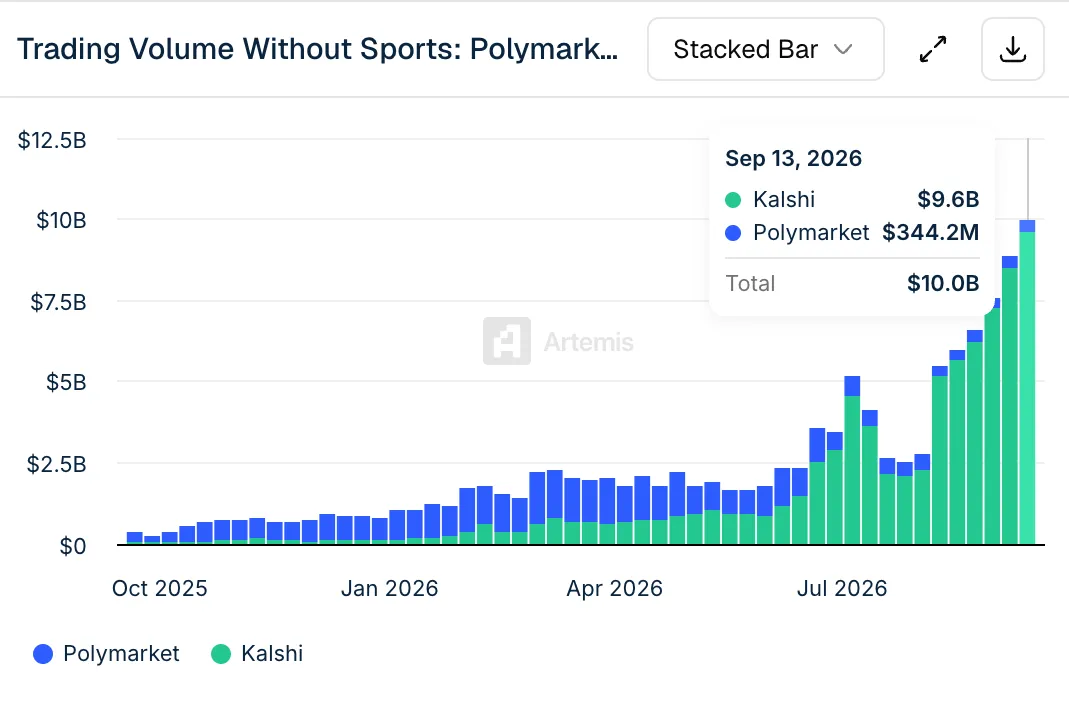
The Czech Finance Ministry added Polymarket to its list of unauthorized online gambling websites on Monday, requiring internet service providers (ISP) to block access.  The ministry listed the prediction market‘s website under the country’s Gambling Act, which prohibits operators from offering unlicensed online gambling services to Czech users.  Under the Gambling Act, ISPs must block access to websites included on the ministrys blacklist within 15 days of publication of the name.  Polymarket is a prediction market where users trade contracts tied to the outcomes of future events. The platform gained global attention during the 2024 US presidential election, with its markets widely cited as a gauge of election sentiment.  Polymarket and rival Kalshi have been restricted by regulators across the European Union, including in France, Germany, Poland, Romania and Spain.  Polymarket did not immediately respond to Cointelegraphs request for comment.  Prediction markets face watchdog scrutiny beyond Europe  Regulators in several jurisdictions argue that some prediction market contracts amount to unlicensed gambling or fall under existing financial market rules.  On July 3, the European Securities and Markets Authority (ESMA) warned that many prediction market contracts could already fall under existing restrictions on binary options if they meet the definition of financial instruments.  The regulator said companies cannot avoid EU financial

07-16Industry
1
...
157159
...
1000