Bitcoin Whales Hold Back as Retail Deposits Hit 6-Month High

Retail investors have nearly doubled their Bitcoin (BTC) deposits to Binance since April, reaching a six-month high. Bitcoin whales have moved the other way for almost two months.  Retail and whale flows often diverge. Data from CryptoQuant, an on-chain analytics firm, shows retail deposits at 2.8 times whale deposits.  Sponsored  Sponsored  Is Retail Treating the Rebound as an Exit Window?  The 30-day retail total climbed from $5.5 billion in April to $10.75 billion, according to CryptoQuant. That leaves retail $6.95 billion above the whale figure.  A 30-day sum adds up every deposit from the past month, which smooths out single-day spikes.  A deposit is not a sale, but it moves coins to where selling happens. The pattern suggests small holders may be using the rebound to exit at better prices.  However, that reading is an inference from flow data, not confirmed selling.  Sponsored  Sponsored  Will Bitcoin Whales Keep Holding if Price Climbs?  In contrast, whale deposits to Binance fell 36% since late August, from $5.9 billion to $3.8 billion.  At $3.8 billion, the flow is still sizable, so this is a slowdown rather than a halt.  Large holders showing no rush to send coins suggests they are not looking to distribute at current levels.  The data covers Binance only, so flows on other exchanges may

10-26Industry

Lido opens larger Ethereum validators with a 32 ETH operator bond

Staking protocol Lido activated a new permissionless Ethereum module on Oct. 23, allowing independent operators to run validators with effective balances of up to 2,048 ETH. The new route is live, with initial capacity intended for about 32 seed deposits and larger allocations dependent on activation and later funding.  Related Asset Ethereum #2 ETH · $2,322.96 24-hour change: down 1.50% Loading price history… 24H Down 1.50% 7D Down 3.62% 30D Down 13.54%  The 0x02 Community Staking Module, or CSM, requires an operator to bond 32 ETH for the first validator key and 30 ETH for each additional key. Lido supplies the validators stake separately, so the operators bond and the protocols initial deposit serve different purposes.  Ethereums 0x02 compounding withdrawal credentials allow a validators effective balance to grow above the 32 ETH minimum needed for activation, up to the 2,048 ETH maximum.  Related Company Lido Liquidity for staked assets  Lido estimates a capital multiplier versus solo staking of 2.18 times for a first validator, approaching 2.26 times as more are added. The comparison includes staking returns on the operators bond and assumes full 2,048 ETH effective balances, making eventual allocation central to the advertised economics.  The launch moves beyond the proposal-stage route CryptoSlate covered on Oct.

10-26Industry

Standard Chartered-led Anchorpoint says its not rushing retail stablecoin

Standard Chartered-backed stablecoin venture Anchorpoint says it will take a cautious approach to opening its Hong Kong dollar-backed stablecoin to retail users, declining to confirm a launch date after rival HSBC rolled out RedCoin, according to the South China Morning Post.  The venture released its institutional stablecoin product in August and previously indicated a retail offering could arrive as early as the end of 2026.  Anchorpoint CEO Dominic Maffei declined to confirm that timeline at a Friday press conference, saying the company would take a prudent approach.  “We believe its important to build the market out in a long-term, sustainable manner,” Maffei said, adding that rushing a launch “does not make sense.”  The update comes after HSBC launched its Hong Kong dollar-backed RedCoin on Friday for the 3.3 million users of its PayMe app.  Anchorpoint grew out of a partnership between Standard Chartered, Animoca Brands and telecommunications provider HKT, which was announced in February 2025, following their joint participation in Hong Kongs stablecoin issuer sandbox in July 2024.  Animocas role is to bring its blockchain expertise and industry network to the venture and help develop uses for the stablecoin across the Web3 ecosystem.

10-26Industry

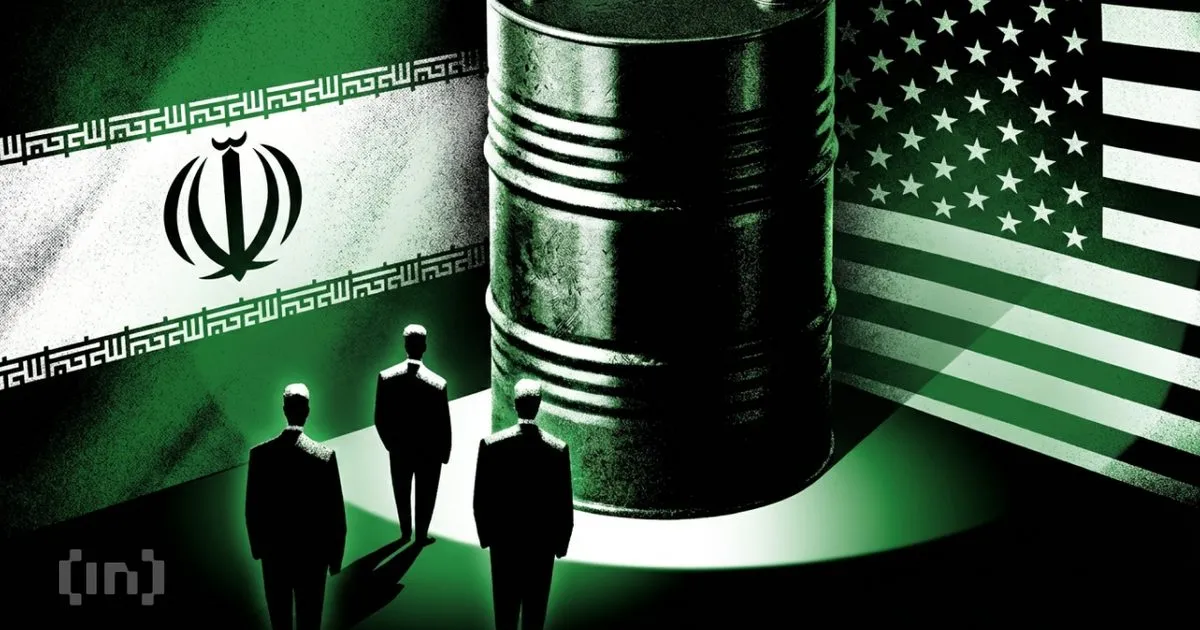
Trump Calls Off Iran Strike But Will Oil Hold Above $100?

West Texas Intermediate (WTI) fell as low as $101.69 on Sunday night after President Donald Trump ruled out an immediate Iran strike. The dip leaves US oil above $100 and about 53% higher than before the US-Israeli war began.  Brent, the global benchmark, still sits near $116, according to Trading Economics. However, Goldman Sachs estimates nearly $25 of that price is a war risk premium, even as Gulf exports recover.  Sponsored  Sponsored  Is a Trump Pause Enough to Cool Oil?  Trump said Sunday that no strike would happen that day. He also suggested Washington might still complete its military campaign or strike a deal, Al Jazeera reported.  Qatari mediators visited Tehran, and President Masoud Pezeshkian said Iran should still pursue a peace deal.  In contrast, Irans parliament speaker said Washington miscalculated in launching the war and must find a way out.  Meanwhile, the Saudi-led coalition said it destroyed missiles and drones that Yemens Houthi group fired at the kingdom.  Shiptracker Kpler counted at least 18 reported vessel attacks over two weeks, according to an Oct. 19 note.  BREAKING:  Oil crashed -1.7% on the news that President Trump cancelled todays strikes on Iran.   Sponsored  Sponsored  Separately, Washington and Israel have reportedly drafted Iran strike plans for after the Nov. 3 US midterm elections.  Can Oil

10-26Industry

Bitcoin and Gold Hit a Historic First in 2026. The Two “Safe Havens” Are Now the Worst Assets

Bitcoin (BTC) and gold are the two worst-performing major assets of 2026, down 7.3% and 7.5%, according to Creative Planning strategist Charlie Bilello. He says no calendar year in his records has put the pair last together.  Investors buy both as protection against inflation and market stress. Yet this year, a basket of commodities gained 52.5%, US large-cap stocks rose 12.3%, and short-term Treasury bills returned 2.9%.  Sponsored  Sponsored  How Far Bitcoin and Gold Have Fallen in 2026  Bilellos table ranks 21 asset classes every year since 2011, using data through October 23. Only 57% of them are positive in 2026.  Golds slide follows a 63.7% gain in 2025, its best year in the table. Spot gold climbed above $5,400 an ounce in early 2026. On Friday, it closed at $3,995.81, after gold fell below $4,000 for the first time since July.  Bitcoin, meanwhile, is heading for a second losing year after a 6.3% drop in 2025. It trades at $80,472, according to BeInCryptos Bitcoin price data. That is about 35% below its peak above $126,000 last October.  Bitcoin and gold rank last among 21 major asset classes in 2026 through October 23. Source: Charlie Bilello/X  Sponsored  Sponsored  Why Oil Prices and the Fed Are Hurting Both  Neither gold nor Bitcoin pays

10-26Industry

AI agents help rescue ETH‘s Glamsterdam fork, ’Steal My Bitcoin‘ site: Hodler’s Digest

AI agents message board set up to rescue Glamsterdam fork  The second and final testnet for Ethereums Glamsterdam hard fork was cancelled this week, after ChainSecurity found vulnerabilities in two gas scaling Ethereum Improvement Proposals that could have spelled big trouble for at least 13 DeFi contracts.  The bugs were connected to EIP-8037/8038 and resulted in contracts that rely on the way gas currently behaves, breaking when a call runs out of gas. Its all fairly technical and complicated, but the upshot is that an attacker may have been able to exploit the resulting vulnerabilities.  The hard fork testnet dress rehearsal on Hoodi is not expected to be rescheduled until all the second order effects of the fork have been gamed out properly. In an article on X today, Derek Chiang from Eth Labs noted the vulnerability was found out at a few minutes to midnight, which is less than ideal, “causing everyone to scramble to deal with the fallout.”  “In the future, protocol designers would do well to conduct much more thorough analysis of potential breakages that their update might introduce, and to do so much earlier in the process.”  Chiang says two researchers from Eth Labs and the Ethereum Foundation had independently spun

10-26Industry

Elon Musk Says 200+ AI Cloud Firms Face Wipeout: Will CoreWeave Survive?

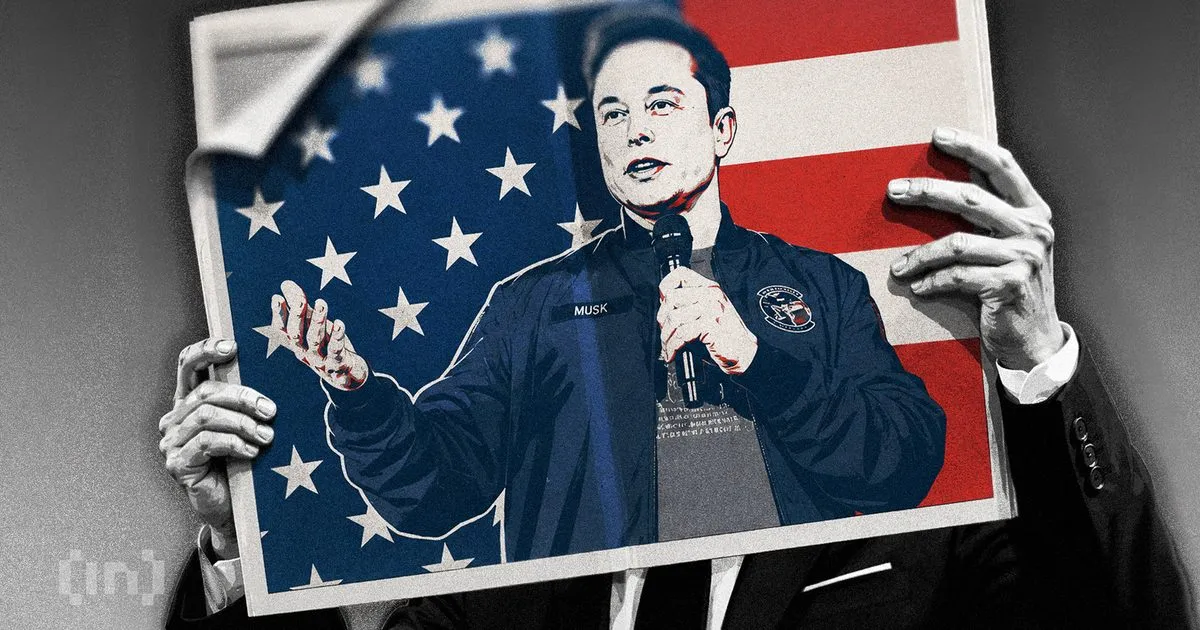
Elon Musk says that lenders have almost entirely stopped funding companies that earn their money only from AI data centers. He predicted most of the 200-plus AI cloud firms will fold or be bought.  The warning lands as CoreWeave (CRWV), the largest listed AI cloud firm, pays record rates on its debt. Musks own SpaceX, meanwhile, says it just closed $40 billion of borrowing.  Sponsored  Sponsored  Can CoreWeave Survive Its Debt Bill?  These firms, known as neoclouds, buy Nvidia chips and rent the computing power to AI developers. Most borrow heavily to do it.  Musk did not name CoreWeave this weekend. However, on October 14 investor Chamath Palihapitiya shared a chart of a CoreWeave bond yield passing 15%, and Musk replied “Yikes.”  CoreWeave is the sectors bellwether, with a reported $50 billion in obligations. When its stock fell more than 15% that day, Oracle, Dell, and Hut 8 also dropped sharply.  The yield on its $2.75 billion bond due 2031 has since hit a record 15.76%. A higher yield means lenders demand more to hold the debt.  The shares are about 70% below their peak. Fidelitys Jurrien Timmer has flagged debt as the AI bubble risk.  Sponsored  Sponsored  Chief Executive Mike Intrator told staff in a memo that its backlog covers its

10-26Industry

Paolo Ardoino wants AI to run Bitcoin mines. Who gets permission to act?

Paolo Ardoinos push to bring AI into Bitcoin mining has a human decision at its center: who may authorize a machine to change what it is doing? Tethers MDK v0.11 reference agent pauses its device-action tool for human approval, while the site must establish who is entitled to give it.  Related Asset Bitcoin #1 BTC · $80,297.35 24-hour change: down 0.05% Loading price history… 24H Down 0.05% 7D Down 0.73% 30D Down 4.09%  That distinction matters as Tether announced commitments from 15 industry participants on October 24 to build and maintain integrations with its Mining Development Kit, an open-source framework connecting mining equipment, pools and applications. A common interface can give software a consistent way to reach different systems. Permission to act still depends on the installation.  The v0.11 example does not establish which code QVAC or participating mines have installed. Newer main-branch code adds caller restrictions absent from that tag. Site control therefore turns on both who may issue commands and which upstream software the mine adopts.  Related Person Paolo Ardoino CEO · Tether Limited  From integrations to equipment commands  Tethers list includes BITMAIN, MicroBT, Canaan, Bitdeer, Foundry Digital and Luxor Technology. It also names ACME Swisstech, Elektron Energy, EMCD, F2Pool, Heatbit, OCEAN, Proto, SpiderPool

10-26Industry

AI Just Put a $5 Million-a-Day Price Tag on Its Biggest Bottleneck

The companies racing to build artificial intelligence (AI) have found a blunt way to say “hurry up.” They now demand $5 million or more for every day a data center opens late.  The builders pay that bill, along with anyone who owns a piece of them. This spring, one tenant asked for $1 million a day, The Information reported.  Sponsored  Sponsored  Why Power, Not Chips, Is Holding AI Back  AI headlines focus on chips. A building full of chips is useless without electricity.  Power is the main obstacle to new data centers, energy research firm Currence found in July, Network World reported.  AI data center tenants are now demanding penalties of more than $5 million per day if developers fail to deliver power and facilities on time, up from around $1 million earlier this year, according to The Information.   How a One-Year Delay Becomes 640 Days of Free Rent  SoftBank-backed SB Energy is building a 10-gigawatt campus in Ohio for OpenAI. If it opens late, OpenAI gets one free day of base rent per day of delay.  After 90 days, that doubles to two, the Wall Street Journal reported, citing SB Energys initial public offering (IPO) filing. A full year late costs 640 days of rent.  Sponsored  Sponsored  SB Energy rent credit

10-26Industry

Bitcoin and Gold Become Worst-Performing Assets of 2026 in Historic First

Bitcoin and gold have emerged as the two worst-performing major asset classes of 2026, marking an unprecedented development in financial markets.  According to Charlie Bilello, chief market strategist at Creative Planning, gold has declined 7.5% since the beginning of the year, while Bitcoin is down 7.3%.  Both assets are now trailing traditional investments, including stocks, bonds and even cash, despite their reputation as stores of value.  The simultaneous losses are particularly noteworthy given that Bitcoin and gold are frequently viewed as alternatives to traditional financial assets during periods of economic uncertainty.  However, neither has managed to deliver positive year-to-date returns in 2026, challenging their appeal as reliable hedges against market turbulence.  Dwarfing gold  Despite Bitcoins disappointing performance this year, the worlds largest cryptocurrency remains the undisputed long-term winner among the major asset classes tracked by Bilello.  Since 2011, Bitcoin has delivered an extraordinary annualized return of approximately 120.6%, substantially outperforming traditional financial assets.  For comparison, gold has generated an annualized return of just 6.3% over the same period.  The contrast becomes even more striking when examining the assets recent performance.  Bitcoin was the best-performing major asset class in 2024, posting a staggering 121% gain. Gold subsequently took the crown in 2025, soaring 63.7% and outperforming competing investments.  However, their fortunes have

10-26Industry
1
...
114116
...
1000