Binance Pool shuts on November 10, with record access ending two weeks later

Miners connected to Binance Pool need to redirect their equipment before 07:00 UTC on Nov. 10, 2026, when Binance will shut the service and stop crediting new mining work.  Binance set out the timetable in an Oct. 13 closure notice. The shutdown also covers Pool Savings, Cloud Mining and Transaction Accelerator, alongside Telegram hashrate alerts, email notifications and mining-pool API services.  Binance will disable its Stratum URLs and mining endpoints at the cutoff. Later hashrate submissions and mining shares will not be accepted, processed or credited.  Related Company Binance Global crypto exchange  Eligible shares submitted before the deadline will still enter the final reward calculation under Binance Pool rules.  A mining share is proof of work submitted while contributing computing power to a pool, according to Binances Mining Pool Product Terms.  Users with active Pool Savings positions should also review them and unsubscribe or redeem before the service ends. The product terms make redemptions subject to daily limits and available liquidity, with requests processed in the order received. They provide for transfers within one business day, or up to 90 days in exceptional circumstances.  Final payments and records have separate deadlines  Eligible outstanding rewards, balances, refunds or settlements, where applicable, will be processed after the mining cutoff. Product


10-17Industry

Solana shows resilience, but some areas need continued observation, Fidelity says

Solana has made significant progress in terms of network health across resilience, economic security and performance indicators, according to a Fidelity report.  Solana has had no reported mainnet outages in two years, but concentrations in stake, hosting and client software could threaten this, according to the report by Fidelitys Center for Applied Technology (FCAT).  The report said economic security was supported by substantial staking participation and incentives that reward validator performance. Low latency, expanded capacity and inexpensive transactions also support practical use at scale.  Related: Solana Foundation hires ex-Binance CMO and payments exec as new partnerships expand  Still, it noted that several areas surrounding decentralization and resilience warrant continued observation, including stake concentrates among a small number of validator identities and operators.  Coijntelegraph reported on Aug. 21 that Solana had reduced its slot time to 350 milliseconds, marking the first such reduction since the inception of the network, according to the Solana Foundations vice president of technology, Jacob Creech.  In June, the Solana Foundation shared plans to reduce slot times to 200ms, arguing that it would improve latency and accelerate confirmations on the blockchain network. Three further 50ms reductions are planned.  Magazine: France is worlds most dangerous place for Bitcoiners: 90 attacks in 7 months

10-17Industry

TokenMaxxing: How to Get the Most Out of Your AI Models

In briefAnthropics and OpenAIs top models cost 100 times more per token than their smallest ones, yet many users default to the flagship for everything.Usage leaderboards at Meta, Amazon, and Uber pushed AI bills up, and Uber burned through its 2026 AI tools budget in about four months.Routing tasks to the right model, trimming context, caching and batching cut costs sharply, but there are other techniques to save money.  Meta employees burned through 60 trillion AI tokens in 30 days earlier this year, chasing spots on an internal leaderboard nicknamed “Claudeonomics.” Tech columnist Gergely Orosz estimated the tab at roughly $900 million at Anthropics list prices, though Meta likely pays far less.  Bain s high-end models. If you do the same thing, youre hiring Albert Einstein to calculate your change at a MacDonalds.  Myriad: Which company will have the best AI model? Click to make your prediction.  Every word you type into ChatGPT or Claude, and every word it writes back, is metered in tokens, chunks of text that average about three-quarters of a word. On a $20 subscription that meter decides how fast you hit your usage limit. On the API, the pay-per-token access developers use to plug models into their own apps,

10-17Industry

Ethereum Derivatives Flash Mixed Signals as Bulls Hold the Edge

Ethereum‘s price has spent the week bouncing between $2,324 and $2,575, but beneath the price swings, derivatives traders are carrying $30.59 billion in futures exposure while options bulls command nearly 62% of outstanding positions. The catch is that futures positions are contracting, short-term liquidations favor longs, and major options exchanges disagree on where ethereum’s fiat value might cause the most financial pain.  Key TakeawaysEthereums futures market is still carrying a hefty $30.59 billion in open interest, with Binance leading the pack at $8.73 billion as traders navigate another volatile week.Ethereum options traders appear to favor the upside, with calls accounting for 61.75% of open interest, although slightly heavier put trading over the past 24 hours suggests some caution.Ethereums December options expirations reveal a curious divide, with Deribit, OKX and Binance showing max pain levels ranging from $2,200 to $2,500, giving traders three different levels to watch as expiration approaches.  Ethereum Futures Open Interest Holds Above $30 Billion  Ethereum‘s futures market isn’t exactly running short of ammunition. Current Coinglass figures show 12.63 million ETH in outstanding futures contracts, valued at $30.59 billion, even after aggregate open interest slipped 0.42% over 24 hours. Open interest measures contracts that remain active rather than completed trades, making

10-17Industry

Eclair patches a browser attack that could send commands to your Lightning node

Eclair, ACINQs Bitcoin Lightning node software, released v0.14.4 on Oct. 15 to block malicious webpages from issuing authenticated node commands through an operators browser.  Related Asset Bitcoin #1 BTC · $81,466.31 24-hour change: down 1.28% Loading price history… 24H Down 1.28% 7D Down 1.64% 30D Up 6.93%  The exposure depends on an enabled Eclair API that the operators browser can reach, with HTTP Basic authentication already cached in that browser. Eclairs node API can read node state, open and close channels, and send and receive payments.  Eclairs v0.14.4 release notes explain how cached authentication lets a malicious webpage submit a plain HTML form to the nodes API. The browser attaches the saved credentials automatically. The attacker cannot read the response, but the authenticated command still reaches the node.  Browser interfaces need a backend  The patch returns HTTP 403 before the API route runs whenever a request carries an Origin header, regardless of its value.  The restriction also affects legitimate browser interfaces, including those hosted at the same origin as the API. Those frontends now need an intermediary backend between the browser and Eclair.  Ordinary command-line access continues. The maintainers say curl and eclair-cli do not send the Origin header, so their normal API requests are unaffected.  The Origin

10-17Industry

The hidden trade behind Strive’s 16.7% Bitcoin income offer

Theres a Bitcoin company thats now offering investors a 15% annual dividend, paid in small installments every business day.  Related Asset Bitcoin #1 BTC · $81,548.90 24-hour change: down 0.73% Loading price history… 24H Down 0.73% 7D Down 1.49% 30D Up 6.85%  While a 15% dividend is high enough to grab everyones attention, the more revealing number is what buyers agreed to pay for it.  On Oct. 15, Strive priced seven million shares of its new SATS preferred stock at $90 apiece, despite each share carrying a $100 stated amount and a $15 annual dividend. That puts the implied cash yield at 16.7% for someone buying at the offering price.  The upsized offering is expected to raise $630 million before expenses, with settlement scheduled for Oct. 20. Strive will use the proceeds to acquire Bitcoin, support its business, buy income-generating assets, or repurchase other shares.  The eye-popping yield makes the product easy to advertise and sell. However, it doesnt tell us what an investor bought for $90, or what that investment would be worth if they needed their money back.  A $100 claim is not a $100 exit  SATS is preferred stock, which means its owners are in a different position from shareholders who buy Strives ordinary

10-17Industry

Ethereum's Vitalik Buterin Shares Key Difference Between Bitcoin Mining and AI

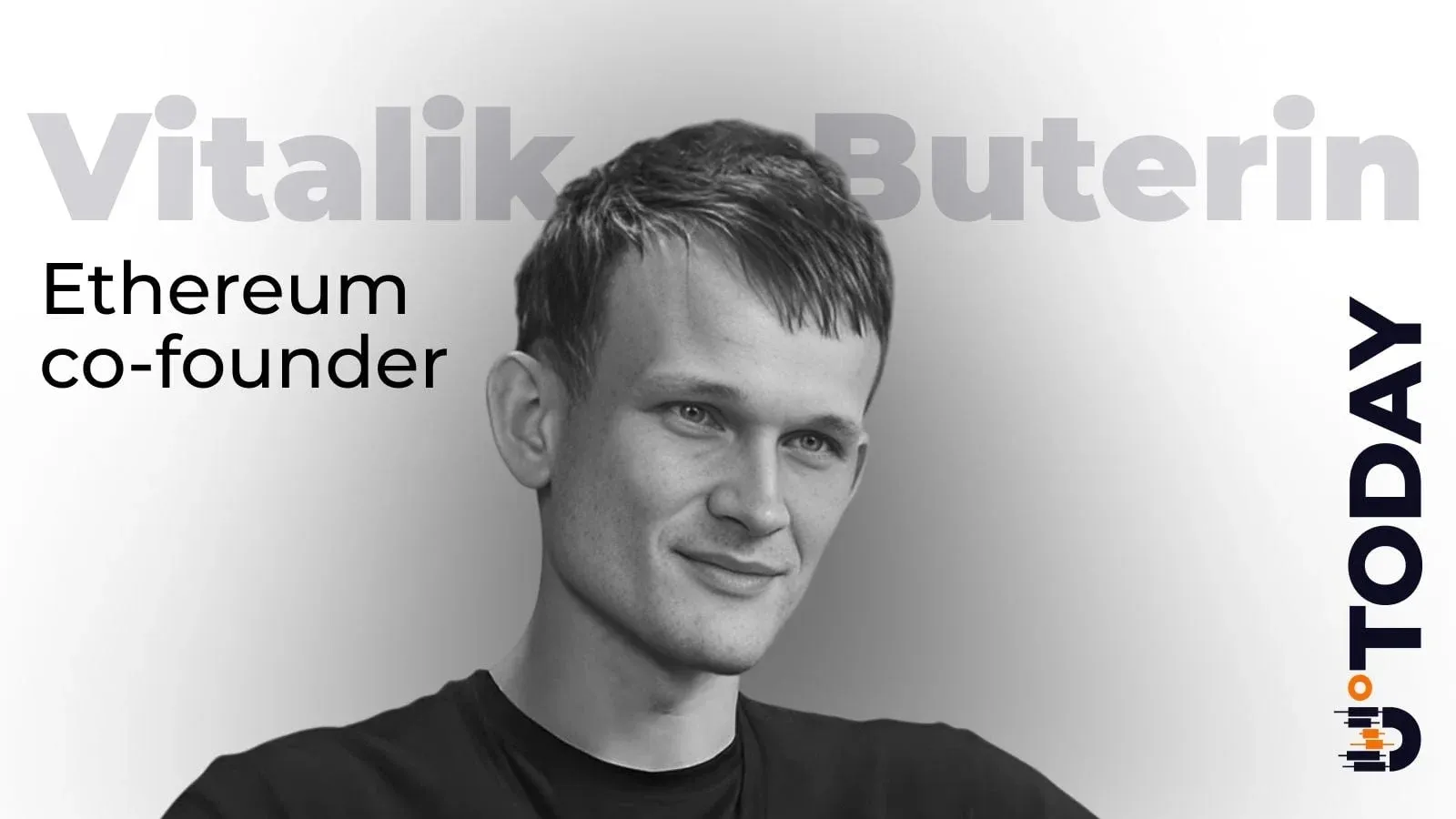
Ethereum co-founder Vitalik Buterin has once again ignited a debate across the crypto ecosystem after spotlighting a key difference between the cost structures of Bitcoin mining and AI inference earlier today.  In what he described as an interesting fact about the matter, Buterin briefly explained how both Bitcoin and AI rely on computing resources but in different ways.  Buterin discusses Bitcoin mining cost  While he pointed to the different roles computing hardware and electricity play in Bitcoin and the AI industry, he explained the cost structure for both.  According to Buterin, Bitcoin mining costs are split almost equally between computing hardware investments, known as capital expenditure (CapEx), and electricity consumption.  As such, miners ensure that they invest heavily in specialized equipment while also paying substantial energy bills to keep their operations running.  AI inference, on the other hand, which refers to the process of using trained AI models to generate responses or perform tasks, has a different cost structure.  Unlike Bitcoin, Buterin notes that AI inference costs are dominated almost entirely by computing hardware investments, as they do not rely on heavy electricity consumption.  Bitcoin and AI compared  Notably, the comparison made by Buterin clearly shows that Bitcoin miners need both powerful hardware and a steady supply of electricity

10-17Industry

Circles Allaire says stablecoin issuer looking to enter 40 developing markets: Report

Stablecoin issuer Circle is seeking to enter about 40 developing markets, according to the companys CEO and chairman, Jeremy Allaire.  “Were kind of going through an inflection point...a transition right now, ‌and that transition is essentially moving from the early adopter phase of blockchain technology into the mainstream scaling phase,” Allaire told Reuters, speaking Friday on the sidelines of the IMF and World Bank meetings in Bangkok.  Markets in Southeast Asia, Latin America, Africa and the Middle East are experiencing increasing demand for stablecoins as businesses and individuals seek to enter the internet-based economic system, Allaire reportedly said.  Cointelegraph reported on Aug. 24 that analysts at Bernstein were bullish on Circle, foreseeing a new growth cycle for its USDC stablecoin may provide a significant boost for the company over the next 12 months.  Bernstein said the next phase of stablecoin growth could be driven by several factors, including renewed momentum in crypto markets, greater US regulatory clarity, tokenized capital markets and growing adoption of stablecoins for payments. The analysts also pointed to early signs of stablecoin use in payments made by AI agents.  Although USDC remains the second-largest dollar-backed stablecoin by market capitalization, well behind Tether‘s USDt (USDT), it has gained significant ground in transaction

10-17Industry

Bitcoin price steadies around $82K after Feds Warsh avoids rate-hike hints

Bitcoin (BTC) traded near $82,000 around Fridays Wall Street open as crypto markets stabilized alongside a rebound in South Korean stocks.  Key points:Bitcoin price volatility eased as South Korean stocks rebounded 2% on Friday, offering relief after a steep sell-off.Federal Reserve Chair Kevin Warsh gave no indication of further interest-rate hikes during a public discussion, as traders lowered the odds of a 25-basis-point increase in October to 15%.Analysts warned of difficult choices for Washington as the 10-year US Treasury yield climbed back to 5.13% and US stocks traded in a narrow range.  Traders see dovish edge to Warsh comments  Data from TradingView showed BTC/USD holding most of its reclaimed ground after bouncing at $80,000 on Thursday.  BTC/USD four-hour chart. Source: Cointelegraph/TradingView  The earlier decline followed a weeklong sell-off in South Korean tech stocks, although Fridays Asian trading session brought some relief. The KOSPI Composite Index closed at 5,668, up 2% on the day but still down 8.3% for the week.  KOSPI Composite Index one-day chart. Source: Cointelegraph/TradingView  US stocks largely avoided the sell-off in Asian markets but were mixed on Friday, with the tech-heavy Nasdaq Composite Index down 0.5% and the S&P 500 up 0.5%.  Meanwhile, Federal Reserve Chair Kevin Warsh offered investors some relief by avoiding any

10-17Industry

Bitcoin Bull Signals are Flashing Everywhere, Analysts Claim

Bitcoin momentum turned positive on two widely watched indicators this week, ending a bearish stretch of roughly 10 months. PlanB, creator of the stock-to-flow model, shared the flip and questioned whether reading it could be that simple.  His doubt has a basis. BTC trades near $81,679, down 1.7% over 24 hours and below the $83,094 level shown on his chart.  Sponsored  Sponsored  Do Bitcoin Bull Signals Mark a New Cycle?  PlanB shared a chart from analytics platform Block Horizon tracking momentum in Bitcoins Market Value to Realized Value (MVRV) ratio. MVRV compares market capitalization with the aggregate cost basis of all coins.  Historically, green readings have lined up with bull markets and red readings with bear phases. The oscillator turned green on October 13 at +0.07, after a red run that began in late 2025.  Notably, the 2026 bear phase bottomed near -0.4. That is shallower than the roughly -0.55 troughs of 2018 and 2022.  Bitcoin bull signals on the MVRV Momentum Oscillator. Source: X  Sponsored  Sponsored  Why a Positive Flip May Not Confirm the Bottom  Analyst Quinten Francois replied with a second gauge. Bitcoins weekly moving average convergence divergence (MACD) rose above zero after 44 consecutive negative weeks.  The same flip appeared in 2019 and 2023, with very different outcomes. In 2023,

10-17Industry
1
...
115117
...
1000