Over 113 Bots Have Generated Profits Exceeding $2 Million on friend.tech

On August 24th, according to analysis by 21.co analyst Tom Wan, more than 113 bot contracts have garnered over 20,000 keys and generated profits exceeding $2 million on friend.tech. The method of identifying these bots is whether traders can purchase them in blocks with the same theme as the key.  The highest-earning bot among them is 0xcc218bbd21e14944fcc121d161c9b9ae71b9cc85, with earnings reaching $569,000.  On August 22nd, the official account of friend.tech posted on social media, stating that “Shares” have been renamed as “Keys.” Originally, “Shares” was merely a placeholder during the development process. friend.tech believes that the term “Keys” better describes its purpose in unlocking in-app features like friend chats.  

2023-08-24Deep Dive
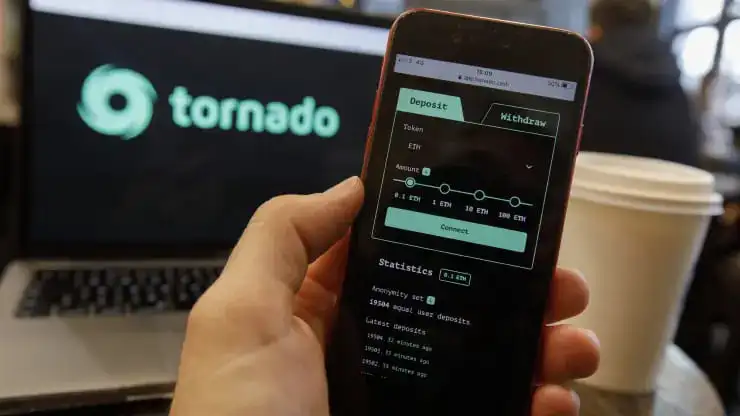
Tornado Cash Co-Founder Roman Semenov Added to OFAC Sanctions List

Tornado Cash Co-Founder Roman Semenov Added to US Treasury Departments Office of Foreign Assets Control (OFAC) Sanctions List on Wednesday.  OFAC has included Roman Semenovs email address and eight Ethereum wallet addresses in the list of Specially Designated Nationals and Blocked Persons (SDN).  In a prior development, the US Department of Justice charged Tornado Cash co-founders Roman Storm and Roman Semenov with violations of money laundering and sanctions regulations, as well as conspiring to operate an unlicensed money transmitting business. The indictment stated that the Tornado Cash operation facilitated over $1 billion in money laundering transactions and laundered hundreds of millions of dollars for the sanctioned North Korean cybercrime group, Lazarus Group.  Roman Storm has been arrested in the state of Washington and is scheduled to appear for trial in the US District Court for the Western District of Washington on August 23rd. Roman Semenov remains at large.  

2023-08-24Deep Dive

USDC to Launch on Six Chains Including Polygon PoS, Base, and Optimism

Insiders have revealed that USDC is set to launch on six new blockchains through the Noble network, including Polygon PoS, Base, Polkadot, NEAR, Optimism, and Cosmos. Currently, USDC has been introduced on Ethereum, Avalanche, Arbitrum, Stellar, Algorand, Tron, Flow, Solana, and Hedera chains.  In a preceding development, Coinbase secured a minority stake in Circle, which also entitles it to a share of USDCs interest income in the future. However, the exact proportion of shares Coinbase acquired from Circle remains undisclosed in the blog post issued jointly by Coinbase and Circle. According to a source familiar with the matter, Coinbase did not provide cash to Circle in exchange for these shares.  Both companies are in the process of dissolving their collaborative ties with Center Consortium, the entity responsible for USDC issuance. As part of this transition, Circle will assume complete control over the issuance and governance of USDC.  Furthermore, Circle will deploy native USDC across these six blockchains, expanding the supported total to 15 blockchains. While Coinbase and Circle havent disclosed the specific names of these six blockchains, Circle had previously indicated plans to expand to Polkadot, NEAR, Optimism, and Cosmos by 2023 as early as September.  

2023-08-24Deep Dive

Curve Founder: CRV Buyers Violating Cooperation Agreement Won't Face Negative Consequences, but Trus

According to a report by Blockworks, Michael Egorov, the founder of Curve Finance, engaged in a series of over-the-counter (OTC) transactions with more than a dozen counterparties to salvage his loans and potentially prevent a cascade of liquidations in the entire DeFi sector. In these transactions, he sold a significant amount of CRV tokens in exchange for stablecoins to repay his debts. While the exact terms of the transactions were not formally disclosed, several individuals who claim to have interacted with Egorov publicly stated that the tokens were sold at a price of $0.40 per CRV (far below the prevailing market price) with a lockup period of 6 months. However, the lockup appears to not be enforced through legal or smart contract mechanisms. Egorov confirmed in a statement that buyers violating the cooperation agreement would not face negative consequences, but he “believes they will” honor the commitment regarding the 6-month lockup.  Observers noted that some participants have moved their tokens to centralized exchanges, often signaling an intention to sell. Additionally, some project communities have indirectly committed to the 6-month lockup through voting. Earlier news revealed that DWF Lab purchased 12.5 million CRV from Egorov for 5 million USDT on August 1st,

2023-08-23Deep Dive

BlockFi Seeks Court to Prevent FTX and Three Arrows Capital from Recovering Billions of Dollars in L

According to Bloombergs report, bankrupt cryptocurrency lending firm BlockFi Inc. is seeking to prevent FTX and Three Arrows Capital from attempting to reclaim billions of dollars in transactions between the companies before their respective collapses last year. In court filings on Monday, BlockFi stated that it is a victim of the FTX platform and thus FTX has no right to claim over $5 billion in recovery. Similarly, BlockFi alleges that the defunct Three Arrows Capital borrowed money from the lender through fraudulent means and is not entitled to repayment.  The filed documents on Monday further fuel an ongoing legal battle that could impact how much creditors of BlockFi, FTX, and Three Arrows Capital receive in their respective bankruptcy proceedings. BlockFi asserts that litigation with FTX, Three Arrows Capital, and several other cryptocurrency companies could affect the $1 billion amount its customers are owed. Previously, BlockFis creditors had accused management of disregarding warning signs before extending loans to FTX, but a settlement was reached with the company last month, advancing a debt repayment plan.  

2023-08-23Deep Dive

AltLayer Launches Rollup API and SDK, Enabling Programmatic Access to Customized Rollup Solutions

Rollup-as-a-Service protocol AltLayer has released an API and SDK suite for programmatically accessing customized Rollup solutions. This suite enables developers to dynamically create, monitor, and terminate Rollups based on application requirements using a range of endpoints. During the Rollup creation process, critical parameters can be specified, including the number of sequencers, Gas settings, virtual machine runtime, custom genesis state, and more. AltLayer also indicates that users can utilize the API to initiate a re-collateralization layer through the Ethereum re-collateralization protocol EigenLayer.  In July of last year, AltLayer completed a $7.2 million seed funding round through SAFT sales, with Polychain Capital, Jump Crypto, and Breyer Capital leading the investment. Other investors included Ethereum co-founder and Polkadot founder Gavin Wood, co-founder of Circle Sean Neville, among others. In August of this year, AltLayer secured an investment from Binance Labs as one of the top-performing projects in the 6th season of the BNB Chain MVB program.  

2023-08-23Deep Dive

Binance Token - BNB Hits Year-Low Amid Escalating Regulatory Heat

Key Points:  BNB faces a dip, nearing a year-low at $203.59. Despite Bitcoin‘s rise, BNB’s 15% YTD loss raises eyebrows.  Binance under fire as SEC sues and CFTC charges; DOJ investigation looms.  As assets drop by $310 million in 24hrs, total falls to $57.57 billion, DeFi Llama reports. BNB‘s trajectory hinges on Binance’s regulatory dance.  Binance token (BNB) is inching closer to its lowest price point in over a year.  The token faced a dip of up to 3.6%, settling at $210.2 on Tuesday. This latest setback contributes to a 15% loss for the year, despite Bitcoins noteworthy 50% surge since December.  With a market capitalization of roughly $32 billion, BNB holds the position of the fourth-largest cryptocurrency. A significant factor in BNBs value proposition lies in the trading-fee discounts it offers to BNB users. Furthermore, it plays a pivotal role in settling fees on the BNB Smart Chain, which finds favor among applications like gaming platforms and exchanges.  However, the cloud of legal challenges has been casting a shadow over Binance and, consequently, BNB. In June, the US Securities and Exchange Commission (SEC) launched a lawsuit against BNB and its American affiliate, Binance.US, citing potential securities law violations. Although BNBs founder Changpeng Zhao and the platforms

2023-08-23Deep Dive

Former OpenSea Product Leader Sentenced To 3 Months In Prison For Insider Trading

Key Points:  Nate Chastain, a former OpenSea executive, gets three months in jail for insider trading, wire fraud, and money laundering.  Chastains case marks the first instance of digital asset-related insider trading charges.  His scheme involved pre-buying NFTs, featuring them on OpenSea, and using anonymous accounts to conceal his gains.  According to Inner City Press, Nate Chastain, the ex-product leader of OpenSea, has been handed a three-month prison sentence for his involvement in insider trading.  After being found guilty of wire fraud and money laundering in a New York federal court back in May, Chastains sentence was delivered by a U.S. judge.  The case revolved around Chastains utilization of internal information to purchase approximately 45 NFTs in advance, later selling them at significantly inflated prices, resulting in profits exceeding $50,000.  This was achieved by concealing transactions across various anonymous wallets and OpenSea accounts.  This landmark case marks the first instance of insider trading charges being applied to the digital asset realm.  The FBI and the U.S. Department of Justice (DOJ) contended that Chastain violated securities trading laws by capitalizing on nonpublic information, thereby prioritizing personal gains over professional and public responsibilities. The illicit gains must now be returned.  Chastain‘s strategies involved acquiring NFTs set to be featured on OpenSea’s homepage,

2023-08-23Deep Dive

Binance Under Investigation For Sanctions Violation, Helping Russian To Exchange Money

Key Points:  The U.S. Justice Department is investigating whether Binance violated Russian sanctions by involving blacklisted banks.  Binance faces SEC and CFTC inquiries over compliance and anti-money laundering, adding to its challenges.  The exchange quietly lifts curbs on Russian users, permitting broader currency deposits and higher balances.  The U.S. Department of Justice (DOJ) is reportedly investigating cryptocurrency giant Binance for potential violations of U.S. sanctions against Russia, the WSJ reported.  According to sources, Binance has been enabling Russian customers to conduct transactions involving at least five sanctioned Russian banks, potentially breaching global sanctions regulations.  Although the exchange initially scaled back its operations in Russia following the countrys incursion into Ukraine, it appears that the exchange continued to facilitate substantial ruble trading volumes.  Reports suggest that clients have been able to convert funds from sanctioned banks into Binance balances through intermediaries. Moreover, its platform has been utilized for peer-to-peer trades involving blacklisted banks, as evidenced by various sources, including user screenshots and official chat groups.  The investigation by the DOJ is only one of the legal challenges facing the exchange. It has been previously scrutinized for anti-money laundering concerns and compliance failures by both the Commodity Futures Trading Commission (CFTC) and the Securities and Exchange Commission (SEC).  Binance maintains that

2023-08-23Deep Dive

Coinbase Announces Equity Stake in Circle, Plans to Deploy USDC on 6 New Blockchains

On August 22nd, according to official sources, Coinbase officially announced on social media that it has taken an equity stake in Circle. This move is intended to continue its long-standing commitment and investment in stablecoins, particularly USDC. The specific details of the equity acquisition have not been disclosed at this time.  Coinbase further elaborated that it has streamlined the operations and governance of Circle. As the issuer of USDC, Circle will assume full responsibility and obligations. For Coinbase customers, there will be no changes to the USDC on Coinbase. Coinbase will continue to support USDC across all its platforms. Both Coinbase and Circle will continue to earn revenue from interest on USDC reserves, and USDC is also planning to launch on 6 new blockchains.  

2023-08-22Deep Dive
1
...
8789
...
742