When Will Institutional Selling Pressure on Bitcoin End? What Does On-Chain Data ‘Coinbase Premium’ Show?

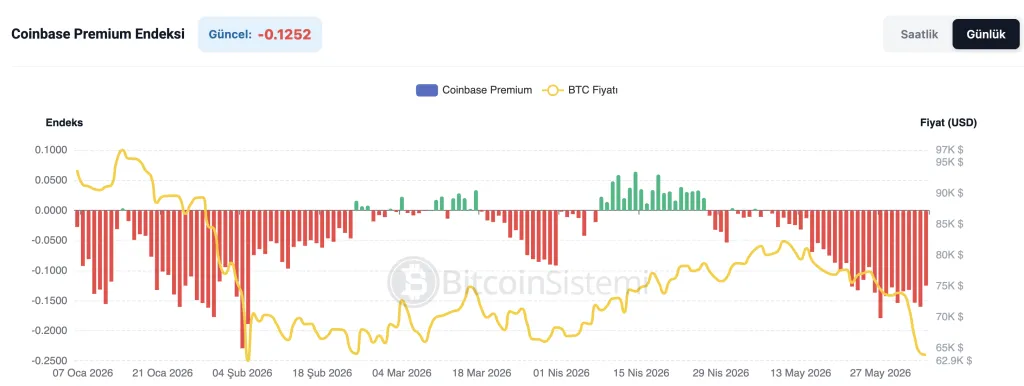
In the cryptocurrency markets, attention has long been focused on the main reason for the price pressure. While general market analysts talk about short-term corrections, on-chain data points to a much deeper structural change: the Coinbase Premium Index has remained in negative territory uninterrupted since April 27th.  This situation clearly reveals that US institutional investors and the spot ETF side have been in a selling and withdrawal trend that has dominated the market for more than a month. So, what does April 27th mean for the market?  The April 27 Breakdown: What Changed in the US?  The market, which remained vibrant until the last week of April with spot Bitcoin ETF inflows and aggressive buying from the US, reversed direction as of April 27th. The fact that the Coinbase Premium Index has been negative (ranging from -0.15% to -0.19%) since that date indicates that US whales are much less enthusiastic than global retail investors and are moving out of the market to cash.  Three key macroeconomic factors stand out as being behind this situation:Geopolitical Risks and Risk-Off Mode: Tensions centered in the Middle East and uncertainties in global markets have pushed US fund managers towards a more protective (risk-off) position.Halt in ETF Inflows and
06-05

Bitcoin and Altcoins Continue to Fall: Heres the Latest Data

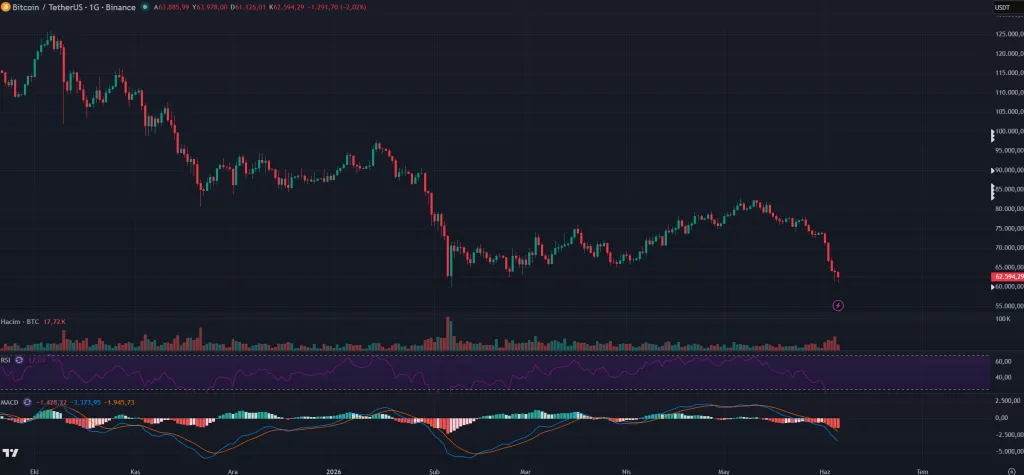
The cryptocurrency market started the last trading day of the week with a sell-off. The sharp pullback in Bitcoin negatively impacted Ethereum and the altcoin market in general.  The Bitcoin price fell to levels as low as $61,000 during the week, testing its weakest levels in recent months. Outflows from US spot Bitcoin ETFs, liquidations in leveraged trading, and a general flight from risky assets are cited as the main reasons for the selling pressure in the market.  The volatility in the derivatives market, in particular, attracted attention. According to Bitcoin System Liquidation data, a large number of leveraged positions were liquidated during the recent decline, with the closure of mostly long positions causing the drop to be felt more severely. This picture shows that the market pullback was fueled not only by spot sales but also by forced closures in leveraged transactions.  On the on-chain side, the Coinbase Premium Index continues its weak performance. The fact that this indicator remains in negative territory suggests that US-based investors and institutional demand are not showing strong buying appetite in the short term. Especially when considered alongside spot ETF outflows, the weakness on the Coinbase side stands out as one of the key indicators explaining

06-05

Hyperliquid whales buy $54mln HYPE dip – Can bulls defend $68?

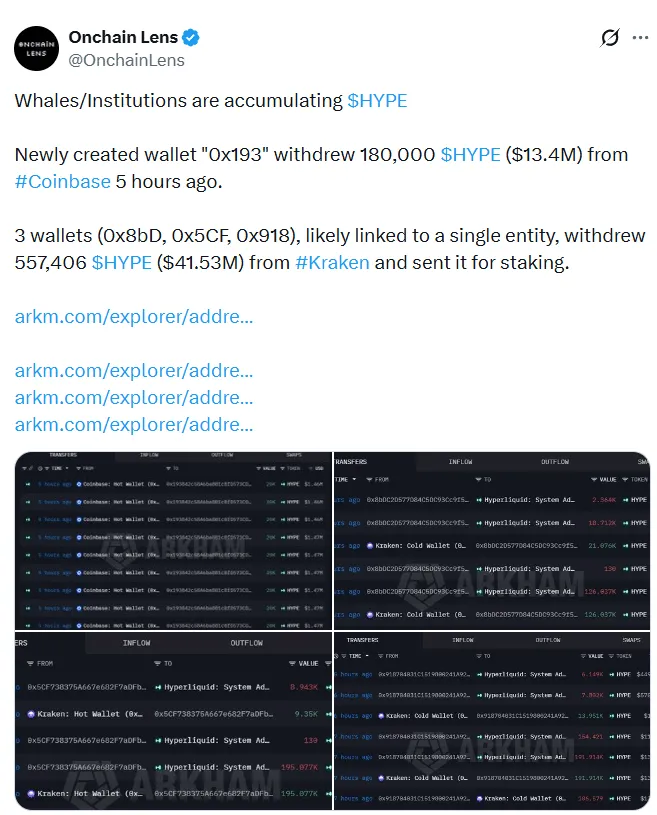
Hyperliquid [$HYPE] has remained one of the markets strongest performers this year. Despite broader weakness, the token continued attracting fresh capital.  On the 4th of June, the crypto market fell 3.85%, while $HYPE slipped 2.90%. Even so, whales appeared to use the dip to accumulate millions of dollars worth of tokens.  Why are $HYPE whales buying the dip?  Data from Onchain Lens showed that a newly created wallet, 0x193, withdrew 180,000 $HYPE worth $13.40 million from Coinbase.  Source: X  At the same time, three additional wallets, potentially linked to one entity, withdrew 557,406 $HYPE worth $41.53 million from Kraken and moved the tokens into staking.  These transactions suggested that large holders continued accumulating $HYPE despite weaker market conditions.  The trend extended beyond new wallets. According to Nansen, the top 100 $HYPE addresses increased their holdings by 1.36% over the past 24 hours. Smart Money holdings also rose by 12.07% during the same period.  Source: Nansen  That accumulation trend may help explain why $HYPE has maintained its broader uptrend while several major cryptocurrencies struggled to recover.  At press time, $HYPE traded at $69.30 after falling 2.90% over the previous 24 hours. Trading Volume declined 14% to $1.44 billion, pointing to slower activity despite continued accumulation.  Can $HYPE avoid a deeper pullback?  According to

06-05

Whales Rush to Accumulate HYPE During Market Pullback

A new wallet withdrew 180,000 $HYPE valued at $13.40 millionfrom the Coinbase platform.Three linked wallets combined for a withdrawal of 557,406 $HYPE equivalent to $41.53 millionfrom Kraken for subsequent staking.The trading volume of this asset recorded a 14% decrease in the last 24 hours, standing at $1.44 billion.  On Thursday, June 4, the crypto market recorded a general contraction of 3.85%, a pullback that dragged several assets into red territory. In the midst of this scenario, the $HYPE token dropped 2.90%, trading near $64.00 at the time of writing. The price drop coincided with significant accumulation movements by whales on the blockchain.  Data analysis platforms identified large institutional transactionsexecuted directly from major cryptocurrency exchanges. Reports from Onchain Lens revealed that a newly created wallet, identified as 0x193, extracted a multi-million dollar batch from the Coinbaseplatform. The report details that the movement amounted to a total of $13.40 million dollars in tokens.  Whales/Institutions are accumulating $HYPE  Newly created wallet “0x193” withdrew 180,000 $HYPE ($13.4M) from #Coinbase 5 hours ago.  Likewise, the firm identified that three other digital addresses made simultaneous withdrawals from the Kraken exchange. Onchain Lens technical analysis suggests that these wallets operate under the control of a single commercial entity, which allocated the funds

06-05

‘Time to take profit’ – Arthur Hayes dumps HYPE, NEAR before SpaceX IPO

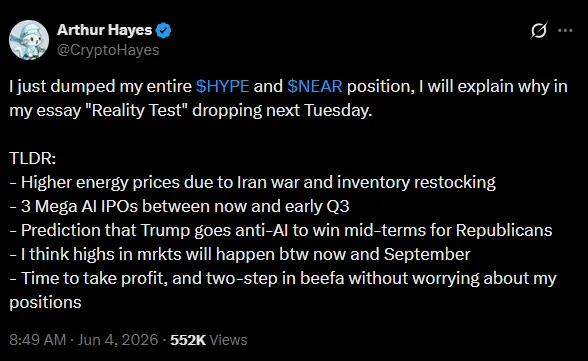
Arthur Hayes, co-founder of BitMEX exchange and crypto-focused Maelstrom Fund, has joined the list of analysts viewing the upcoming SpaceX IPO as a bearish catalyst for the crypto market.  According to him, the upcoming IPOs (SpaceX, Athropic, and OpenAI) have forced him to rebalance his altcoin portfolio. He dumped his entire Hyperliquid [$HYPE] and Near protocol [$NEAR], noting that it was “time to take profit.”  Source: X  However, for the SpaceX IPO scheduled for next week, Hayes billed it as positive to Worldcoin [$WLD].  The SpaceX IPO is going to melt peoples faces off. Holding the $WLD through the listing next week.  Perhaps, he was bullish on Worldcoin because of the protocols focus on human identification in the era of AI and AI agents. The altcoin surged 12% in the past 24 hours.  But it is worth pointing out that Hayes comments are sometimes cues to take a contrarian trade. Some of his bullish posts in the past were immediately followed by a massive sell-off by his fund.  For example, he made a bullish ‘$HYPE to $100’ call earlier in the week, only to report that he exited his entire holdings three days later.  In fact, thats why most watchers sometimes view his bullish posts as a way

06-05

Comptroller says only Democrats pressuring over crypto trust charter

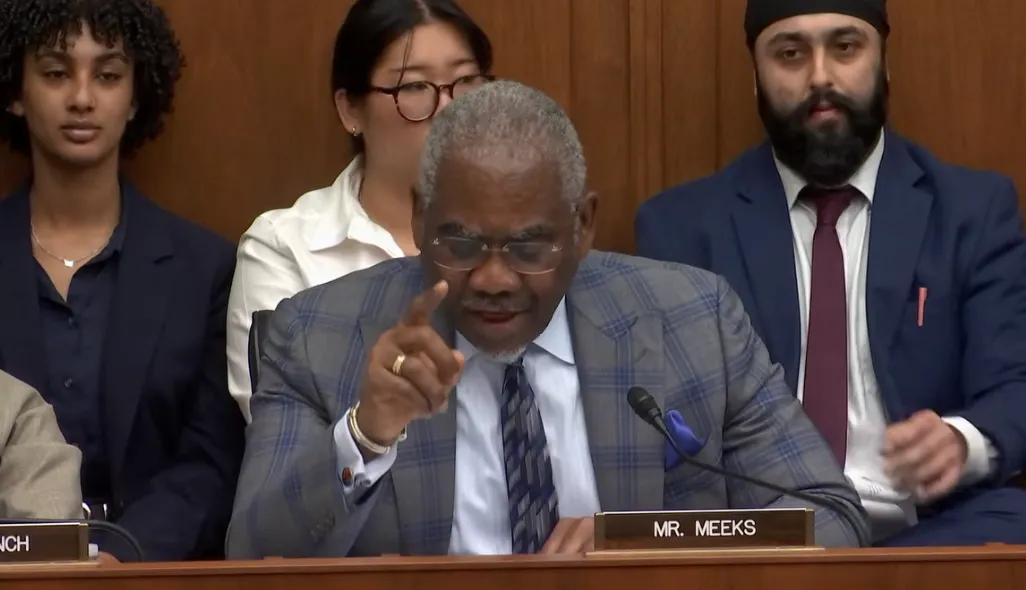
Jonathan Gould, the Comptroller of the Currency (OCC) nominated by Donald Trump, implied that the US president had not ordered him to approve or give special consideration to a national trust charter application tied to his familys financial interests.  In a Thursday hearing of the House Financial Service Committee on “oversight of prudential regulators,” New York Representative Gregory Meeks questioned Gould on the Trump family crypto company World Liberty Financials connections to foreign governments and the Binance exchange. The company, whose co-founders include Trump and his sons, applied for an OCC charter in January, prompting backlash from many Democratic lawmakers alleging conflicts of interest.  Representative Gregory Meeks at a Thursday hearing.  Source: House Financial Services Committee  Meeks said that the company “actively lines the pockets of the president‘s family,” pressing the comptroller to hold World Liberty to the same standards as other companies in consideration of its application for a national bank trust charter, “to prove if [he’s] still working on behalf of the American people, or [ceded his role] to serve as a fixer for the Trump family.”  Meeks and Gould talked over each other at the hearing, with the New York lawmaker accusing the OCC head of being “Trump‘s fixer,” signaling his belief

06-05

Tom Lee‘s $250,000 ether target: Here’s what math says about this crazy prediction

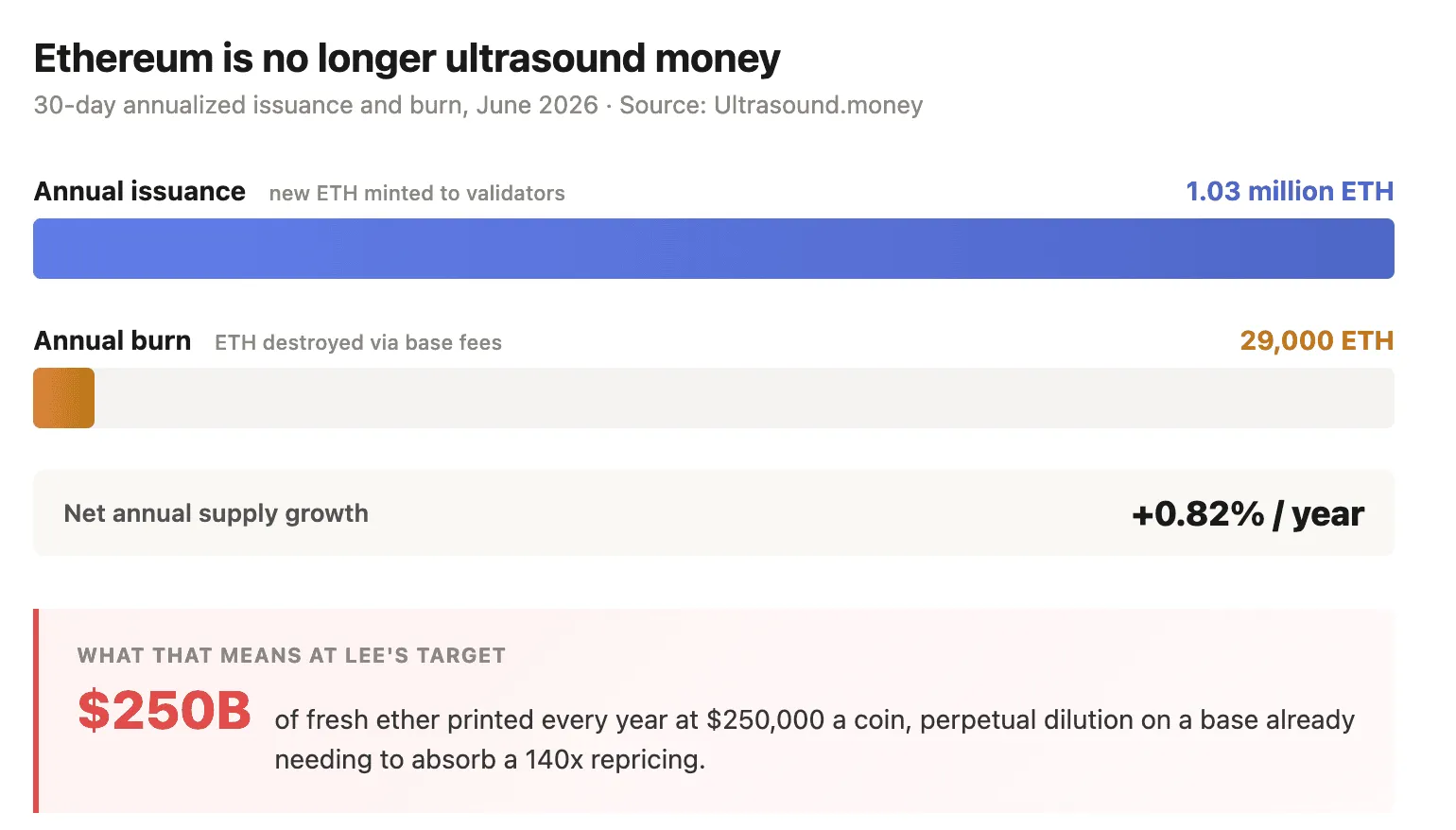
Ether at $250,000 would make Ethereum a $30 trillion network, larger than the U.S. Treasury market and comparable to all the gold ever mined.  But thats the target Bitmine chairman Tom Lee laid out at Proof of Talk in Paris this week, with the move pitched as a 50x from current levels on the back of AI-driven payments and a corporate validator takeover of the network.  Lets dive into the math of how that target may be reached, starting with supply. Ethereums circulating supply sits at 121.75 million $ETH and is growing at 0.82% a year, because since the Dencun upgrade pushed most fee activity to cheaper layer-2 chains in 2024, the burn mechanism has collapsed to roughly 29,000 $ETH a year against issuance of 1.03 million $ETH.  At $250,000 a coin, that 0.82% drift turns into $250 billion of fresh ether issued every year.  The supply growth is not huge by itself. Gold supply expands at a similar pace, and the U.S. Treasury market grows much faster. Big assets can absorb new issuance if demand is strong enough.  However it puts to rest the old “ultrasound money” trade that was built on the idea that Ethereum could become a shrinking monetary asset while usage

06-04

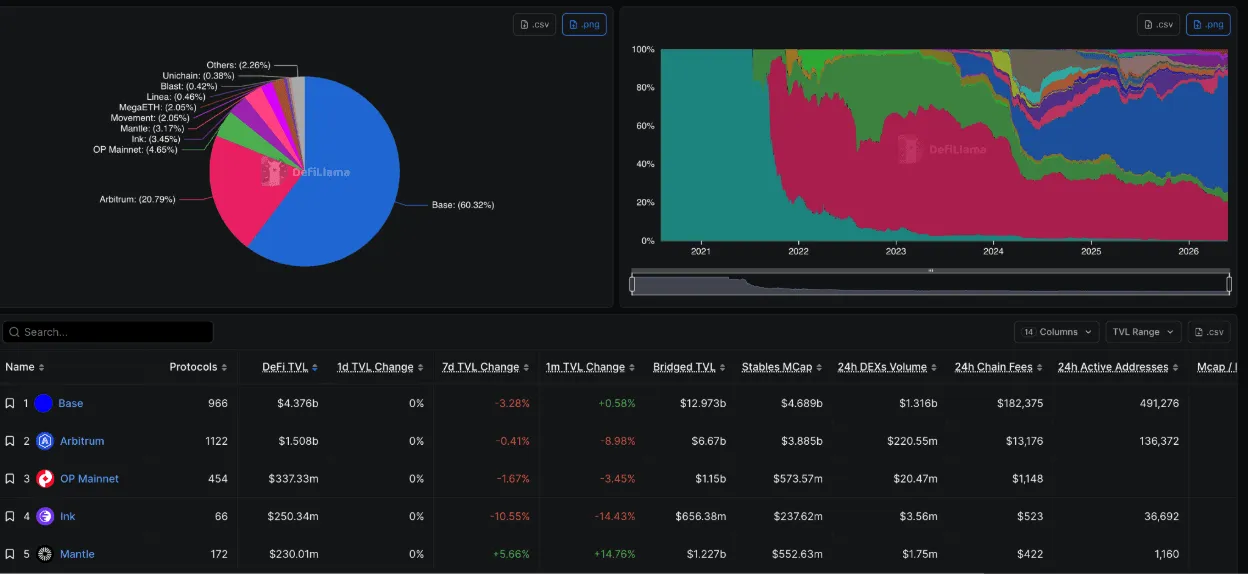
Not all Ethereum layer 2s are dying, but many general-purpose chains no longer have a reason to exist

When Zero Network announced it was shutting down last month, the reaction across crypto was weary: Another Ethereum layer-2 just bit the dust.  The closure joined a growing list of struggling rollups and came amid renewed debate about whether Ethereums sprawling layer-2 ecosystem has become too crowded. At the same time, Ethereum creator Vitalik Buterin has urged developers to rethink the networks long-term scaling roadmap, while several major projects have shifted away from marketing themselves as general-purpose blockchains and toward more focused applications in payments, stablecoins and tokenized assets.  To many observers, the developments have revived a familiar question: Has Ethereums sprawling layer-2 ecosystem become too crowded?  Industry participants, however, argue the opposite.  “The thing to recognize is that anywhere where somebody would be running a smart contract on an existing blockchain, someone could equally run a layer two,” said Ben Fisch, co-founder and CEO of Espresso Systems. “Were in a consolidation phase for general-purpose layer twos, not layer twos broadly.”  Ethereum layer-2s exploded over the past several years as improvements in rollup technology dramatically reduced the cost and complexity of launching new chains. Rollups work by processing transactions off Ethereums main blockchain, bundling hundreds of them together, and then periodically posting compressed transaction data

06-04

Coinbase freezes $3M tied to Southeast Asia crypto fraud networks

Crypto exchange Coinbase said it froze more than $3 million in cryptocurrency tied to a global operation targeting cyber-enabled crypto scam networks in Southeast Asia.  The operation was part of Disruption Week led by the US Department of Justices Scam Center Strike Force, which brought together government entities and private industries to tackle crypto fraud targeting Americans.  “This operation is proof that scammers cant be stopped by any single company or agency acting alone,” said Coinbase.  “It took social platforms, financial institutions, connectivity providers, and law enforcement working in lockstep to hit these networks at nearly every point in the fraud chain, online accounts, financial flows, and physical infrastructure all at once.”  The operation also involved Meta, Microsoft and Starlink, which worked together to take down servers and other hosting infrastructure linked to scam networks and disrupt criminal activity across more than 1.4 million social media and email accounts, leading to several arrests by the Royal Thai Police Anti-Cyber Scam Center.  Investment fraud and pig butchering are among the fastest-growing and most financially devastating forms of fraud targeting Americans, the DOJ said. The FBI reported earlier this month that Americans losses from crypto- and AI-related scams in 2025 exceeded $11 billion, with investment scams the

06-04

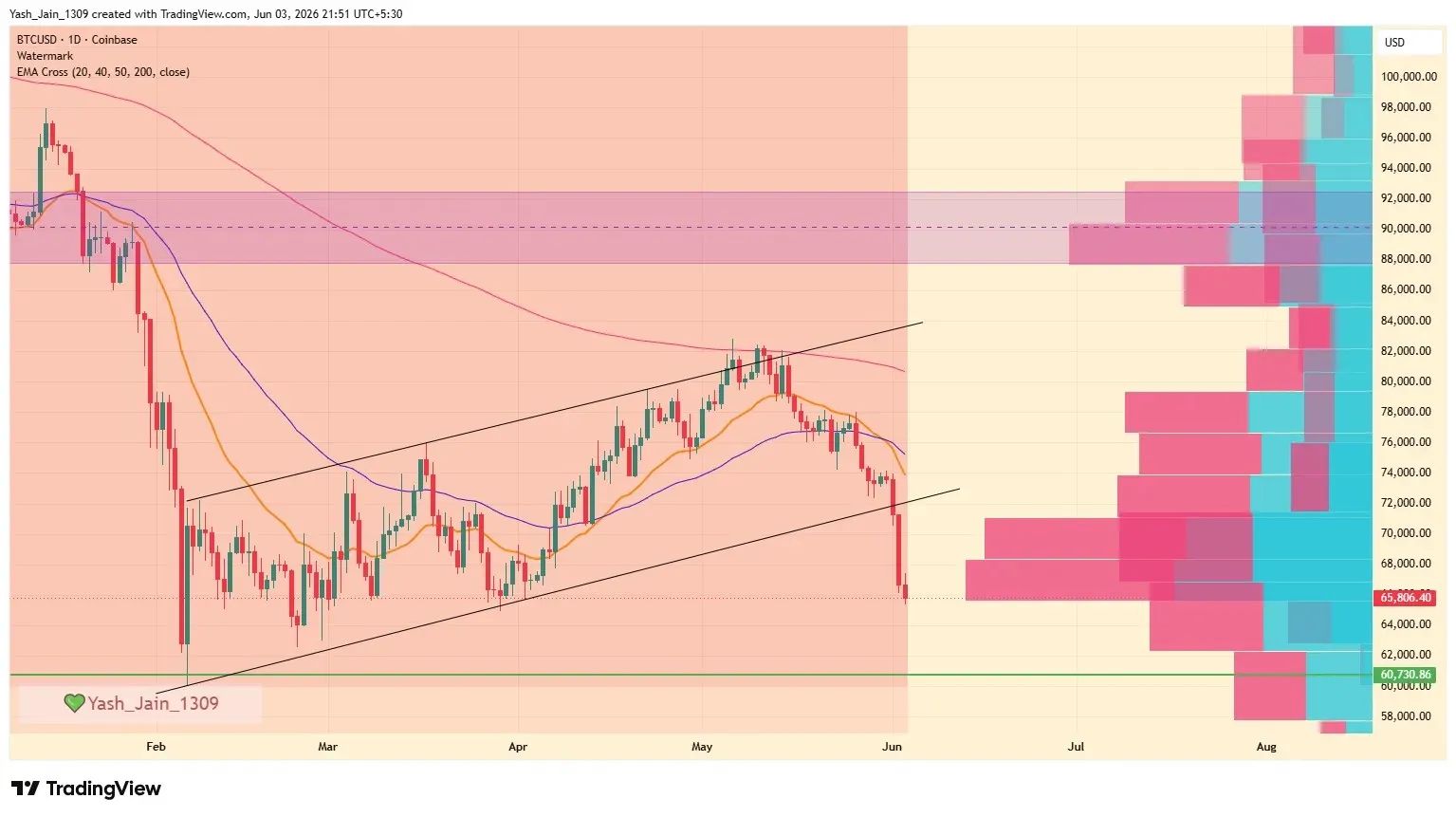
Bitcoin Price Faces Fresh Pressure as BlackRock and Winklevoss Wallet Moves Spark Speculation

Bitcoin price traders got another reason to stare nervously at on-chain dashboards on June 2 after more than 7,000 $BTC moved into exchange-linked wallets within a matter of hours.  The transfers involved two of the markets most closely watched holders. Blockchain analytics platform Arkham flagged the activity as BlackRock and the Winklevoss twins shifted substantial amounts of $BTC while the broader market was already dealing with ETF outflows and a weakening price trend.  Massive Transfers Grab Market Attention Fast  BlackRock transferred 6,005 $BTC, valued at roughly $403 million, to Coinbase Prime. The transactions originated from wallets associated with the firms IBIT fund.  Before traders rush to conclusions, theres an important catch. Coinbase serves as the official custodian for IBIT, meaning such transfers can be related to fund creation and redemption processes rather than outright market sales.  Still, timing matters. The movement arrived after spot Bitcoin ETFs recorded more than $2 billion in outflows since mid-May.  Exchange Wallet Activity Raises Questions  Meanwhile, the Winklevoss twins transferred 1,000 $BTC, worth approximately $67.5 million, from Gemini custody into a Gemini hot wallet.  Moves into hot wallets don‘t automatically signal selling activity. However, they often attract attention because exchange-accessible wallets can precede future transactions. That’s exactly why the market reacted.  Bitcoin Price Battles

06-04
1
...
581583
...
1000