






President Donald Trump said the US could strike Iran as soon as Sunday, or reach a deal instead. This comes as Bitcoin (BTC) trades at $80,546 after briefly dipping below $80,000 on Saturday.
So what happens to Bitcoin if a strike does come, or if a deal lands instead? Past instances may offer a clue.
What Past Iran Headlines Show
On October 8, Trump pledged to hold off on strikes until the November 3 midterms. Bitcoin dipped to $80,393 that day but closed at $81,754, according to TradingView data for Binance.
On October 22, a report on post-midterm US and Israeli strike plans emerged. Bitcoin fell from an October 21 high of $84,898 to $80,939, closing the day at $81,416.
US spot Bitcoin exchange-traded funds (ETFs) lost $635.49 million that day, a day after drawing $528.40 million.
As talk of a weekend strike built, Bitcoin fell to $79,220 on Saturday. It recovered to close the day at $80,888. Escalation headlines cut Bitcoin by 2% to 5% intraday, while the pledge brought no lasting rally.
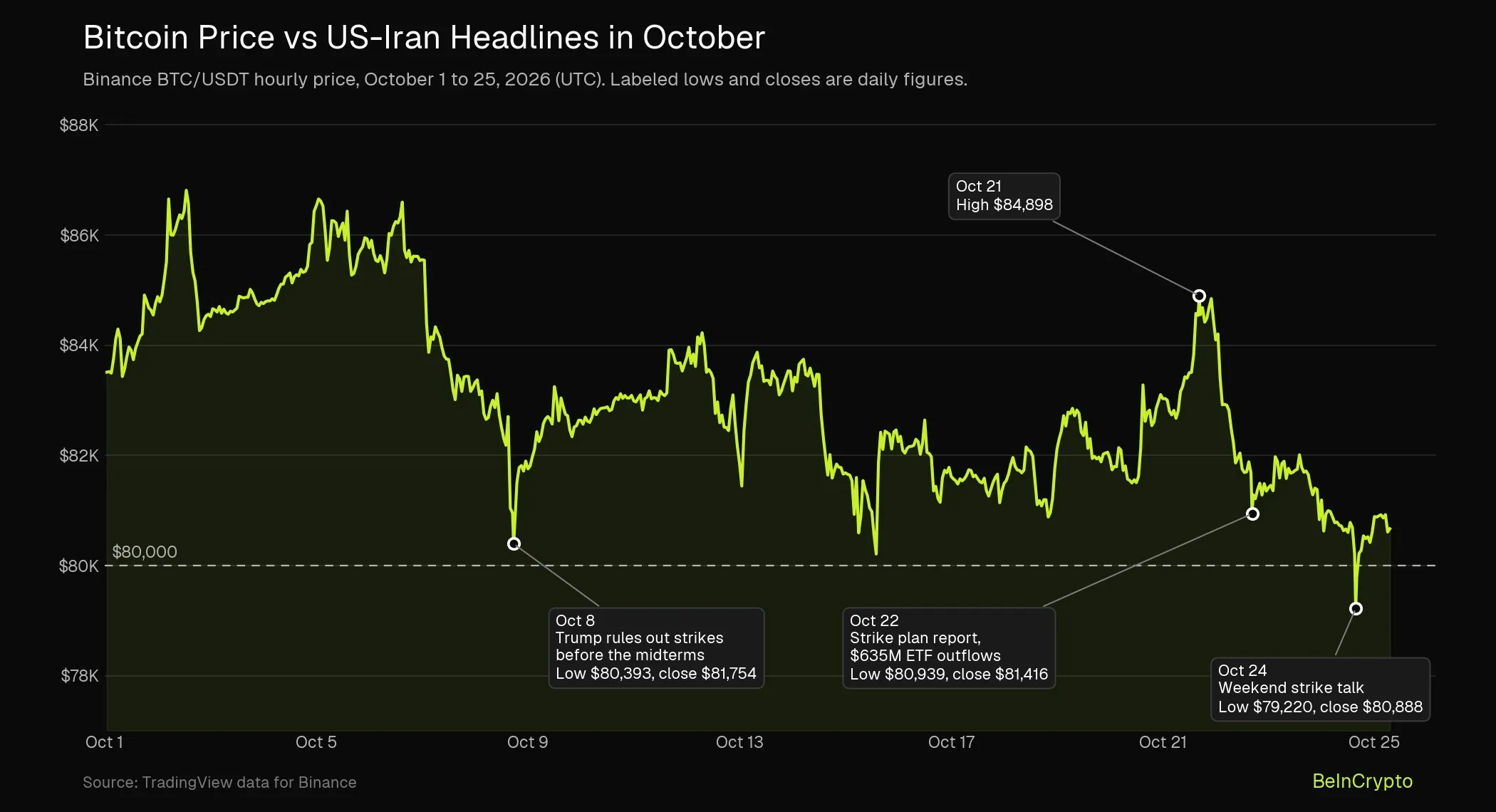
Bitcoin price chart marking October 2026 US-Iran headlines and the $80,000 level. Source: BeInCrypto
Leveraged Longs Took the Hit Near $80,000
CoinGlass data shows $543.68 million in liquidations over 24 hours, with long positions accounting for $461.19 million.
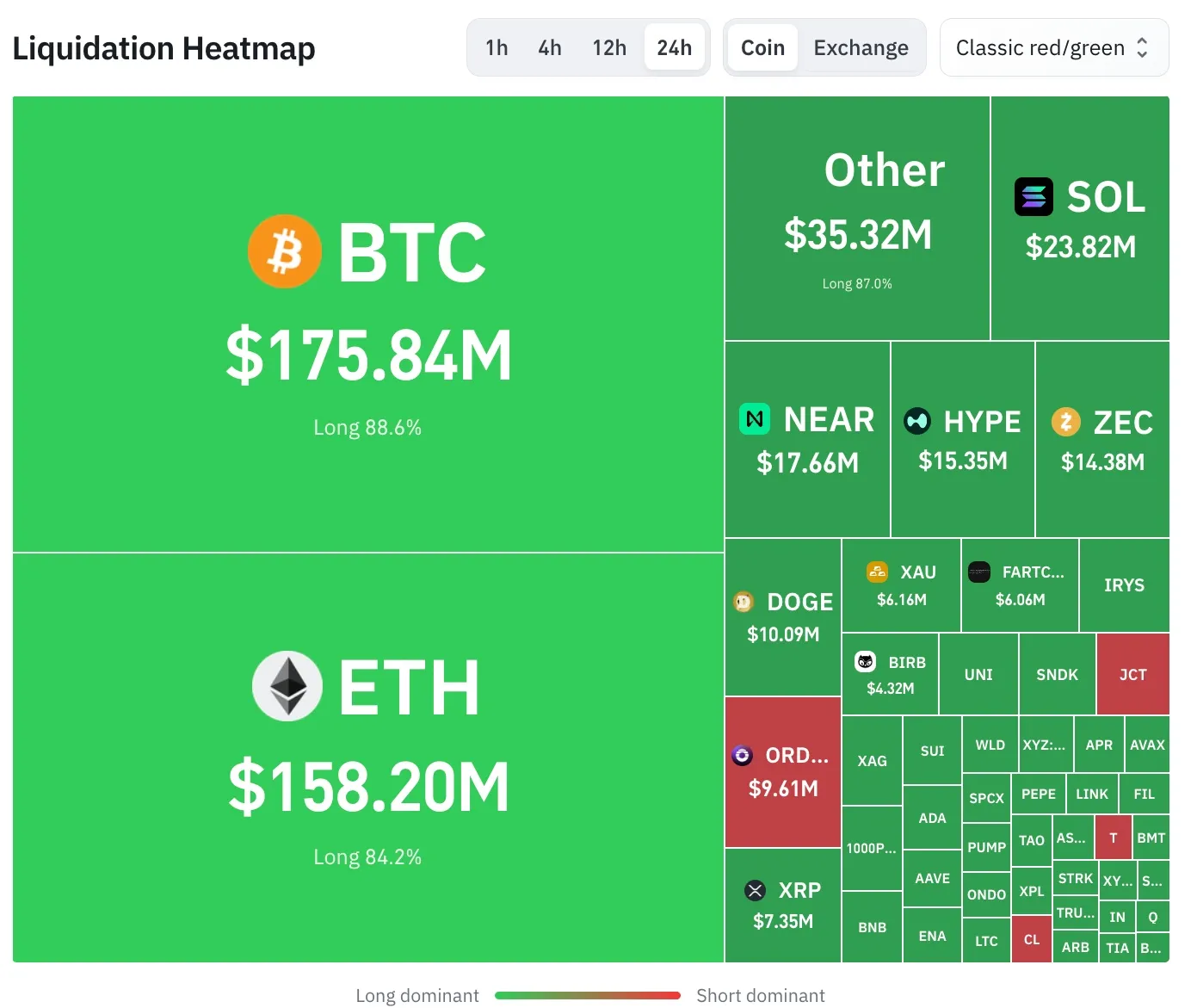
Crypto Liquidations on October 25. Source: Coinglass
The $80,000 level also matters for institutional holders. Glassnode places the cost basis of ETF and treasury-company investors between $80,000 and $81,500.
According to the firm, a daily close below $80,000 would leave the average holder at a loss. It would also bring the True Market Mean near $77,600 into view.
A weekend strike could test that line quickly.
What a Strike Could Mean When Markets Reopen
Because Bitcoin trades through the weekend, it would likely absorb the first reaction to any strike.
Past strikes offer a mixed guide. When the war began on February 28, Bitcoin fell to $63,030 but closed the day at $66,973. After the early September strikes, it dipped to $76,264, then jumped 5.08% on September 3.
Gold could also feel pressure when traditional markets reopen. Glassnode data shows Bitcoins correlation with gold set an eight-year record in September and remains near it.
Its dollar correlation is among its most negative, so a rush into the dollar could weigh on both.
Oil adds inflation risk, with Brent at $117.30 on Friday. A strike could push it higher before the Fed decides on October 28.
A deal could cool those worries, though the October 8 pledge showed relief can be modest. Thus, Bitcoins response to these headlines is the signal to watch this weekend.