Exchanges with 24H trading volume exceeding 2.55%
$9,610
264.52% 




No Regulatory License
Be aware of the risks!


Exchanges with 24H trading volume exceeding 2.55%
Exchange
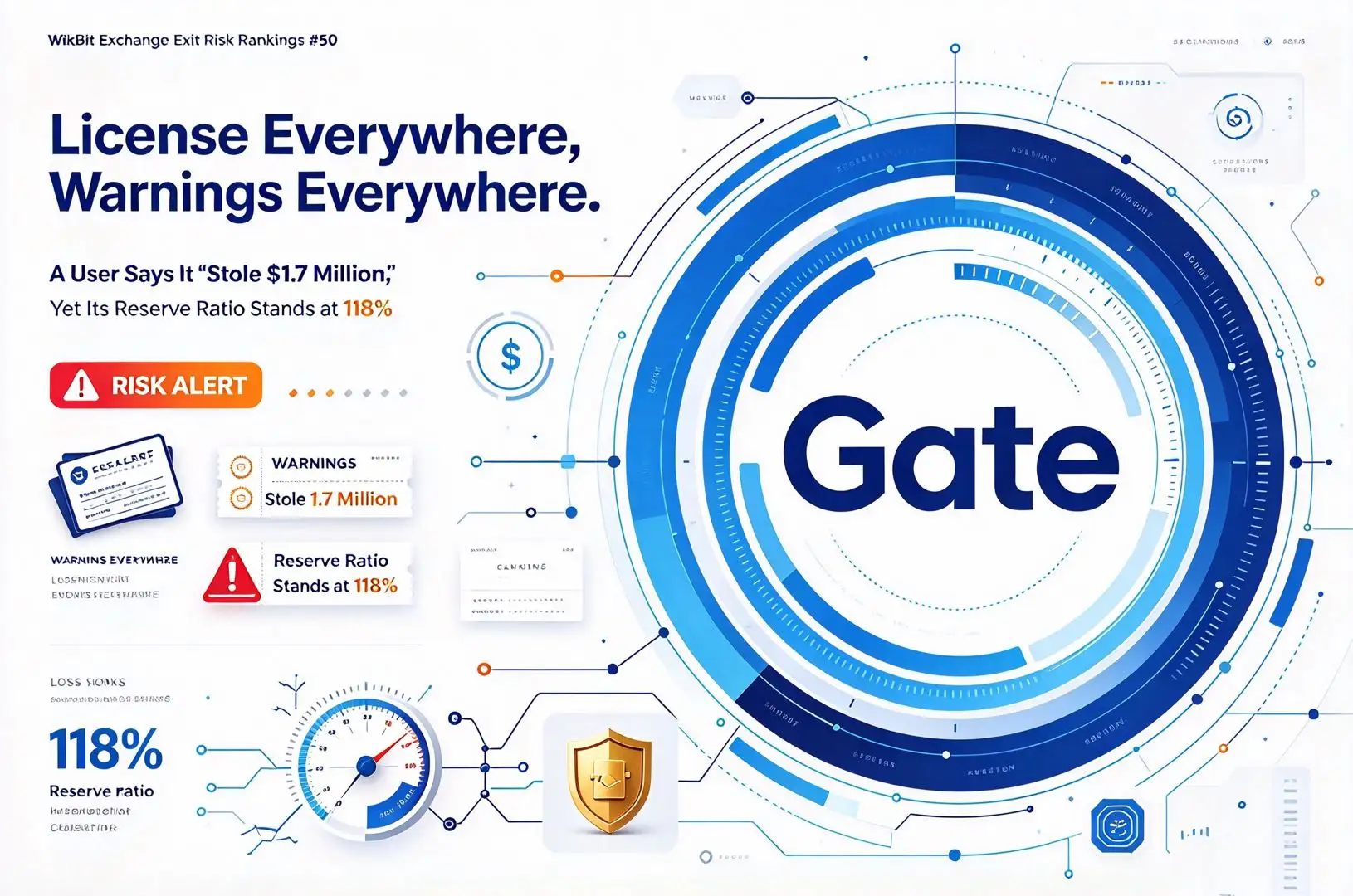
Introduction: An Exchange Surrounded by Both Licenses and Warnings In our first 49 installments, we examined a range of exchanges, from HashKey to KuCoin. For Episode 50, we turn to one of the most complicated compliance stories in the industry: Gate (Gate.io). On paper, Gate has an impressive track record. Originally launched as Bter.com in 2013, it now claims more than 63 million users worldwide and lists over 5,500 crypto assets. Its 24-hour spot trading volume has ranked as high as second globally. The platform reports total reserves of $8.688 billion, a reserve ratio of 118.49%, and multiple regulatory registrations and licenses, including Maltas MiCA authorization, Dubais VARA license, Cypruss CySEC license, and Australias AUSTRAC registration. But there is another side to the story. In 2025, the Cayman Islands Monetary Authority (CIMA) issued a public notice explicitly stating that Gate.io and Gate Global Corp had “never been licensed or authorized to conduct business in or from within the Cayman Islands”—the jurisdiction Gate has long identified as its place of registration. Taiwans Financial Supervisory Commission (FSC) has stated that Gate had not completed the required anti-money laundering registration and was therefore prohibited from providing virtual asset services locally. In July 2026, a longtime Gate user
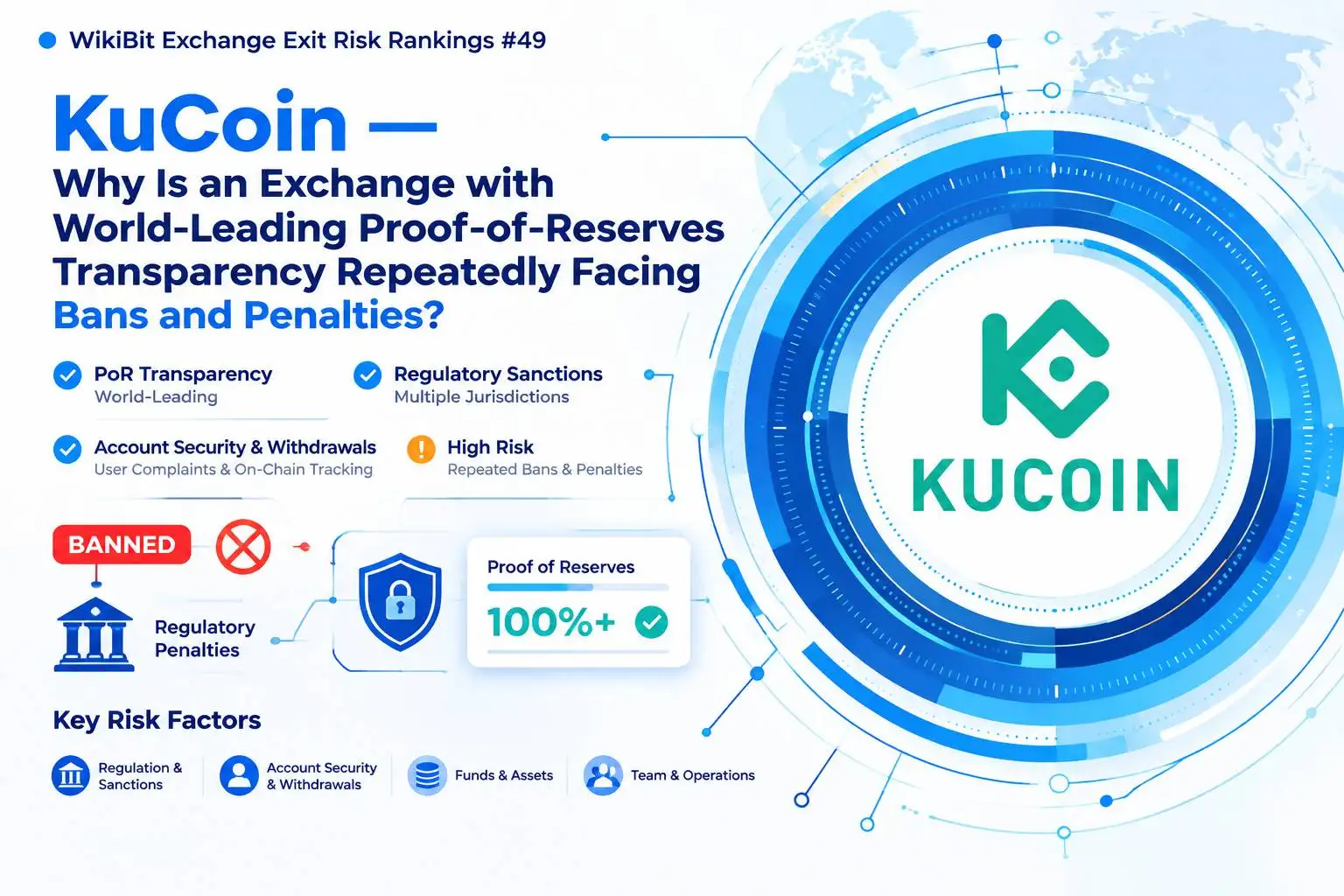
Introduction: An “A-Student” Report Card on Regulatory Compliance In the first 48 installments, we investigated a range of exchanges, from HashKey to MEXC. For Episode 49, we turn to one of the most strikingly contradictory cases: KuCoin. In terms of transparency, KuCoin has delivered one of the most impressive performances in the crypto industry. Founded in 2017, it received a Proof-of-Reserves (PoR) transparency score of 96.7 out of 100 from CryptoQuant in 2025, ranking first globally. It has published Merkle tree-based Proof-of-Reserves reports for more than 39 consecutive months, undergone third-party verification by Hacken, and held a 6.69% share of the global spot market in Q1 2026, placing it among the worlds top three exchanges. But there is another side to the story. On October 13, 2026, South Koreas Financial Intelligence Unit (FIU) officially blocked access to KuCoins website, extending restrictions beyond its app to the web platform. The UKs Financial Conduct Authority (FCA) listed KuCoin as an unauthorized firm. In January 2025, KuCoin pleaded guilty to charges brought by the U.S. Department of Justice (DOJ), agreeing to pay more than $297 million in penalties and admitting to receiving billions of dollars in suspicious funds between 2017 and 2024. The Commodity Futures Trading Commission
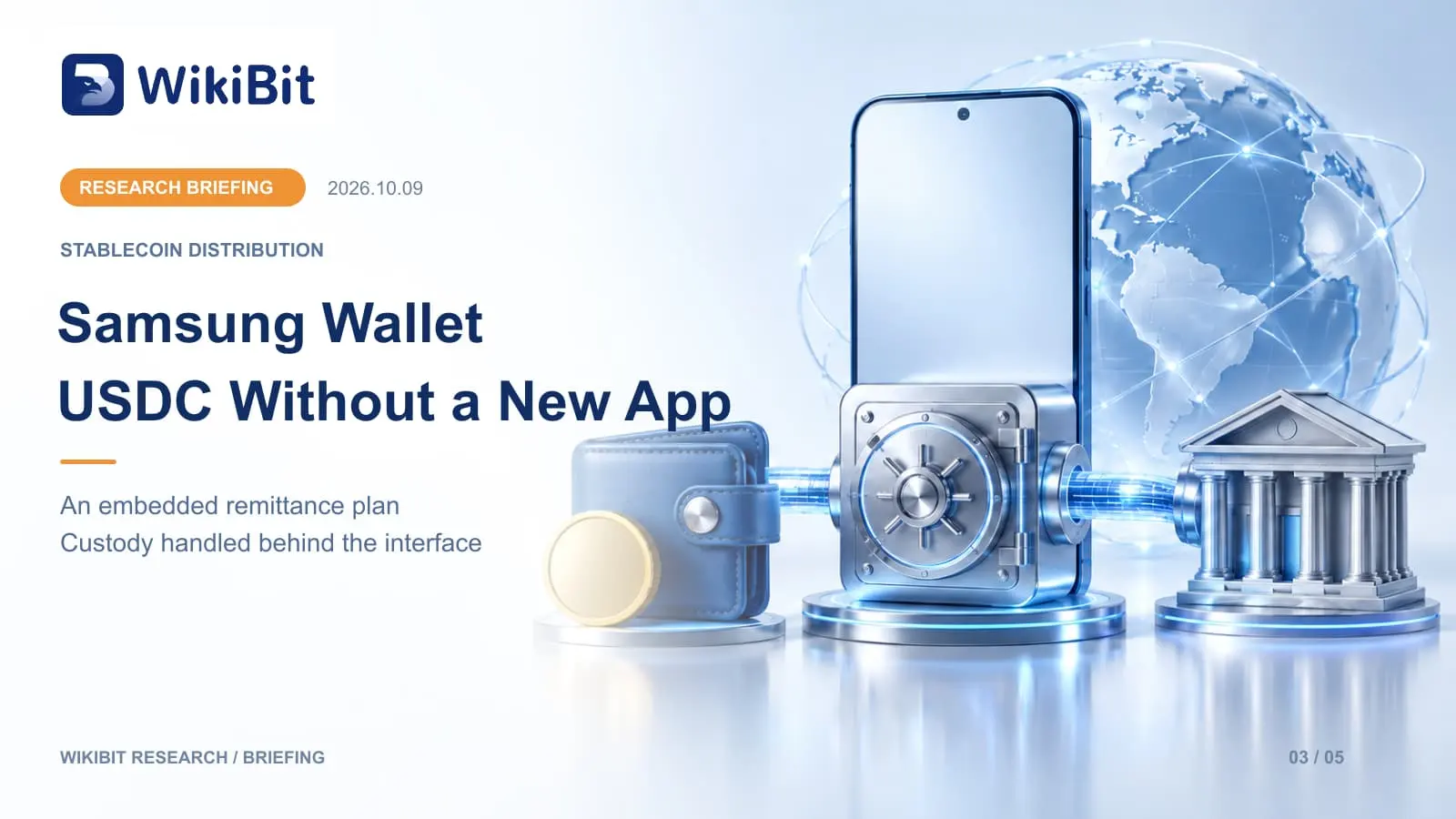
The most important part of Samsungs latest stablecoin announcement is what the user will not need to do. They will not need to install a separate crypto application or learn how to safeguard a seed phrase. Samsung says eligible U.S. Galaxy users will be able to make cross-border USDC transfers directly inside Samsung Wallet beginning in the last week of October 2026. The feature will support transfers to compatible crypto wallets and eligible bank accounts in more than 60 countries, with local-currency delivery possible for bank-account recipients. Samsung estimates the service will be available across 82 million U.S. Galaxy devices. That is a device distribution figure, not 82 million new crypto wallets, customers or transactions. Availability will still depend on device compatibility, identity and geographic eligibility. The product is significant because stablecoin adoption may increasingly arrive as a feature of software people already use, rather than as a decision to enter a new asset class.A Payment Feature, Not a New Layer 1 Samsungs October 7 announcement identifies USDC as the initial stablecoin. It says Bastion will provide the cross-border payment infrastructure and Coinbase will act as Bastions sub-custodian through Coinbase Prime Vault. User access requires biometric authentication on compatible registered devices. Infrastructure and network support