Ethereum Price Analysis: ETH Is Not Simply Pulling Back, Its Breaking Down

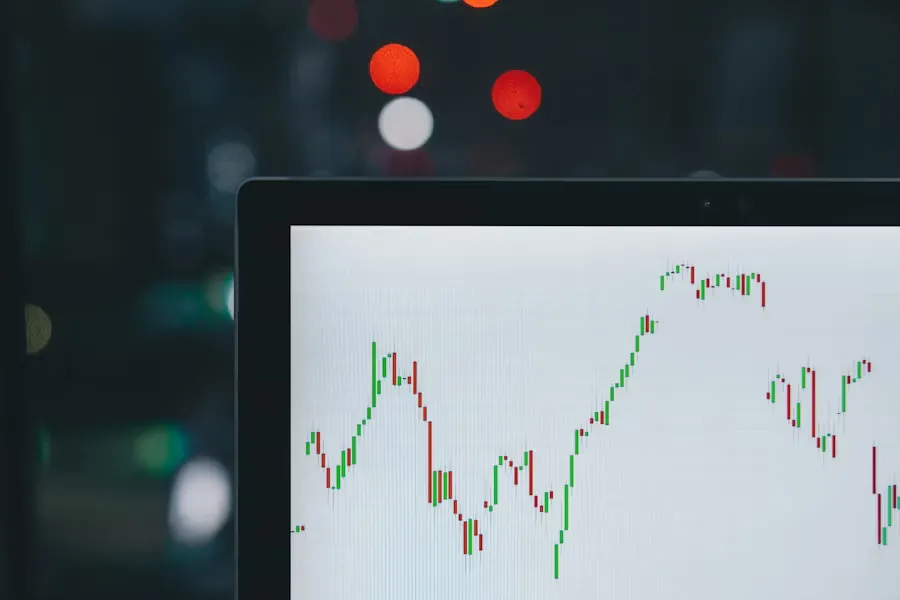
Ethereum is trading at $2.1k, and the chart tells a story that three months of cautious optimism can no longer paper over. The ascending channel that has provided the structural backbone for every bullish argument since the February bottom is getting broken to the downside.  Moreover, the US institutional bid that supported the recovery through March and April has quietly retreated to its most negative reading since the capitulation lows. Therefore, $ETH is seemingly not pulling back. It is breaking down.  Ethereum Price Analysis: The Daily Chart  The ascending daily channel from the February low is failing. The asset is breaking below its lower boundary for the first time since the recovery began, and the 100-day moving average, which sat at approximately $2.2k and is still nearby, has been lost on a daily closing basis. The RSI has also declined below 40. This is its weakest daily reading since Februarys capitulation, with no sign of a momentum floor forming yet.  The $1.8k demand zone is now the primary downside reference, having held as the absolute floor during Februarys sell-off. Above, the lost 100-day moving average at the $2.2k zone now acts as immediate resistance. Reclaiming the $2.2k area on a sustained daily close is

05-22Exchange

Zcash price eyes move past $700 after confirming Bull flag breakout

Zcash has emerged as the markets primary breakout performer, logging a 15% single-day advance to trade at $660.21.  Investor sentiment has rapidly pivoted from cautious accumulation to aggressive risk-on expansion, fueled by a perfect convergence of long-term structural chart breakouts and an abrupt vacuum of regulatory downside risk.  This localized rally comes at a time when aggregate digital asset volumes are shifting toward utility and sovereign privacy preservation. As institutional market makers recalibrate their portfolios ahead of upcoming macroeconomic policy decisions, Zcash ($ZEC) has decoupled from legacy layer-1 assets. The sudden spike in spot purchasing volume indicates that market participants are aggressively positioning for an extended multi-week extension vector.  What catalysts are driving institutional accumulation into Zcash?  The foundational spark for the immediate price expansion is the official and unconditional closure of the U.S. Securities and Exchange Commissions multi-year investigation into the Zcash Foundation.  Originally initiated in August 2023 to evaluate the compliance parameters of private decentralized protocols, the regulatory agency concluded its probe with zero penalties, enforcement mandates, or restrictive settlement conditions. This development removes a multi-year institutional discount factor, effectively greenlighting compliant capital deployment into the asset from risk-averse American entities.  Following the regulatory clearance, corporate and venture-scale accumulation has accelerated rapidly, drastically altering

05-22Exchange

Solana Price Prediction: SOL Eyes $100 Breakout

Solana is building a rounded base while holding above its broken multi-month downtrend line, keeping the recovery setup alive. However, $SOL still needs to reclaim the $98-$100 resistance zone before buyers can target the larger $145-$155 supply area.  Solana Price Builds Rounded Base as $100 Breakout Level Comes Into Focus  Solana is forming a rounded recovery structure on the daily Coinbase chart shared by TraderSZ on X.  The $SOL/USD chart shows price trading near $85, after moving sideways for several weeks between the lower range near $70-$75 and resistance near $95-$100.  $SOL/USD Daily Rounded Base Chart. Source: TraderSZ on X  The yellow drawing marks a possible rounded bottom. This suggests $SOL may be trying to build a base after the sharp decline from the late 2025 high area.  The first key level is the horizontal resistance near $95-$100. Solana needs to break and hold above that zone before a stronger recovery can start.  If $SOL clears that level, the chart points toward the next major supply area around $145-$155. That zone acted as support before the bigger breakdown, so it may now work as resistance.  However, the breakout has not happened yet. $SOL still trades below the $100 area, so the rounded base remains only a potential setup.  For

05-22Exchange

Bitcoin extends recovery as optimism grows around US-Iran deal

Bitcoin ($BTC) extends its recovery, trading above $77,500 on Thursday amid optimism over a potential US-Iran peace deal that is supporting the markets risk-on sentiment. Despite this rebound, spot Exchange Traded Funds (ETFs) continue to record steady outflows, and on-chain data highlights cautious signs, with net demand for the Crypto King contracting.  US-Iran peace hopes lift risk appetite  Risk sentiment among market participants is improving after news on Wednesday that US President Donald Trump characterized the ongoing negotiations with Iran as in their final stages. However, President Trump also reiterated a firm pledge to resume military actions within days if Iran rejects his terms.  In response, Iranian President Masoud Pezeshkian said that Tehran has no intention of capitulating, stating on the social media platform X that attempting to force a surrender through coercion is “nothing more than an illusion”.  ETF outflows continue  Despite a mild price recovery, institutional demand for the Crypto King has continued to fade so far this week. SoSoValue data shows that US-listed spot $BTC ETFs recorded an outflow of $70.47 million on Wednesday, marking the fourth consecutive day of withdrawals since last week. If this outflow trend persists and intensifies, $BTC could resume its price fall.  Total Bitcoin spot ETF net inflow

05-21Exchange

Could Morgan Stanleys Solana ETF bid revive SOL price momentum?

Solana price has struggled to hold above $90 this month, Morgan Stanleys proposed spot $SOL ETF could offer fresh momentum for the token.  According to Coingecko data, Solana ($SOL) briefly climbed to nearly $93 on May 15 before losing momentum again, with sellers repeatedly defending the $94 to $96 range that has acted as a heavy resistance zone on the daily chart.  Why is $SOL price struggling?  Trading activity across the Solana network has slowed compared to the frenzy seen during the memecoin boom that fueled much of the chains explosive growth through 2024 and early 2025.  Data from multiple on-chain trackers has shown a visible cooldown in decentralized exchange volumes and network fee generation over recent months, reducing the organic demand that previously came from users buying and locking $SOL for gas fees and liquidity activity.  At the same time, Solanas transition toward more sustainable infrastructure-driven growth has yet to fully compensate for the decline in speculative retail trading.  Developers behind the networks upcoming Alpenglow upgrade have promoted the update as a major improvement focused on ultra-fast transaction finality and enterprise-grade performance, though adoption from those use cases could take time to materially impact demand.  Institutional sentiment also took a hit after recent 13F filings revealed

05-21Exchange

Is Grayscale Accumulating Hyperliquid? Tens of Millions Added

After a wallet purportedly connected to Grayscale amassed more than $10 million worth of tokens through major trading firms and OTC desks, Hyperliquids native token, $HYPE, is experiencing one of its biggest rallies in months.  Institutional accumuation  Arkham data indicates that, through transactions involving Wintermute, FalconX, Coinbase, and Flowdesk, the address 0x61…4318 amassed roughly 176,050 $HYPE, valued at almost $9.84 million. Additionally, the Hyperliquid System Address received over 149,000 $HYPE, or about $7.49 million, from the same address.  $HYPE/USDT Chart by TradingView  The market responded instantly. After the accumulation activity became apparent on-chain, $HYPE surged sharply, surpassing the psychological $50 level and continuing its broader recovery trend. With prices trading well above the 50-, 100-, and 200-day moving averages, the chart currently displays one of the strongest structures among the major altcoins.  Additionally, momentum indicators lend credence to the breakout story. Strong buying pressure and rapid inflows into the asset have caused the RSI to move toward overheated territory.  The type of accumulation involved is what makes this move significant. In contrast to speculative retail chasing, large OTC and exchange-linked purchases typically reflect strategic positioning. Markets may view the accumulation as early institutional exposure to the Hyperliquid ecosystem if the Grayscale connection turns out to be

05-21Exchange

Vitalik Buterin Details Ethereum Upgrades to Boost Privacy Features

The roadmap includes account abstraction FOCIL and keyed nonces to improve transaction confidentiality.FOCIL introduces validator-enforced transaction inclusion to reduce the risk of censorship on the network.Account abstraction allows Ethereum accounts to function like smart contracts with enhanced security and flexibility.Keyed nonces make it harder to link transactions by replacing the single sequential nonce system.The access layer proposal focuses on protecting user data during blockchain queries through tools like Kohaku.  Vitalik Buterin on Wednesday detailed new privacy-focused upgrades planned for Ethereum. The proposals aim to bring private transactions directly onchain instead of relying on third-party tools. The update outlines three initiatives designed to improve privacy across transactions, accounts, and data access.  Vitalik Buterin outlines Ethereum Privacy Roadmap  Buterin shared the update in a technical post on X that described near-term privacy improvements. He focused on making private transactions a native feature of Ethereum.  Short-term things being done to shift Ethereum toward native privacy:  The proposals include account abstraction, FOCIL, and keyed nonces. Each initiative targets a different layer of user privacy on the blockchain.  FOCIL, or fork-choice enforced inclusion lists, aims to reduce transaction censorship. It allows validator committees to require block builders to include specific transactions.  If builders ignore these transactions, the network can reject their blocks.

05-21Ethereum

 BingX Shows Robust 66% Growth YoY in CoinGecko Perpetuals Report

Finance  BingX Shows Robust 66% Growth YoY in CoinGecko Perpetuals Report  PANAMA CITY, May 21, 2026 –BingX, a leading cryptocurrency exchange and Web3-AI company, today announced a partnership with CoinGecko for the release of the, an in-depth study examining the evolution of the perpetuals market across centralized and decentralized exchanges.  The report indentified accelerating growth in trading tied to tokenized real-world assets (RWAs), AI-linked markets and multi-asset products, trends that closely align with BingXs leadership in multi-asset trading.  Moreover, the report indicated that trading related to RWAs accelerated sharply in 2026, with first-quarter volumes already surpassing total 2025 levels. It also highlighted growing traction for stock perpetuals and other traditional finance-linked products as traders increasingly seek continuous access to diversified markets through crypto-native infrastructure.  According to CoinGeckos 2026 State of Derivatives Report, BingX Experienced Strong Growth:#2 Perpetual Listings Globally: BingX recorded 565 new perpetual listings since 2025, averaging 35 new contracts monthly, and among the highest number of new listings of any exchange.Fastest Derivatives Growth Into 2026: The report identified BingX as having one of the strongest market share growth trajectories, increasing its derivatives market share by 58% entering 2026 and YoY growth exceeding 66%, bucking the overall trend and driven by large RWA asset

05-21Industry

Binance Will Temporarily Suspend ETH Deposits and Withdrawals: Details Inside

Heres what users should expect on May 21.  ;  }  function loadTrinityPlayer(targetWrapper, theme,extras=“”) {  cleanupPlayer(targetWrapper); // Always clean first ✅  targetWrapper.classList.add(‘played’);  // Create script  const scriptEl = document.createElement(“script”);  scriptEl.setAttribute(“fetchpriority”, “high”);  scriptEl.setAttribute(“charset”, “UTF-8”);  const scriptURL = new URL(`https://trinitymedia.ai/player/trinity/2900019254/?themeAppearance=${theme}${extras}`);  scriptURL.searchParams.set(“pageURL”, window.location.href1);  scriptEl.src = scriptURL.toString();  // Insert player  const placeholder = targetWrapper.querySelector(“.add-before-this”);  placeholder.parentNode.insertBefore(scriptEl, placeholder.nextSibling);  }  function getTheme() {  return document.body.classList.contains(“dark”) ? “dark” : “light”;  }  // Initial Load for Desktop  if (window.innerWidth 768) {  const desktopBtn = document.getElementById(“desktopPlayBtn”);  if (desktopBtn) {  desktopBtn.addEventListener(“click”, function () {  const desktopWrapper = document.querySelector(“.desktop-player-wrapper.trinity-player-iframe-wrapper”);  if (desktopWrapper) loadTrinityPlayer(desktopWrapper, getTheme(),  });  }  }  // Mobile Button Click  const mobileBtn = document.getElementById(“mobilePlayBtn”);  if (mobileBtn) {  mobileBtn.addEventListener(“click”, function () {  const mobileWrapper = document.querySelector(“.mobile-player-wrapper.trinity-player-iframe-wrapper”);  if (mobileWrapper) loadTrinityPlayer(mobileWrapper, getTheme(),  });  }  function reInitButton(container,html){  container.innerHTML = + html;  }  // Theme switcher  const destroyButton = document.getElementById(“checkbox”);  if (destroyButton) {  destroyButton.addEventListener(“click”, () = {  setTimeout(() = {  const theme = getTheme();  if (window.innerWidth 768) {  const desktopWrapper = document.querySelector(“.desktop-player-wrapper.trinity-player-iframe-wrapper”);  if(desktopWrapper.classList.contains(‘played’)){  loadTrinityPlayer(desktopWrapper, theme,  }else{  reInitButton(desktopWrapper,‘’)  const desktopBtn = document.getElementById(“desktopPlayBtn”);  if (desktopBtn) {  desktopBtn.addEventListener(“click”, function () {  const desktopWrapper = document.querySelector(“.desktop-player-wrapper.trinity-player-iframe-wrapper”);  if (desktopWrapper) loadTrinityPlayer(desktopWrapper,theme,‘  });  }  }  } else {  const mobileWrapper = document.querySelector(“.mobile-player-wrapper.trinity-player-iframe-wrapper”);  if(mobileWrapper.classList.contains(‘played’)){  loadTrinityPlayer(mobileWrapper, theme,  }else{  const mobileBtn = document.getElementById(“mobilePlayBtn”);  if (mobileBtn) {  mobileBtn.addEventListener(“click”, function () {  const mobileWrapper = document.querySelector(“.mobile-player-wrapper.trinity-player-iframe-wrapper”);  if (mobileWrapper) loadTrinityPlayer(mobileWrapper,theme,  });  }  }  }  }, 100);  });  }  })();  The worlds largest crypto exchange by total users, trading volume, and other metrics will perform a wallet maintenance today, May 21.  The procedure will halt some important functions, yet it is projected to be wrapped up in short order.  Prepare for Disruption  The upgrade is scheduled for May 21, and to support the process, Binance will temporarily suspend deposits and withdrawals on the Ethereum

05-21Ethereum

The Protocol: Ethereum Foundations high-profile departures spark fresh debate

ETHEREUM COMMUNITY RESPONDS TO EF DEPARTURES: A wave of departures from the Ethereum Foundation (EF) is reigniting a debate inside the crypto industry: What is going on at the main steward behind Ethereum, and why does the community know so little about what is happening behind the scenes? Days after several high-profile figures said they had left the foundation during an internal shakeup, community members on X began openly questioning the organization‘s direction, leadership structure and communication practices. “What’s happening at the EF?” crypto commentator Andy, the co-founder of the Rollup podcast, wrote in a post on X. Others echoed similar frustrations, arguing the EF has failed to clearly explain the rationale behind the changes or how responsibilities inside the organization are evolving. “Why can‘t the EF just be transparent about things,” wrote Joon Ian Wong, a prominent figure in the crypto community events space. The criticism reflects a longstanding tension surrounding the Ethereum Foundation, the Switzerland-based nonprofit that plays a central role in funding research, coordinating upgrades and stewarding development of the world’s second-largest blockchain by market capitalization. Unlike traditional corporations, the EF has historically operated with a loose and decentralized structure. Some have argued that the model preserves

05-21Ethereum
1
...
396398
...
1000