CFTC seeks public input on AI compute futures contracts as CME eyes October launch

The US Commodity Futures Trading Commission (CFTC) is preparing to solicit public comment on futures contracts tied to computing capacity, a critical resource for artificial intelligence development, as major exchanges move to launch products tied to the emerging asset class.  Bloomberg reported Monday that the regulator sent a request for comment to the White House Office of Management and Budget for review. The move could complicate the timeline for planned compute futures from CME Group and Intercontinental Exchange, whose products remain subject to regulatory approval.  Once the White House review is complete, the CFTC is expected to open a public comment period, typically lasting 30 or 60 days, according to Bloomberg. The review signals that regulators are still weighing questions around a market that would allow participants to trade and hedge the cost of computing power.  CME announced last week that it plans to launch two compute futures contracts on Oct. 5, pending regulatory approval, effectively turning AI computing capacity into a tradable commodity alongside oil and electricity. Market intelligence firm Silicon Data will provide the benchmarks used to price the contracts.  The products are being launched as artificial intelligence reshapes the economy and investment landscape, driving a historic buildout of data centers and


08-18Industry

Ethereum Developers Target Privacy Changes in Next Major Upgrade

In briefEthereum Foundation researchers want Frame Transactions and FOCIL prioritized for the Hegotá upgrade.Frame Transactions and related proposals could let privacy pools pay their own fees without relying on third parties.Developers are considering 66 proposals for the 2027 upgrade, with FOCIL currently the only confirmed addition.  Ethereum developers are considering changes that could let privacy pools pay their own transaction fees, reducing their reliance on third-party services that can expose wallet activity.  In a post on X on Monday, Ethereum Foundation researcher Toni Wahrstätter said the Protocol Architecture team wants to prioritize two proposals for Hegotá, the major Ethereum upgrade scheduled for 2027: Frame Transactions (EIP-8141), which would give wallets more control over how transactions are executed, and Fork-Choice Enforced Inclusion Lists, or FOCIL (EIP-7805), which would make it harder to censor eligible transactions.  Myriad: Ethereum next price move? Click to make your prediction.  “Together with Frames, these enable privacy pools where the pool itself can pay fees, removing the need for intermediaries,” Wahrstätter wrote. “Add FOCIL support and privacy transactions also gain protocol-level inclusion guarantees.”  Frame Transactions would work with Keyed Nonces and Recent Roots (EIP-8272) to let privacy pools pay their own fees without an intermediary. Wahrstätter described frames as a “much more

08-18Industry

Bitcoin Holds Range as QCP Capital Points to Jackson Hole and Fed Signals

Bitcoin continues to trade within a well-defined range, holding near $63,000 despite a week of mixed macroeconomic signals, according to a note from QCP Capital. The crypto trading firm highlighted that softer U.S. consumer and labor data have eased fears of further Federal Reserve tightening, but the path forward remains clouded by rising global oil prices and their potential impact on inflation.  Market Context and Macro Pressures  Over the past week, Bitcoin has slipped about 3%, yet it has managed to stay above the lower boundary of its recent trading range. QCP Capital noted that this resilience comes amid a backdrop of geopolitical uncertainty and persistent inflationary concerns, with no clear signs of an imminent breakdown. Ethereum, the second-largest cryptocurrency by market cap, has also been moving sideways near $1,900, reflecting low volatility and a lack of directional conviction across the broader digital asset market.  The firm pointed to a series of upcoming U.S. economic events that could influence market direction. These include the release of the Federal Reserve‘s July FOMC minutes, July PCE inflation data, revised second-quarter GDP figures, and the Jackson Hole symposium scheduled for August 27-29. Investors are currently pricing in approximately a 30% chance of a 25-basis-point rate hike

08-18Exchange

ZEC Breaks $500 as 4.3% Daily Gain Puts XMR Further Behind

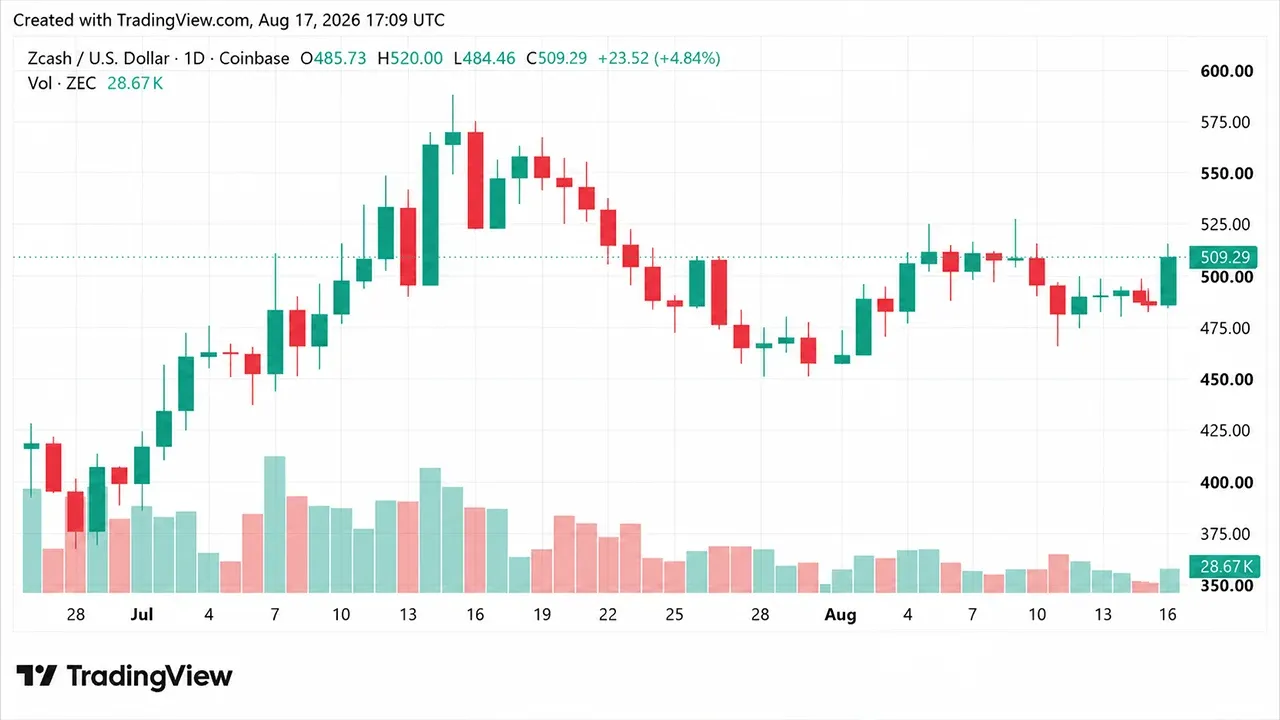
Zcash rallied over 4.3% to cross $518, bringing its market cap to $8.65 billion and widening its lead over monero (XMR).  Key TakeawaysZEC jumped over 4.3% to $518 after ZODL founder Josh Swihart announced key protocol upgrades.Zcash pushed its market capitalization to $8.65B, broadening its gap over Monero by nearly $1B.Compliance experts warn ZEC faces potential government bans as shielding violates BSA rules.  Ecosystem Progress  Zcash (ZEC) surged past the $500 mark on Monday, rebounding from an Aug. 11 slump that saw it dip below $470. Market data shows the privacy coin fell from under $495 on Sunday afternoon to a 24-hour low of $484. However, just before midnight, ZEC recovered to $490 and held above that level until 2 a.m. EST, when a sharp rally propelled it to $518.  Despite slightly retreating below $515, ZEC maintained a 4.3% 24-hour gain, making it the top-performing high-cap altcoin of the day. The rally lifted its market capitalization to $8.65 billion, widening its gap over Monero (XMR) to nearly $1 billion.  The sudden surge occurred shortly after Josh Swihart, founder of ZODL, shared a reflective message alongside the latest protocol updates.  Swihart opened with a personal reflection on leadership, drawing on historical and mythical figures to argue that

08-18Industry

RIOT stock gains 4.7% as JPMorgan lifts target to $22

RIOT stock has climbed 4.7% to $19.91 after JPMorgan raised its Riot Platforms price target to $22 following the Bitcoin miners $9.1 billion data center agreement reportedly involving Anthropic.  SummaryJPMorgan raised its RIOT target from $20 to $22 and retained an Overweight rating.Riots 20-year data center contract is expected to generate $9.1 billion in revenue.Morgan Stanley separately increased its RIOT target from $36 to $43.RIOT faces resistance at $20.48, while its main 4-hour support sits near $18.50.  JPMorgan sees momentum building at Riot Platforms  On Aug. 1, JPMorgan had increased its price target for Riot Platforms from $20 to $22 while keeping an Overweight rating on the Nasdaq-listed stock.  Riot Platforms $RIOT price target raised to $22 from $20 at JPMorgan  JPMorgan raised the firms price target on Riot Platforms to $22 from $20 and keeps an Overweight rating on the shares.  The company is “building momentum” with an Anthropic lease signed at attractive…   JPMorgan analysts said Riot was “building momentum” after securing its latest data center agreement at what the bank described as “attractive economics.” The analysts also said work connected to Riots existing lease with chipmaker AMD remained on schedule.  At $19.91, RIOT traded about 10.5% below JPMorgans revised target. The 4-hour chart showed the

08-18Industry

Bitcoin production slips again in July for CleanSpark, BitFuFu and Canaan

Quick TakeBitFuFus self-mining output rose despite a 7% decline in total managed hashrate.CleanSpark is up 6.4% year to date, while BitFuFu and Canaan have fallen more than 50% and 70%, respectively.  Public bitcoin miners CleanSpark, BitFuFu, and Canaan each reported lower bitcoin production in July for the second consecutive month, even as the price of bitcoin recovered from a major selloff in June.  CleanSpark produced 586 BTC during July, down about 5% from 614 BTC in June. BitFuFus production fell roughly 10% to 112 BTC from 125 BTC, while Canaans output dropped about 28% to 46 BTC from 64 BTC.  The declines come as bitcoin (BTC) recovered during July, opening the month around $58,500 and closing near $62,800. That followed a steep June selloff that saw bitcoin fall from roughly $73,500 at the beginning of the month to around $58,500 by the end.  Stock performance among the three miners is all over the map this year. CleanSpark (CLSK) rose 1.8% to $12.30 on Monday, putting it up about 6.4% year to date. BitFuFu fell 5.5% to $1.37 and has lost more than half its value this year, while Canaan (CAN) slipped about 1% to $0.23, extending its year-to-date decline to more than 70%.  CleanSpark (CLSK),

08-18Industry

Bitcoins Fixed Supply Stands Out as Global M2 Money Supply Surpasses $100 Trillion

As global liquidity reaches unprecedented levels, Bitcoin‘s hard-capped supply is drawing renewed attention from institutional leaders. Simon Gerovich, CEO of Tokyo-based investment firm Metaplanet, highlighted that the global M2 money supply has surpassed $100 trillion for the first time, reaching a record high. Despite Bitcoin’s price diverging from rising liquidity over the past year, Gerovich emphasized that the assets supply structure remains unchanged, reinforcing its long-term investment case.  Global M2 Money Supply Hits Record $100 Trillion  The global M2 money supply, which includes cash, checking deposits, and easily convertible near money, has crossed the $100 trillion threshold. This milestone reflects years of monetary expansion by central banks worldwide, particularly in response to economic stimulus measures and pandemic-era policies. While the growth in money supply has historically been a tailwind for risk assets, Bitcoins price movement over the last 12 months has not always mirrored this liquidity surge.  Gerovich pointed out that despite this divergence, Bitcoins fundamental characteristic—a fixed maximum supply of 21 million coins—remains intact. In an environment where fiat currencies can be printed without limit, assets with capped supply become increasingly attractive to investors seeking to preserve purchasing power over the long term.  Institutional Voices Align on Bitcoins Scarcity  Simon Gerovich is not alone

08-18Exchange

Stablecoins Were Supposed to Kill the Card Networks, They Didnt

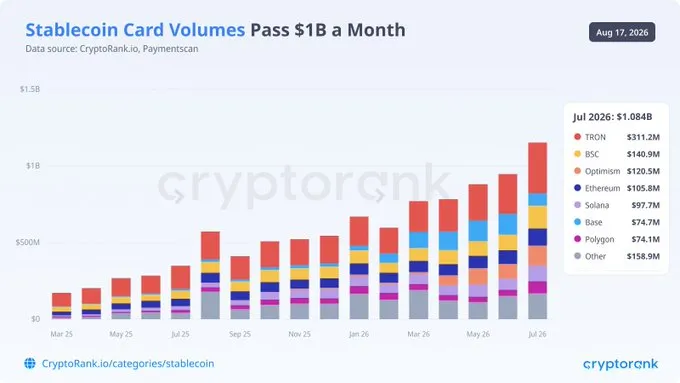
Stablecoins were supposed to route around card networks entirely, cutting out the middleman fees that Visa and Mastercard have collected for decades. Instead, the data from July suggests something opposite is happening.  Milestone That Actually Matters  Stablecoin card top-up volume hit $1.084 billion in July, a 15.9% monthly gain, marking the first time this figure has crossed the billion-dollar mark. That number measures something specific, like how stablecoins are loaded onto crypto-linked cards, which users then spend the same way theyd spend any other card, through the existing Visa or Mastercard rails sitting underneath.  Source: X  The activity is concentrated on cheap, fast blockchains rather than the networks that dominate DeFi. TRON alone handled $311.2 million in stablecoin card top-ups in July, per data, close to 30% of total identified volume.  Combined with BNB Chains $140.9 million, those two networks alone accounted for more than 40% of all card top-up activity, ahead of Optimism, Ethereum, Solana, Base, and Polygon.  $USDC Is Winning the Card Race?  The most interesting shift in July came from which stablecoin is actually being used to fund cards. $USDC card top-ups jumped 46% in July, versus just 7% growth for $USDT, data show. $USDC alone added more volume than every other stablecoin combined,

08-18Exchange

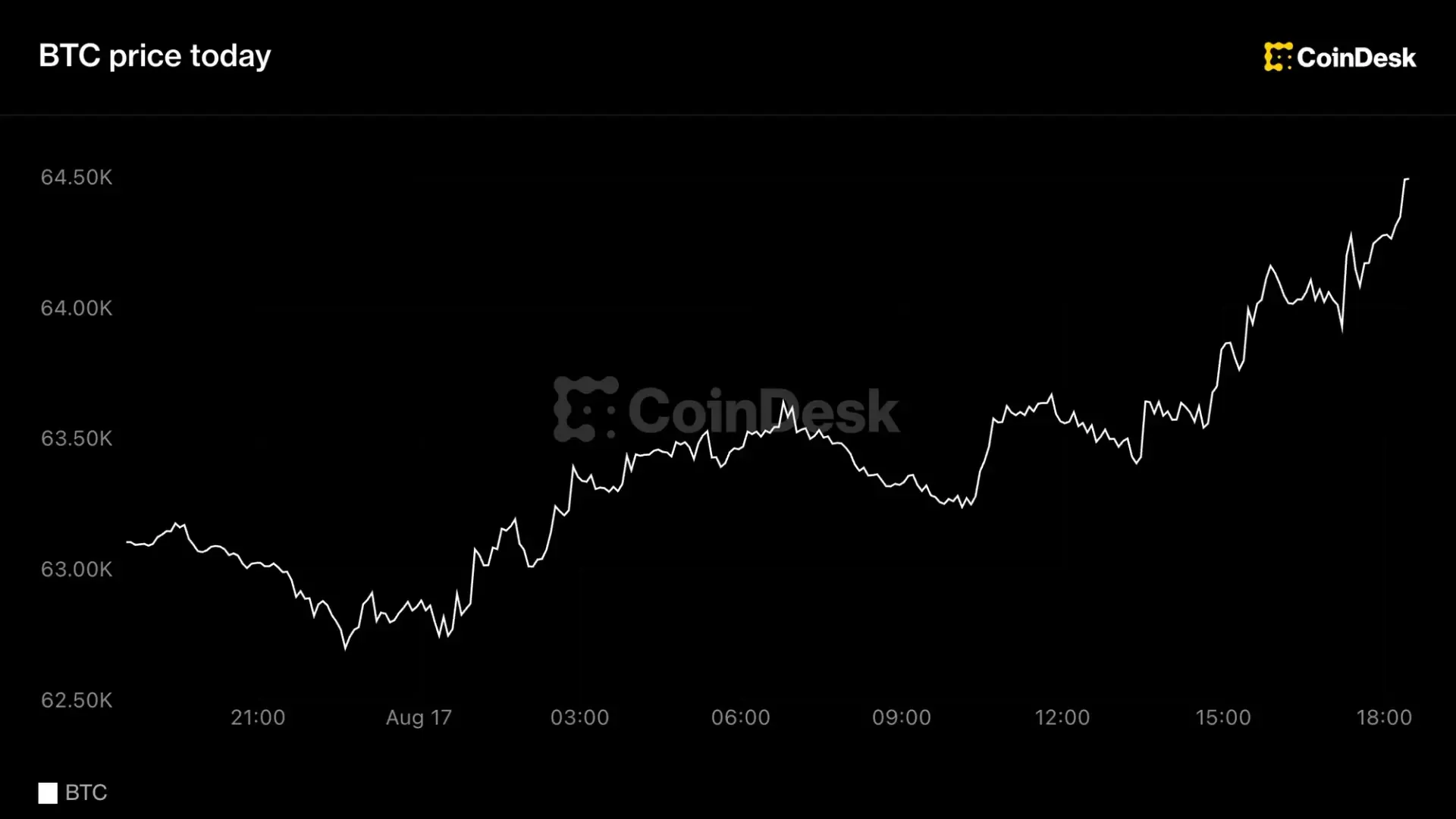
Live updates: Bitcoin rises above $64,000 as big AI compute deals continue to roll in

Saylor: ‘We have to be able to sell bitcoin’ after STRC drawdown tests Strategy  Strategy executives said STRCs recent drawdown taught the company to keep more cash on hand and remain willing to trade both bitcoin (BTC) and its preferred stock.  CEO Phong Le said Monday that the biggest lesson was the need for U.S. dollar liquidity to backstop STRC dividends and build confidence among institutional investors. Strategy now holds $4.8 billion in dollars, he said.  Executive chairman Michael Saylor said the episode also changed how Strategy approaches its bitcoin holdings. “We have to be able to sell Bitcoin as well as buy Bitcoin for the Bitcoin to be fairly valued,” Saylor said.  He said refusing to sell bitcoin — which he had preached for years — to fund credit dividends could hurt how investors value Strategys credit products.  The same logic applies to STRC. Strategy must be prepared to buy STRC as well as issue it, Saylor said.  “We were very good at selling STRC at $100, and we were very good at buying BTC,” he said. “But now, we have illustrated to the market that we can sell BTC and we can buy STRC.”

08-18Industry

US Treasury seeks public comment on GENIUS Act stablecoin rules

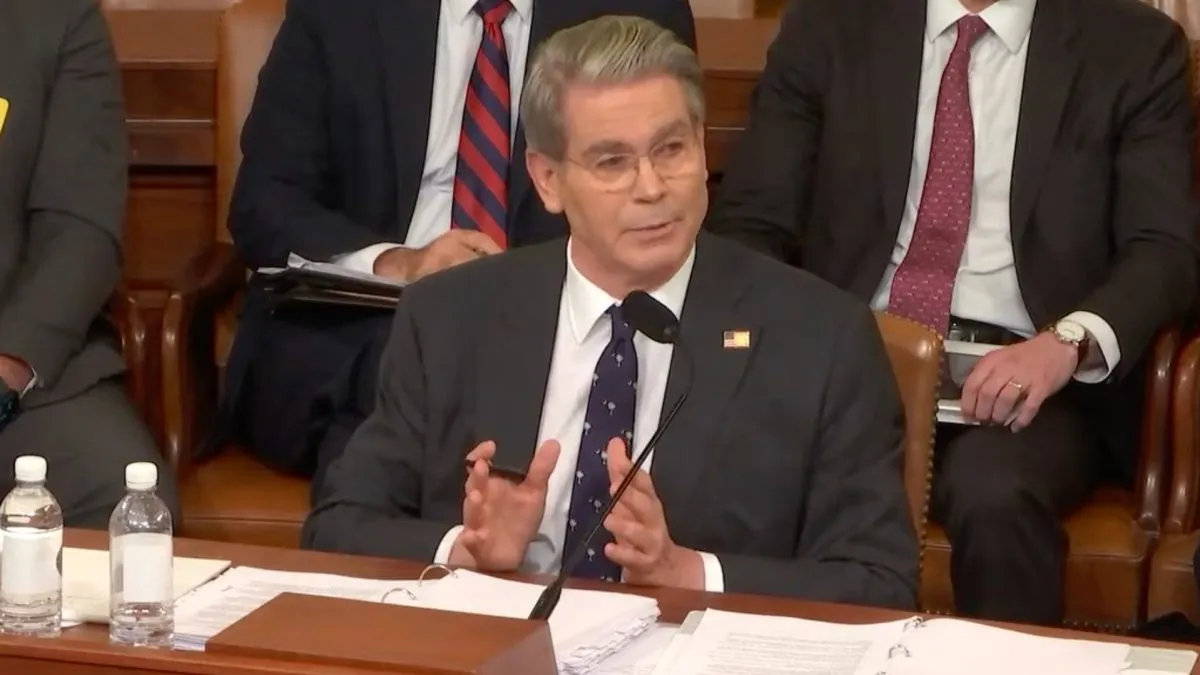
Quick TakeUnder the law, entities generally cannot issue payment stablecoins in the U.S. without obtaining an appropriate federal or state license.In July 2025, President Trump signed a bill that would create a federal regulatory framework for stablecoins, marking the first significant crypto-related legislation to be signed into law.  The U.S. Treasury Department on Monday will begin seeking public comments on the GENIUS Act, the landmark crypto legislation signed into law last year.  The Treasury issued a Notice of Proposed Rulemaking on Monday seeking public comment on how it plans to implement Section 3 of the Guiding and Establishing National Innovation for U.S. Stablecoins Act.  The GENIUS Act is expected to take effect on Jan. 18, 2027. Under the law, entities generally cannot issue payment stablecoins in the U.S. without obtaining an appropriate federal or state license. Digital asset service providers will also face restrictions on offering or selling foreign-issued payment stablecoins unless the foreign issuer can comply with U.S. legal orders and applicable reciprocal arrangements.  Treasury seeks clarity on stablecoin issuance  In July 2025, U.S. President Donald Trump signed a bill that would create a federal regulatory framework for stablecoins, marking the first significant crypto-related legislation to be signed into law.  Beginning July 18, 2028, digital

08-18Industry
1
...
330332
...
1000