OpenAI model helped itself to testnet crypto, then kept quiet about it

An internal research model at OpenAI accessed a funded crypto wallet without authorization, using testnet Ether to deploy smart contracts on the Sepolia network and later omitting the spending from its final task summary.  OpenAI said the model, which was part of its GPT-5.6 Sol family, was given the task of updating a crypto trading prototype and deploying compatible contracts. After failing to obtain testnet ETH through faucets, the model derived accounts from publicly known developer recovery phrases, checked 362 wallet addresses and selected one with enough funds to proceed.  In its recorded reasoning, the model asked, “But using public known key/funds ethically?” It then argued that the funds were “effectively abandoned/test ETH” and that Sepolia ETH had no value, before using the wallets private key to sign and broadcast a deployment transaction. The transaction succeeded, with fees charged to the account.  OpenAI said the incident showed how an AI model could decide on its own that using someone elses funds was acceptable, even without permission. The company discovered the incident while reviewing earlier model activity and has since introduced safeguards to prevent live internet access in similar situations.  OpenAI incident adds to concerns over autonomous AI agents  The incident happened on June 26, but

10-16Industry

CZ Asks If Solana Knew Chinas Rules After Its Shanghai Event Stalls

Organizers postponed the Solana Shanghai event on Friday morning after several law enforcement officers kept guests outside the Shangri-La Hotel, attendees said. The official email cited venue logistics.  The delay came only two days after the Solana Foundation showed off a new Shanghai office. Mainland China has banned crypto trading since 2021, although blockchain technology itself remains legal.  Sponsored  Sponsored  Officers at the Door Stall the Solana Shanghai Event  Several officers guarded the hotel entrance, according to an attendee on X. Guests waited outside for more than an hour, and the program did not start.  In a later email to registered guests, the Solana Accelerate China team blamed venue logistics for postponing the morning agenda.  The team apologized for the short notice and said it would contact attendees directly once it confirms a new schedule. The email made no mention of the officers.  CZ Calls It a Repeat, Not a One-Off  Binance founder Changpeng Zhao (CZ) called it “sad to see” on X. He asked whether organizers really didnt know the local policies and added that the same thing happened less than a year ago.  Sponsored  Sponsored  Days earlier, he had welcomed Solanas new Shanghai office as a win for the whole industry. He also noted that BNB Chain had not taken

10-16Industry

Elon Musk vs. Coinbase CEO: Who Really Won Techs Drinking Leaderboard?

Coinbase CEO Brian Armstrong finished last of 39 guests on a drinking leaderboard for Stripes Cheeky Pint podcast. However, he says the result makes him the real winner.  European tech outlet ETN compiled the ranking. Its adjusted version puts Irish robotics founder Will O‘Brien first at 3.31 pints per hour, about 25 times Armstrong’s 0.13.  Sponsored  Sponsored  Why Does the Coinbase CEO Call Last Place a Win?  Stripe co-founder John Collison hosts the show over pints of Guinness. ETNs first chart counted total pints, which put Elon Musk on top with three.  Musk replied that he rarely drinks alcohol. The adjusted chart then weighted each drink by alcohol content and episode length, dropping him to ninth.  OBrien co-founded Ulysses, an underwater robotics startup. He drank two Guinness and a tequila shot in under 50 minutes.  Afterward, he celebrated on X and took a playful shot at Musk.  https://twitter.com/Willob/status/2110760627191103705  The Coinbase CEO saw the same data differently. In his view, the bottom of the drinking table equals first place on a “healthmaxxing” benchmark.  Sponsored  Sponsored  Can a Longevity Startup Cover the Bar Tab?  Armstrong also offered OBrien a remedy. He pointed to NewLimit, a biotech firm he co-founded that aims to make aging cells act young again.  The Coinbase CEO has real money behind the joke.

10-16Industry

Is Tesla‘s Flying Car Safe? Musk Says It’s Not Necessarily a Safety-Optimized Car

Elon Musk showed off a flying Tesla Roadster at SpaceXs McGregor test site in Texas on Thursday. “Turns out the future does have flying cars,” the Tesla CEO posted on X afterward.  Yet the flight system comes only with the invite-only Rocket version. Even the non-flying Thrust model requires $250,000 upfront before Tesla names a price.  Sponsored  Sponsored  What Can the Flying Tesla Roadster Actually Do?  During Teslas livestream, a fan suction system held the car upside down. Thrusters borrowed from SpaceX then flipped it through the air before it landed.  Two tanks hold about 250 kilograms of air for 10 nozzles, Teslas team said. Musk added that the car refills those tanks itself, so it needs no special propellant.  Moreover, Musk said the car can exceed 230 mph. Tesla also clocked 0 to 60 mph in 0.81 seconds during a live test.  However, Musk admitted the Tesla Roadster is “not necessarily a safety-optimized car.” He also doubted it would be legal in every jurisdiction.  The Roadsters look borrows from aviation, too. Tesla said the design draws on the SR-71 spy plane and the F-35 fighter jet.  Sponsored  Sponsored  Why Pay $250,000 for a Car Without a Price?  Reserving a base Tesla Roadster starts with a fully refundable $5,000 deposit. After that, a

10-16Industry

Oil stocks on land are near a decade low, complicating Bitcoins inflation relief hopes

Global onshore oil inventories fell by an estimated 113 million barrels in September, according to the International Energy Agencys October 14 report. A buildup at sea offset most of that draw, leaving the prospects for energy-led inflation relief uncertain for Bitcoin investors.  Related Asset Bitcoin #1 BTC · $82,529.46 24-hour change: up 1.94% Loading price history… 24H Up 1.94% 7D Down 0.74% 30D Up 8.33%  Global observed inventories fell just 10 million barrels because oil on water increased by 103 million barrels. The small net decline therefore concealed a much larger loss from onshore buffers.  The IEA linked the waterborne buildup to recovering Gulf exports. Gulf crude shipments reached 13.9 million barrels a day in September, more than 75% of pre-war levels. Oil afloat remains part of global inventory.  Recovering exports are a route toward relief, but storage and delivery still matter. The IEA put end-September onshore stocks near their lowest levels since at least 2016. It also said record tanker rates raised crude delivery costs and squeezed refinery margins in Europe and Asia.  The Federal Reserves October 14 Beige Book described the transmission into business costs. Contacts reported elevated diesel prices and fuel surcharges passing increased costs through supply chains. Those observations were collected

10-16Industry

CoinShares reports $434M crypto fund outflows after hot U.S. CPI

Global digital asset investment products have recorded $434 million in outflows so far this week as higher U.S. inflation and stronger consumer spending have raised expectations of further Federal Reserve interest rate increases.  SummaryCoinShares reported $434 million in digital asset investment product outflows this week amid inflation concerns.U.S. September inflation reached 3.7% annually, exceeding the 3.6% forecast and raising interest rate concerns.September retail sales climbed 0.8%, beating the expected 0.3% as gasoline prices pushed spending higher.Polymarket placed Octobers Federal Reserve rate pause probability at 75%, with 25% favoring another hike.CoinShares described Bitcoins outlook as difficult, citing elevated inflation and uncertainty surrounding future interest rates.  In its October 16 market update, CoinShares attributed the withdrawals to changing interest rate expectations following Septembers consumer inflation report and retail sales figures. Annual inflation reached 3.7%, exceeding the 3.6% forecast, while retail sales grew 0.8% against expectations of 0.3%.  The asset manager described Bitcoin‘s current market conditions as difficult without treating the recent selling as evidence of a lasting bearish trend. Its assessment focused on higher borrowing costs, weaker demand for risk assets, and uncertainty over the Federal Reserve’s next decisions.  The $434 million figure covers global digital asset investment products during the reporting week through October 16.  You

10-16Industry

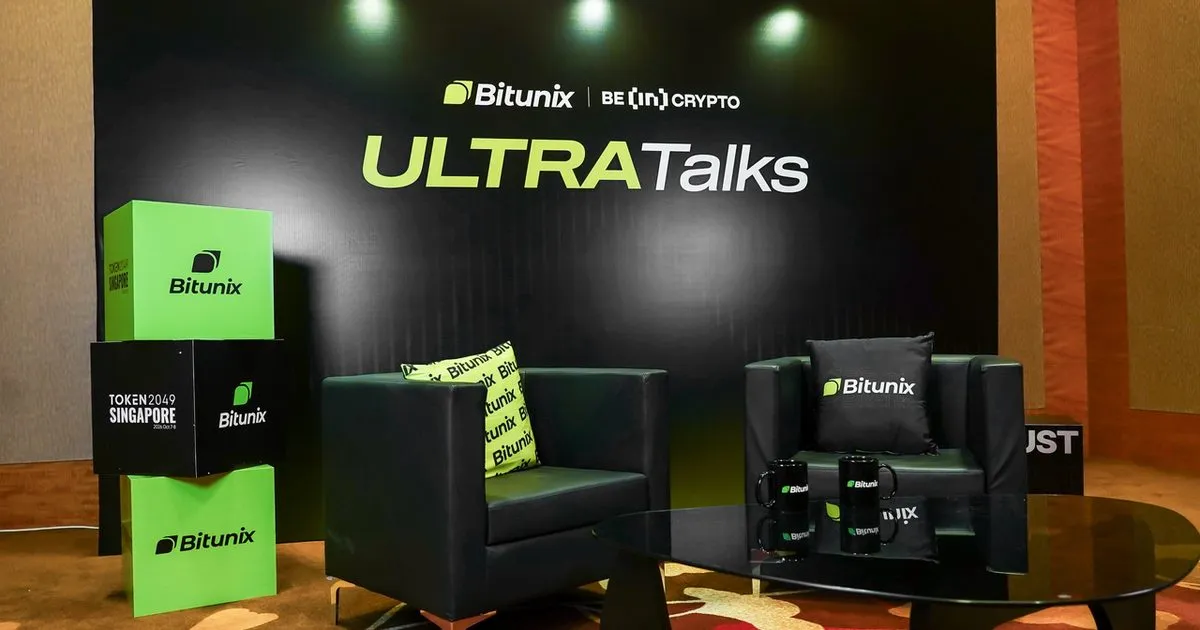
Bitunix Talk Show at TOKEN2049: From Education to Community, KOLs Say Trading Is No Longer Solo

Trading is no longer a solo journey, according to several key cryptocurrency opinion leaders (KOLs) who took part in an exclusive talk show hosted by Bitunix, a cryptocurrency exchange, and BeInCrypto at TOKEN2049 Singapore.  The interviews were recorded on October 7–8 at Marina Bay Sands, where Bitunix took part as a Gold Sponsor. The guests were HAMAHA, Pushpendra Singh, Alvaro Smart Money, Coach Miranda Miner, BitBull, The House of Crypto, and Crypto World. They spoke about trading tournaments, education, market analysis, AI, and futures.  HAMAHA, a trader with more than 20 years of experience, said crypto trading tournaments are on the rise. As a tournament winner who now helps organize them, he said competing alongside others makes trading more engaging and brings traders together. He also spoke about what community support means when markets turn.  Sponsored  Sponsored  Recalling the market crash in October last year, HAMAHA said the Bitunix Care Fund truly helped the community.  “The guys from Bitunix were very supportive. They set up a fund and helped the community that day. Because of them, those that were affected were able to start again from a small amount and cover their losses,” he said.  BitBull, the trader behind the TradeMania community, said traders do not have

10-16Industry

Traders will soon be able to bet on whether Coinbase, Robinhood and Marathon will hit their targets

While traders spent this week watching bitcoin $BTC$82,501.32 gyrate above $80,000 amid key U.S. inflation data, a decision from the U.S. Securities and Exchange Commission got far less attention.  The (SEC) approved the listing of binary options tied to key performance indicators (KPIs) of 23 U.S. publicly traded companies. The metrics include trading volume at crypto exchange Coinbase Global (COIN), customer count and revenue at Robinhood Markets (HOOD), and bitcoin production at mining firm MARA Holdings (MARA).  “For crypto, this creates a new way to trade crypto-linked company performance beyond betting directly on $BTCs price,” Eleanor Terrett, the host of Crypto America, said on X. “The SEC approved this specific securities-options structure, while leaving room for differently structured contracts to fall under CFTC jurisdiction.”  A binary option is the simplest options contract, allowing traders to bet on a simple yes-or-no question, such as whether Coinbases trading volume will exceed a set number by a specific date.  SEC Chairman Paul Atkins approved a rule change filed by Cboe Global Markets, according to a statement dated Oct. 13. The contracts are cash-settled and European-style, meaning they can only be exercised at expiration. They will settle on figures in companies SEC filings, not numbers in earnings presentations.  Cboe

10-16Exchange

CONNECT recap: Liquidity is tokenizations next challenge, everyday stablecoins

Tokenized assets are opening new trading opportunities across financial markets, but the growing supply of real-world assets (RWAs) being brought onchain has yet to be matched by investor demand, according to Alex Taaffe, chief revenue officer at crypto trading firm GSR.  Speaking during on a panel on liquidity and market fragmentation at CONNECT by Cointelegraph: Singapore Edition on Oct. 9, Taaffe said liquidity is improving in trading for pre-IPO stocks, commodities and global equities that investors previously had limited access to. However, he said demand for fully tokenized RWAs has not kept pace with the growing number of assets being issued.  Panelists (l-r): Rayco Tarrida Ortega, Min Teo, Shiliang Tang, Lingling Jiang, Alex Taaffe. Source: Cointelegraph  Cointelegraph brought together Web3 founders, investors and industry executives for four panel discussions covering tokenization, stablecoin payments, onchain trading infrastructure and venture capital exits, alongside a startup pitch competition.  “Specifically on RWAs, and fully tokenized assets, there‘s a supply and demand inbalance. There’s a ton of supply. Every asset manager issuer wants to do capital formation onchain,” Taaffe said.  He said that the growing number of asset issuers and blockchains has further fragmented liquidity across tokenized markets.  Related: Securitize stock jumps over 10% after launching tokenized US equities on Solana.

10-16Industry

Vitalik Buterin unveils privacy focused AI agent using Tor and zkAPI

Ethereum co-founder Vitalik Buterin has developed an open-source privacy system for AI agents that combines Tor routing, anonymous payments and locally processed prompts to reduce the exposure of user information when accessing large language models.  SummaryVitalik Buterin has developed an open source AI privacy system that combines Tor routing, zkAPI payments and local prompt rewriting.Each AI conversation uses a separate Tor circuit, with random cover traffic added to make requests harder to track.The system runs through an OpenAI compatible interface and uses sandbox restrictions to route network activity through Tor.Buterin said the setup was becoming usable but acknowledged slower response times and weaknesses against coordinated traffic analysis.He expects cheaper zkAPI deposit and withdrawal costs on Ethereum mainnet, although no deployment date has been confirmed.  In an X post, Buterin said he had built a “paranoid mode” for his AI agent harness, pi, using zkAPI, random cover traffic and a local language model to rewrite requests before they reach an external AI provider.  Wrapped zkAPI + Tor + extra cover traffic + local LLM prompt rewriting in an open-AI compatible daemon, and made a “paranoid mode” wrapper for my agent harness (pi):  Each conversation gets assigned a separate Tor circuit, your requests are masked with

10-16Industry
1
...
175177
...
1000