Feds Waller cites Binance hack in warning over tokenized finance

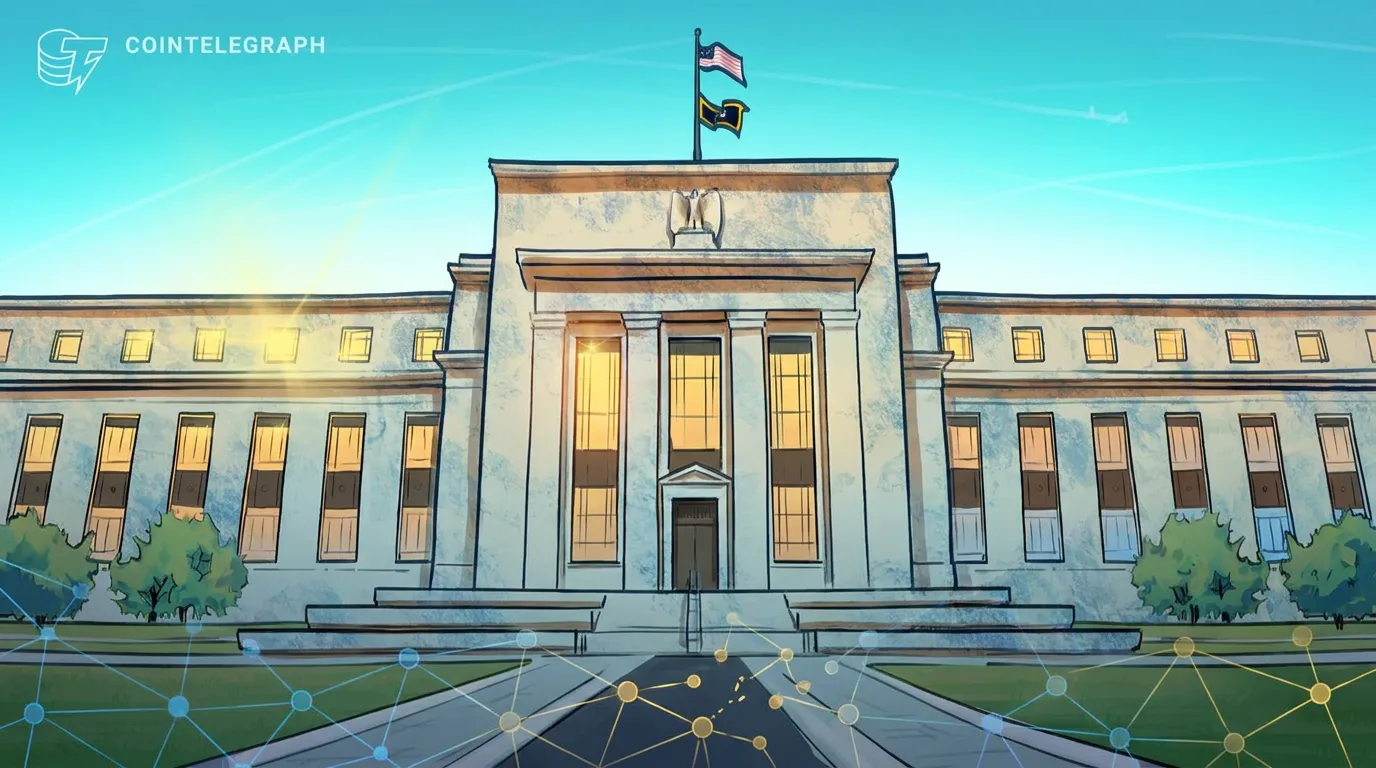
US Federal Reserve Governor Christopher Waller cited the recent $6.3 billion Binance hack while raising questions about security and accountability in tokenized financial markets, suggesting that major institutional transactions may require blockchain systems offering greater privacy and control.  Speaking at The Clearing Houses annual conference in New York on Nov. 17, an event bringing together banking and payments industry leaders, Waller questioned who would bear responsibility when fraudsters exploit smart contracts, private keys are compromised, transfers go wrong or assets become stranded on failed blockchains.  Waller said the level of security and oversight required could depend on the importance of the financial transactions involved:  For example, systemically important financial transactions may call for the most conservative designs. These designs might trade some of the developer creativity found on purely permissionless, open networks in favor of greater privacy and control.  The expansion of tokenized finance would also require clear legal frameworks governing ownership rights, custody and settlement, he said, arguing that governance and legal protections are as important as technical safeguards in building trust.  Wallers remarks came as four Democratic senators pressed the Securities and Exchange Commission (SEC) over safeguards for tokenized stocks. In a letter released Monday, the lawmakers questioned who would be responsible for
2 days agoIndustry

Eastern Europe crypto flows fall 7.9% as Ukraine draws $12B in stablecoins

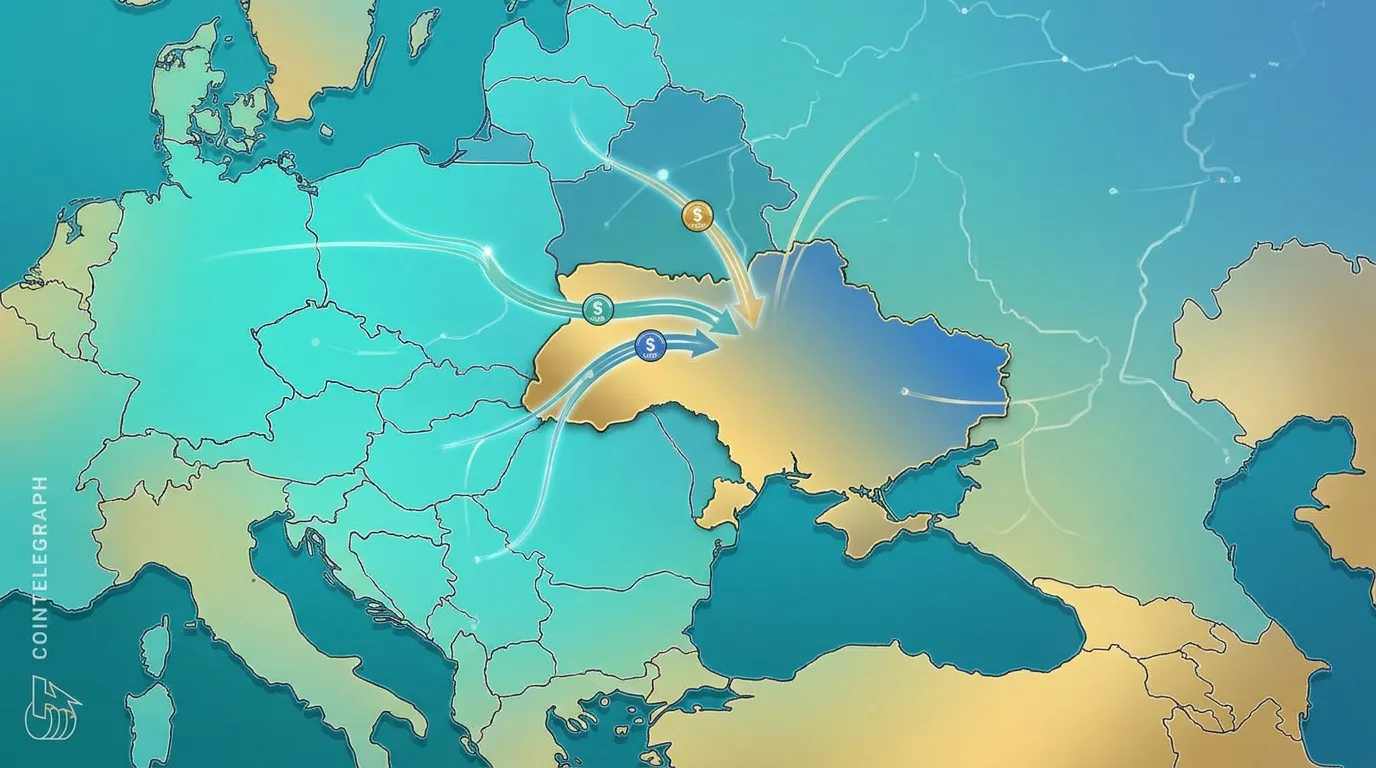
Eastern Europe recorded the steepest decline in cryptocurrency activity among the regions tracked by Chainalysis in the year ended June 2026, falling 7.9% even as retail-sized transfers increased in value, according to a report published Tuesday.  The regions crypto economy shrank to $642.1 billion from $697.1 billion a year earlier, compared with a 1.6% decline globally, the report states. Russia, which accounted for roughly 44% of the regional total, saw activity fall 14.7% to $284.1 billion over the period. By contrast, Belarus recorded 27.6% growth, while Bulgaria, Moldova and Ukraine saw smaller increases.  The value of transfers of $10,000 or more to crypto services fell 17.4%, from $591.5 billion to $488.6 billion, according to the report.  The value of smaller transfers to crypto services, meanwhile, rose 8.3%. These retail-sized transfers accounted for 13.1% of the value sent to crypto services in Eastern Europe, the highest share of any region studied and above the global average of 10.1%.  Eastern European crypto activity by country, July 2025 to June 2026. Source: Chainalysis reportPolish crypto ATM activity grows  Crypto ATM activity also increased across Eastern Europe, with transaction volumes nearly doubling from $17.3 million to $33.9 million. Poland recorded a 120% increase in ATM transactions despite a 5%

2 days agoIndustry

CFTC sets Dec. 15 talks on 24/7 trading and tokenization

The Commodity Futures Trading Commission has published the agenda for its Dec. 15 roundtable on 24/7 derivatives trading, putting tokenized collateral, margin, and weekend market safeguards before industry participants.  The CFTC‘s Nov. 17 announcement sets the meeting for 1–4 p.m. EST at its Washington headquarters, with public access and a livestream on the agency’s website.  Chairman Michael Selig said he wants to hear how continuous trading would affect different business models so the commission can ensure it is “appropriately tailoring its regulatory regime for all market participants.”  The agency first announced the event on October 28, saying it would build on a request for public comment issued earlier in the summer. Its original notice described the roundtable as a venue for industry discussion about innovation, market integrity and the resilience of U.S. derivatives markets.  In the October notice, Selig said the commission “will not take a one-size-fits-all approach to 24/7 trading.” The agency invited members of the public to submit speaker nominations and said in-person attendance could be limited, with visitors subject to security checks.  CFTC will assess which assets suit 24/7 trading  In its published agenda, the commission asks which asset classes are ready for continuous trading now, within one or two years, further out

2 days agoIndustry

Ethereum Devs Weigh a Scaling Upgrade That Could Break 15,000 Apps

In briefEthereums proposed Glamsterdam upgrade could break up to 15,000 smart contracts, EF developer Marius van der Wijden said on a Nov. 16 core developer call.AI-assisted audits by ChainSecurity and Dedaub found ~200 affected contract classes, mostly tied to gas-cost increases.No decision was made; removing the changes could delay the upgrade—and the post-quantum roadmap—by four to six months.  Ethereums upcoming Glamsterdam upgrade threatens to break as many as 15,000 smart contracts, developers warned during a core developer call Monday, forcing a debate over how much disruption the network should tolerate in the name of scaling.  The concern centers on two proposed changes, EIP-8037 and EIP-8038, designed to let Ethereum scale from 60 million gas to as much as 200 million gas per block, a roughly 3.3x jump that developers say would sharply lower costs for most users while keeping state growth in check.  The problem, flagged late in the development process, is that the changes break certain invariants, assumptions that some smart contracts were built to rely on.  Predict·CryptoETH price on November 22, 4:59PM UTC  Above 1,50097%YesNo  Above 1,60093%YesNo  Above 1,70078%YesNo  Above 1,80047%YesNo  Above 1,90019%YesNo  +1 more outcomes  NEW  $100.00 volume  Nov 22Closes: Nov 22, 2026, 16:59 UTC  Closes: Nov 22, 2026, 16:59 UTC  “Multiple contracts were relying on invariants in the protocol that are

2 days agoIndustry

Goldman Sachs reports $1.22B in Ether ETFs as ETHA share count jumps

Banking giant Goldman Sachs reported $1.22 billion in Ether exchange-traded fund (ETF) holdings at the end of September, up from $211.6 million three months earlier, as it increased positions across several funds throughout the third quarter.  The bank increased its holdings in BlackRocks iShares Ethereum Trust ETF (ETHA) by 352% to 29.96 million shares, worth $602.9 million, according to its Q3 Form 13F filing with the US Securities and Exchange Commission (SEC).  The company also shifted its Bitcoin ETF holdings, reducing its stake in BlackRock‘s Bitcoin (BTC) fund while increasing its position in Fidelity’s competing ETF.  The increase coincided with a strong quarter for Ether (ETH), which surged nearly 71% in Q3, according to CoinGlass. US spot Ether ETFs attracted more than $3 billion in net inflows, their strongest quarter of 2026, according to SoSoValue.  Goldman Sachs boosts Ether ETF holdings  BlackRocks ETHA was not the only Ether ETF in which Goldman Sachs increased its holdings during Q3.  The bank also increased its holdings in Grayscale‘s Ethereum Staking Mini ETF (ETH) by 180% to 5.68 million shares, lifting the position’s reported value to $144.9 million from $30.5 million in Q2.  Its holdings in BlackRocks iShares Staked Ethereum ETF (ETHB) rose 62% to 8.18 million shares, worth $281

3 days agoIndustry

Revolut plans four blockchain-based funds for private markets, chair says

Revolut plans to launch four funds using blockchain to offer fractional investments in illiquid markets, chair Martin Gilbert said Tuesday at Solanas Breakpoint conference in London.  Blockchain, he explained, would be used to divide funds focused on illiquid markets “into what I would term marketable sizes.”  “If you want to buy a private equity fund on Revolut going forward, when we do launch these funds, you will be able to buy them in fractional amounts.”  The company, which has said it has over 80 million customers worldwide, launched a private market investment platform to eligible customers in Europe in July. Managed by a number of firms including Apollo, Ares, Hamilton Lane and Partners Group, the funds already on the platform allow for a minimum investment of 1 euro.  Warning that the financial sector may be entering into a liquidity crunch, particularly in private markets, he highlighted the need to attract more buyers to these markets, which blockchains could facilitate.  “In this world, there is liquidity until there is no liquidity,” he said. “If you can help people get liquidity in illiquid assets, youre going to solve a lot of problems for a lot of people. The only way you can do that is to be

3 days agoIndustry

Russia opens Bitcoin, Ethereum, USDT access to retail investors under new rules

Russia has brought new cryptocurrency investment rules into force, allowing retail investors to purchase Bitcoin, Ether and Tethers USDT through regulated financial intermediaries under an annual limit of 300,000 rubles.  The Bank of Russia confirmed on Nov. 6 that its approved list of cryptocurrencies for non-qualified investors would take effect on Nov. 17, giving individuals access to the three digital assets through brokers, trust managers and cryptocurrency exchange offices.  BREAKING: Russia is opening the door to regulated Bitcoin trading for the general public.  Starting today, November 17, non-qualified Russian investors can access Bitcoin, Ethereum and USDT through authorised financial intermediaries.  But there are limits.  Retail investors face… pic.twitter.com/9qkgw3dF17  — That Martini Guy ₿ (@MartiniGuyYT) November 17, 2026  Based on the central banks official exchange rate of 82.5143 rubles per dollar on Tuesday, the annual purchase limit amounts to approximately $3,636.  While the rules governing retail access are now in effect, domestic exchanges can begin cryptocurrency trading from Nov. 22, provided the central bank approves their trading rules. Moscow Exchange has scheduled its initial rollout for Dec. 1.  Russia sets annual crypto purchase limits for retail investors  Under the Bank of Russias Ordinance No. 7441-U, the annual purchase limit applies separately to each financial intermediary through which a non-qualified investor acquires

3 days agoIndustry

Aster strengthens security after API Wallet leak and reported $4.56M loss

Aster has strengthened its platform security measures after confirming that a user suffered financial losses following the exposure of an API Wallet private key.  In a Nov. 17 statement on X, Aster CEO Leonard Leung said the decentralized perpetual futures exchange began investigating the incident immediately after receiving a report from the affected user. The team examined the circumstances surrounding the loss while carrying out checks on its platform systems.  “Recently, an Aster user suffered asset losses after their API Wallet private key was compromised. I regret this incident,” Leonard wrote in a statement.  The CEOs response follows a complaint from an Aster user who reported losing approximately $4.56 million through unauthorized transactions, including the movement and subsequent sale of Bitcoin holdings.  Source: XAster user reports $4.56 million in unauthorized transfers  The affected user, who goes by furongfei on X, disclosed that the transactions occurred during the early hours of Nov. 13 Beijing time. The user maintained that they had not authorized any of the transfers and that their main wallets private key had not been compromised.  Details of the complaint reported by Lookonchain indicated that someone had used an agent key automatically generated through Asters web interface to register a new account.  Transaction records described by

3 days agoIndustry

Bitcoin realized loss metric beats June high as open interest eyes 2-year low

Bitcoin investors are showing increasing signs of panic as newer buyers onchain losses hit their highest since February.  Key points:The spent output profit ratio (SOPR) for Bitcoin (BTC) wallets holding for up to 155 days reached 0.955, reflecting the largest realized losses in over nine months.SOPR set lower lows than its 0.985 reading from June 30, 24 hours before BTC/USD fell to multiyear lows of $57,800.Bitcoin open interest has fallen to $20.498 billion, its lowest level since late 2024, per data from CryptoQuant.  Bitcoin short-term holder onchain losses highest in nine months  Data from onchain analytics platform CryptoQuant reveals new nine-month lows in the spent output profit ratio (SOPR) of Bitcoins short-term holders (STH).  SOPR measures the ratio of BTC moving onchain at a higher or lower price relative to the last time it was used in a UTXO. The metric can be broken down by investor cohort, only accounting for coins owned by older or newer hodlers. The latter cohort traditionally consists of speculative entities who are more sensitive to BTC price volatility. An STH entity is a wallet holding a given unit of BTC for up to 155 days without selling.  On Nov. 16, STH-SOPR recorded a reading of 0.955, its lowest since

3 days agoIndustry

US senators seek SEC answers on tokenized stock money laundering risks

Four Democratic senators pressed the US Securities and Exchange Commission (SEC) to clarify financial crime safeguards under its tokenized stock exemption, warning that tokenized shares bought by verified investors could reach offshore or unverified wallets.  In a letter released Monday, Senators Angela Alsobrooks, Catherine Cortez Masto, Mark Warner and Ruben Gallego questioned how Anti-Money Laundering and Know Your Customer rules apply to tokenized securities venues, which can trade certain US stocks without registering as securities exchanges.  The senators said the SECs Sept. 17 Innovation Exemption requires venues to control trading access but does not mandate restrictions on subsequent transfers. They asked who would be responsible for tokens moved outside of regulated platforms and whether the SEC could recover or freeze them.  The lawmakers also questioned issuers‘ rights to object, retail investors’ access to best execution protections and custody safeguards. They asked SEC Chair Paul Atkins 13 questions, urging more transparent rulemaking and requesting answers within 30 days.  When announcing the exemption in September, Atkins said federal anti-fraud and anti-manipulation rules would continue to apply in full.  OKXICE, a venture between crypto exchange OKX and New York Stock Exchange parent Intercontinental Exchange, has also faced issuer objections. Its Nov. 5 public notice listed 67 companies that

3 days agoIndustry
1
...
1214
...
1000