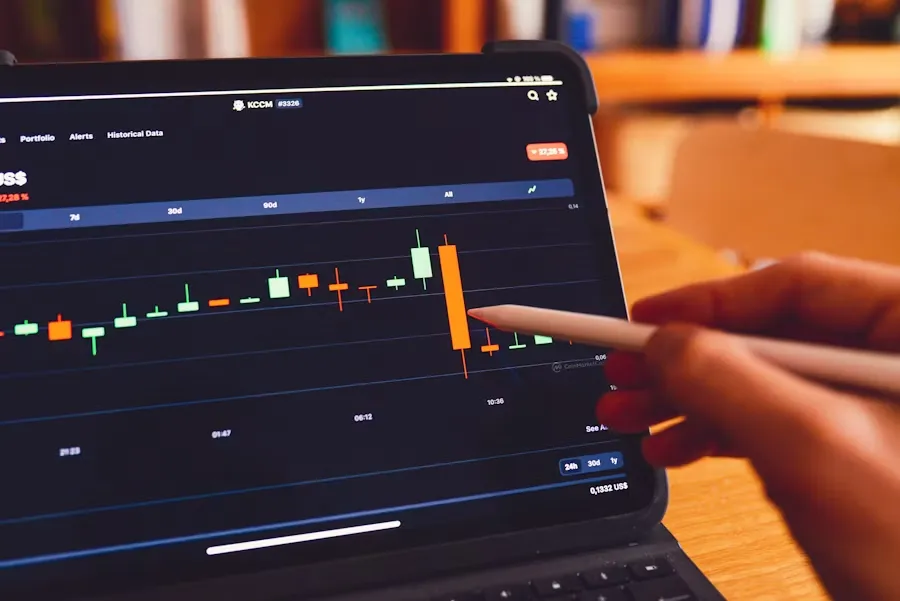
Benchmark Initiates Coverage on DDC Enterprise: $3 Target

Benchmark has initiated coverage on DDC Enterprise (NASDAQ: DDC) with a buy recommendation and a $3 price target per share. Analysts highlight the company‘s potential to more than double its bitcoin holdings by the end of 2026. The report published on Tuesday states that DDC’s Asia-originated food platform infrastructure provides a competitive advantage in managing its bitcoin treasury. The note signed by Mark Palmer emphasizes the firm‘s established operational strength with brands like DayDayCook, Nona Lim, and Yai’s Thai. This move differentiates DDC among corporate bitcoin accumulators.  DDC stock price chart. Source: Google FinanceDDCs Plan to Expand Bitcoin Treasury to 5,000 BTC  The company already holds a strong bitcoin portfolio and plans to reach 5,000 BTC by the end of 2026; this could significantly move it up in the current rankings. The accumulation strategy proceeds with share-based deals and direct purchases, thus preserving balance sheet flexibility. The ready-to-eat and ready-to-cook food segment offers operational resilience and additional revenue streams compared to pure bitcoin treasuries. You can examine market dynamics by visiting the BTC detailed analysis page.  2025 Financial Performance and Valuation Discount  In fiscal 2025, DDC recorded $39.2 million in revenue, achieving 4.6% annual growth and positive adjusted EBITDA for the full year for

04-28Industry

Dogecoin (DOGE) Trends Higher, Larger Gains Could Be Ahead

The first major resistance for the bulls could be near the $0.10 level. The next major resistance is near the $0.1050 level. A close above the $0.1050 resistance might send the price toward the $0.1120 resistance. Any more gains might send the price toward the $0.120 level. The next major stop for the bulls might be $0.1250.  Another Decline In DOGE?  If DOGEs price fails to climb above the $0.0995 level, it could continue to move down. Initial support on the downside is near the $0.0975 level or the trend line. The next major support is near the $0.0970 level.  The main support sits at $0.0950. If there is a downside break below the $0.0950 support, the price could decline further. In the stated case, the price might slide toward the $0.0920 level or even $0.090 in the near term.  Technical Indicators  Hourly MACD – The MACD for DOGE/USD is now gaining momentum in the bullish zone.  Hourly RSI (Relative Strength Index) – The RSI for DOGE/USD is now above the 50 level.  Major Support Levels – $0.0970 and $0.0950.  Major Resistance Levels – $0.0995 and $0.10.

04-28Industry

Microsoft, OpenAI Amend Partnership Deal Through 2032

OpenAI and Microsoft have announced a major update to their partnership agreement, simplifying their collaboration while providing long-term clarity and flexibility. The amended deal, effective through 2032, cements Microsoft‘s role as OpenAI’s primary cloud partner while granting OpenAI the freedom to serve its products on other cloud platforms.  The revised terms include several key changes. Microsoft retains a non-exclusive license to OpenAIs intellectual property for models and products, extending through 2032. OpenAI, meanwhile, will continue paying Microsoft a revenue share until 2030, albeit with a total cap on payments. Notably, Microsoft will no longer share revenue with OpenAI, signaling a shift in the financial structure of their collaboration.  This amendment reinforces Microsoft‘s continued investment in OpenAI, both financially and strategically. Beyond its role as a cloud provider, Microsoft remains a major shareholder, a position it has built through a series of investments totaling over $13 billion since 2019. These funds have powered not only OpenAI’s AI breakthroughs but also its transition to a public benefit corporation in 2025, a move that allowed the company to expand its investor base while maintaining its mission-driven focus.  The companies plan to continue scaling their joint efforts in AI infrastructure and applications. This includes expanding datacenter capacity,

04-28Industry

Digital ledger technology explained: a guide for crypto

Digital ledger technology encompasses various structures beyond blockchain, affecting finance and applications.Blockchain is a specific DLT structure emphasizing security and decentralization, while alternatives like DAG offer scalability.Understanding DLTs architecture and consensus mechanisms is crucial for evaluating crypto projects and managing risks.  Blockchain dominates the headlines, but the technology powering the broader crypto ecosystem is often misunderstood, misnamed, or simply overlooked. Many investors and technologists use “blockchain” and “distributed ledger technology” as if they mean the same thing, but that assumption can lead to costly blind spots when evaluating projects or assessing risk. Digital ledger technology, or DLT, is the wider category that blockchain belongs to, and understanding the distinction matters more than ever as new DLT architectures reshape finance, trading infrastructure, and decentralized applications across the industry.  Table of ContentsKey TakeawaysPointDetailsDLT vs blockchainBlockchain is a type of DLT, but DLT covers more diverse structures useful in crypto.Consensus mattersHow a DLT validates transactions impacts speed, security, and decentralization.Investor benefitsDLT enables more transparent, auditable, and programmable investments for crypto users.Scalability and risksScalability, interoperability, and quantum threats remain top challenges for DLT adoption.  What is digital ledger technology?  DLT is a database technology that records and shares transaction data across multiple locations, called nodes, simultaneously. Unlike a

04-28Industry

TRON DAO Joins The Programmable Economy: AI & Blockchain Redefining Markets Conference at Cornell Tech

— TRON DAO, the community-governed DAO dedicated to accelerating the decentralization of the internet through blockchain technology and decentralized applications (dApps), participated in The Programmable Economy: AI Ayesha Kiani, Chief Operating Officer of Monarq Asset Management; and Alex Weseley, Research Team Lead at Artemis Analytics, to examine the evolving relationship between centralized and decentralized financial markets, and how emerging infrastructure is reshaping liquidity, access, and capital formation.  “DeFi is no longer a parallel system; it is slowly integrating as part of the same financial fabric that institutions operate within,” said Elfarra. “On TRON, were seeing firsthand how high-throughput and cost-efficient infrastructure for stablecoin settlement can serve both TradFi and DeFi at scale. As traditional finance and decentralized markets grow closer together, the networks that can support both worlds reliably will define where the industry goes next.”  TRON DAO‘s participation at the 2026 AI & Blockchain Redefining Markets Conference builds on its expanding commitment to academic engagement through the TRON Academy initiative, a global program designed to bridge the gap between blockchain education and real-world industry applications. TRON DAO’s growing university network now includes Cornell University, Columbia University, Harvard University, Imperial College London, Yale University, MIT, Princeton University, Dartmouth College, the University of

04-28Industry

Solana (SOL) Prepares for Quantum Threats with Falcon Scheme

Solana (SOL), the high-performance blockchain known for its speed and scalability, is taking proactive steps to address the looming challenge of quantum computing. While quantum technology capable of breaking current cryptographic protocols is still years away, Solana is positioning itself as a leader in quantum readiness through extensive research and early implementation of post-quantum cryptography.  Independent research from two key validator client developers, Anza and Firedancer, has identified Falcon, a post-quantum digital signature scheme, as the most viable solution for maintaining Solanas high throughput while safeguarding against quantum threats. Both teams have developed initial implementations of Falcon, available on their respective GitHub repositories, laying the groundwork for a swift migration should it become necessary.  Why Quantum Matters for Blockchains  Quantum computing poses a theoretical threat to blockchain networks by potentially breaking the cryptographic signatures that secure transactions. For a platform like Solana, which handles tens of thousands of transactions per second, any disruption in security could have catastrophic consequences for its ecosystem.  Solanas early focus on quantum security helps mitigate this risk. Alongside the Falcon initiative, the ecosystem has already deployed quantum-resistant solutions like the Blueshift Winternitz Vault, cited in a 2026 Google Quantum AI whitepaper as a leading example of proactive quantum-proofing. This

04-28Industry

A Solana Storage Network Just Put Down Roots on Bitcoin

Xandeum, the decentralized storage network built on Solana, today began anchoring its state to Bitcoin.  At every checkpoint of its consensus, Xandeum writes a cryptographic fingerprint of its storage state into the Bitcoin blockchain, where it cannot be altered or erased. Anyone, anywhere, at any point in the future can use that fingerprint to prove what data Xandeum was holding at a given moment in time — without trusting Xandeum, its team, or any third party.  It is the first time a Solana-native infrastructure project has tied its trust model to Bitcoin.  “Solana gives us the speed and programmability to scale storage to exabytes,” said Bernie Blume, Founder and CEO of Xandeum. “Bitcoin gives us something Solana wasn‘t built for: the most battle-tested permanence record in computing history. Our customers shouldn’t have to choose. Now they dont.”  Xandeum currently runs more than 300 pNodes — independently operated storage nodes — across the network, with capacity growing weekly. The upcoming South Era pNode Sale in June will be the final opportunity to acquire nodes under the networks early-era terms.  Xandeum is presenting at Bitcoin 2026 in Las Vegas, April 27–29. Bernie Blume and members of the team are available for briefings and live demonstrations of the

04-28Industry

Dogecoin (DOGE) Trends Higher, Larger Gains Could Be Ahead

The first major resistance for the bulls could be near the $0.10 level. The next major resistance is near the $0.1050 level. A close above the $0.1050 resistance might send the price toward the $0.1120 resistance. Any more gains might send the price toward the $0.120 level. The next major stop for the bulls might be $0.1250.  Another Decline In DOGE?  If DOGEs price fails to climb above the $0.0995 level, it could continue to move down. Initial support on the downside is near the $0.0975 level or the trend line. The next major support is near the $0.0970 level.  The main support sits at $0.0950. If there is a downside break below the $0.0950 support, the price could decline further. In the stated case, the price might slide toward the $0.0920 level or even $0.090 in the near term.  Technical Indicators  Hourly MACD – The MACD for DOGE/USD is now gaining momentum in the bullish zone.  Hourly RSI (Relative Strength Index) – The RSI for DOGE/USD is now above the 50 level.  Major Support Levels – $0.0970 and $0.0950.  Major Resistance Levels – $0.0995 and $0.10.

04-28Industry

Monero To $1,160? Analyst Sees Major XMR Rally Ahead

Cryptoinsightuk analyst Will Taylor says Moneros multi-year structure could support a move toward the $1,000 area and potentially as high as $1,160 if the current weekly trend holds.  Taylor shared a weekly XMR chart on X and tied the setup to a broader thesis around privacy coins, arguing that Moneros market structure has continued to improve despite the regulatory and exchange pressure facing privacy-focused assets.  “Looking to see if this trend continues or not. Structural higher lows and higher highs, with volatility of the upside moves increasing. Im thinking a TP below / around the psychological level of $1,000,” Taylor wrote.  He added that the more aggressive target sits above that level. “We still have today to confirm on the weekly of course, but just an idea. There is also an argument for the $1,160 region that would align with the 2.618 fib level.”  The Thesis Behind Monero  The chart shows Monero trading near $388 against USDT on KuCoin. The projected move toward the $1,160 area would imply a gain of around 200% from the highlighted region, according to the chart‘s measurement. Taylor’s market-cap chart also shows XMR around $7.15 billion, with Fibonacci extension levels mapped above the current range.  Taylors thesis is not based only

04-28Industry

SuperEX Partners With Abelian Blockchain To Protect Crypto Exchange From Quantum Computer Attacks

In a groundbreaking move to advance network security to safely safeguard investors‘ assets from on-chain risks, SuperEX, a Web3 cryptocurrency exchange, today announced a strategic partnership with Abelian, a layer-1 blockchain with the capability to protect user transactions, assets, and data against adversarial quantum attacks. The collaboration enabled SuperEX to integrate Abelian’s quantum-resistant blockchain infrastructure to support its crypto exchange trading platform with advanced cybersecurity safeguards.  ???? SuperEx × Abelian (@PQabelian)  SuperEx is proud to partner with Abelian, a post-quantum Layer 1 blockchain purpose-built to withstand quantum threats. The U.S. National Institute of Standards and Technology (NIST) has approved several lattice-based cryptographic algorithms…  — SuperEx (@SuperExet) April 27, 2026  Why SuperEX Taps Abelian  Through the partnership above, the integration of Abelian‘s quantum-resistant blockchain infrastructure enhances the security of crypto services and products built on SuperEX’s exchange, making them resilient against possible attacks from quantum computers. Abelian is a Layer-1 blockchain network built with quantum-resistant and privacy-preserving features, having an advanced capability to protect blockchain networks and Web3 platforms against potential quantum computer attacks, ensuring their long-term security. This post-quantum privacy-preserving public blockchain utilizes the NIST standardized lattice-based cryptosystems to ensure security against quantum computing threats and enables privacy enhancements for user wealth preservation.  The integration of

04-28Industry