Bitget’s OpenAI-linked token sale tops $100M before deadline

Bitget said commitments for its OpenAI-linked preOPAI sale on IPO Prime passed $100 million before the subscription window closed on May 15 at 8:00 UTC. Bitget said OpenAI-linked preOPAI commitments passed $100 million before the May 15 subscription deadline.Crypto.news earlier noted preOPAI offers OpenAI-linked exposure but does not represent direct company equity.Bitgets own terms say OpenAI has not endorsed, approved or authorized the preOPAI product.  The product gives eligible users exposure tied to OpenAIs possible future public listing.  The exchange listed preOPAI as the second project on IPO Prime. Earlier crypto.news coverage said the sale opened on May 12, with preOPAI priced at $725 per token. It also noted that the product gives OpenAI-linked exposure but does not represent direct company equity.  How the preOPAI sale works  Bitget‘s support page says preOPAI was issued by Republic and designed to mirror OpenAI’s economic performance after a future public listing. The product used USDT or USDGO for commitments, with a $100 minimum and a $300 million total commit cap.  The IPO Prime timeline listed May 12 to May 15 as the commitment period. Distribution was scheduled for May 15 between 8:00 UTC and 12:00 UTC, with spot trading set to start at 14:00 UTC on the same

05-15Industry

Arc, Canton and Tempo raise over $1B for privacy-focused blockchains

Tech  Arc, Canton and Tempo raise over $1B for privacy-focused blockchains  Three privacy-focused blockchain networks, Arc, Canton, and Tempo, have collectively raised more than $1 billion in funding, each commanding valuations north of $10 billion combined. The money isnt coming from the usual crypto-native suspects alone. BlackRock, Goldman Sachs, Visa, Deutsche Bank, and Stripe are all in the mix.  The billion-dollar breakdown  Circles Arc network closed a $222 million token presale at a $3 billion fully diluted valuation. BlackRock and Apollo led the round. Circle already operates USDC, the second-largest stablecoin by market cap, and Arc represents its bet that stablecoin settlement needs a dedicated privacy layer rather than just riding existing public chains.  Canton Network is reportedly raising $300 million at a $2 billion valuation. The round is being led by a16z, with Goldman Sachs and Citadel among the participants. Canton was originally built by Digital Asset Holdings using its smart contract language, DAML, and focuses on institutional asset tokenization with built-in privacy controls that let counterparties share transaction data selectively.  Then there‘s Tempo, incubated by Stripe, which pulled in $500 million at a $5 billion valuation. Visa and Deutsche Bank contributed to the round. Stripe’s involvement is particularly telling. The payments giant acquired stablecoin

05-15Industry

Apple (AAPL) Stock Dips as OpenAI Considers Legal Action Over ChatGPT Partnership

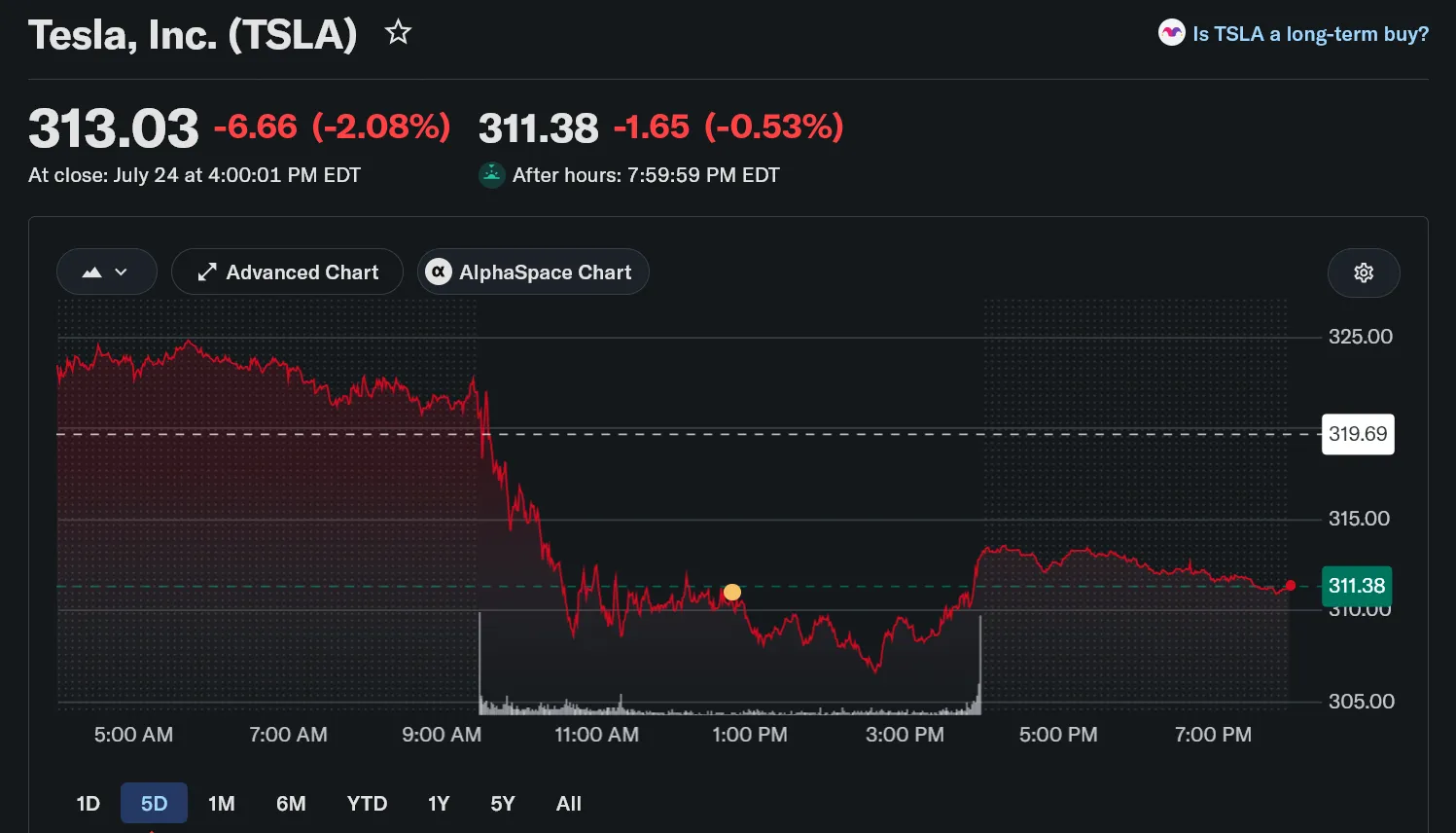
Apple Inc., AAPL  The collaboration, unveiled during Apple‘s WWDC conference in June 2024, integrated ChatGPT capabilities into Siri and the iPhone’s Visual Intelligence functionality. The arrangement also established a direct pathway for iPhone owners to subscribe to ChatGPT premium services via iOS settings, with Apple receiving a revenue share.  OpenAI projected the partnership could ultimately yield billions in annual subscription revenue. Those projections have not materialized.  OpenAIs internal analytics revealed that iPhone users overwhelmingly prefer the dedicated ChatGPT application over the Siri integration. The integrated experience only activates ChatGPT when users explicitly voice or type “ChatGPT,” and responses display in a constrained, abbreviated format.  “We have done everything from a product perspective,” an unnamed OpenAI executive told Bloomberg. “They have not, and worse, they havent even made an honest effort.”  Both Apple and OpenAI have declined to provide official statements.  Growing Discord Between Partners  The alliance has deteriorated from both perspectives. Apple has maintained persistent reservations regarding OpenAI‘s handling of user privacy matters. Additionally, Apple leadership has grown increasingly concerned about OpenAI’s aggressive recruitment of hardware engineers from Apple‘s teams, offering compensation packages worth millions above Apple’s standard rates.  OpenAI‘s acquisition of Jony Ive’s hardware company for approximately $6.5 billion positioned the AI firm as a potential direct

05-15Industry

Community Bank discloses security lapse after unauthorized AI app exposure

Tech  Community Bank discloses security lapse after unauthorized AI app exposure  Community Bank, a regional lender operating across Pennsylvania, Ohio, and West Virginia, has disclosed a cybersecurity incident caused by an employee using an unauthorized AI application. The breach exposed sensitive customer information, including names, dates of birth, and Social Security numbers.  The bank reported the incident in an SEC 8-K filing on May 7, 2026. Regulatory notifications and direct outreach to affected customers are already underway under both state and federal guidelines.  What happened and why it matters  Community Bank hasn‘t disclosed exactly how many customers were affected, but the nature of the compromised information, Social Security numbers and dates of birth, puts this squarely in the high-severity category. The breach didn’t come from a sophisticated external attacker or a zero-day exploit. It came from inside the house.  The AI governance gap in banking  Banks are supposed to be among the most tightly regulated entities when it comes to data handling. The Gramm-Leach-Bliley Act, state privacy laws, and a web of federal guidelines all impose strict requirements on how financial institutions collect, store, and share customer information. And yet, Community Bank‘s disclosure suggests those guardrails didn’t prevent an employee from plugging customer data into an outside

05-15Industry

EU in talks to join US-led alliance for tech supply chain security

Tech  EU in talks to join US-led alliance for tech supply chain security  The European Union is negotiating to join a US-led coalition designed to lock down supply chains for the worlds most sensitive technologies. The alliance, described as a “trusted network” of partners, focuses on AI infrastructure, advanced semiconductors, and the critical minerals needed to build them.  What the alliance actually looks like  The initiative continues a push that gained momentum under the Trump administration to reduce Western dependency on China for essential technology inputs.  The EU‘s interest in joining isn’t a sudden pivot. Brussels has been building its own parallel infrastructure for years. The European Chips Act is designed to boost domestic semiconductor production. The Critical Raw Materials Act targets the minerals that go into everything from EV batteries to GPU substrates. And the transatlantic US-EU Trade and Technology Council has been the diplomatic scaffolding for exactly this kind of cooperation.  Joining the US-led alliance would layer another coordination mechanism on top of those existing frameworks. It would also signal that Europe is willing to align more explicitly with Washington on technology containment strategies aimed at Beijing.  Why crypto should be paying attention  This alliance doesn‘t mention Bitcoin, Ethereum, or any crypto protocol by name. It

05-15Industry

Equities: Tech and AI leadership drive record highs – Deutsche Bank

Tech  Equities: Tech and AI leadership drive record highs – Deutsche Bank  Deutsche Bank analysts note that global equities rallied as positive Trump-Xi signals, solid US data and easing inflation concerns lifted risk appetite. The S&P 500 and Nasdaq reached fresh record highs, supported by tighter US investment-grade spreads and strong gains in technology and AI-related names, while European equities advanced and mainland Chinese stocks outperformed weaker Asian peers.  Equities rally with tech and AI leadership  “Ahead of all that, global markets had generally put in a strong performance yesterday, thanks to positive noises from the Trump-Xi summit in Beijing, a decent batch of US data, and easing fears about inflation. So that pushed the S&P 500 (+0.77%) to another record, topping the 7,500 mark for the first time. And other risk assets performed well too, with US IG spreads closing at their tightest level in 3 months.”  “Otherwise, risk assets got further support from various corporate headlines. Notably, Cisco (+13.41%) was the top performer in the S&P 500, after they announced a better-than-expected outlook in their latest release. Wider optimism around AI was also supported by a +68% opening jump for AI chipmaker Cerebras Systems after its $5.5bn IPO.”  “Nvidia (+4.39%) led the gains for

05-15Industry

HBAR Price Prediction: Dead Cat Bounce to $0.12 Before $0.07 Crash

Market Context: Why HBAR is Moving Now  HBAR sits in purgatory at $0.09, down a brutal 70% from its February 2025 peak of $0.40. Temitope Olatunji‘s January analysis nailed the carnage, but the bleeding isn’t over. The token is trapped in a sideways grind thats lulling traders into complacency while institutional players quietly accumulate for the next major move.  The $11 million daily volume tells the real story – this is distribution masquerading as consolidation. Blockchain.news has been tracking similar patterns across enterprise blockchain tokens, and HBARs current setup screams impending volatility.  Indicator Alignment  The technicals are painting a deceptive picture that‘s fooling the majority. RSI sitting pretty at 53 looks neutral, but that’s exactly where smart money wants it before the next leg down. MACD histogram at zero with bearish momentum underneath shows the bulls are exhausted despite the recent bounce attempts.  Bollinger Band positioning at 0.63 indicates HBAR is riding the middle, but the compression is tightening like a coiled spring. When this breaks, its going to be violent in both directions. The fact that all major moving averages are converging around $0.09 creates a perfect storm for a fake breakout before the real move.  Whales & Analyst Targets  Here‘s where it gets interesting –

05-15Industry

Isomorphic Labs raises $2.1B for AI-powered drug discovery, backed by Alphabet and sovereign wealth funds

Tech  Isomorphic Labs raises $2.1B for AI-powered drug discovery, backed by Alphabet and sovereign wealth funds  Isomorphic Labs, the Alphabet-backed drug discovery company founded by DeepMind creator Demis Hassabis, has raised $2.1B in Series B funding. Thrive Capital led the round, with a roster of investors that reads like a who‘s-who of deep-pocketed capital: Alphabet, GV, MGX, Temasek, CapitalG, and the U.K. government’s AI fund all participated.  What Isomorphic Labs actually does  The company is building what it calls IsoDDE, short for Isomorphic Drug Design Engine. Think of it as an AI system that can design drug molecules from scratch, predicting how theyll interact with biological targets at the atomic level before anyone steps into a lab.  The technological backbone here is AlphaFold 3, the protein structure prediction model that earned Hassabis a Nobel Prize in Chemistry in 2024. AlphaFold cracked a problem that had stumped biologists for 50 years: predicting how proteins fold into three-dimensional shapes. Isomorphic takes that foundational capability and extends it into actual drug design.  The funding trail and what it signals  This $2.1B round follows a prior $600M external funding round. The plan is straightforward: use the money to refine the IsoDDE platform and push the companys internal drug development pipeline toward

05-15Industry

Gemini (GEMI) Stock Soars 30% as Credit Card Business Powers Q1 Revenue Beat

Gemini Space Station, Inc. Class A Common Stock, GEMIConsumer Finance Products Drive Revenue Shift  While transaction revenue remained steady at $24 million, the composition beneath that figure changed significantly. Revenue from the primary cryptocurrency exchange operations totaled $17.2 million — representing a 27% decline year-over-year. Trading volumes contracted to $6.3 billion from $13.5 billion in Q1 2025, reflecting broader market headwinds in the digital asset space.  The companys pivot into consumer financial products began in 2021 with the introduction of its credit card offering. Half a decade later, that strategic decision is delivering substantial returns.  However, operational costs also saw significant expansion. Overall expenses increased 73% to $144.5 million during the quarter, propelled by higher compensation costs, marketing expenditures, and credit card-related expenses. The company recorded a net loss of $109 million alongside an adjusted EBITDA loss approaching $60 million.  The Winklevoss twins also provided capital support through a $100 million investment via their Winklevoss Capital Fund, executed in Bitcoin, receiving 7.1 million common stock units in return.  Prediction Market Gains Traction  In a first for the company, Gemini shared performance data for its prediction market platform, which went live in December. The offering has facilitated over 100 million contract trades since inception, attracting more than

05-15Industry

Anthropic Outlines 3 Measures to Keep US Ahead of China in AI

Anthropic has published a paper on the US-China competition in artificial intelligence (AI). It argues America can secure a 12-to-24-month lead over China with the right policy moves.  The United States and China are engaged in an intense competition for leadership in AI development. However, Anthropic stressed that the US and its allies must maintain their advantage over the Chinese Communist Party (CCP).  Anthropic Pushes Washington to Cement a 12-24 Month AI Lead  The paper noted that although export controls have helped preserve the United States current lead, the measures have not been sufficient.  US vs China update. Stanford‘s AI Index put the US–China gap at 2.7%. Here’s what two years of real-world use from the Text Arena shows.  Gap three years ago: +278. Today: +29.@AnthropicAI‘s Claude Opus 4.6 Thinking vs. Baidu’s@ErnieforDevs Ernie 5.1 at the top.  The US… pic.twitter.com/gDt4hzRR8K  — Arena.ai (@arena) May 14, 2026  The Chinese Communist Party (CCP) lacks the capacity to produce enough advanced chips domestically or legally acquire them from overseas.  Nonetheless, Chinese AI labs have remained competitive through two key workarounds. The first is illicit compute access, smuggling advanced AI chips into China and tapping into offshore data centers.  The second is illicit model access, which includes distillation attacks on US frontier systems and

05-15Industry
1
...
431433
...
1000