Ethereum Glamsterdam Upgrade Nears Final Development Phase

The countdown to one of Ethereums most consequential technical overhauls has officially started. According to a recent update from an Ethereum Foundation researcher, the Ethereum Glamsterdam upgradeis entering its final development phase, with a public testnet trial now just weeks away and a mainnet rollout penciled in for later this year.  Key takeawaysThe Ethereum Glamsterdam upgrade, featuring EIP-7928 (Block-Level Access Lists), is described as close to its final stage by Ethereum Foundation researcher Toni Wahrstätter.A Sepolia testnet fork for Glamsterdam is scheduled for October 6, 2026, ahead of a mainnet launch expected in Q4 2026, though no official date has been confirmed.Glamsterdam is built around three goals: faster processing through parallelism, faster and simpler syncing via snap v2, and long-term sustainability against database bloat.Ethereum cofounder Vitalik Buterinsays the fork following next year‘s Hegota upgradecould be Ethereum’s last “normal” hard fork, opening the door to recursive STARKs and quantum-safe consensus.Separately, improvements to node synchronization and hardware efficiency are already making it easier for individuals to run Ethereum nodes at home.  Ethereum Glamsterdam Upgrade Nears Completion  Glamsterdam is approaching its final development mile, and the people building it say the progress is encouraging. Toni Wahrstätter, a researcher at the Ethereum Foundation, said in a recent

Within 1 weeksIndustry

New Bitcoin proposal rescues locked multisig wallets

Bitcoins BIP138 wallet-backup proposal was merged into the Bitcoin Improvement Proposals repository on Sept. 21, but the specification remains Draft. It aims to preserve information that a seed phrase may not restore in a complex wallet. The tradeoff is that a third party could read that information if it already holds an eligible extended public key, or xpub, and obtains a copy of the encrypted backup.  A multisignature wallet requires more than one signer. Its descriptor records the public keys and spending rules that tell wallet software how to reconstruct the account and find its coins. A seed phrase can regenerate one signers private keys, but losing the descriptor can still leave a multisig or miniscript script impossible to reconstruct from that seed alone.  The proposal describes another failure: a wallet designed to survive the loss of one seed may also lose that signers public key. The remaining signers can then lack a piece of the script needed to recover the coins. These are risks for wallets whose spending setup depends on information beyond a seed, not a claim that every Bitcoin wallet needs this backup.  Related Reading  A flaw in Coldcard seed generation lets attackers recreate private keys from the press of a

Within 1 weeksIndustry

New Bitcoin proposal rescues locked multisig wallets – At a hidden cost

Bitcoins BIP138 wallet-backup proposal was merged into the Bitcoin Improvement Proposals repository on Sept. 21, but the specification remains Draft. It aims to preserve information that a seed phrase may not restore in a complex wallet. The tradeoff is that a third party could read that information if it already holds an eligible extended public key, or xpub, and obtains a copy of the encrypted backup.  Related Asset Bitcoin #1 BTC · $84,439.80 24-hour change: up 0.37% Loading price history… 24H Up 0.37% 7D Up 4.36% 30D Up 7.59%  A multisignature wallet requires more than one signer. Its descriptor records the public keys and spending rules that tell wallet software how to reconstruct the account and find its coins. A seed phrase can regenerate one signers private keys, but losing the descriptor can still leave a multisig or miniscript script impossible to reconstruct from that seed alone.  The proposal describes another failure: a wallet designed to survive the loss of one seed may also lose that signers public key. The remaining signers can then lack a piece of the script needed to recover the coins. These are risks for wallets whose spending setup depends on information beyond a seed, not a claim that

Within 1 weeksIndustry

Ethereum's Glamsterdam Upgrade in Final Stretch, Here Are Key Dates to Watch

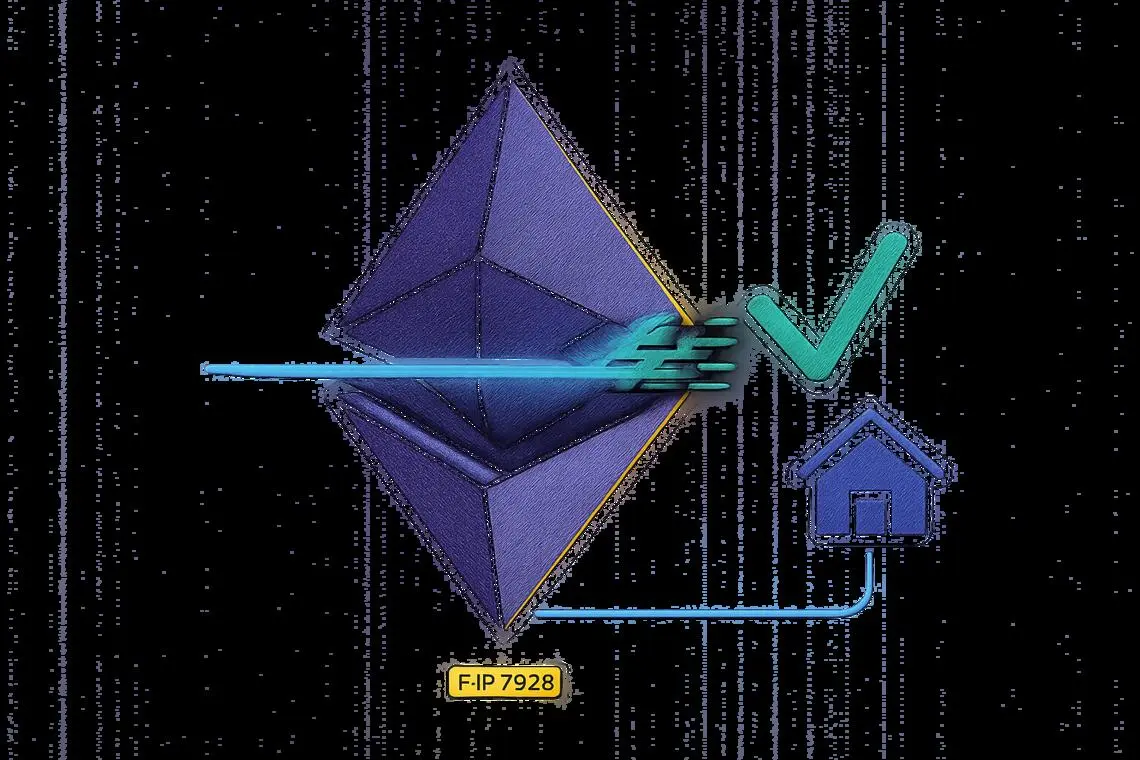
Ethereum Foundation researcher Toni Wahrstätter said in a recent X post that things are looking great with Glamsterdam and EIP-7928 (Block-Level Access Lists) close to the final mile.  The countdown has begun for Glamsterdams first public test as testing continues on devnets. The Sepolia fork is scheduled for October 6, 2026, while the mainnet launch is expected in Q4 2026 with no official date yet.  Wahrstätter believes Glamsterdam will be one of the biggest forks seen yet; while it has taken a correspondingly long time, he claims the result will be worth it.  Ethereums upcoming Glamsterdam upgrade is intended to pave the way for the next generation of scaling.  The Glamsterdam upgrade centers on three main goals: speeding up processing (parallelization), expanding capacity, and preventing database bloat (sustainability).  ePBS is a headliner of the upcoming Glamsterdam upgrade and revamps the block validation pipeline, reducing trust assumptions, while BALs bring parallelization to Ethereum.  Ethereum cofounder reveals vision post-Hegota hard fork  In a recent post, Ethereum cofounder Vitalik Buterin shared a glimpse of a post-Hegota era for Ethereum.  “My attempt to express in somewhat concise terms the true meaning of basically everything planned to happen to Ethereum starting from the fork after Hegota. Its really not just a blockchain anymore.

Within 1 weeksIndustry

Visa cuts reported stablecoin volume but there’s no proof payments fell

Visas September 18 data refresh lowered its adjusted stablecoin volume measure, while its adjusted transaction count fell by less than 2%. The divergence reflects a change in how recorded activity is classified, leaving payment trends unanswered.  The Visa Onchain Analytics changelog attributes the reset to a fuller set of address labels and revised filters. Its underlying Allium identity set grew from about 15 million labeled addresses to roughly 600 million. Visa says the definition of adjusted volume stayed the same: it aims to exclude labeled exchanges, contracts, bots, bridges, other infrastructure, and minting and burning. With more addresses identified, more transfers now fall outside the adjusted measure. The refresh also added heuristics for short-term routing and changed how organic and payment activity is identified.  The live transaction methodology still describes “over 3 million” labeled addresses, a figure that does not match the dated changelog‘s roughly 600 million in the new full identity set. Visa’s public text does not say whether the older wording refers to a different subset or has yet to be updated. The 3 million figure therefore cannot serve as the previous baseline for this reset.  Related Company Visa A global payments technology company  The classification changed while the underlying recorded transfers

Within 1 weeksIndustry

Vitalik Buterin says Ethereum is becoming a cryptographic world computer

Ethereum has begun moving toward what Vitalik Buterin calls a “cryptographic world computer,” with major changes planned to verification, consensus, privacy and state management after Hegotá.  Buterin wrote in his Sept. 27 essay, The Cryptographic World Computer, that Ethereum is approaching a point where describing it simply as a blockchain becomes increasingly incomplete.  He expects future Ethereum architecture to combine blockchain consensus with zero-knowledge proofs, data sampling, privacy technology and decentralized off-chain computation.  “Hegota — the fork planned for next year — is likely to be Ethereum‘s last ’normal fork,” Buterin wrote, referring to an upgrade whose technology would remain recognizable to developers familiar with Ethereum in 2015.  Hegotá could close Ethereums conventional upgrade era  Ethereums official roadmap currently places Hegotá in 2027, following Glamsterdam in the fourth quarter of 2026.  The Hegotá upgrade remains in planning, and its complete scope has not been finalized. Two proposals are already scheduled.  FOCIL, or EIP-7805, is the consensus-layer headliner. It lets a committee of validators create inclusion lists containing transactions that block builders must include.  The mechanism is designed to reduce the ability of a single builder to exclude valid transactions. Ethereums Hegotá roadmap says the feature can strengthen censorship resistance and improve Layer 2 settlement guarantees.  Frame Transactions, or EIP-8141,

Within 1 weeksIndustry

Bitcoin Price Climbs Back Toward $85K With Bulls in the Driver's Seat

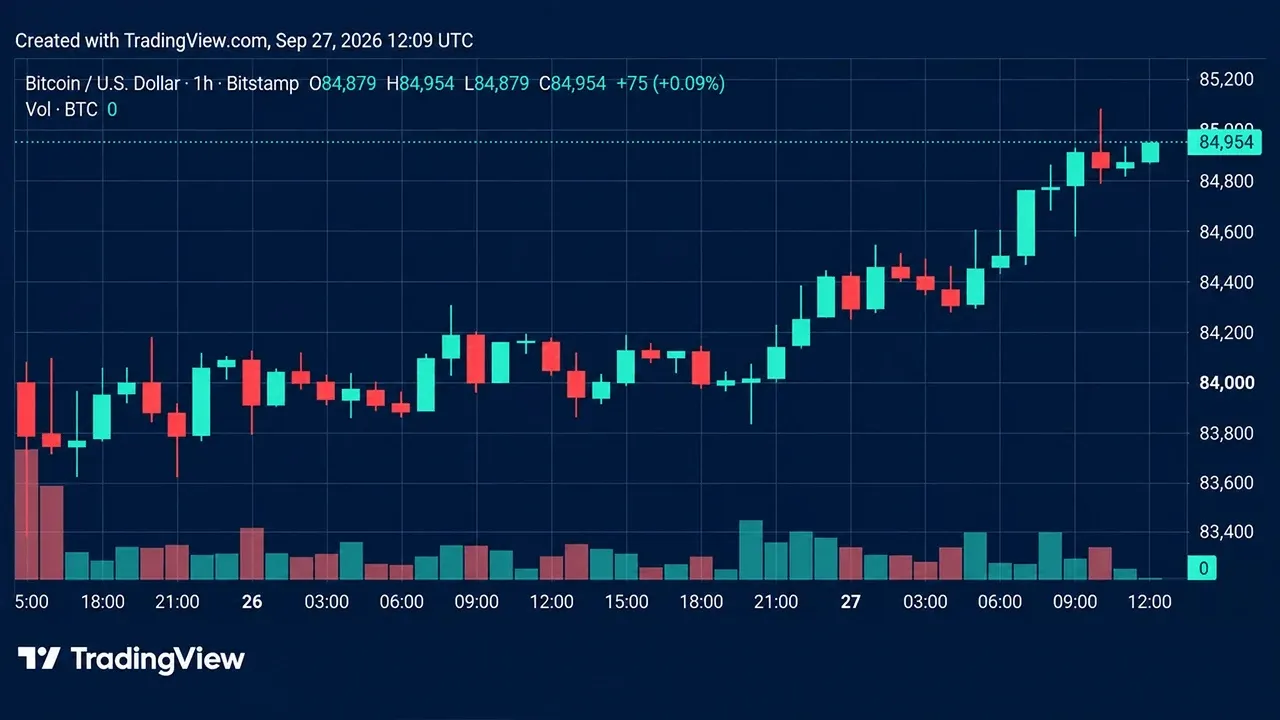
Bitcoins price was changing hands at $84,899 on Sunday morning at 8 a.m. Eastern time, up 0.9% over 24 hours, as buyers worked their way back toward $85,000 following the retreat from $87,374. The daily technical picture remains firmly positive, with 14 moving averages flashing favorable readings, although lighter trading volume suggests the latest recovery still has something to prove before BTC can take another crack at its September high.  Key TakeawaysBitcoins price stood at $84,899 on Sept. 27 at 8 a.m., gaining 0.9% as buyers worked their way back toward $85,000.The daily charts BTC indicators show 14 positive moving averages and nine neutral oscillators.Bitcoins price needs to clear $85,000 and $85,945 to challenge $87,374, while $83,300 remains key support.  One-Hour Chart: Bitcoin Takes Another Crack at $85,000  The one-hour chart shows bitcoins price steadily clawing back ground following its Sept. 23 retreat into the low-$83,000s. After spending Sept. 24-25 trading between approximately $83,300 and $85,300, BTC has worked its way toward $84,870, putting the $85,000 threshold squarely in the spotlight.  BTC/USD 1-hour chart via Bitstamp on Sept. 27, 2026.  However, the latest advance has unfolded on considerably lighter volume than the Sept. 21-23 trading activity. A sustained move above $85,000 would bring $85,300 and

Within 1 weeksIndustry

SEC Staff Says Token Buybacks Don't Make Crypto a Security—If the Network Works

In briefThe SECs Division of Corporation Finance said buyback announcements on functional crypto networks dont count as promises of “essential managerial efforts” under the Howey test.For networks that arent yet functional, pitching buybacks as a source of yield or returns could still trigger securities laws.Attorney Gabriel Shapiro called the guidance a “loophole,” but noted its staff guidance without legal force that a future SEC could reverse.  Crypto projects looking to buy back their own tokens just got a green light from the SECs staff, with one big condition.  In new FAQs published Friday, the agencys Division of Corporation Finance said that once a crypto system is functional, announcing a token buyback program doesnt amount to a promise of “essential managerial efforts.” Thats a key ingredient of the Howey test, the Supreme Court standard for deciding whether something is an investment contract, and therefore a security.  Myriad: What will the Fed do next? Click to make your prediction.  The picture changes for networks that arent functional yet. There, staff said, a buyback announcement could cross the line if the issuer pitches it as generating yield or returns for holders.  The FAQs also said that after a network is functional, promises to maintain, upgrade or grow it

Within 1 weeksIndustry

Ethereum is not instant, but collateral could make it feel that way

When a payment app tells you a transfer is complete, you start making decisions. You hand over whatever youve sold, spend the money youve received, or close the app and get on with your day. That little confirmation you get is enough for you to stop thinking about whether the transaction worked.  Related Asset Ethereum #2 ETH · $2,690.39 24-hour change: down 0.04% Loading price history… 24H Down 0.04% 7D Up 3.10% 30D Up 8.42%  Crypto companies want to offer that reassurance almost instantly, even when the blockchain underneath still needs time to finish settling the payment. One way to do it is to have an operator promise the result early and put money behind that promise.  Puffer, a company building transaction infrastructure for Ethereum, is working on a system like this. On Sept. 22, it announced that Google Cloud would operate a gateway, receiving transactions and guaranteeing their results before settlement. Puffers UniFi network would be the first to use it.  Related Company Google An American multinational technology company  Both UniFi and Puffer Preconf, the service issuing these guarantees, were still running in a testing environment as of Sept. 23, CEO Amir Forouzani told CryptoSlate. Their performance with customers putting real money through them

Within 1 weeksIndustry

Japan arrests two suspect over 81M yen crypto police scam

Japanese police have arrested two people suspected of helping a fake police fraud group steal cryptocurrency worth approximately 81 million yen from a woman in her 40s.  FNN reported on Sept. 25 that police arrested 31-year-old Saki Okayama and 38-year-old Mitsuki Minamisawa on suspicion of involvement in the scheme. Investigators believe the group operated from Cambodia and impersonated Japanese police officers to pressure victims into transferring assets.  The victim was allegedly told that her bank card had been connected to a large money laundering investigation. According to police information cited by FNN, the group claimed a fraud case had caused 600 billion yen in losses and that around 400 accounts had been used to launder funds.  ???????? Au Japon, une femme a perdu léquivalent de plus de 500 000 $ en cryptos après que de faux policiers lui ont demandé de transférer ses fonds pour… « prouver son innocence ».  L‘arnaque aurait été orchestrée depuis un centre d’appels au Cambodge. Les escrocs se faisaient…  Fake police allegedly demanded proof of innocence  The scheme began with a telephone call from a man claiming to represent the Osaka Prefectural Police.  FNN reported that the caller told the woman her card appeared among accounts connected with the supposed money laundering

Within 1 weeksIndustry
1
...
2931
...
1000