Record-Breaking ETH Unstaking on Ethereum Following the Shanghai Upgrade

Data from the 21.co blockchain and research analyst Tom Wan indicates that the second week of January has set a record for the largest scale of ETH unstaking since the Ethereum Shanghai upgrade. Approximately 656,200 ETH (valued at $1.6 billion) were fully unstaked, with Figment and Celsius leading 85% of the unstaking.  

2024-01-16Deep Dive

The U.S. SEC Agrees to Postpone Do Kwon's Trial Date

In documents submitted to the United States Southern District Court on January 15th, the U.S. SEC agreed to the request from Do Kwons legal team to postpone the trial start date to no earlier than March 18th. The filing stated, “The SEC agrees to the reasonable request by Do Kwon for a modest continuance to allow him to engage in the trial. If the trial date is delayed, the SEC respectfully proposes that the trial commence on April 15, 2024.”  While the SEC agreed to the request to potentially postpone the trial date, it opposed separating Kwons case from the Terraform case. The SEC stated, “Conducting two trials would unnecessarily require witnesses, including SEC whistleblowers and financially limited retail investors, to testify twice on the same facts in separate trials.”  In earlier news, Do Kwon appealed the decision of the Montenegro Higher Court to uphold the extradition requests from the United States and South Korea. His lawyers stated that the local court faced pressure, and the reason for filing a new appeal was that the decision of the Montenegro Higher Court “seriously violated legal provisions, the European Extradition Convention, and the extradition bilateral treaties signed with the United States.”  

2024-01-16Deep Dive

L2 Network ZKFair Initiates Gas Fee Dividends, Surpasses 2.5 Billion ZKF Total Staked

Community-driven ZK L2 network ZKFair has announced that it has started distributing Gas fee profits on the ZKFair chain. All ZKF stakers can view their individual benefits in real-time through the ZKFair official website. As the first L2 network in the industry to distribute Gas fee profits, ZKFair officially launched the ZKF staking function on January 10. As of now, a total of 2.5 billion ZKF tokens have been staked, accounting for 25% of the total token supply. There are 34,871 independent staking addresses, and these users will share 75% of the total profits according to the corresponding rules, with the remaining 25% allocated to DApp developers.  In terms of specific distribution, ZKFair will settle the total Gas fee revenue weekly. After deducting operational costs, the protocol will automatically distribute the profits to the DApp developers address and the staked ZKF reward contract in proportion. The distribution is averaged over seven days.  ZKFair adopts a 100% fair launch token model and is supported by the ZK-RaaS platform Lumoz for technology and computational power. ZKFair uses USDC as the Gas token. Its mainnet was launched in December of the previous year, and the current on-chain TVL is $323 million, ranking 8th on the

2024-01-15Deep Dive

CoinShares: Anticipates Average Production Cost of $37,856 per Bitcoin After Halving

CoinShares has released its 2023 mining report, revealing a 104% increase in Bitcoin mining hash rate. This has raised questions about the sustainability and profitability of Bitcoin mining, especially concerning the networks efficiency and energy costs. The report estimates the average production cost per Bitcoin after the halving to be $37,856. Most miners will face challenges with the costs of sales and administrative expenses and will need to reduce costs to maintain profitability. Only Bitfarms, Iris, CleanSpark, TeraWulf, and Cormint are expected to continue being profitable unless the Bitcoin price remains above $40,000.  

2024-01-15Deep Dive

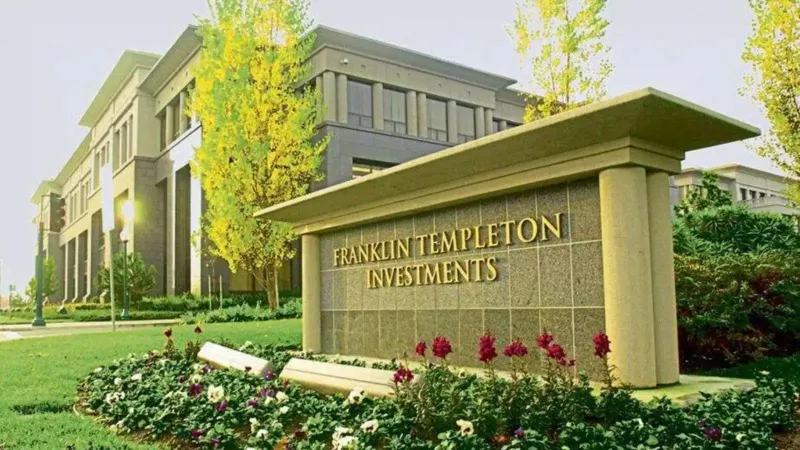
Franklin Templeton: Commits to Continued Investment and Participation in Blockchain and Web3 Project

Asset management company Franklin Templeton publicly stated on the X platform that the companys current assets under management amount to $16 trillion, and it possesses a digital assets team that has been focused on building and investing in blockchain and Web3 projects.  The companys team includes multiple blockchain developers, and they have been running validating nodes on various blockchains for up to 5 years. The company has also established an investment strategy team deeply involved in early-stage Web3 venture investments and managing liquidity token portfolios. Franklin Templeton has made proactive decisions to invest in companies with Web3 strategies as a business model and will continue to make significant investments in this field.  They stated, “Blockchain is the future, and we seek to develop, support, and invest in this field in a meaningful way.”  

2024-01-15Deep Dive

Base Unveils 2024 Roadmap

Layer2 network Base has unveiled its roadmap for 2024. Base aims to establish a global on-chain economy platform that fosters innovation, creativity, and freedom. The mission for 2024 is to build a global on-chain economic body comprised of three parts: the developer platform (Base as infrastructure), the application ecosystem (all applications built on Base), and the capital market (user and liquidity flows through applications, such as ETH and USDC).  The strategic focus for Base in 2024 revolves around four core pillars: achieving decentralization and scalability to onboard everyone to the chain, constructing a robust developer platform for anyone to build on-chain products, nurturing a vibrant application ecosystem to provide incentives for consumers, creators, and businesses to join the chain, and driving a deeper capital market to power the interconnected on-chain economy.  Base highlights that key development priorities for 2024 include accelerating decentralization while enhancing network availability, significantly reducing network fees, making smart wallets the default setting, simplifying deposits and withdrawals, and bringing existing and new users, assets, and products from Coinbase onto the chain.  

2024-01-10Deep Dive

Celsius Asks Creditors With Over $100,000 Withdrawn 90 Days Before Bankruptcy to Return Some Funds

According to the notice issued by Celsius bankruptcy trustee to creditors, Celsius creditors who withdrew more than $100,000 from Celsius within three months before July 13, 2022 (the day Celsius declared bankruptcy), will be required to return a portion of the funds or may face legal action.  The notice states that Celsius will soon send letters to the relevant accounts, instructing them to pay back 27.5% of the withdrawn amount during the affected period. Those complying with these terms will be eligible for future distributions based on the restructuring plan.  Moreover, users who withdrew amounts less than $100,000 are not required to return the funds. However, they still need to vote to accept the plan rather than opt out.  Previously, in December 2023, Celsius successfully received approval for its restructuring plan from the New York bankruptcy court and will continue focusing on implementing its Bitcoin mining plans.  Celsius announced on the X platform that the MiningCo transaction is considering establishing a new publicly traded Bitcoin mining company and plans to increase the distribution of liquid cryptocurrencies to account holders post-Celsius emergence from bankruptcy, expected to occur in early 2024.  Additionally, Celsius revealed that customers will possess shares of Mining NewCo, a company managed by US

2024-01-10Deep Dive

The U.S. Financial Regulatory Authority Releases 2024 Regulatory Report

The Financial Industry Regulatory Authority (FINRA) released its annual regulatory report for the year 2024, featuring a dedicated section for the first time that discusses cryptocurrency assets.  The section related to cryptocurrency assets is aimed at companies currently engaged in or intending to engage in cryptocurrency-related activities. The report notes that FINRAs Membership Application Program (MAP) follows SEC guidance to assess proposed cryptocurrency asset securities business lines based on applicable rules, such as the SECs financial responsibility rules and customer protection rules. Companies would be approved to act as private (non-public) placement agents, operate alternative trading systems for cryptocurrency asset securities, and provide custody services.  FINRA also requires its members to notify the organization when engaging in non-securities cryptocurrency asset activities. Additionally, individuals involved in external business activities related to cryptocurrency assets, private securities transactions, and cryptocurrency mining operations are also required to inform FINRA.  Reportedly, FINRA is a self-regulatory organization in the United States responsible for overseeing securities broker-dealers. FINRA operates under the supervision of the U.S. Securities and Exchange Commission (SEC).  

2024-01-10Deep Dive

Fox Reporter: SEC Committee Members Still Likely to Postpone Approval of Bitcoin Spot ETF

Fox Business journalist Eleanor Terrett posted on X platform, suggesting an interesting reminder: the approval of the Bitcoin spot ETF by the five members of the U.S. SEC (Securities and Exchange Commission) may face potential delays. The SEC committee members include Gensler, Crenshaw, Peirce, Lizárraga, and Uyeda.  Although theres no formal committee vote scheduled regarding the ETF, each commissioner evidently has the authority under 17 C.F.R. § 201.431 to request a review and a full commission vote, even if the matter has been delegated and approved by authorization. This provision allows an SEC commissioner to request the entire commission to review matters authorized by the staff.  

2024-01-09Deep Dive

Creditors Claim DCG Has Not Fully Repaid Genesis Loan

DCGs Creditor Special Committee stated in court documents that DCG has not fully complied with repayment obligations to its bankrupt subsidiary, Genesis Global.  Genesis and other debtors claim that, according to their repayment and main loan agreements, DCG still owes a certain amount of Bitcoin, along with $26 million in interest and late fees. ETCG and ETHE shares held by DCG have been used as collateral for loans from Genesis. However, DCG can only settle its dollar and Bitcoin demands with these currencies, not with other assets.  Genesis claimed that as of Monday, DCGs outstanding balance was 4,550 BTC (approximately $214 million), with an additional 14,048 Bitcoin Cash (around $3.5 million), and late fees of 70 BTC.  Previously, on January 6th, Digital Currency Group (DCG) posted on X platform, stating: “DCG announced that it has repaid all short-term loans to Genesis. DCG has repaid over $1 billion in debt to creditors over a year, including nearly $700 million to Genesis. We have fulfilled all current due debts. With the arrival of this milestone, we look forward to a new chapter for DCG and the future development of our industry. We will continue to honor our financial commitments as always.”  

2024-01-09Deep Dive
1
...
4143
...
743