Stablecoin payment firm OpenPayd eyes Nasdaq listing

OpenPayd has targeted completion of its Titan Acquisition Corp. merger by the end of 2026 as the stablecoin payments infrastructure firm prepares for a Nasdaq listing and a U.S. customer launch in 2027.  SummaryOpenPayd expects its Titan merger to close by year-end, followed by Nasdaq trading under OP.The transaction could value OpenPayd at up to $1.145 billion on a pro-forma equity basis.OpenPayd plans to launch U.S. services by April 2027 with 43 state money transmitter licenses.Revenue reached $73 million in fiscal 2026, while EBITDA totaled $13 million, company filings show.The proposed deal still requires Titan shareholder approval, SEC effectiveness, Nasdaq approval and minimum proceeds.  OpenPayds latest disclosures show the proposed business combination remains subject to several closing conditions, including Titan shareholder approval, effectiveness of the SEC registration statement, Nasdaq listing approval and at least $130 million in aggregate transaction proceeds.  CEO Iana Dimitrova said the company expects the transaction to close before year-end, barring a major external disruption. If completed, the combined company is expected to trade on Nasdaq under the ticker OP.  You might also like:  OpenPayd gains 43 U.S. licenses ahead of Nasdaq deal  OpenPayd expects its Nasdaq deal to close this year  OpenPayd and Titan signed their definitive business combination agreement on June 1.
1 ہفتوں کے اندرانڈسٹری

Stablecoins may not drain banks of dollars but they can still make lending more expensive

Heres a hypothetical scenario: you want to use $100 out of your bank account to buy newly issued stablecoins. The company issuing the stablecoins takes your dollars, puts them in its own bank account, and gives you a balance you can send around on a blockchain.  You got the product you wanted, and somewhere in the vast and confusing realm of banking, the $100 is still there.  From a distance, this looks like something banks shouldnt worry about. Sure, they lost a deposit, but they also got a deposit back, so why do bankers keep warning that stablecoins could drain the financial system?  The thing is, your bank really liked having you as the customer. If you take your money away, now it owes that money to a company managing withdrawals for thousands of people, with someone paid to decide where the reserves should go.  The dollars came back, but they came back with a different owner, and that owner can be a much more demanding creditor.  This is the part of the stablecoin debate that gets lost when everyone starts estimating how many trillions will leave banks. The amount in the bank can stay the same while the bank gets a much worse deal,

1 ہفتوں کے اندرانڈسٹری

Zcash ETF sees $93.6M exit as ZEC drops 23%

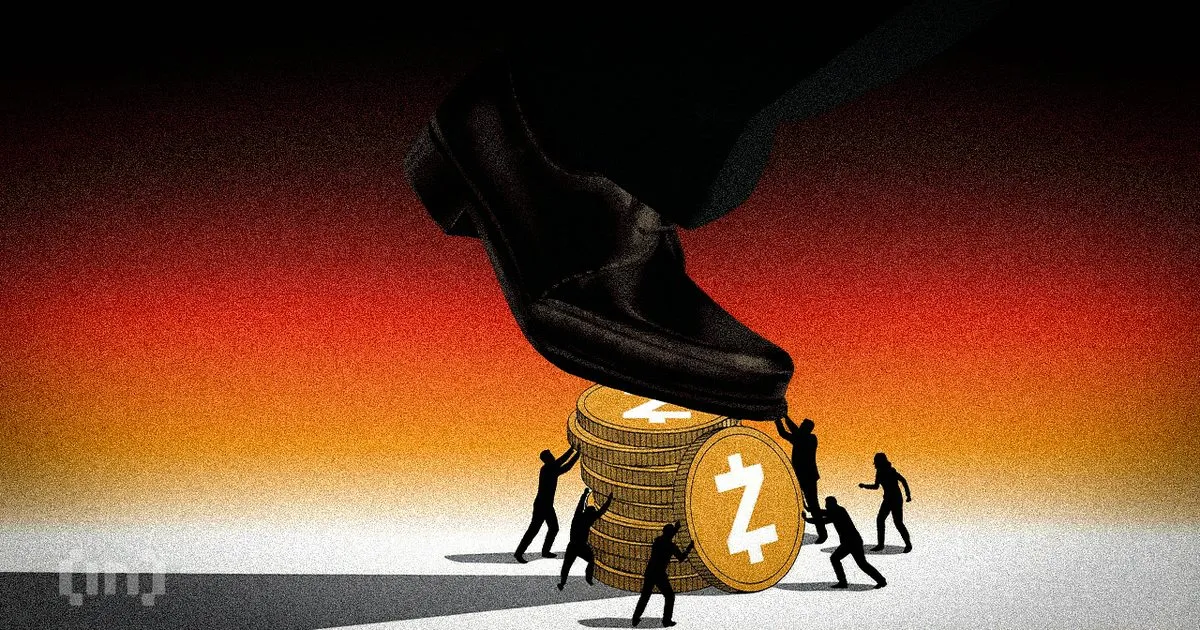
Zcashs U.S.-listed spot ETF has recorded $93.56 million in net outflows for the week ended Oct. 2 as ZEC fell toward $1,300 following its strong September rally.  SummaryZCSH recorded $93.56 million in weekly net outflows, its first negative week since late August.Daily redemptions reached $30.25 million September 30 and another $26.93 million on October 2 alone.ZEC closed near $1,304 on October 3, well below its recent late-September peak above $1,650.Grayscale completed a three-for-one ZCSH share split on September 30 without changing investor value overall.DCG invested roughly $100 million into ZCSH on September 8 through an authorized participant transaction.  According to SoSoValue ETF data, the weekly loss was the first net outflow for Grayscales ZCSH since the end of August. Total net assets fell to approximately $751 million, while cumulative net inflows remained positive at around $212.56 million.  $93.56M pulled from $ZEC ETFs in the last week.  Crazy reversal after the strong inflows we saw following the ETF launch.   The reversal came after strong demand during the funds first weeks of exchange trading. Grayscale converted its long-running Zcash Trust into ZCSH on Aug. 25, giving investors access to ZEC through NYSE Arca without directly holding the cryptocurrency.  Zcash ETF investors pulled $93.56 million in one week  ETF

1 ہفتوں کے اندرانڈسٹری

Philippines freezes 25 crypto wallets tied to flood scandal

The Philippine Court of Appeals has frozen 116 accounts and assets, including 25 virtual asset wallets, under a Sept. 21 order tied to an unnamed lawmaker and a flood-control plunder investigation.  The Anti-Money Laundering Council said the order covers assets linked to a “prominent lawmaker,” a corporation and several associated individuals and entities. The Court of Appeals issued the order after finding probable cause that the covered property was related to alleged plunder under Republic Act No. 7080.  The AMLCs public statement did not identify the lawmaker, corporation or other people covered by the order. The council has said confidentiality rules prevent it from disclosing information that could reveal the identities of parties in freeze-order proceedings.  AMLC freeze order covers 25 crypto wallets and 91 other assets  The Sept. 21 order covers 86 bank accounts, four investment accounts, one insurance policy and 25 virtual asset wallets. Together, the categories account for 116 financial accounts and other assets placed under restraint while authorities continue their investigation.  A freeze order blocks covered property from being withdrawn, transferred or disposed of during the court-approved period. Philippine Supreme Court decisions describe the measure as interim relief intended to preserve property suspected of being connected to unlawful activity while investigators

1 ہفتوں کے اندرانڈسٹری

Vitalik Buterin tries AI that keeps personal data private

Ethereum co-founder Vitalik Buterin has tested a privacy-focused AI setup that uses a local model, zkAPI and Tor to generate personalized diet and exercise recommendations while limiting personal information sent to remote models.  Buterin said on Oct. 4 that the self-experiment uses his health and travel information locally, while more powerful remote models handle selected questions that require stronger reasoning or knowledge.  Doing a bit of a self-experiment.  Goal: use my personal health and travel data to provide personalized diet and exercise recommendations for me, using frontier models but in a way that avoids leaking to them any private information.  Strategy: use a local model (Qwen 3.8 Flash… pic.twitter.com/mi38E5jlfN  — vitalik.eth (@VitalikButerin) October 4, 2026  The setup uses Alibabas Qwen3.8-Flash-Next as the local model. Buterin said the local system decides what information a remote model needs and rewrites requests before sending them, reducing the chance that personal details or his writing style reveal his identity.  Vitalik Buterin uses three layers to separate his identity  Buterin described the design as a three-layer privacy setup covering the content of requests, payment information and internet traffic. The local Qwen model handles the first layer by constructing queries itself instead of sending his original wording and full personal context to remote AI

1 ہفتوں کے اندرانڈسٹری

XRP Liquidation Pressure Eases as Spot Demand Remains the Test

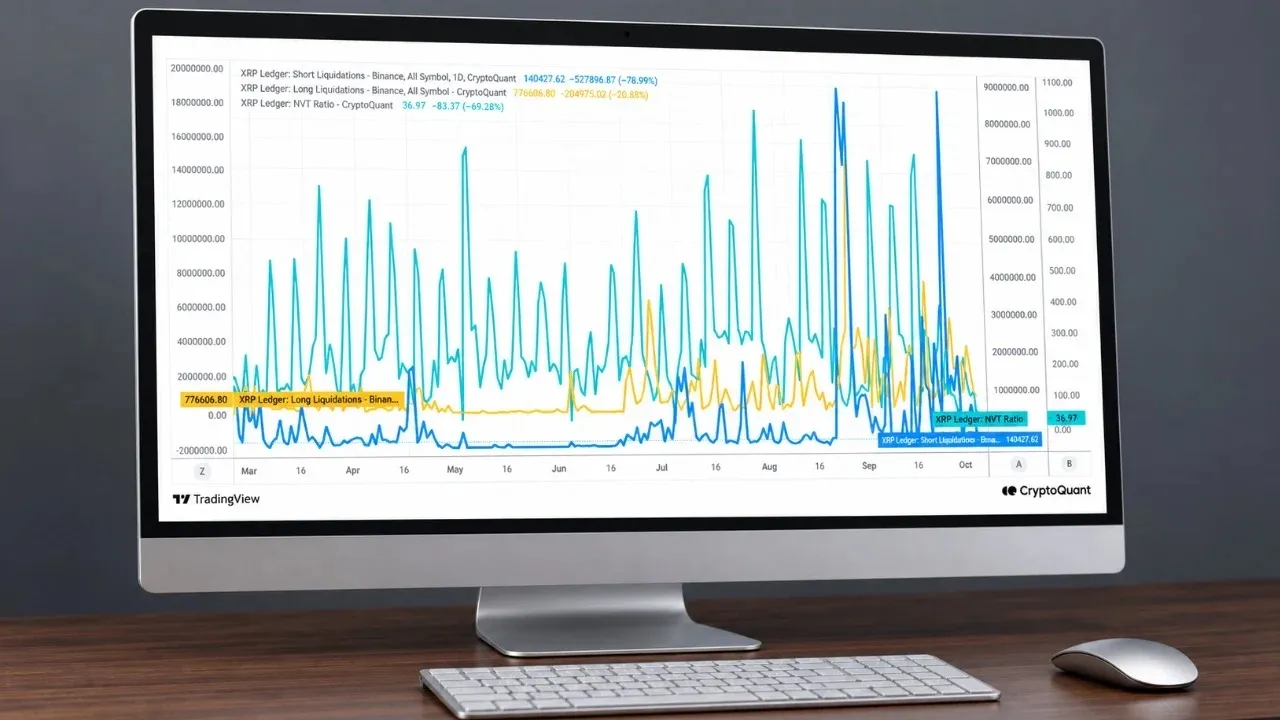
XRP liquidation pressure on Binance is easing after months of sharp spikes, suggesting less strain from leveraged trading, according to a new analysis. Sustained gains would still depend on spot buying, trading volume, and supportive price trends.  Key TakeawaysXRP long liquidations on Binance exceed short liquidations.The network value-to-transactions ratio fell 69.28% to 36.97.U.S. spot XRP ETFs recorded $3.28 million in outflows on Oct. 2.  XRP Forced Selling Eases After Repeated Liquidation Spikes  XRP traders on Binance are seeing fewer forced position closures after repeated liquidation spikes from late July through September, according to an analysis published by Cryptoquant on Oct. 2. Cryptoquant contributor “PelinayPA” examined easing XRP liquidation pressure using a chart combining exchange liquidations with a network valuation measure.  The shift follows a contraction in derivatives, contracts linked to the token‘s price rather than direct ownership. Binance’s outstanding XRP derivatives positions contracted about 32% between Aug. 22 and Sept. 17, from roughly $323 million to $219 million. Known as open interest, this measure tracks exposure that remains open.  Leverage magnifies gains and losses by allowing investors to control trades larger than the collateral they deposit. Exchanges trigger forced closures of futures positions when those funds cannot meet margin requirements, the minimum needed to maintain

1 ہفتوں کے اندرانڈسٹری

Leveraged funds Bitcoin futures shorts fall by 5,300 BTC-equivalent as longs shrink

Leveraged funds reported Bitcoin futures shorts fell by about 5,300 $BTC-equivalent in the week to Sept. 29, narrowing their net short even as their aggregate long exposure shrank.  The Commodity Futures Trading Commission‘s latest futures-only figures, released in the Oct. 2 reporting cycle, cover CME standard and micro Bitcoin futures plus Coinbase Derivatives’ nano Bitcoin and nano perpetual-style futures. The totals convert different contract sizes into $BTC-equivalent exposure; they describe futures positions, not transfers of physical bitcoin.  Compared with Sept. 22 positions, the funds reported shorts fell 5,299.69 $BTC-equivalent and longs fell 908.99 $BTC-equivalent. Their net short consequently narrowed by 4,390.70 $BTC-equivalent, from 40,110.83 to 35,720.13. Their combined short exposure still exceeded their longs. These long and short columns exclude separately recorded, offsetting spread positions.

1 ہفتوں کے اندر

Hyperliquids USDC Yield Program Gets $14.6 Million for HYPE Buybacks

Hyperliquid‘s $USDC reserve-yield program has received its first payment of 14.58 million $USDC, providing a new source of funding for $HYPE buybacks beyond trading fees. The money remained in the protocol’s interest-collection address early Oct. 3 ET, awaiting transfer to its Assistance Fund.  A transaction recorded by Hyperliquid‘s explorer shows 14,580,777.21 $USDC sent to the system interest address. Hypurrscan’s account record showed that balance still there, with only an earlier 2 $USDC transfer to the Assistance Fund. The large payment had therefore funded the collection stage, rather than completed $HYPE purchases.  For $HYPE holders, the change adds reserve income to a buyback mechanism previously funded by trading fees. Under Hyperliquids AQAv2 rules, stablecoin deployers share approximately 90% of cost-adjusted reserve yield on their Hyperliquid supply with the protocol. That makes the new funding dependent on eligible stablecoin balances and the applicable yield rate, rather than trading turnover.

1 ہفتوں کے اندر

Trump Doubles Down on His $5,000 Midterm Promise. Will Bitcoin Swing?

President Trump has once again reassured that every American will receive $5,000 as a “Trump Dividend” if Republicans win the November midterms.   Past stimulus-style payments have notably benefited crypto markets and Bitcoin‘s price. So, could a republican win actually be bullish for Bitcoin’s price?  Sponsored  Sponsored  If Republicans win the House of Representatives and the Senate in the 2026 Midterm Elections, Im going to give all adult citizens in the United States of America, $5,000! Thank you for your attention to this matter, and I look forward to signing those checks!  What Is the Trump Dividend, and Could It Lift Bitcoin?  The Trump Dividend proposes a $5,000 payment to roughly 240 to 250 million eligible adults, contingent on a full Republican sweep of Congress.  The total cost would exceed $1.2 trillion, far surpassing combined COVID-era payments, which topped out near $3,200 per adult across multiple rounds.  Cleveland Fed research found those earlier $1,200 checks drove only a 3.8% rise in Bitcoin buy volume and a 0.7% price increase, with just 0.02% of the funds flowing into BTC.  Even so, BeInCrypto has pointed to real upside potential. Bitcoin buying rose after both the Trump- and Biden-era stimulus rounds, showing measurable, if modest, crypto inflows each time.  Investor Anthony Pompliano has

1 ہفتوں کے اندرانڈسٹری

Zcash ETF Lost Over $93 Million This Week. Is the Rally Over for ZEC?

Zcash‘s ETF has recorded its first week of net outflows since launching in August. Investors withdrew $93.6 million this week, as ZEC’s price fell toward $1,300.  The withdrawals mark a sharp change for Grayscales ZCSH fund. Just two weeks earlier, it attracted $98.2 million, leading crypto ETFs in weekly inflows. Now that demand has reversed, can Zcash hold its ground in October?  Sponsored  Sponsored  Zcash ETF Flows. Source: SoSoValueZcash Falls as ETF Investors Withdraw  ZEC traded near $1,308 in the October 3 chart snapshot, down about 17.5% since the start of the week. It has lost roughly 23% from its recent peak near $1,690.  ETF withdrawals have accompanied that decline. The fund has recorded no daily net inflows since September 22, according to SoSoValue.  These figures suggest ETF investors have been reluctant to buy the dip. Continued withdrawals could put further pressure on ZEC, although they do not explain the entire price decline.  Zcash (ZEC) Price Performance. Source: BeInCrypto Markets  Sponsored  Sponsored  Zcash Price Outlook: Is the Bullish Rally Over for ZEC?  The first level to watch is $1,270–$1,300, where buyers recently stepped in. The four-hour charts longer-term moving average also sits near this area, making it an important test of demand.  If that support breaks, ZEC price could fall toward $1,155, roughly

1 ہفتوں کے اندرانڈسٹری
1
...
4143
...
1000