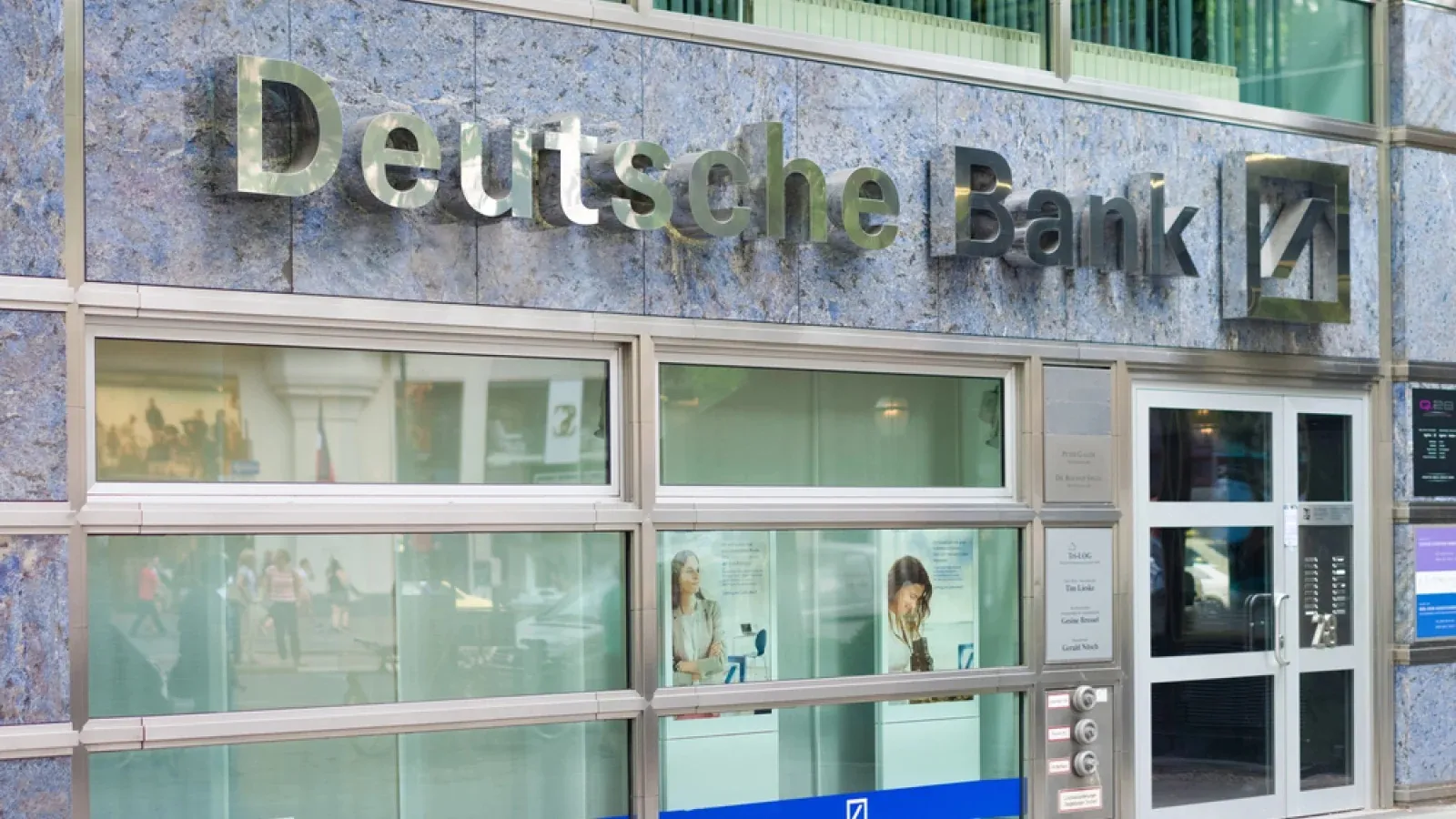
Deutsche Bank Opens Digital Asset Custody to Paying Institutional Clients

Deutsche Bank opens up digital asset custody to paying institutional clients. The service includes storage, user experience improvements, and accessibility via the banks own gateways. The bank announced the launch on November 11, as DBs official website reveals.  This is an improvement in the field of institutional adoption, even though it comes at a time when it might be unwarranted. The market is experiencing serious issues and constant outflows from both retail and institutional investors.  Warm and cold storage  Surprisingly, the bank can provide both warm and cold storage options available directly through DBs infrastructure. According to the landing page, the platform will provide key storage via Hardware Security Modules. Access goes through Autobahn, the banks own multi-channel gateway.  Source: DB  Compliance will also be handled by Deutsche Bank. Initially, the service will focus on core functions: custody of digital assets and transfers, with further capabilities planned.  The Asian market has yet to receive similar treatment. For now, the service is available in the EU, operating out of DB AG Frankfurt. An expansion to Asia is reportedly planned for 2027, though the details are yet to be confirmed.  Additionally, DB announced support for euro stablecoins such as EURC and EURAU, in addition to BTC, ETH, and USDC.
1 ہفتوں کے اندرانڈسٹری

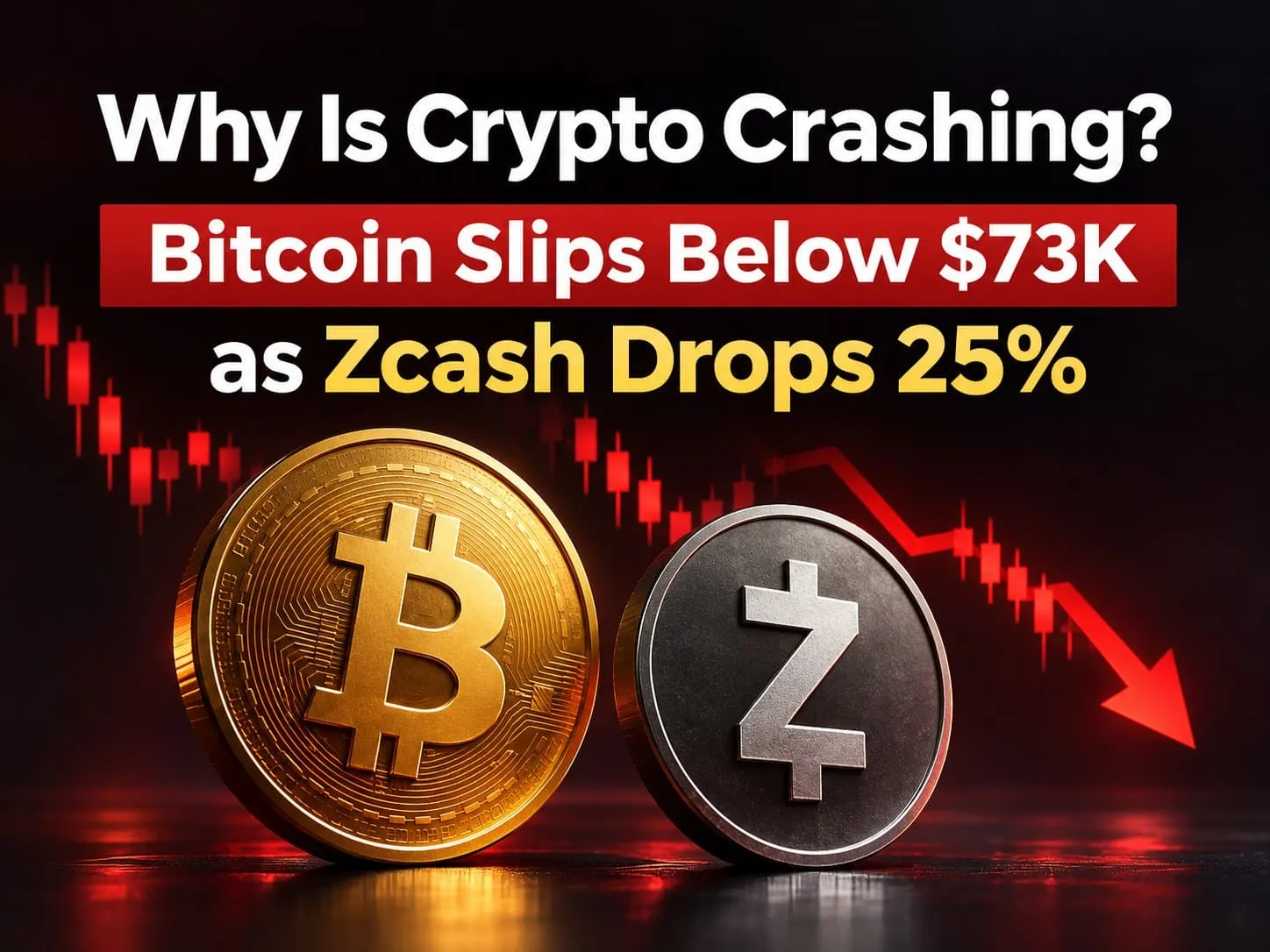
Why Is Crypto Crashing? ZEC Falls Below $1,000 After Hot CPI

Why is crypto crashing on Wednesday, November 11? The sell-off that began with Tuesdays hotter-than-expected U.S. inflation report has carried into today, and almost every major coin is lower.  Bitcoin (BTC) dropped below $73,000 on Tuesday, touching $72,727 on Binance, and now trades at about $73,800. Ether (ETH) briefly slipped to $2,006, while XRP and Solana (SOL) are down 2% to 3% in 24 hours. The Crypto Fear & Greed Index, a daily gauge of market mood from 0 to 100, has fallen to 29.  The report changed what traders expect from the Federal Reserve. Bond yields jumped, and bets on a larger December rate hike nearly tripled within two hours.  One coin is falling much harder than the rest. Zcash (ZEC) is a cryptocurrency launched in 2016 that lets users hide the sender, the receiver and the amount of a payment. It dropped below $1,000 on Wednesday for the first time since September 5. ZEC now trades at about $966, down 15.4% in 24 hours and 24.8% in a week.  ZEC has been one of this years best performers. It rose from about $526 on January 1 to a closing high of $1,653 on September 26. We checked the 20 largest coins on

1 ہفتوں کے اندرانڈسٹری

ECB warns legislative delays could postpone digital euro launch

European Central Bank (ECB) Executive Board member Piero Cipollone called for European Union negotiators to reach a deal on digital euro legislation by year-end to keep a possible 2029 launch on track.  Speaking at the European Parliament‘s Committee on Economic and Monetary Affairs on Tuesday, Cipollone said adoption of the regulation, part of the EU’s Single Currency Package, would give the ECB the legal certainty it needs to complete preparations.  “A delay in adoption could instead postpone the introduction of the digital euro,” Cipollone said, warning that a later launch could deepen Europes dependence on foreign payment providers and make it harder for European companies to compete.  The ECB aims to be ready for a potential first issuance in 2029 if the EU adopts the regulation this year. Its Governing Council will decide whether and when to issue the digital euro after the legislation passes.  The European Parliaments economic affairs committee approved its position on the digital euro legislation in June in a 43–14 vote. Parliament adopted its negotiating position in July, clearing the way for talks with EU member states.  The ECB is preparing a 12-month pilot set to begin in the second half of 2027. Payment providers and selected merchants will test a

1 ہفتوں کے اندرانڈسٹری

SEC enforcement actions fall 24%, crypto cases in spotlight

The US Securities and Exchange Commission (SEC) filed 348 enforcement actions in fiscal 2026, down 23.7% from 456 a year earlier.  Its annual enforcement results included cases involving alleged crypto fraud and failures in FTXs audits.  In its Tuesday release, the SEC said it had charged three purported crypto trading platforms and four investment clubs in an alleged scheme that defrauded investors of at least $14 million. In a separate case, the agency accused the founder of a Bitcoin mining business of misappropriating $48.5 million after raising more than $95.6 million from about 6,400 investors.  In April, the SEC settled charges against Francis Decker, the Prager Metis partner who led FTXs audits, over failures to meet professional auditing standards.  In February, a jury found Ismael Zarco Sanchez liable for securities fraud and registration violations over his role in the $300 million CryptoFX Ponzi scheme. In July, a court ordered Michael Noble to pay $1.07 million in a case over his role promoting BitConnects crypto lending program.  Fiscal 2026 was SEC Chair Paul Atkins‘ first full fiscal year in office. The 348 enforcement actions were the agency’s fewest since 1991, according to a Reuters review of SEC records. Standalone actions fell to 235 from 303 a

1 ہفتوں کے اندرانڈسٹری

CoreWeave Raises 2026 Outlook to $13.3 Billion, Stock Rebounds From 52-Week Low

CoreWeave (CRWV) stock rose 7.9% to $52.58 in after-hours trading on Tuesday, up from a $48.73 close. The company lifted its 2026 outlook days after an AI selloff sent shares to a 52-week low.  The growth came with a heavier debt bill. Net interest costs rose to $846 million from $310 million a year earlier. Operating income of $207 million could not cover them, leaving a net loss of $709 million.  Sponsored  Sponsored  CoreWeave Stock Performance After Earnings. Source: Google Finance  Follow us on X to get the latest news as it happens  CoreWeave Stock Bounces After Earnings Beat  The third-quarter report topped expectations across its main measures. Here are the key figures.Third-quarter revenue reached $3.66 billion, up about 168% from a year earlier. That cleared the top of the companys own $3.45 billion to $3.60 billion forecast.Analysts tracked by Zacks had expected a $1.45 loss per share, the CoreWeave earnings preview showed. The actual net loss came to $1.27 per share.Revenue backlog, or contracted revenue still to be recognized, rose to about $132.5 billion from $104 billion in June.Full-year revenue guidance now stands at $13 billion to $13.3 billion. Its adjusted operating income target rose 26% at the midpoint, to $1.275 billion to $1.375 billion.  The rebound

1 ہفتوں کے اندرانڈسٹری

End of Crypto Hardware Wallets? Sui Cancels Suiball Wallet Amid Cybersecurity Risks

The hardware wallets industry is taking a huge hit in 2026, and Ledgers supply chain exploit set a certain fact in stone: no wallet is secure, no algorithm is uncrackable. As a reminder: back in October, Ledger confirmed the placement of an unauthorized electronic plate inside of their device sold via reseller CryptoBills.  Units sold in Southeast Asia had an exploit which allowed illicit actors to steal recovery phrases during the setup of the wallet.  Most likely outcome for the cybersecurity industry would be AI protecting itself from AI-based reverse-engineering. This is not taking into consideration things like one happened with Ledger.  Suiball closes before the first shipment  Sui Hardware wallet is no different: they understand the risks and take them seriously on such extent where they simply decide not to ship it, avoiding unnecessary risks. Suiball, a hardware wallet built natively for Sui, announced its closure on November 11, after the Sui Foundation decided that backing a hardware wallet project is too risky after the recent attacks across the industry.  Source: Suiball  Surprisingly, the first batch of wallets have already been developed, manufactured and ready to be sent out to the first owners. However, the Sui Foundation decided to play it safe and avoid potential

1 ہفتوں کے اندرانڈسٹری

WikiBit Tokenized U.S. Stocks Special Report 6: The Crypto Industry Is Gearing Up! Exchanges, Blockchains, Stablecoins and Oracles — Who Will Be the Biggest Winner?

If the biggest wealth opportunities in the cryptocurrency industry over the past decade came from Bitcoin, Ethereum, and DeFi, a new sector that could reshape the industrys competitive landscape is now emerging: Tokenized Stocks.  Imagine a future in which investors no longer need to open accounts with traditional brokerage firms to gain exposure to companies such as Apple, NVIDIA, and Tesla. Instead, they could hold tokenized stock exposure directly in their digital wallets, purchase tokenized shares using USDC, trade on-chain 24/7, and even use these assets as collateral for lending, portfolio investments, and other financial applications.  As trillions of dollars in traditional financial assets begin migrating to blockchain networks, the key question is: Who will collect transaction fees, control user access, capture liquidity, and ultimately turn industry growth into investment returns?  Centralized exchanges such as Coinbase and Kraken, tokenization issuers such as Ondo and Securitize, blockchains such as Ethereum and Solana, oracle providers such as Chainlink, stablecoin issuers such as Circle and Tether, as well as wallets and trading aggregators, are all competing for a potentially enormous market.  However, there is an investment principle that is easy to overlook: Industry growth does not necessarily translate into project growth, and project growth does not necessarily

1 ہفتوں کے اندرگہرا غوطہ

Apple Harbor Turns Macs Into Private AI Servers With No Cloud Fees

Apple Harbor, a new app from Apple subsidiary Claris, turns Mac computers into private AI servers that run open-weight models without cloud fees. The app is in a private preview, and Apple has already pulled its unlisted App Store entry.  The pitch targets AI users who pay per-token fees to cloud providers. However, free tools already cluster Macs, so Harbor mainly shifts the cost of AI from monthly bills to Apple hardware.  Sponsored  Sponsored  Why Apple Harbor Moves AI Costs From the Cloud to the Desk  The app, previously called Fabric, surfaced on X, where a user shared its description and later reported the takedown.  Apple is working on a new app called Harbor  Harbor turns your Mac into a private AI inference server. Run open-weight models locally on Apple silicon—your data never leaves your hardware, and nothing reaches the cloud. Connect multiple Mac computers over Thunderbolt 5 to pool… pic.twitter.com/UYJBQeX4Nf  — Aaron (@aaronp613) November 10, 2026  Claris, best known for its FileMaker business database, says a single Mac can serve as an AI endpoint within minutes. The team also promises no per-token billing.  Data and prompts stay strictly within your physical Mac hardware.  Claris  For larger models, the Apple Harbor app links two or more Thunderbolt 5 Macs and pools their

1 ہفتوں کے اندرانڈسٹری

Ripple Ex-CTO David Schwartz Reveals How Much XRP, Ethereum, and Bitcoin He Owns

Ripple CTO Emeritus David Schwartz says he has cut his XRP holdings from about 26 million tokens to roughly 3 million. The XRP Ledger co-creator also holds just 1 Bitcoin (BTC) and 6 Ethereum (ETH), down from about 1,500 BTC and 40,000 ETH.  A viral post on X called Schwartz the founder of Ripple and framed the news as a shock. In fact, he sold gradually over the years, co-created the ledger and still sits on Ripples board after stepping back as CTO in 2025.  Sponsored  Sponsored  For XRP holders, the more telling detail is what he kept. Schwartz still owns quite a bit of Ripple stock, a stake in the company rather than the token.  Why Schwartz Sold XRP at Every New High  “Its not a secret,” Schwartz wrote before listing the figures.  His XRP holdings shrank under a long-standing pact with his wife to sell part of his position at every new all-time high.  In a separate reply, David Schwartz said he has not bought XRP in a long time and has sold nearly all his digital assets.  David Schwartz XRP, Bitcoin and Ethereum holdings compared with his peak holdings. Source: BeInCrypto  Sponsored  Sponsored  Even the Ripple stake carries more risk than he wants, according to the ex-CTO. Ripple was

1 ہفتوں کے اندرانڈسٹری

Lighthouse issues urgent Ethereum node patch due to hidden security flaws

Ethereum consensus client Lighthouse released a security patch on Nov. 9 and urged operators of all its beacon nodes to upgrade as soon as possible.  Related Asset Ethereum #2 ETH · $2,066.19 24-hour change: down 2.47% Loading price history… 24H Down 2.47% 7D Down 10.16% 30D Down 19.34%  The v8.3.3 release makes that work a high priority for users who stake and those who do not, but the release notice rates validator-client upgrades as low priority for staking users.  As a consensus client, Lighthouse connects with other clients in Ethereums proof-of-stake network. Its beacon node works with an execution engine to validate transactions in blocks, while the validator client connects to the beacon node and manages keys, according to the Lighthouse Book.  Operators can also run a beacon node without a validator client. Lighthouses documentation includes data analysis and applications among these non-staking uses, and those operators receive the same high-priority beacon-node instruction as staking users in the v8.3.3 update table.  The projects priority definitions put high-priority work on a timescale of hours or days, to be completed as soon as possible. Low-priority work belongs in the next routine update cycle, with two weeks given as an example.  Beacon nodes first. Vulnerability details later.  The beacon-node upgrade

1 ہفتوں کے اندرانڈسٹری
1
...
2628
...
1000