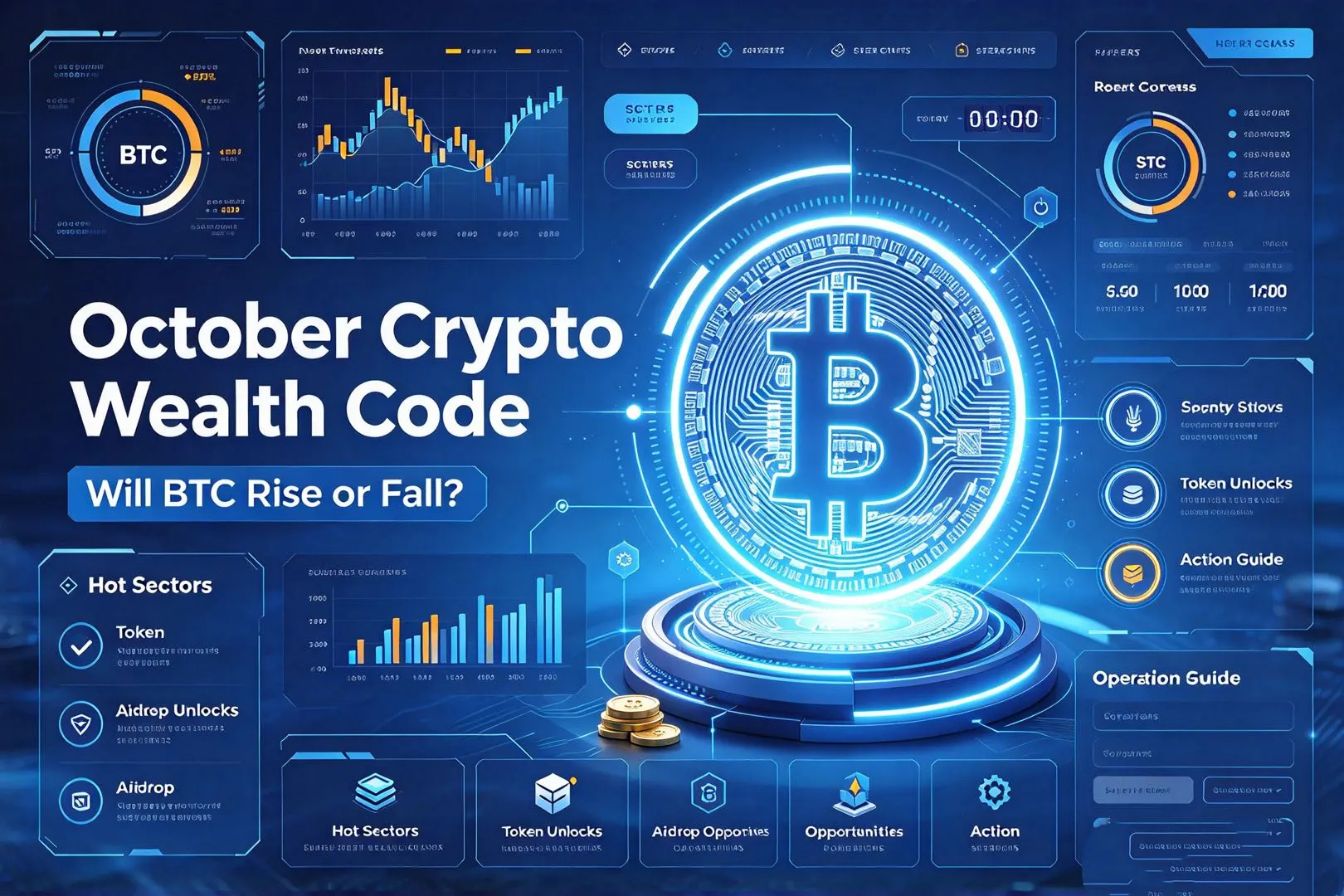
October Crypto Wealth Code: Will BTC Rise or Fall? Hot Sectors, Token Unlocks, Airdrop Opportunities & Action Guide

Bitcoin posted three consecutive monthly gains from July through September. With only three months left in 2026, can the rally continue?  Looking at historical October performance, Bitcoin rose in 10 out of 13 years between 2013 and 2025, with a 76.9% probability of a positive monthly return, an average monthly return of approximately +17.2%, and a median monthly return of approximately +14.9%.  So, purely from a historical perspective, October has clearly been one of Bitcoins stronger months.  However, October this year presents a major divergence: Bitcoins fundamentals and technical structure are bullish, while the broader macro environment remains bearish.  From a technical perspective, Bitcoin has climbed back above its 50-week moving average for the first time in 45 weeks. Historically, this signal has often indicated that a bear-market bottom may be coming to an end.  From a market-data perspective, long-term holders have accumulated more than 3 million BTC since 2020, while approximately 81% of the circulating supply has remained unmoved for at least six months. The supply structure has therefore become increasingly concentrated among long-term holders. Bitcoin ETFs recorded $2.4 billion in net inflows last week, the highest weekly inflow of 2026, although daily inflows have been declining, suggesting that bullish momentum may be weakening.  The
1 گھنٹے پہلےگہرا غوطہ

Wikibit Crypto Risk Monitor — September 29, 2026

September 29 is defined by one immediate centralized-exchange deadline and two material regulatory developments.  CoinEx reaches its 02:00 UTC spot-shutdown and non-USDT asset-processing cutoff today. At the publication cutoff for this report, that deadline is still ahead. Under the exchanges wind-down terms, all spot trading ends, open spot orders are cancelled, remaining CET is repurchased at 0.005 USDT per CET, CoinEx Smart Chain and OneSwap cease operations, and remaining non-USDT balances begin platform-controlled disposal. For users who want a non-USDT asset in its original token form, this is the critical deadline; the later December 22 general withdrawal deadline does not guarantee every original token remains supported unchanged.  Read the updated Detail: CoinEx Shutdown  Bitget has passed its first post-hack withdrawal milestone. The exchange confirms BTC withdrawals resumed at 08:00 UTC on September 28 on both the Bitcoin and BSC networks. This is the first externally verifiable operational recovery step following the approximately $388 million September 24 wallet-infrastructure breach. ETH withdrawals are scheduled for September 29 at 08:00 UTC, later than this reports publication cutoff; USDT follows September 30 and other assets/fiat/P2P October 2.  Bitgets updated incident explanation also sharpens the attack path: the attacker may have exploited a vulnerability in a third-party security product

2 گھنٹے پہلےانڈسٹری ریسرچ

CoinEx Shutdown: September 29 Spot Closure and Non-USDT Disposal Deadline

CoinEx reaches the most consequential stage of its orderly shutdown on September 29.  At:  September 29, 2026 at 02:00 UTC  the exchanges published wind-down schedule moves from non-spot closure into spot shutdown and platform-controlled asset processing.  At this reports publication cutoff, the 02:00 UTC deadline is still ahead. WikiBit therefore treats the change as imminent rather than already completed.What happens at 02:00 UTC  CoinExs shutdown terms say the September 29 stage includes:all spot trading ending;unfilled spot orders being cancelled;remaining CET being automatically repurchased;CoinEx Smart Chain ceasing operations;OneSwap ceasing operations;related bridge/redemption services ending;remaining non-USDT balances entering platform disposal/processing.  For users still holding assets on the exchange, this is an irreversible operational transition.The most important distinction: original token versus later withdrawal  CoinExs general withdrawal window remains scheduled until:  December 22, 2026 at 02:00 UTC  But that later date does not mean every non-USDT asset will remain available in its original token form until December.  CoinEx tells users who want to retain non-USDT assets themselves to complete withdrawal before the September 29 cutoff.  Afterward, CoinEx may dispose of assets in external markets and credit the resulting value in USDT.  The user can therefore move from:  holding token X  to:  holding USDT proceeds determined by CoinExs disposal of token X  without choosing the execution timing or venue.Liquid non-USDT balances  Where an

2 گھنٹے پہلےانڈسٹری ریسرچ

Binance Funding Account Migration: On-Chain Deposits Stop September 29 as Crypto Moves Toward Spot Accounts

Binance begins a major account-architecture transition on September 29.  The goal is to separate:ordinary crypto asset storage/flows;U.S. stock and stock-options settlement.  The Funding Account will gradually stop functioning as Binances general-purpose crypto-routing account and will ultimately become the:  Stocks Account  after the transition completes.The most important change today: Funding Account on-chain deposits stop  Starting:  September 29, 2026  the Funding Account no longer supports on-chain crypto deposits.  Users sending ordinary crypto into Binance should use the supported deposit flow that credits the appropriate Spot Account structure.  This creates a real operational risk for:saved wallet workflows;treasury systems;scripts;API integrations;instructions copied from old documentation.What happens to assets already in Funding?  Binance says non-stock crypto assets will be moved toward the Spot Account structure on a:  1:1 basis  with no reduction in total asset value.  Most users do not need to take action.  Binance is providing a One-Click Migration feature for users who want to proactively move unsupported/non-stock assets from Funding to Spot.  The overall migration is gradual and is expected to complete around January 2027.Important timing nuance: transition now, automatic completion later  The September 29 change begins the new routing model and removes Funding Account on-chain deposit support.  Binance also says assets users do not proactively migrate will be handled through automatic batch migration as the transition completes, with January 2027

2 گھنٹے پہلےانڈسٹری ریسرچ

California Crypto Laws 2026: Public-Official Meme Coin Ban and New Digital-Asset Seizure Framework

California has signed two crypto-focused statutes that target different risks:AB 2409: conflicts of interest and public-official meme coins;SB 1208: digital-asset money laundering, seizure, forfeiture and victim restitution.  The package is broader than a single “meme coin ban” headline, but it is also narrower than a general prohibition on meme coins or cryptocurrency trading.AB 2409: who cannot issue a meme coin?  AB 2409 prohibits a covered:  public officer or public employee  from issuing a meme coin.  The laws public-officer category includes state/local elected or appointed officials and members of governmental boards, commissions or similar bodies.  The covered public-employee category is narrower and includes employees with decision-making authority over government bids and contracts.What counts as “issue”?  The bill defines issuance broadly around making the token available for:public purchase;donation;exchange of value;  whether or not the official personally promotes it.  That matters because the rule cannot necessarily be avoided simply by saying an official “did not advertise” a token.Platform listing rule  AB 2409 also restricts digital-asset service providers serving California residents.  A provider may not list for sale or purchase by a California resident a meme coin:issued on or after January 1, 2027;offered by, or in partnership with, a federal public official or a state/local public officer.  This rule reaches official-linked tokens at the point of

2 گھنٹے پہلےانڈسٹری ریسرچ

Tether and Iran: Senate PSI Says 84% of 846 Studied Wallets Relied Almost Entirely on USDT

Tether faces a new level of U.S. sanctions and anti-money-laundering scrutiny after Democratic staff of the Senate Permanent Subcommittee on Investigations published a September 28 report on USDT use in Iran-linked financial networks.  The headline finding is:  84% of 846 studied wallets transacted exclusively or nearly exclusively in USDT.  The same day, Tether published a detailed response centered on its law-enforcement record and said it had supported approximately:  $550 million  of Iran-linked USDT freezes during 2026.  These statements are not mutually exclusive. The policy dispute is about whether issuer-level controls were applied quickly and proactively enough, not whether Tether has a technical ability to freeze USDT.Who issued the report?  The report was released by Senator Richard Blumenthal, the ranking Democrat on the Senate Permanent Subcommittee on Investigations.  It reflects the work of PSI Democratic investigators/staff.  That distinction matters politically and legally. It is a congressional investigative report, not:a Treasury sanctions designation;a DOJ indictment;an SEC/CFTC order;a court judgment.What wallets were studied?  PSI says investigators analyzed blockchain transaction data from:  846 unique cryptocurrency wallets  that had been:sanctioned; ortargeted for seizure;  because of associations with Iran and regional proxies.  The designations/seizure targets came from U.S. and Israeli authorities over several years.The 84% finding  The Senate release says:  84% of the 846 wallets transacted exclusively or nearly exclusively in USDT.  The

2 گھنٹے پہلےانڈسٹری ریسرچ

Bitget Hack Update: BTC Withdrawals Are Open; ETH Restoration Is Next After $388M Breach

Bitget has completed the first planned withdrawal-recovery milestone after the September 24 breach.  The exchange confirms that:  BTC withdrawals resumed at 08:00 UTC on September 28  and are open on:the Bitcoin network;BNB Smart Chain.  This materially improves the user-access picture compared with the full withdrawal freeze in place immediately after the incident.What is open now  BTC withdrawal support is confirmed operational on two networks.  Bitgets remaining schedule is:Sep. 29 08:00 UTC: ETH on Ethereum, BSC, Arbitrum, Base and Optimism;Sep. 30 08:00 UTC: USDT on Ethereum, BSC, Solana and Tron;Oct. 2 08:00 UTC: other supported tokens, fiat withdrawals and P2P.  At this reports cutoff, the ETH milestone remains in the future.The incident amount is now described as approximately $388M  Bitgets updated incident page uses approximately:  $388 million  as its current estimate.  The exchange says the incident involved 12 wallet addresses associated with hot or warm wallet infrastructure and activity across 11 blockchains.  Affected assets identified to date include:XRP;ETH;USDT;ZEC;ATOM;USDC;USD0;XAUt;BNB;AVAX;TRX;ALGO;TIA.  The estimate can still be adjusted as transaction classification and on-chain tracing continue.The current attack explanation is more specific  Bitget now says the attacker may have exploited a vulnerability in a:  third-party security product  to potentially obtain high-level internal credentials.  The attacker then appears to have:impersonated authorized activity;sent fraudulent withdrawal commands to the wallet system;bypassed existing risk controls;triggered abnormal transfers

2 گھنٹے پہلےانڈسٹری ریسرچ

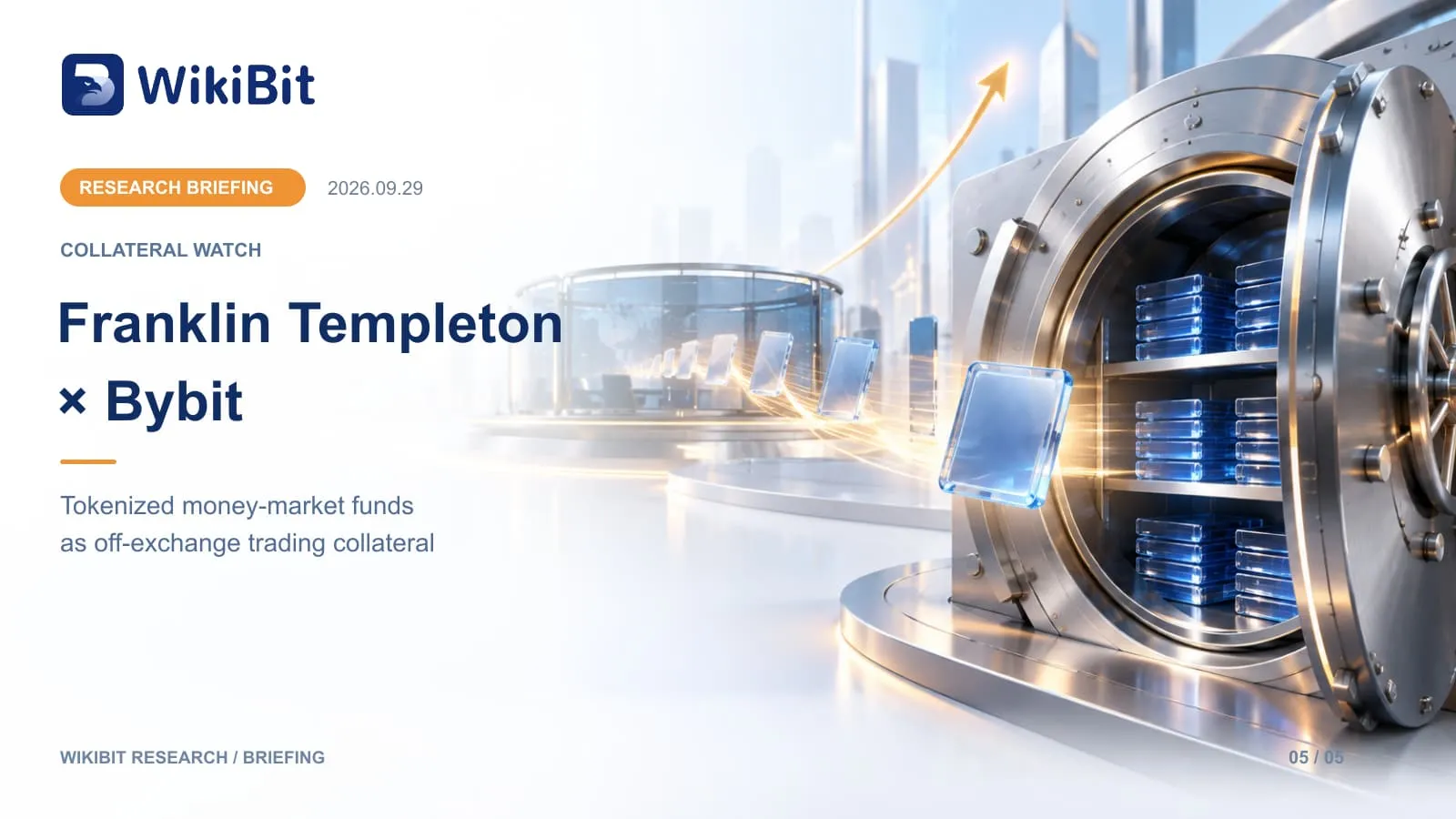
Franklin Templeton × Bybit: Tokenized Money-Market Funds Become Off-Exchange Trading Collateral

Tokenized money-market funds are moving from investment products into trading infrastructure.  Franklin Templeton expanded its off-exchange collateral program to Bybit on September 28, allowing eligible institutional users to pledge tokenized money-market fund shares and receive USDT or USDC trading credit.  The shares are issued through Franklin Templetons Benji Technology Platform.  The underlying assets remain in regulated off-exchange custody through ByCustody rather than being transferred into Bybits exchange wallets.  Their value is mirrored into the trading environment.  The investor can therefore continue earning money-market yield while using the asset to support crypto trading.  That architecture addresses one of institutional cryptos most persistent problems:  how do you use capital efficiently without putting all of it inside an exchange?The Collateral Stays Off the Exchange  Traditional exchange trading often requires users to deposit collateral directly onto the venue.  That creates counterparty exposure.  If the exchange fails, freezes withdrawals or suffers a security incident, the collateral can become trapped.  Off-exchange collateral changes that model.  The asset remains with a custody arrangement outside the trading venue, while the exchange recognizes its value and extends a credit line.  This separates two functions:  asset custody and trading liquidity.  That is especially attractive to institutions after repeated crypto exchange failures and hacks.Yield-Bearing Collateral Improves Capital Efficiency  Cash collateral often sits idle.  A tokenized money-market fund can

2 گھنٹے پہلےانڈسٹری ریسرچ

Tether, Iran and USDT: Stablecoins as Both Sanctions Rails and Enforcement Chokepoints

USDT is at the center of a new U.S. sanctions debate because it combines two characteristics that appear contradictory.  It is globally liquid and easy to move across crypto networks.  It is also issued by a company that can freeze specific token balances.  On September 28, Democratic staff of the U.S. Senate Permanent Subcommittee on Investigations released a report arguing that Tethers USDT has become deeply embedded in Iran-linked shadow-banking networks.  The report says investigators analyzed 846 cryptocurrency wallets that had been sanctioned, targeted for seizure or otherwise associated with Iran and its regional proxies. According to the report, 84% of those wallets had transacted exclusively or nearly exclusively in USDT.  Senator Richard Blumenthal called for Treasury and the Department of Justice to investigate Tethers sanctions and anti-money-laundering practices.  Tether pushed back the same day by emphasizing its cooperation with law enforcement. The company said actions involving USDT had frozen approximately $550 million across wallets U.S. authorities identified as connected to Irans central bank and sanctions networks during 2026.  These claims should not be collapsed into a simple conclusion that “Tether supports Iran” or “Tether stopped all illicit use.”  The more useful question is structural:  Why is the same stablecoin attractive to sanctioned actors and useful to enforcement agencies?Dollar

2 گھنٹے پہلےانڈسٹری ریسرچ

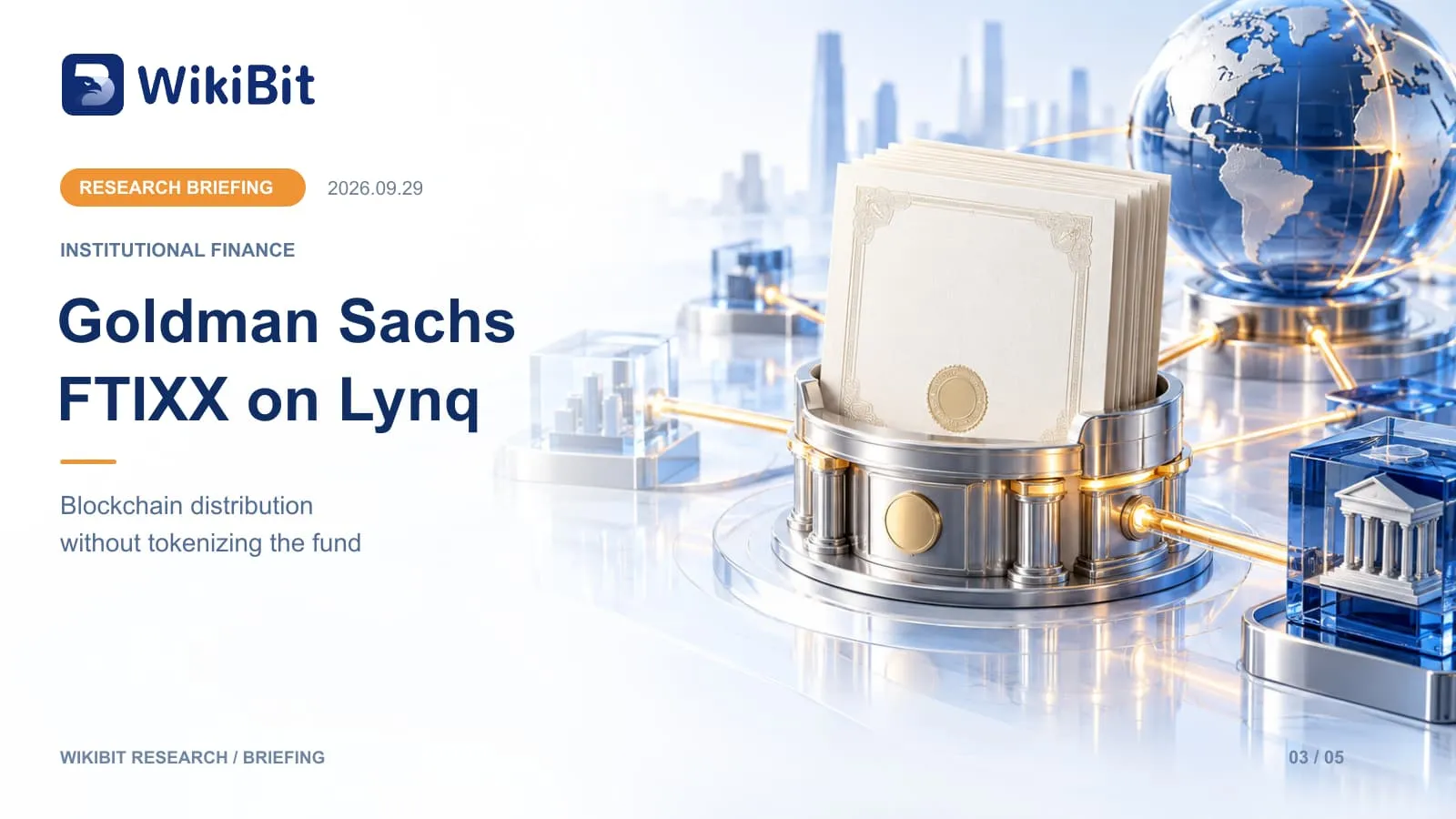
Goldman Sachs FTIXX on Lynq: Why Blockchain Distribution Does Not Require Tokenization

Goldman Sachs has found a different way to connect traditional asset management with crypto infrastructure.  Its roughly $100 billion Treasury money-market fund, FTIXX, is being made available to institutional digital-asset firms through Lynq, a settlement network built on a private, permissioned Avalanche Layer 1.  The important part is what Goldman did not do.  FTIXX is not being converted into a blockchain token.  It remains a conventional fund. Lynq becomes a new distribution and workflow layer around it, while trades are handled by SEC-registered broker-dealer tZERO Securities.  That makes the structure a useful counterexample to one of cryptos most common assumptions:  bringing an asset into blockchain-based financial infrastructure does not always require tokenizing the asset itself.Tokenization and Blockchain Distribution Are Different Things  A tokenized fund usually changes how the investors ownership interest is represented. The fund share or a mirror of that share exists on blockchain infrastructure.  The FTIXX-Lynq model is different.  The underlying fund remains inside conventional fund infrastructure.  Lynq gives institutional crypto firms a new place to access it, move capital around their workflow and park idle cash between trades.  That distinction matters because many institutions care more about workflow than token format.  If a trading firm can move cash efficiently, earn Treasury yield and redeploy it quickly, it may not

2 گھنٹے پہلےانڈسٹری ریسرچ
2345
...
1000