THORChain and Bitget: What the Power to Pause Means for Decentralization

Evidence at a glance: Bitgets loss figure comes from its September 25 statement. The dispute is described in September 27 reporting; technical claims about halt controls are checked against THORChain documentation.  The Bitget hack has created a much larger argument than whether one protocol should blacklist one wallet. It has exposed a core distinction between permissionless operation and the technical ability to intervene. Bitget said that approximately $387.5 million had been transferred to attacker-controlled addresses during its September 24 security incident. Its September 25 update said the upward revision reflected more complete accounting, not additional theft. Bitgets statement  September 27 reporting described a dispute over routing funds associated with the incident through THORChain. It reported that Bitget sought intervention, THORChain defended permissionless operation, and OKX founder Star Xu challenged the comparison with Bitcoin. These positions are attributed to that reporting. Dispute coverage A separate, verifiable technical question is whether THORChain has operational controls for emergencies. The protocols own documentation confirms that such controls exist. The dispute raises a concrete governance question:  If a protocol can stop, but chooses not to stop, is that censorship resistance — or a governance decision?THORChain Is Not Architecturally the Same as Bitcoin  Bitcoins base-layer consensus does not require a
23 گھنٹے پہلےانڈسٹری ریسرچ

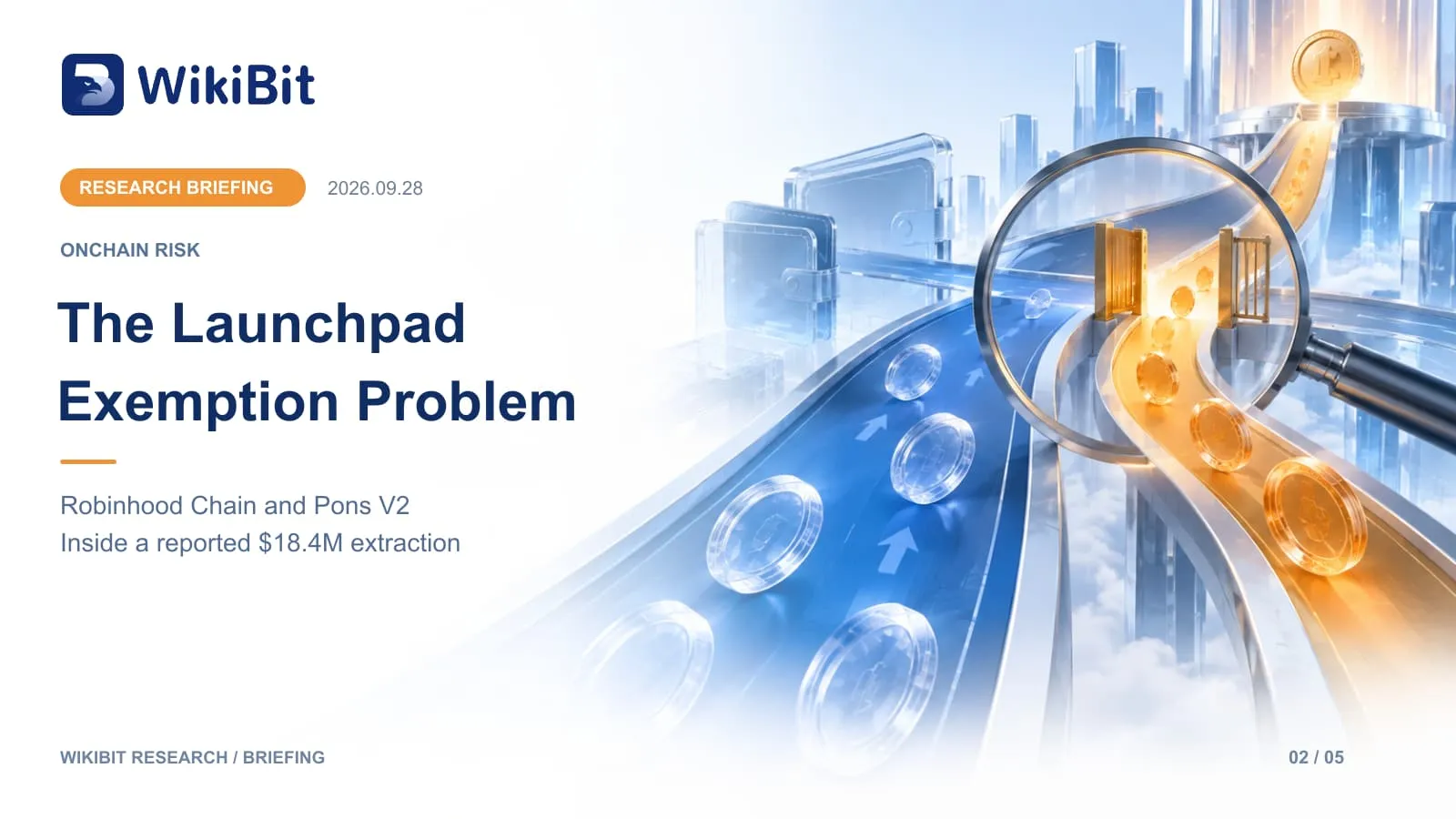
Robinhood Chain’s Reported $18.4M Extraction: The Risk Behind Launchpad Exemptions

Evidence at a glance: Wazzs $18.43 million estimate covers 53 launches. The Block reported checking launch mechanics for 10 tokens, not independently reproducing the full total. WikiBit has not performed a new transaction-level audit.  A September 27 report on Robinhood Chain token launches puts a specific design choice under scrutiny: who can bypass a launchpads opening protections. It has also become a case study in how a launchpad feature designed to help projects coordinate opening liquidity can be turned into an extraction mechanism. On September 27, pseudonymous onchain analyst Wazz published an investigation alleging that one coordinated operation extracted at least $18.43 million from 53 token launches on Robinhood Chain between July 10 and September 21.  The Block independently reviewed the onchain activity for 10 Pons V2 launches on Wazzs list and confirmed a recurring pattern:token creators exempted a specific set of wallets from the launchpads anti-sniping tax;those wallets bought most of the token supply within seconds of launch;the opening purchases pushed the token into a Uniswap pool;the same cluster then sold into public buyers.  The Block also traced a specific flow connecting proceeds from one launch, DRAFT, to wallets that later funded another token, DEED. However, The Block did not independently reproduce

23 گھنٹے پہلےانڈسٹری ریسرچ

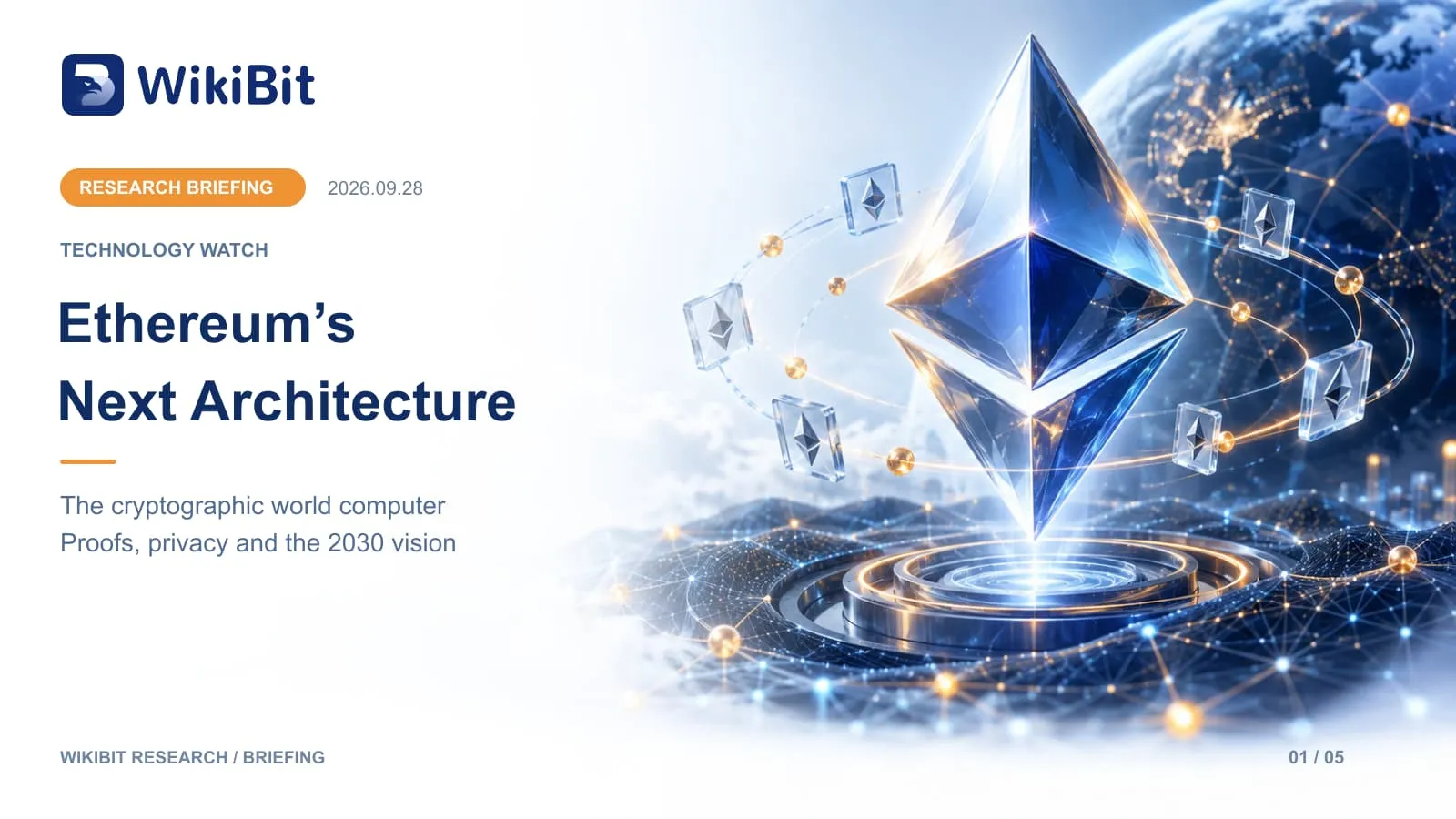
Ethereum’s Cryptographic World Computer: What the 2030 Vision Changes

Evidence at a glance: Based on Vitalik Buterin‘s September 27 essay and Ethereum’s published roadmap. Future architecture and delivery targets remain proposals, not mainnet guarantees.  Vitalik Buterin‘s latest Ethereum roadmap is not simply a proposal to make the chain faster. It is a proposal to change what Ethereum fundamentally is. In a September 27 essay titled “The cryptographic world computer,” Buterin argued that Ethereum is moving toward a system that combines a blockchain with zero-knowledge proofs, offchain computation, multi-party block construction and stronger privacy. Buterin’s essay  He wrote that Hegota — the fork planned for 2027 — is likely to be Ethereums last “normal” upgrade, meaning the last major fork whose technology would still look broadly familiar to a 2015 Ethereum developer. After that, the roadmap increasingly depends on:recursive STARKs;automated formal verification;highly optimized proof-of-stake;multi-party block construction;quantum-safe cryptography;privacy-preserving verification.  That is a much larger shift than another throughput upgrade. The central idea is that Ethereum should stop requiring every computer to repeat every computation. Instead, specialized systems can do work elsewhere and provide short cryptographic proofs that the work was done correctly. Ethereum then verifies the proof.Verification Is Becoming More Important Than Re-Execution  Traditional blockchains are deliberately repetitive. In the conventional fully validating model, nodes

23 گھنٹے پہلےانڈسٹری ریسرچ

Binance Wallet adds USDT gas fees on 4 networks

Binance Wallet has added USDT gas-fee payments on four blockchain networks as of Sept. 25, allowing users to transact without first holding each chains native gas token.  According to Binances updated support documentation Binance Wallet gas-fee guide, the option currently works on BNB Smart Chain, Ethereum, Solana and TRON. Users with USDT in Binance Wallet can select the stablecoin to cover the network fee when completing supported transactions.  Previously, users generally needed BNB for transactions on BNB Smart Chain, ETH on Ethereum, SOL on Solana and TRX on TRON. A wallet without the required native token could leave the user unable to complete an on-chain transaction even when it held the asset being transferred.  Binance Wallet Removes Native Gas Token Requirement With USDT Payments  Binance Wallet now allows users to pay gas fees with USDT on BNB Smart Chain, Ethereum, Solana and TRON, removing the need to hold each networks native gas token before making transactions. Binance said… pic.twitter.com/6YCUDWL4Bd  — Wu Blockchain (@WuBlockchain) September 28, 2026  Binance said its wallet calculates the network fee based on current blockchain conditions. The company said more networks will gain support later, though it has not provided a rollout timetable.  Binance Wallet uses USDT for gas on four networks  The USDT option

کل 13:46انڈسٹری

A Huge Week Is Coming for XRP as Evernorth Nears Crucial Nasdaq Vote

Evernorths planned Nasdaq debut under the XRPN ticker is approaching its final major hurdle.  The shareholders of Armada Acquisition Corp. II are set to vote on September 30 on the proposed business combination, on whether Evernorth will be the next cryptocurrency-related company to become public.  A potential approval would clear the last major obstacle before the XRP-focused treasury company can begin trading publicly under the XRPN ticker.  Will XRPN Be Different?  Popular cryptocurrency commentators, especially those with a clear preference toward Ripple and its native token, have long praised Evernorths move. BankXRP is among those. They recently highlighted the upcoming vote this week, noting that the company is effectively “one vote away” from bringing an XRP-focused treasury company to Nasdaq. The distinction is important because Evernorth is not designed to function like a passive XRP fund.  Instead, it intends to hold and actively deploy the cross-border token across the ecosystem, including through yield strategies, infrastructure participation, and capital-markets activity, with the stated objective of increasing the amount of coins represented by each share over time.  Evernorth currently holds roughly 473 million XRP, making it one of the largest identifiable corporate holders of the asset. If the merger closes, that treasury would effectively become accessible through a

کل 12:07انڈسٹری

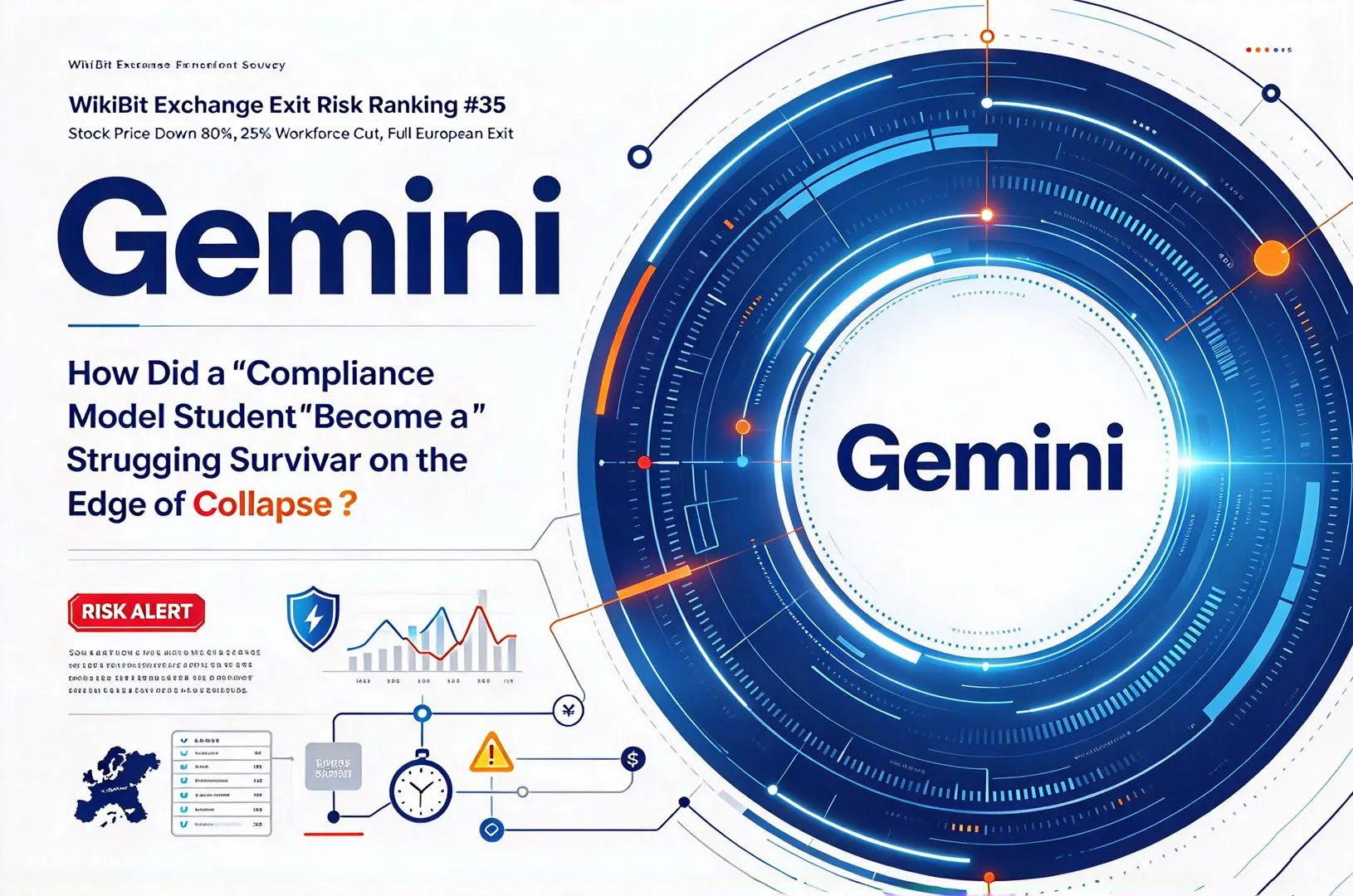
WikiBit Exchange Exit Risk Ranking #35: Gemini — Stock Price Down 80%, 25% Workforce Cut, Full European Exit — How Did a “Compliance Model Student” Become a “Struggling Survivor on the Edge of Collapse”?

Introduction: The Survival Crisis of a “Compliance Model Student”  In the previous 34 editions, we investigated a wide range of exchanges, from HashKey to GXT. For the 35th edition, we are looking at one of the most dramatic contrasts in the industry — Gemini.  When it comes to compliance, Geminis profile looks almost unbeatable in the crypto industry:  Founded in 2014, holding a New York State Department of Financial Services (NYDFS) Trust Charter, obtaining CFTC DCM + DCO licenses, securing Money Transmitter Licenses (MTLs) across nearly all U.S. states, operating as a FINRA broker-dealer, having its GUSD stablecoin independently audited monthly by BPM LLP, becoming publicly listed on Nasdaq (GEMI), and being founded by the Winklevoss twins — the same twins who famously sued Mark Zuckerberg over Facebooks early history.  Sounds like “the most compliant crypto exchange in the world,” right?  But on the other side of the story:Geminis stock price has fallen approximately 80% since its IPO, with market capitalization dropping from around $4 billion to $753 million;The company reportedly cut 25% of its workforce in February 2026 and exited the UK, European Union, and Australian markets;Its CFO, COO, and CLO reportedly departed within two weeks after the layoffs;The company has accumulated 557 complaints

کل 11:55گہرا غوطہ

China's Industrial Profits Slow to 4.2% Showing The AI Boom Left It Behind

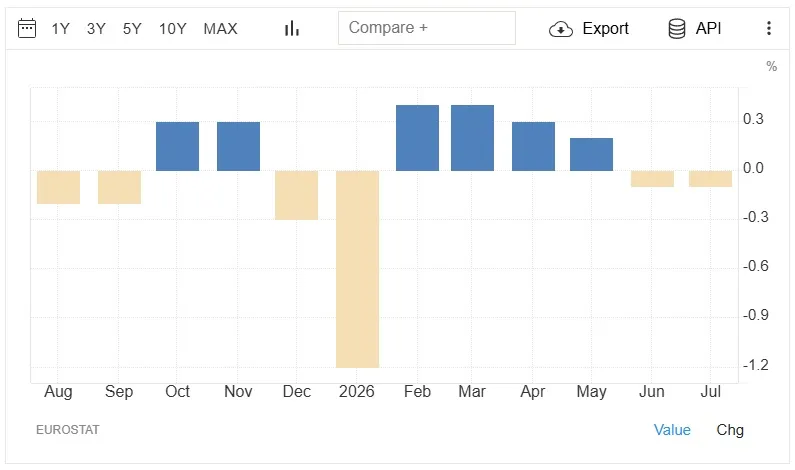
Chinas industrial profits grew 4.2% in August from a year earlier, official data showed Monday.Cumulative profit growth for the year has now slowed for a fourth straight month.  That cumulative pace peaked at 24.7% through April and has eased to 15.7% through August. Meanwhile, an AI-driven profit boom is lifting rival economies far faster.  The AI Boom China Missed  South Koreas audited companies posted a record operating margin of 16.9% in the second quarter. That is up nearly 12 percentage points from a year earlier.  Manufacturing margins alone leaped almost fivefold, to 24.0%, driven by chipmakers riding the artificial intelligence memory wave.  Japan told a similar story. Corporate profits jumped 24.6% year-on-year in the second quarter, beating estimates comfortably.  Across the Pacific, US manufacturers saw after-tax profits climb to $370.1 billion in the second quarter. That is up from $225.8 billion a year earlier.  By contrast, Chinas 4.2% barely registers as growth.  Europe Is the Exception  However, one major economy is struggling harder than Beijing. Eurozone industrial production fell 1.2% year-on-year in January and was flat by July.  Europe is another area that is really struggling. Image Source: Trading Economics  The Eurozone‘s manufacturing gauge hit a 44-month high in February, led by a German rebound. Germany’s own index returned to expansion

کل 11:38انڈسٹری

Discover How 20 Million Russians Tap Into Over $43B in Cryptocurrency

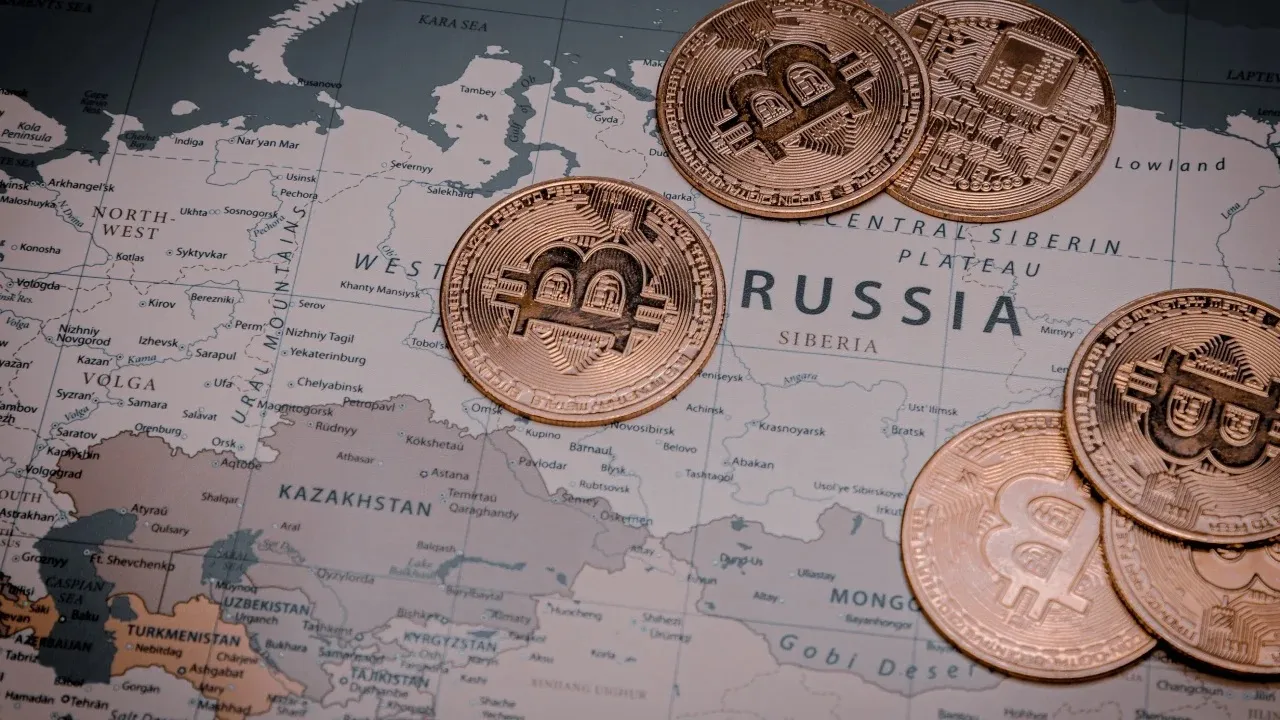
Key TakeawaysOver 20M Russians use crypto to settle foreign trade, bypassing SWIFT sanctions to import key goods.Russia holds the 2nd-largest mining hashrate, boosting local jobs, infrastructure, and tax revenue.Russia is regulating exchanges to bring capital home while banning domestic crypto payments for a CBDC.  How Are Russians Adopting Crypto?  Russia has become a cryptocurrency hotbed, ranking as the 16th nation with the most crypto adoption in the world in the latest Global Crypto Adoption Index Report issued by Chainalysis.  Deputy Finance Minister Ivan Chebeskov estimated that at least 20 million Russians had invested in crypto products, and that more were on the way after regulations to license national exchanges and bring crypto capital to Russia were put in place.  But how are Russians using these 3.7 trillion rubles (nearly $44 trillion), and how much of this capital is really within the Russian governments reach? In a recent investigation, Izvestia pointed out that these resources were divided into three pools, with the first one being their use in foreign trade settlements, as the Russian Federation is currently facing a disconnection from the SWIFT banking system, and even banks in friendly countries like China and Turkey might face secondary sanctions when serving Russian customers purchasing so-called

کل 11:22انڈسٹری

CoinMarketCap buys CoinGlass to expand crypto derivatives data

CoinMarketCap has acquired crypto derivatives data platform CoinGlass for an undisclosed amount, expanding its coverage of leveraged trading across major exchanges.  CoinMarketCap announced Friday that CoinGlass will continue operating under its existing brand, with its team remaining in place. Its website, app, free tools, API and pricing will be unchanged.  CoinGlass tracks open interest, funding rates, liquidations and options. It covers 28 exchanges and more than 2,500 instruments, according to the announcement.  CoinMarketCap said the acquisition would give its users access to derivatives positioning data alongside cryptocurrency prices, including information on where liquidations cluster and how funding rates are moving.  Crypto exchange Binance acquired CoinMarketCap in April 2020. At the time, Binance said the platform would continue operating independently and that the exchange would have no influence over its rankings.

کل 11:21انڈسٹری

Dogecoin Price Eyes $0.11 After Whales Accumulate 1.14 Billion Tokens

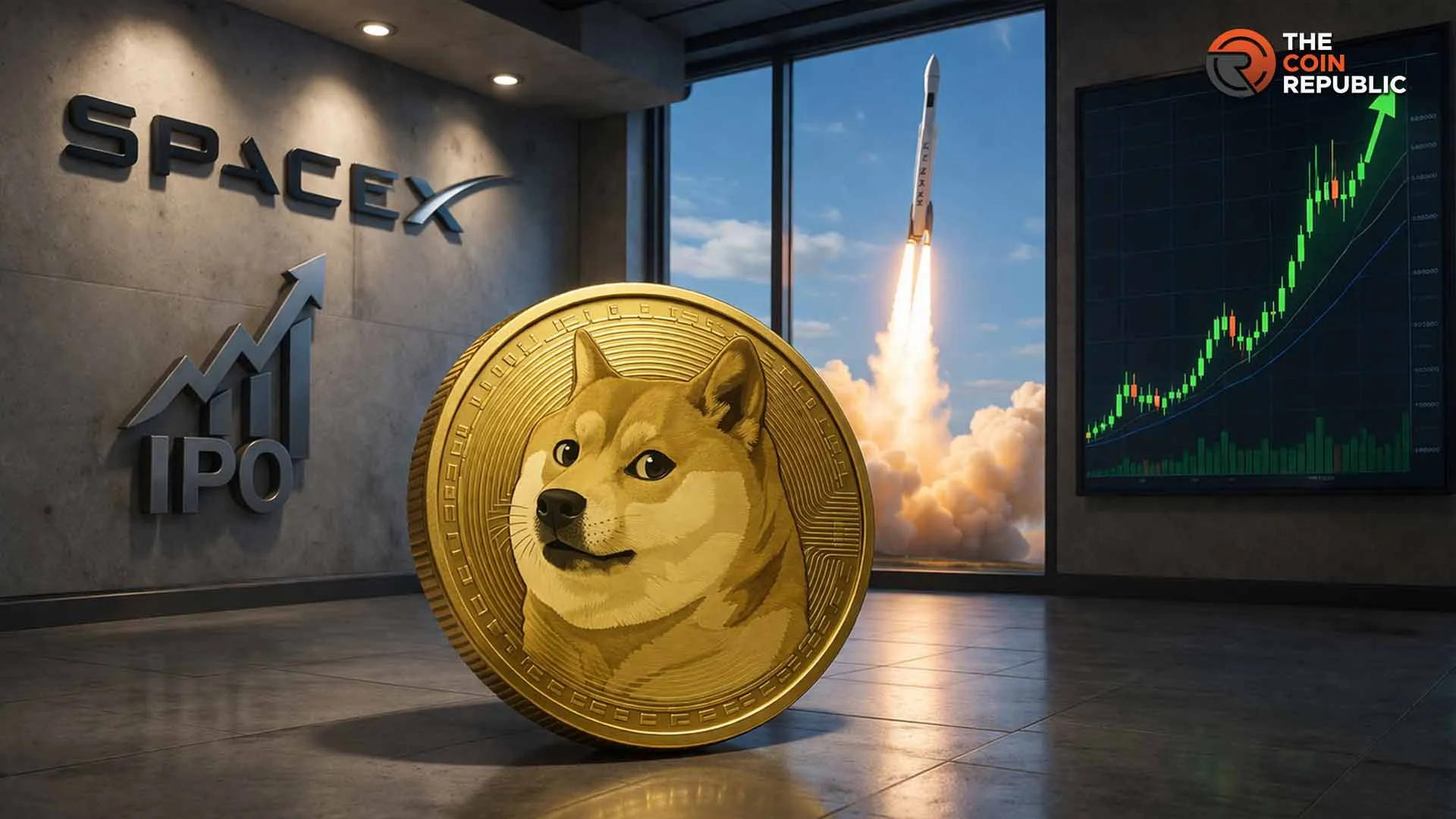
Key InsightsDogecoin price faces major resistance near $0.098, where roughly 28 billion DOGE previously traded.Whales bought more than 1.14 billion DOGE, worth about $112 million, in 96 hours.A break above $0.098 could shift focus to $0.11, then the $0.20 supply zone.  Dogecoin price traded near $0.097 as traders watched a dense supply zone around $0.098. CoinMarketCap data showed DOGE remained up roughly 11.7% over seven days despite staying below that resistance.  The technical barrier coincided with fresh large-holder accumulation and stronger exchange-traded fund flows. However, neither metric confirms that DOGE will clear the resistance area.  Dogecoin Price Faces Resistance at $0.098  In an X post, Martinez used a cost basis distribution heatmap to assess DOGE levels. According to him, Dogecoin is testing a major resistance zone near $0.098. His cost basis distribution heatmap shows that roughly 28 billion DOGE previously changed hands around this level.  Dogecoin Price Analysis by Ali Martinez. Source: X  That large concentration of historical supply makes $0.098 an important barrier for the current move. DOGE would need to break above this zone before shifting attention to higher resistance levels.  Discover more  Financial technology news  FINANCE  Merchant Services & Payment Systems  Martinez identifies $0.11 as the next supply wall. Around 4.98 billion DOGE previously traded near that level,

کل 11:03انڈسٹری
1
...
46
...
1000