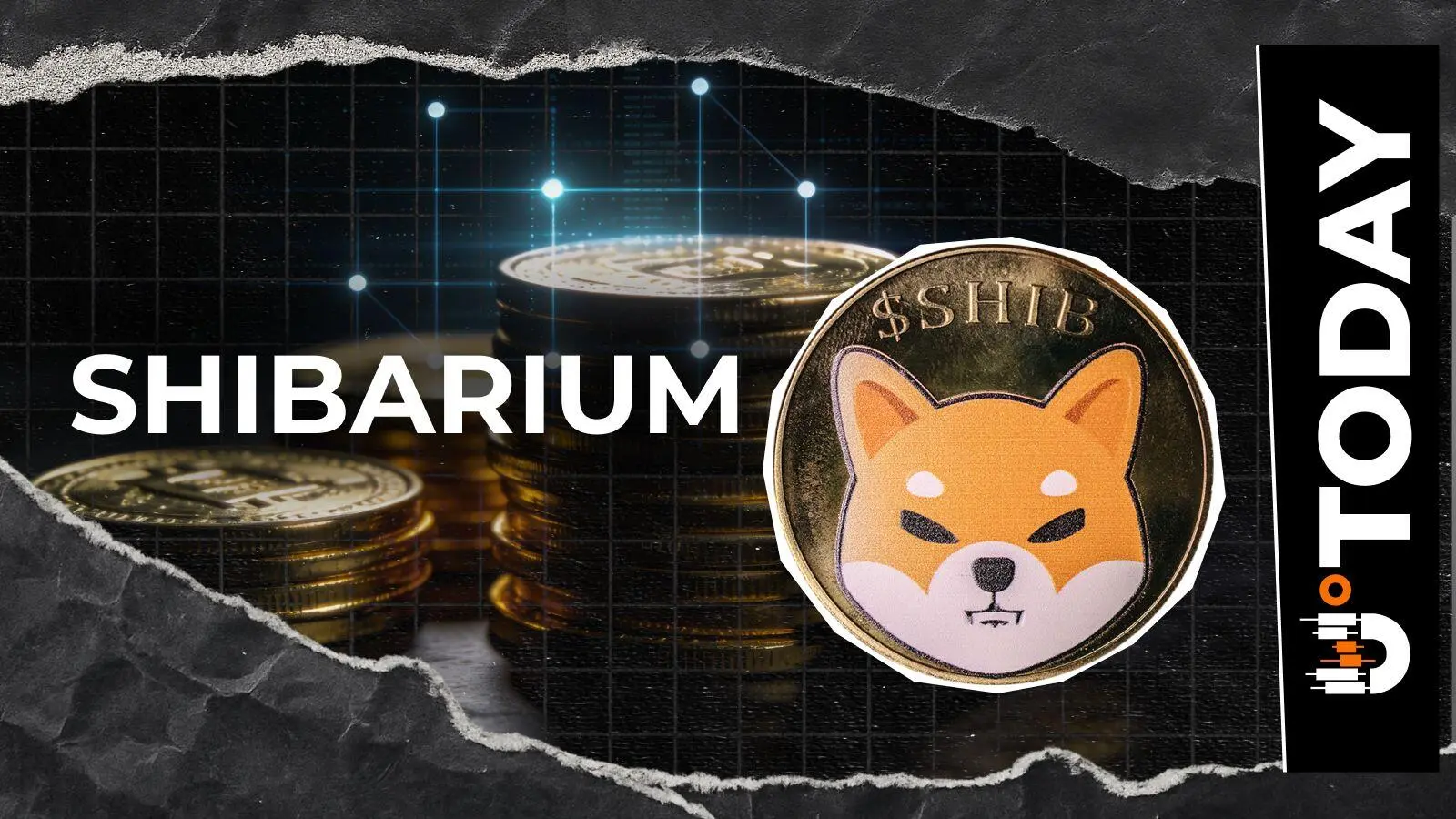
WikiBit Exchange Rug Pull Risk List, Issue 67: Bitbank — FSA License No. 00004, a Zero-Hack Record, and a Proof of Reserves with "No Public Wallet Addresses"
Preface: A Veteran Japanese Exchange with a “Real License, Zero Incidents, Yet an Invisible Ledger” In the first 66 issues, we examined a range of exchanges from HashKey to Coinone. Today, in Issue 67, we take a look at a platform with a very different profile—one that scores high on “institutional security” but has a clear shortcoming in “verifiable transparency”: Bitbank (bitbank.cc). In terms of compliance and security records, Bitbank is a “top student” in the Japanese market. It began operating in May 2014 and obtained its Financial Services Agency (FSA) license in 2017 under registration number Kanto Local Finance Bureau No. 00004. Since its inception, it has maintained a public record of zero hacking incidents. Its altcoin liquidity ranks among the highest in Japan, and the order book depth for core trading pairs such as BTC/JPY and XRP/JPY is at the forefront among licensed exchanges. Its negative maker fee (-0.02% Maker) stands out among Japanese exchanges, offering real appeal to limit-order traders. In June 2026, SBI Holdings acquired 100% of Bitbank for 46.7 billion yen (approximately $289 million). Following the merger, SBI‘s crypto customer assets will reach roughly 1.1 trillion yen across about 2.92 million accounts, making it Japan’s largest crypto exchange
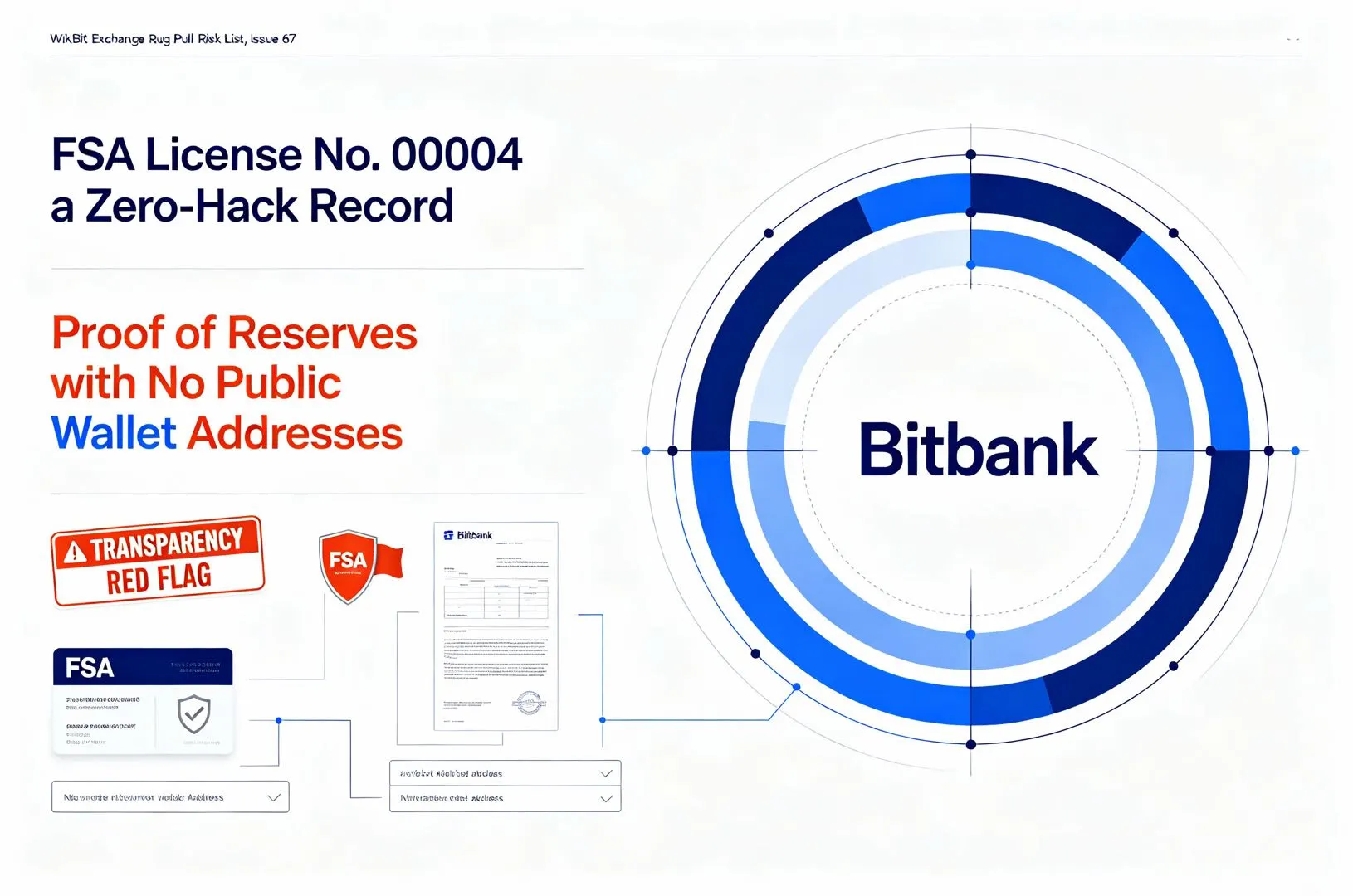
Bitcoin ETFs near $5B in record monthly outflows amid AI stock rout
US-listed spot Bitcoin exchange-traded funds (ETFs) are approaching $5 billion in monthly net outflows for the first time since their launch in January 2024. The funds recorded $231.6 million in net outflows on Tuesday, extending their withdrawal streak to six consecutive trading days, according to SoSoValue. November outflows reached $4.94 billion, surpassing the previous monthly record of $4.51 billion in June. The latest withdrawals bring net outflows for 2026 to about $4.57 billion, erasing the recovery that saw the funds attract $6.34 billion in the third quarter. Digital asset investment company Teroxx identified rising interest rates and weakness in AI stocks among the factors behind declining ETF demand in its November research report, noting that markets increasingly expect another Federal Reserve rate hike in December. US spot Bitcoin ETF net flows in billions of dollars, with November data through Nov. 20. Source: Teroxx “In the near term, flows into Bitcoin will remain under pressure as long as artificial intelligence stocks are searching for a bottom and the December Fed decision looms,” Teroxx digital asset researcher Leonardo Larieira said in comments shared with Cointelegraph. Larieira said a sustained recovery in Bitcoin ETF inflows would require long-term US Treasury yields to stabilize. “Once that happens, returning institutional capital
Stablecoin redemptions hit $12B in 30 days, echoing 2022 bear market
Net redemptions across the 11 stablecoins tracked by crypto research firm Kaiko reached about $12 billion in the 30 days to Nov. 13, echoing a pattern analysts saw during the 2022 bear market. Tether‘s USDt (USDT) and Circle’s USDC (USDC), the two largest stablecoins, each ended the period with about 4% fewer tokens in circulation. Since Nov. 13, total stablecoin supply has fallen just 0.4%, while USDC supply has edged higher. “The contraction looks like capital leaving crypto rather than rotating within it,” Kaiko analyst Andrew Yang told Cointelegraph. Yang said that the redemptions left traders with fewer stablecoins on hand to buy crypto. The cash-out coincided with outflows from US spot Bitcoin exchange-traded funds and a shift in expectations toward tighter Federal Reserve policy. USDT trading slows while onchain transfers hold up Daily trading volume in USDT pairs was about half its 2025 average over the past month, according to Kaiko. Bitcoin (BTC) market makers continued to post orders close to the market price. The dollar value of orders to buy or sell Bitcoin within 1% of its market price fell about 15% over the past month. Measured in Bitcoin, those orders were 9% larger in aggregate, Yang said. Related: Stablecoin supply falls $14.2B in biggest 30-day

Japans SBI, SMFG launch Solana venture for stablecoins, tokenization
Japanese financial giants SBI Holdings and Sumitomo Mitsui Financial Group (SMFG) have launched launched a joint venture with the Solana Foundation to tokenize assets, develop stablecoin payment infrastructure and expand onchain financial services across Asia. The three parties said Wednesday they had finalized agreements to transition SBI R3 Japan to new joint venture structure, with the company beginning full-scale operations as SBI Solana Global. The company said it will focus on financial asset tokenization, real-world asset tokenization, stablecoin payments and onchain asset management. Its plans include developing domestic and cross-border remittance infrastructure, exploring micropayments conducted by artificial intelligence agents and supporting the issuance and distribution of tokenized bonds, investment funds and loan receivables. SBI has already expanded into both dollar- and yen-denominated stablecoins. Its crypto subsidiary SBI VC Trade began offering USDC trading in March 2025, while the group and Startale launched the yen-backed JPYSC in June 2026. The launch follows a strategic partnership between SBI Holdings and the Solana Foundation announced in July, which outlined plans to rename SBI R3 Japan and develop financial infrastructure supporting institutional blockchain adoption.
A New Path for API3: Fixed Supply, On-Chain Curation, and Infrastructure for AI Agents
API3 caps its token supply at 200,000,000 and ends emissions, then turns to whats next: a curation business backed by its own capital, and AirnodeHub, bringing provider-signed data to AI agents. A fixed supply with a deflationary design funded by buybacks. API3, a provider of first-party data infrastructure, is permanently capping its token supply at 200,000,000 and ending five years of token emissions, a reset of its tokenomics that clears the way for a new direction: applying the API experience it has built since 2021 to the fast-growing economy of AI agents. The change removes the ability to mint new API3, hands ownership of the token contract to a dead address, and moves governance to a simpler one-token-one-vote model. Since 2021, API3‘s staking pool has minted roughly 90 million tokens (about 47% of today’s supply) at a pace near 950,000 a week, or close to 26% a year. Under the change, API3 is minted one final time to bring the total to exactly 200,000,000, after which minting is removed entirely and no new API3 can ever be created. The tokens maximum supply, listed until now as effectively unlimited, becomes fixed and final. Governance moves from the protocol‘s original five-year-old contracts to a streamlined

Bitrue Thanksgiving Month Brings 0.01% Fees and Up to $300 Daily Rewards
Bitrue cuts trading fees to 0.01% and pays up to $300 a day for referrals in its Thanksgiving Month campaign, which runs from Nov. 23 to Dec. 23, 2026. During the campaign, traders on the global cryptocurrency exchange pay a 0.01% fee on eligible trades, and users who invite friends to join and trade on Bitrue can earn up to $300 in rewards every day. Referrers can also receive commission of up to 80% on the trading of the friends they invite. The campaign runs through the holiday season and is built around three rewards: trading at 0.01% fees, commission of up to 80% and daily referral rewards of up to $300. Full terms, eligibility and reward rules are available on the Thanksgiving Month campaign page. Three Rewards Over One Month The campaign brings together trading costs and community growth in a single program running for a full month.0.01% trading fees.During the campaign, eligible trades on Bitrue are charged a 0.01% fee, lowering the cost of each trade for active users.Up to 80% commission.Participants who bring new traders to Bitrue can earn commission of up to 80% under the campaigns referral terms.Up to $300 a day for invitations.Users who invite friends to join

Bitcoin price may fall below $53K if bear-market history repeats
Bitcoin (BTC) is approaching investors aggregate cost basis, with previous bear markets pointing to the risk of further price declines. Key points:Bitcoin traded at $58,919 at 10 am UTC on Wednesday, 10.75% above its realized price of $53,200.BTC/USD fell below its realized price before every previous bear-market bottom, trading below it for up to 301 days.Relative to capital inflows, Bitcoins onchain realized losses hit their highest levels since the FTX implosion in November 2022. Bitcoin targets realized price for first time in four years New research from onchain analytics platform Glassnode shows BTC/USD now trades just 10% above its realized price. Realized price represents the average price at which each Bitcoin last moved onchain. When the spot price falls below this level, currently around $53,200, holders are collectively sitting on an unrealized loss.BTC/USD one-week chart with realized price. Source: Cointelegraph/TradingView During prior bear markets, Bitcoin fell through its realized price before establishing its next long-term floor. “In each of those bear markets, however, price ended up well below the Realized Price,” Glassnode wrote in the latest edition of its The Week Onchain newsletter. During Bitcoin‘s last bear market in 2022, price spent 180 days below realized price before reclaiming it in January 2023. The record for time
Hong Kong launches tokenized debt platform with 24-hour settlement
The Hong Kong Monetary Authority (HKMA) launched a platform Wednesday that supports round-the-clock settlement of tokenized debt securities in multiple currencies. The CMU Digital Asset Platform, developed and operated by CMU OmniClear Limited on behalf of the HKMA, uses cash tokens for payment and connects with conventional payment systems and central bank digital currencies. Its onchain delivery-versus-payment model ensures that the securities and corresponding payment transfer together, or neither transfer occurs. This means the buyer receives the securities only if the seller receives payment. The platform also handles issuance, interest payments and repayment at maturity, and supports the tokenization of existing debt securities. The HKMA said it aims to improve settlement efficiency and reduce operational costs. The launch follows a separate expansion of Hong Kongs digital payment infrastructure. On Nov. 2, the HKMA upgraded its Project Ensemble pilot to support 24/7 interbank settlement of tokenized deposit transactions using tokenized central bank money. The pilot phase launched in November 2025 and initially used Hong Kongs conventional real-time gross settlement system. Its applications have included corporate treasury management and transactions involving tokenized money market funds.

Sequent raises $2.2M from Frachtis and Metaplanet to develop AI-powered smart contract security
London-based software security startup Sequent has raised $2.2 million in pre-seed financing to develop its AI-assisted formal verification platform, with decentralized finance protocol Curve Finance becoming its first paying customer. According to a November 25 report, venture capital firm Frachtis and Metaplanet Holdings OÜ co-led the financing round. The latter is the investment firm of Skype co-founder Jaan Tallinn, who led artificial intelligence developer Anthropics Series A financing in 2021. Founded in January 2026 by Charles Cooper and Ramana Kumar, Sequent plans to use the capital to prepare its flagship product, Alan, for a full commercial launch. The company will allocate funding toward AI computing resources and recruit employees across engineering, sales and marketing. Sequent develops AI-powered formal verification for smart contracts Named after mathematician Alan Turing, Sequents software uses artificial intelligence to construct mathematical proofs that establish whether computer programs comply with specified requirements. According to its product documentation, Alan examines source code and helps developers prepare formal specifications describing the behavior their software must maintain. Engineers review and approve these specifications before the system begins searching for proofs. Unlike conventional software testing, which examines selected scenarios, formal verification can establish whether a particular property holds across every execution covered by the underlying mathematical model. For

‘Shibarium Is Ready Either Way’: SHIB Developer Teases Privacy Boost for Shiba Inu
The Shiba Inu ecosystem may be set for a privacy boost, as longtime SHIB community member and developer Mazrael hints at privacy potential coming to the blockchain. Shiba Inus privacy potential draws from Oxbows Privacy Pools, the privacy design coauthored by Ethereum cofounder Vitalik Buterin, which is currently a plug-in in the Ethereum Foundations Kohaku wallet SDK. Mazrael noted that Shibarium is now ready for Oxbows Privacy Pools, with the groundwork already being done. WOOF ????????????And its privacy done the regulation-friendly way. Privacy Pools come from a 2023 paper Vitalik co-wrote: deposits are screened, so stolen funds cant hide in the crowd, while honest users stay private. No KYC, no backdoors, and you can always exit publicly.Two ways to bring it to Shibarium: 0xbow deploys it themselves, or the community deploys the same contracts and runs a relayer. Shibarium is ready either way, and ShibWallet already runs it on testnet ???? — Mazrael.shib (@Mazrael_shib) November 25, 2026 The groundwork done on Shibarium (Chain ID 109) includes Cancun opcodes, BN254 pairing support for zero-knowledge proofs, CreateX and Arachnid factories and verified PoseidonT3 and PoseidonT4 contracts at Ethereum addresses. Mazrael shared a GitHub document, “Shibarium (chain 109) support: chain is prepared,” which highlighted this fact. Addressed to the