ESMA questions whether tokenized assets are safe in a crisis

The European Securities and Markets Authority (ESMA) has launched a review of tokenized collateral used by European clearinghouses, asking financial institutions to demonstrate whether blockchain-based assets can be accessed and converted into cash during a market crisis.  ESMA announced the consultation on October 9, giving banks, clearinghouses, custodians and technology providers until January 15, 2027, to submit evidence. The regulator is examining how tokenized assets are transferred, protected and sold when a clearing member fails to meet its financial obligations. It will assess the findings during the first quarter of 2027 before deciding whether additional regulatory measures are needed.  The review follows the introduction of blockchain-based collateral services by European financial institutions, including Eurex Clearing, which began processing live transactions using distributed ledger technology in July 2025.  ESMA examines whether tokenized collateral can be sold in a crisis  At the center of the consultation is whether clearinghouses can access and liquidate tokenized assets quickly enough when markets come under pressure.  Clearinghouses sit between buyers and sellers in financial transactions and require participants to provide collateral to cover potential losses. When a member fails to meet its obligations, the clearinghouse may need to sell or otherwise use the pledged assets to settle outstanding positions.  Existing European rules

18 گھنٹے پہلےانڈسٹری

Pi Network price falls 10%: Can new updates help PI recover?

Pi Network has clarified its plans to introduce stablecoins into its ecosystem while keeping PI as the main cryptocurrency, as its native token struggles near $0.08 following a 10% weekly decline.  SummaryPi Network says PI will remain its primary cryptocurrency while stablecoins support selected payment activities.Open Standard partnership will explore OUSD rewards for Pioneers, with no confirmed Mainnet integration date.Protocol 28 is scheduled for October 16, with node upgrades required by October 13, 2026.PI traded near $0.0812 after falling approximately 10% over seven days, according to CoinGecko data.Technical indicators remain negative, with $0.080 support and $0.090 resistance defining the immediate trading range.  According to the Pi Core Team, the networks partnership with Open Standard will explore ways to bring OUSD stablecoin payments and reward programs to Pioneers. In an October 8 update, the team explained that stablecoins could support payments, commerce and settlement where predictable prices are needed.  However, PI will continue serving as the primary digital asset across network activities, and no date has been announced for an OUSD Mainnet integration.  Pi Network is exploring how stablecoins can support additional utility across the Pi ecosystem while maintaining a distinct, complementary role to Pi.  Read the new blog in the Pi mining app to learn

19 گھنٹے پہلےانڈسٹری

Bitcoin could benefit from rising U.S. debt fears: CoinShares

Bitcoin has emerged as a potential beneficiary of growing concerns over U.S. government debt, with CoinShares warning that rising Treasury yields could become more important to the cryptocurrency‘s next move than the Federal Reserve’s interest rate decisions.  SummaryCoinShares says digital asset fund inflows have slowed after attracting $11.1 billion since mid-July 2026.U.S. ten-year Treasury yields crossed 5.3%, while thirty-year yields reached 5.7%, according to CoinShares research.October rate hike odds dropped to 23% from 71% three weeks earlier following weak payrolls.Treasury increased long-term bond buyback operations to at least $4 billion per operation through November.CoinShares believes bond yields driven by debt concerns could strengthen Bitcoins appeal over government money.  CoinShares reported on October 8 that digital asset fund inflows had slowed considerably this week after attracting $11.1 billion since mid-July. The research firm pointed to the 10-year U.S. Treasury yield rising above 5.3% and the 30-year yield reaching 5.7%, levels not seen in more than two decades. It argued that concerns over government borrowing could increasingly influence how investors value Bitcoin.  The analysis comes after September U.S. employment data fell short of expectations, reducing the probability of another Federal Reserve interest rate increase in October. Despite that change, institutional buying has not recovered enough

19 گھنٹے پہلےانڈسٹری

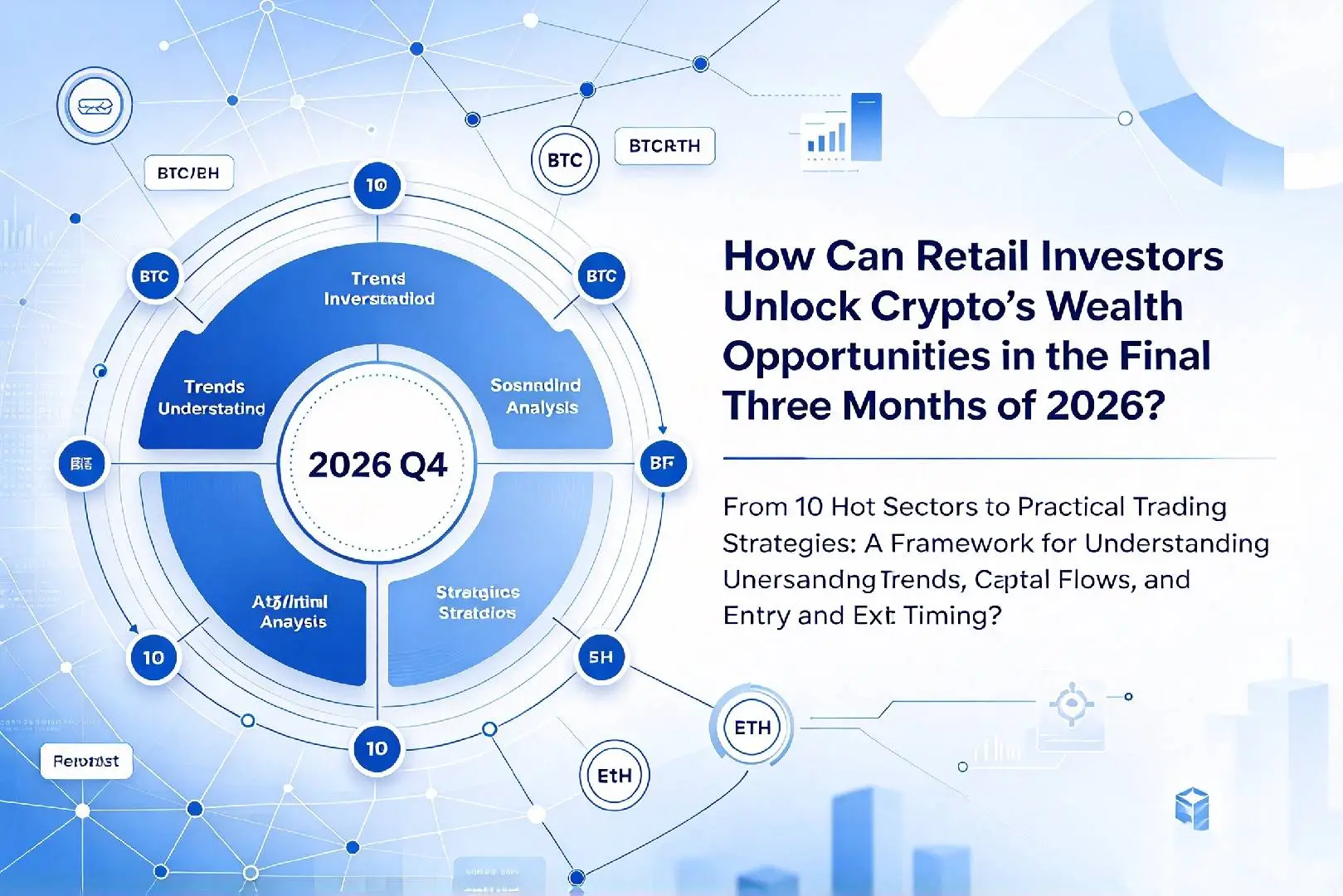
How Can Retail Investors Unlock Crypto’s Wealth Opportunities in the Final Three Months of 2026? From 10 Hot Sectors to Practical Trading Strategies: A Framework for Understanding Trends, Capital Flows, and Entry and Exit Timing

Retail investors real advantage is not getting information faster than institutions. It is the ability to avoid chasing every trend, identify opportunities before the market reaches a consensus, validate narratives with data, and control risk through disciplined position sizing.  First, Understand This: What Is the Real Secret to Building Wealth in Crypto?  Whenever a new crypto market cycle begins, a familiar pattern emerges.  At first, only a small group of people pays attention to an emerging sector. Then, projects begin attracting capital, social media discussions increase, and prices start showing unusual movements. Eventually, mainstream media coverage intensifies, retail investors rush in, and even people who rarely follow crypto begin talking about it.  By the final stage, stories about the “next 100x coin” are everywhere.  The problem? By the time everyone knows about a hot trend, the easiest money may already have been made.  What retail investors should learn is not how to predict which coin will rise tomorrow, but how to identify three distinct stages:Narrative Formation: A new demand trend emerges. Projects begin attracting attention, but the market has not fully priced in the opportunity.Capital Validation: Trading volume, user growth, capital flows, or real business metrics begin to improve, and the market gradually recognizes the opportunity.Sentiment

21 گھنٹے پہلےگہرا غوطہ

Binance to Delist 22 Tokens in Brazil

Binance, a top cryptocurrency exchange, has decided to delist 22 cryptocurrencies for Brazilian customers.  The exchange titan will halt trading services for 22 tokens for Brazilian residents, effective Oct. 27.  The affected tokens include Verge (XVG), Ethena USDe (USDE), TerraClassicUSD (USTC), Decred (DCR), Dusk (DUSK), PIVX (PIVX), MANTRA, Harmony (ONE), Ravencoin (RVN), Zilliqa (ZIL), and Secret (SCRT).  Other tokens to be delisted are BB, GMT, TFUEL, ONT, ACX, HIT, PYR, VANRY, VIC, ICX, and STORJ.  It is important to note that the delistings are only for Brazilian users, not global Binance customers.  However, until Oct. 27, users will be able to trade the delisted tokens. After that, their balances will remain in their accounts. Users can still withdraw and reinvest in them.  Eight Binance services to be restricted  Binance will also put some restrictions on access to eight products and services in Brazil, effective Oct. 27.  The restricted services and products are Binance Loans, Binance Pool, Cloud Mining, margin trading, Launchpool, Megadrop, HODLer Airdrops and Alpha 2.0.  Binance will restrict new positions in the above products and services from being opened.  Existing loans will be switched to a repayment-only status. This will ensure that clients can pay off their outstanding debt without further repercussions due to the transition.  Additionally, Binance is

22 گھنٹے پہلےانڈسٹری

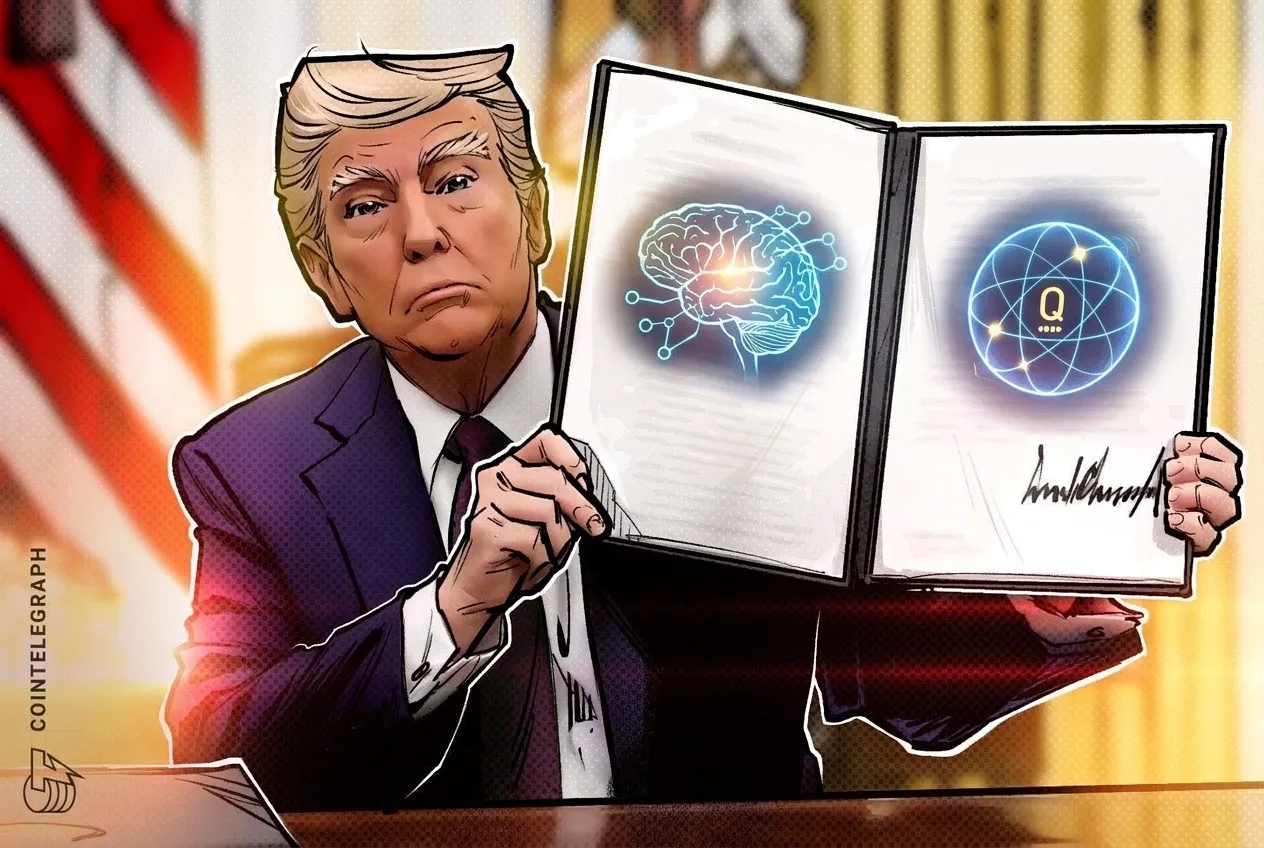
Trump administration outlines quantum, AI initiatives in $6B science push

The Trump administration has announced over $6 billion in science initiatives, including a $215 million quantum computing competition and $2.4 billion in industry commitments for artificial intelligence tools and computing resources.  On Thursday, the Department of Energy identified eight scientific applications to guide its Quantum Genesis Q Competition, which offers up to $215 million in planned funding to companies developing fault-tolerant quantum computers.  First announced in September, the funding includes milestone-based awards and incentive prizes for companies that demonstrate increasingly powerful quantum systems. The research priorities span chemistry, materials science, subatomic physics and applied mathematics.  Advances in fault-tolerant quantum computing could have implications for blockchain-based assets that rely on public-key cryptography. On Sept. 23, three EU financial watchdogs warned that the development of more powerful quantum computers could undermine cryptographic systems used to secure blockchains and financial transactions.  For these crypto assets, sufficiently powerful quantum computers could potentially derive private keys from exposed public keys, allowing attackers to steal funds. However, no quantum computer capable of carrying out such attacks currently exists.  The White House also announced that 11 technology companies pledged $2.4 billion in AI tools and compute credits to support research at 15 federal agencies. Commitments include $1 billion from Nvidia, $500 million

کل 13:40انڈسٹری

Thailand to allow Bitcoin and Ethereum ETFs from October 16

Thailand has finalized 11 regulations allowing Bitcoin and Ether exchange-traded funds (ETFs) to list on its main stock exchange, with the new rules taking effect on October 16, 2026.  Thailands Securities and Exchange Commission (SEC) announced the framework on October 8, confirming that locally established crypto ETFs will trade exclusively on the Stock Exchange of Thailand (SET). Bitcoin and Ether will be the only eligible cryptocurrencies during the initial stage, while fund managers must meet new investment, custody and investor protection requirements.  The rules will allow Thai investors to gain exposure to the two cryptocurrencies through regulated securities products without directly purchasing or storing digital assets. However, the October 16 effective date does not mean that individual ETFs will begin trading that day, as fund managers must first satisfy the applicable requirements.  Thailand crypto ETFs must hold at least 80% in one asset  Under the approved framework, each crypto ETF must operate as a passive investment fund designed to track the price of its underlying cryptocurrency. The SEC requires funds to maintain an average net exposure of at least 80% of their net asset value to a single eligible cryptocurrency over each accounting year.  During the first phase, the regulator will permit investment only in

کل 13:39انڈسٹری

BitGo sued for $141M by DWF Labs-linked firms over early token sales

BitGo has been sued for $141 million by two companies linked to DWF Labs over allegations that the crypto custodian sold restricted tokens before their agreed release dates, causing losses to the sellers.  SummaryTwo DWF Labs-linked companies have sued BitGo in London, seeking $141 million over alleged violations.Plaintiffs allege BitGo sold Falcon Finance and ESPORTS tokens before their contractual trading restrictions expired.The disputed agreements reportedly required three months of initial restrictions, followed by further token vesting.BitGo declined to comment on allegations that early token sales damaged prices and remaining holdings.  The Financial Times reported on October 9 that DWF Maas and Falcon Digital filed the lawsuit in Londons High Court, accusing BitGo of breaching private token sale agreements involving Falcon Finance (FF) and ESPORTS tokens. The companies claim the disputed sales pushed token prices lower and reduced the value of their remaining holdings.  The legal action was reported by Law360 on October 2, before the Financial Times published further details. BitGo declined to comment on the allegations, which have not been established as facts by the court.  You might also like:  BitGo shifts focus from crypto custody to trading, lending  DWF Labs-linked firms accuse BitGo of breaking token sale agreements  At the center of the dispute are

کل 13:31انڈسٹری

Bitcoin rebounds to $82,000 as Trump rules out Iran strikes, oil drops

Bitcoin rebounded to $82,000 on Friday as the broader crypto market recovered from late-Thursday lows, with President Donald Trumps comments easing fears of an imminent U.S. strike on Iran.  Trump said the U.S. would not attack Iran before the Nov. 3 midterm elections.  “We will not be attacking Iran at any time prior to the Midterm Elections to be held in the United States on November 3rd,” Trump said in a Truth Social post, published at 12:17 p.m. ET.  He described discussions with Iran as “productive,” but said the U.S. blockade would remain “in full force and effect.”  Bitcoin selling appeared to run out of steam near $80,300 following the post, and prices have since steadily recovered to $82,000. Other major tokens followed a similar trajectory, with ether, XRP, solana and several other cryptocurrencies trimming Thursdays losses.  Oil, geopolitics drove the selloff  The selling began roughly 24 hours earlier amid fears of renewed military escalation between the U.S. and Iran, which pushed oil prices higher.  Axios reported on Oct. 7 that the Pentagon had instructed U.S. Central Command to prepare for resuming major combat operations in Iran. The report lifted crude prices: futures tied to WTI crude rose from $89 to $93.20 before falling sharply after Trumps

کل 12:00

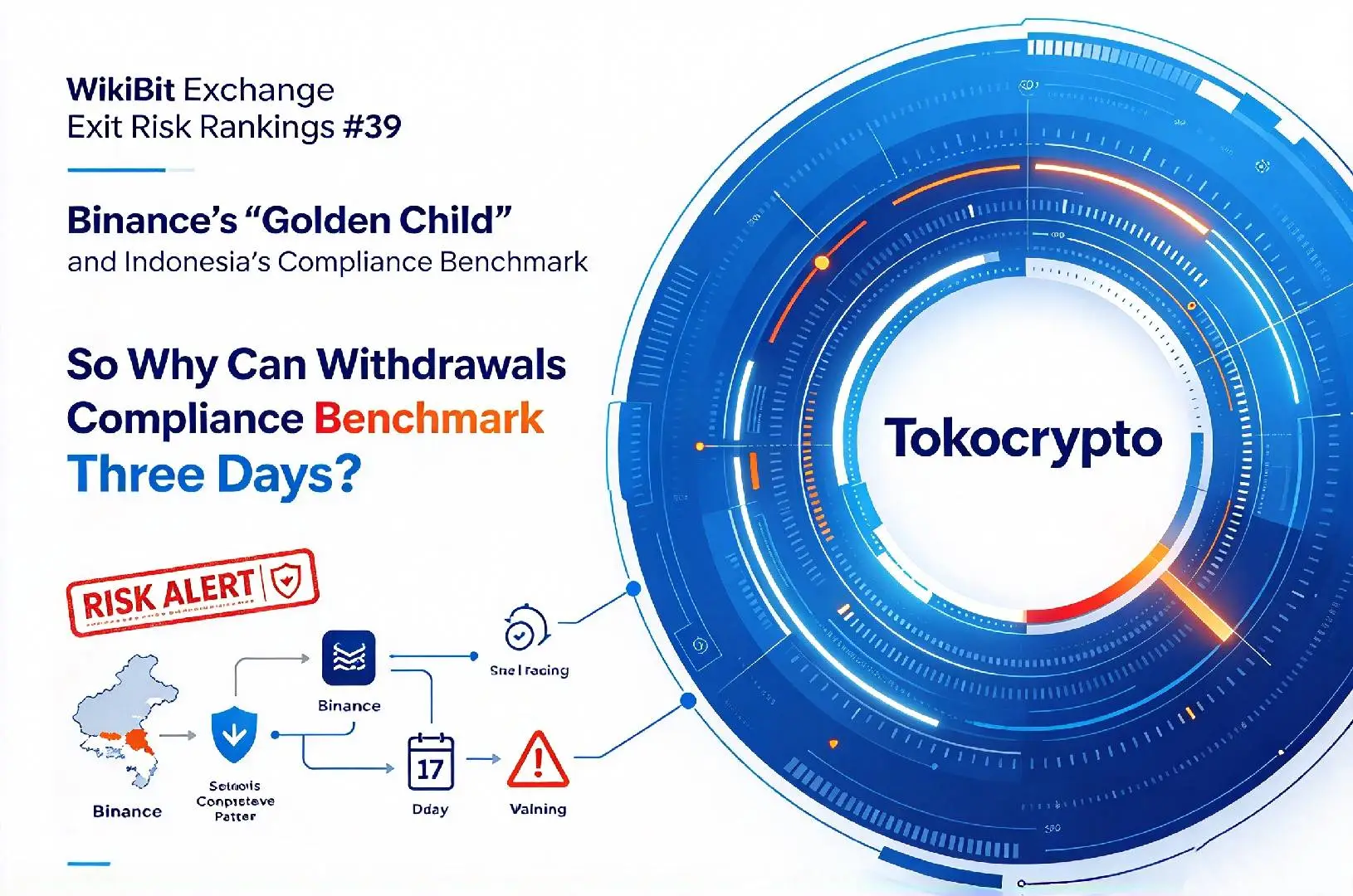
WikiBit Exchange Exit Risk Rankings #39: Tokocrypto — Binance’s “Golden Child” and Indonesia’s Compliance Benchmark, So Why Can Withdrawals Take Three Days?

Introduction: An Exchange Born with a Silver Spoon  In our first 38 installments, we investigated a range of exchanges, from HashKey to Websea. For Episode 39, we turn our attention to a platform that appears to have one of the most legitimate pedigrees in the industry: Tokocrypto.  Its credentials look impressive on paper: founded in 2018; Indonesia‘s first crypto exchange registered with Bappebti; awarded a full PFAK license in 2024; placed under the direct supervision of Indonesia’s Financial Services Authority (OJK) starting in January 2025; fully acquired by Binance in 2022; more than 5 million users; dual ISO 27017 and ISO 27001 certifications; Proof of Reserves using Merkle trees and zk-SNARKs; and user assets totaling $345 million.  Sounds like a gold-standard example of regulatory compliance in Southeast Asia, right?  But there is another side to the story. Tokocrypto has a Trustpilot rating of just 1.9 out of 5, with users repeatedly complaining about slow withdrawals and unresponsive customer support. Gridinsoft gives the website a trust score of only 35 out of 100 and flags it as a “suspicious website.” Multiple Chinese-language anti-fraud articles have accused Tokocrypto of being involved in a futures-trading Ponzi scheme scam. Academic research also indicates that 46.2% of sentiment toward

کل 11:56گہرا غوطہ
1
...
57
...
1000