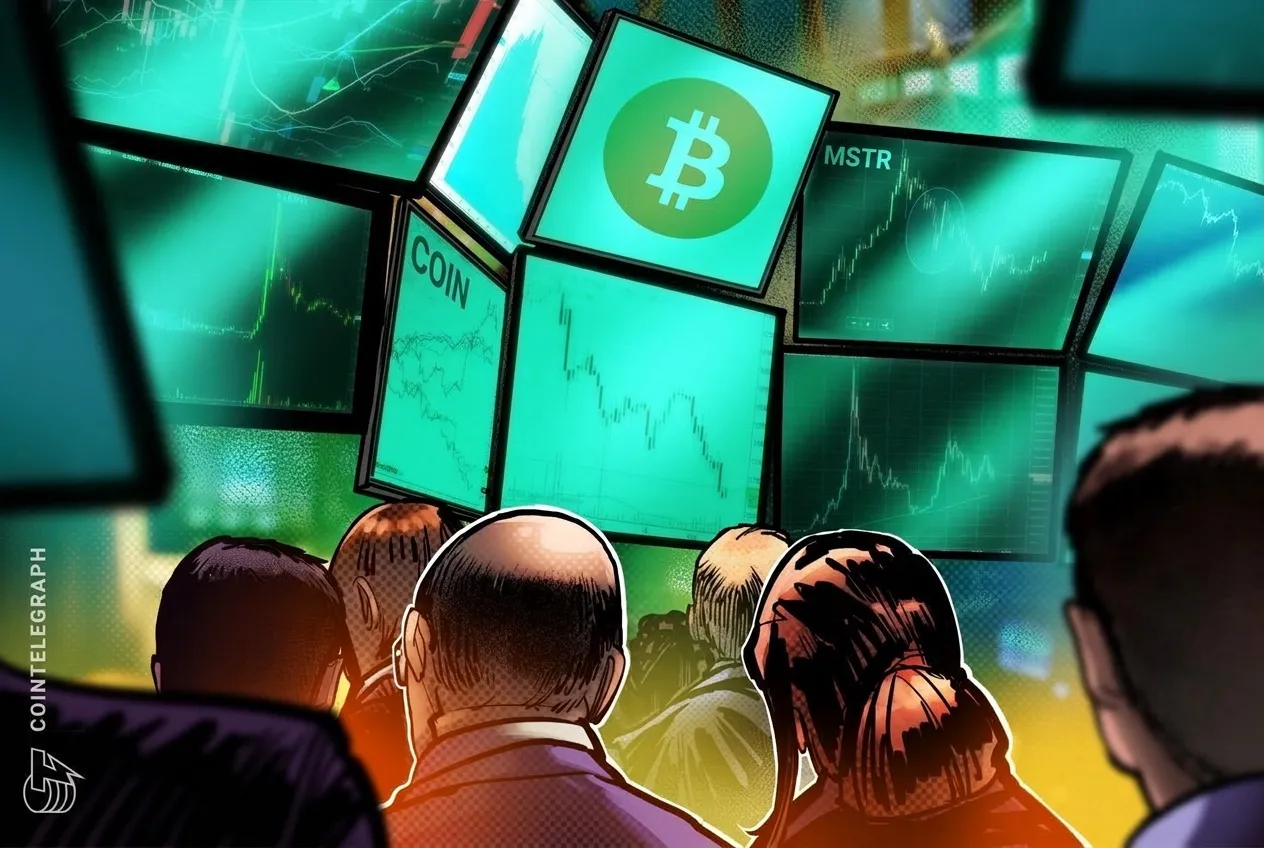
Crypto executives say digital native generations may never need a bank account

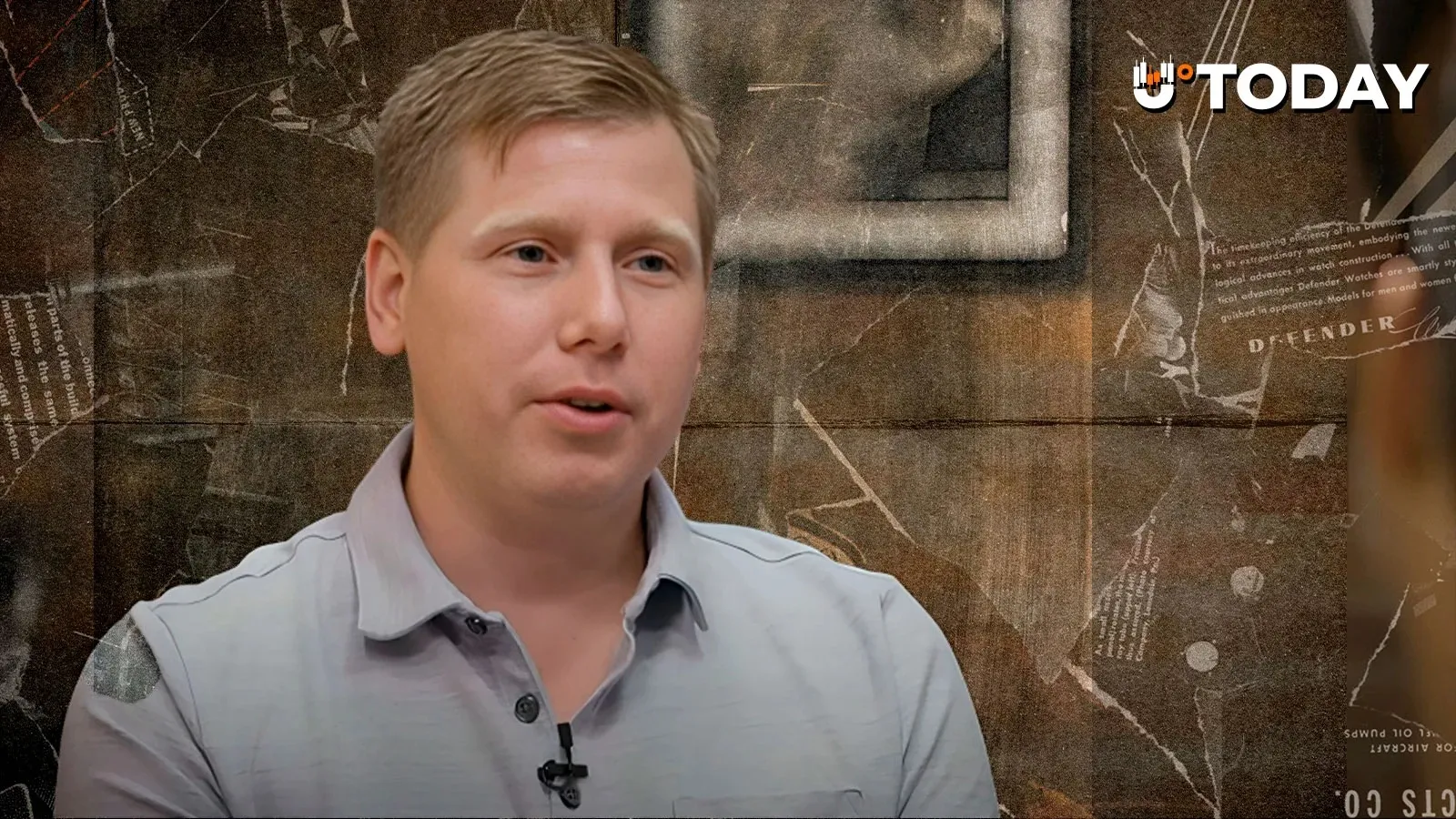
Jan said many Binance employees, including himself, already keep most of their assets on the exchange. “I could make payments, I could use my debit card to spend whatever I need wherever I want,” he said.  Lines are blurring  Eneko Knorr, co-founder and CEO of Dubai-based stablecoin company Stabolut, said the line between banks and crypto companies is becoming harder to see.  “Today, you see regular banks offering crypto, and crypto platforms offering real bank accounts and normal banking services,” Knorr told CoinDesk. “Of course, the world still runs on regular money, so we all have to make a standard bank transfer to pay rent or the utility bills.”  Knorr said younger customers may choose an app that combines stablecoins with daily banking services.  Rohan Misra, head of the Gulf Cooperation Council region and SEO of AMINA Bank ADGM, said stablecoins are increasingly used for payments and settlement but still need regulated banking infrastructure.  “The wallet alone isnt the bank account,” Misra said. “The regulated infrastructure around it is.”  Misra also questioned whether self-custody, where users control their private keys, would become the default.  “Self-custody means if someone accesses your private key, your assets are gone with no recourse, no recovery and no insurance,” he said. “Thats cash

07-20انڈسٹری

Here is why a massive $1.6 billion in crypto liquidity is sitting idle and wasting away

Around 54% of liquidity in positions below $1,000 was out of range, compared with 26% for positions above $1 million. Yet positions worth more than $1 million accounted for 47% of all idle capital, or roughly $260 million.  While contract-managed positions stayed within a more consistent range, individual wallets accounted for between 82% and 94% of the attributed idle capital on Uniswap v3, depending on the chain. That suggests liquidity deposited directly by users and requiring manual adjustments is more likely to go unattended and fall out of range.  Dune estimated that these out-of-range providers, that are sitting idle, could be missing roughly $150 million in fees each year, based on a blended in-range fee APR of about 35%.  Liquidity providers deposit token pairs that decentralized exchanges use to complete swaps. They earn a share of the fees paid for trades using that liquidity pool while their positions remain in the range they set.  However, the research said that the figure is not guaranteed recoverable income. Keeping positions active can add transaction costs, execution risk and exposure to unfavorable price movements.  1inch commissioned the research ahead of the planned launch of , a new liquidity protocol. Dune said it developed the methodology and reached its

07-20انڈسٹری

Massive bitcoin call spreads target $72,000 by month end, right when the Fed meets

SummaryTraders have bought $2.5 billion in notional bitcoin call spreads on Deribit, targeting $72,000 by July 31.The timing aligns with the Feds July 29 interest rate decision, with markets currently favoring a hold.  Bitcoin traders are betting billions that the cryptocurrencys spot price will climb to $72,000 by the months end, a timeline that lines up with the July Federal Reserve meeting.  They have done so this week with the help of Deribit-listed bitcoin call options, or derivative contracts that pay off when BTCs spot price surges beyond specific price levels by a certain date.  According to Deribit, a total of 20,000 contracts of the $70,000 call expiring July 31 were purchased alongside a sale of 20,000 contracts of the $72,000 call of the same expiry. That amounts to $2.5 billion in notional value, the dollar value of 40,000 contracts, each representing 1 bitcoin.  This is known as a bull call spread, a strategy initiated when expecting a moderate rise in the price of the underlying asset.  Think of it as buying a ticket that pays out if bitcoin rises to $70,000, while selling away the gains above $72,000 to lower the cost of that ticket. The trade-off: a lower entry cost and lower maximum

07-20انڈسٹری

Tokenization has become a strategic priority for 84% of financial firms

On Wednesday, DTCC completed its first live production trades involving tokenized securities, marking a major step toward bringing blockchain technology into traditional financial markets.  Broadridges findings suggest those efforts are influencing the broader industry. Sixty-eight percent of respondents said tokenization will at least partially reshape financial markets within the next three to five years, while nearly one-third plan to increase investment in tokenization projects by 26% to 50% or more over the next two years.  The survey also found firms are not preparing for an all-onchain future. Instead, 92% expect digital and traditional assets to coexist for the foreseeable future, and 69% plan to integrate tokenization into existing infrastructure rather than build separate blockchain-native systems.  That mirrors the approach taken by many large financial institutions, which have generally focused on connecting blockchain networks to existing trading, custody and settlement systems instead of replacing them.  Adoption remains uneven across the industry. Forty-four percent of capital markets firms said they already have tokenization initiatives in production or operating at scale, compared with 20% of asset managers and 9% of wealth managers.  The survey also pointed to where firms expect tokenization to gain traction first. About 80% of respondents believe tokenized mutual funds and money market funds will

07-20انڈسٹری

WOO X Signs Memorandum of Understanding (MOU) with Payward Services

15 JULY, 2026– WOO X, a leading global centralized digital asset exchange, and Payward Services, the B2B infrastructure platform from Payward, the company behind global crypto platform Kraken, have signed a Memorandum of Understanding (MOU) to bring crypto trading to WOO Xs European users through Payward Services trading-as-a-service offering.  Under the agreement, the companies intend to enable spot crypto trading for WOO X‘s EU users powered by Paywards regulated European infrastructure and licensing. WOO X will join a growing roster of financial institutions using Payward Services’ trading-as-a-service offering, including bunq, one of Europes leading neobanks.  “Were excited to bring WOO X the power of fifteen years of Paywards regulated infrastructure, creating an easy path to meet customer demand with an expanded trading offering and the right licenses to unlock crypto trading across the EU. When partners work with Payward Services, they can launch crypto trading in a few weeks without building complex in-house infrastructure,” said Mark Greenberg, Global Head of Payward Services.  The MOU serves as a foundational framework for future cooperation. Both entities will share further operational updates as specific initiatives are finalized.  About WOO X  WOO X is a leading global centralized digital asset exchange built by traders, for traders. Backed by YZi

07-20انڈسٹری

South Korea weighs new legal framework for seizing self custodied crypto

South Korean tax officials have proposed amendments to the countrys Criminal Procedure Act to establish a legal framework for seizing self-custodied digital assets, arguing that existing rules do not adequately cover wallets controlled through private keys.  SummarySouth Korean tax officials have proposed changes to criminal law to allow the seizure of self custodied digital assets.The proposal sets out warrant requirements and recommends court supervised joint wallets to store seized crypto assets.The recommendations follow recent efforts by the National Tax Service to strengthen crypto custody after a security breach exposed seized assets.  According to Digital Asset, four officials from South Korea‘s National Tax Service, including investigation team leader Jang Hee-won, published a paper in the June edition of the Korea Institute of Criminology and Justice’s Criminal Policy Research journal outlining legislative changes for handling self-custodied virtual assets during criminal investigations.  The proposal focuses on digital assets held directly by individuals through private keys rather than those stored with exchanges or other third-party custodians. Personal wallets, including hardware wallets, fall into this category.  Existing law leaves gaps for self-custodied assets  The paper points to a 2025 South Korean Supreme Court ruling that found investigators acted lawfully when seizing Bitcoin held in an exchange wallet. While the authors

07-20انڈسٹری

Circle President Heath Tarbert sold $30.8M in CRCL shares since June 2025

Circle President Heath Tarbert has sold about $30.8 million worth of Circle shares through 10 transactions since June 2025, while continuing to hold more than 500,000 CRCL shares, according to SEC filings.  SummarySEC filings show Circle President Heath Tarbert has sold about $30.8 million worth of CRCL shares across 10 transactions since June 2025.Tarbert continues to hold roughly 503,000 Circle shares and has not disclosed any open market purchases.The latest filings come as Tarbert continues defending Circles long term strategy despite pressure on CRCL shares.  According to SEC Form 4 filings, Tarbert completed 10 insider transactions between June 2025 and July 2026, generating about $30.77 million through a combination of stock sales and option exercises. The filings show he still owns roughly 503,000 Circle shares and has not disclosed any open-market purchases during the period.  The latest filings come as Circles stock continues trading well below its post-IPO peak, following increased competition in the stablecoin market and changes to major stock indexes.  Earlier this month, Tarbert told FOX Business that Circle remains focused on building internet financial infrastructure instead of reacting to daily stock movements. Responding to a question about CRCL falling from around $260 to the low $60 range, he said the company

07-20انڈسٹری

South Korea unveils roadmap for won stablecoins and currency reforms

South Korea has unveiled a roadmap to make the Korean won a freely convertible currency, pairing foreign exchange reforms with a legal framework for won-backed stablecoins and new digital payment infrastructure.  According to a July 19 report from local mediahouse Etnews, the roadmap was jointly announced by the Financial Services Commission, the Bank of Korea, the Financial Supervisory Service, and the Korea Securities Depository. The plan seeks to remove time and location barriers to trading the Korean won while improving the countrys cross-border capital flow system.  As part of the proposal, the government plans to establish legal rules for issuing and circulating won-denominated stablecoins under the upcoming Digital Asset Basic Act. The report said the legislation would provide the legal basis for bringing won-backed stablecoins into the domestic financial system while also supporting cross-border movement of funds.  The Digital Asset Basic Act is expected to introduce a unified legal framework covering cryptocurrencies and stablecoins. Under the proposal, won-backed stablecoins would become an officially recognized issuance category once the law takes effect.  Stablecoins, CBDCs and tokenized bonds move forward  Alongside the stablecoin framework, the Bank of Korea plans to expand pilot projects linking an institutional central bank digital currency (CBDC) with tokenized government bonds. The central

07-20انڈسٹری

'An Impossible Requirement': Why Have I Been Pwned's Creator Is Dropping Crypto Donations

Troy Hunt, creator of Have I Been Pwned, announced that the measure would likely follow the tightening of Australias cryptocurrency oversight requirements. Hunt stressed that this level of compliance was impossible to fulfill, especially when applied to small donations.  Key TakeawaysTroy Hunt plans to drop crypto donations because strict Travel Rule laws make small tips impossible.Coinbase required extensive sender data for a $6 donation, disrupting anonymous peer-to-peer funding.AUSTRAC enforced Travel Rule mandates on July 1, tightening KYC oversight for virtual asset providers.  Have I Been Pwned Security Project To Drop Crypto Donations  While the tightening of oversight for cryptocurrency transactions is making it difficult for criminals to use digital assets for illicit purposes, it is also affecting use cases where identification is not practical.  Troy Hunt, creator of the Have I Been Pwned website, which allows users to find out whether their emails have been part of data breaches to verify if their information is at stake, announced that he will likely drop crypto donations due to the enforcement of Travel Rule compliance.  On social media, Hunt complained after being prompted by Coinbase to provide the information from a donation made by an unidentified third party due to new Australian regulations.  “I think I can remove

07-20انڈسٹری

US agencies miss GENIUS Act deadline for final stablecoin rules

US regulatory agencies missed Saturdays rulemaking deadline under the Guiding and Establishing National Innovation for US Stablecoins (GENIUS) Act, one year after the law was signed.  While several regulatory agencies published proposed rules and collected public feedback during the past year, no final regulations were issued before the deadline.  Those agencies include the Department of the Treasury, the Office of the Comptroller of the Currency (OCC), the Federal Deposit Insurance Corporation (FDIC) and the Federal Reserve Board, according to rulemaking trackers by law firm Chapman and crypto investment company Paradigm.  Missing the statutory deadline does not invalidate the GENIUS Act, but the unfinished rules could result in regulatory uncertainty for stablecoin issuers.  The GENIUS Act established the first comprehensive federal regulatory framework for stablecoins in the US. The act was signed into law by President Donald Trump on July 18, 2025.  Related: ABA, state banking groups push back on CLARITY Act stablecoin yield provisions  Treasury issued four rule proposals since law signing  Of the 10 notices of proposed rulemaking (NPRM) issued since since the GENIUS Act was signed into law, the Treasury Department issued the most proposals, four, covering the broader implementation of the act, including standards for determining whether state stablecoin regulatory regimes are similar to

07-20انڈسٹری
1
...
141143
...
1000