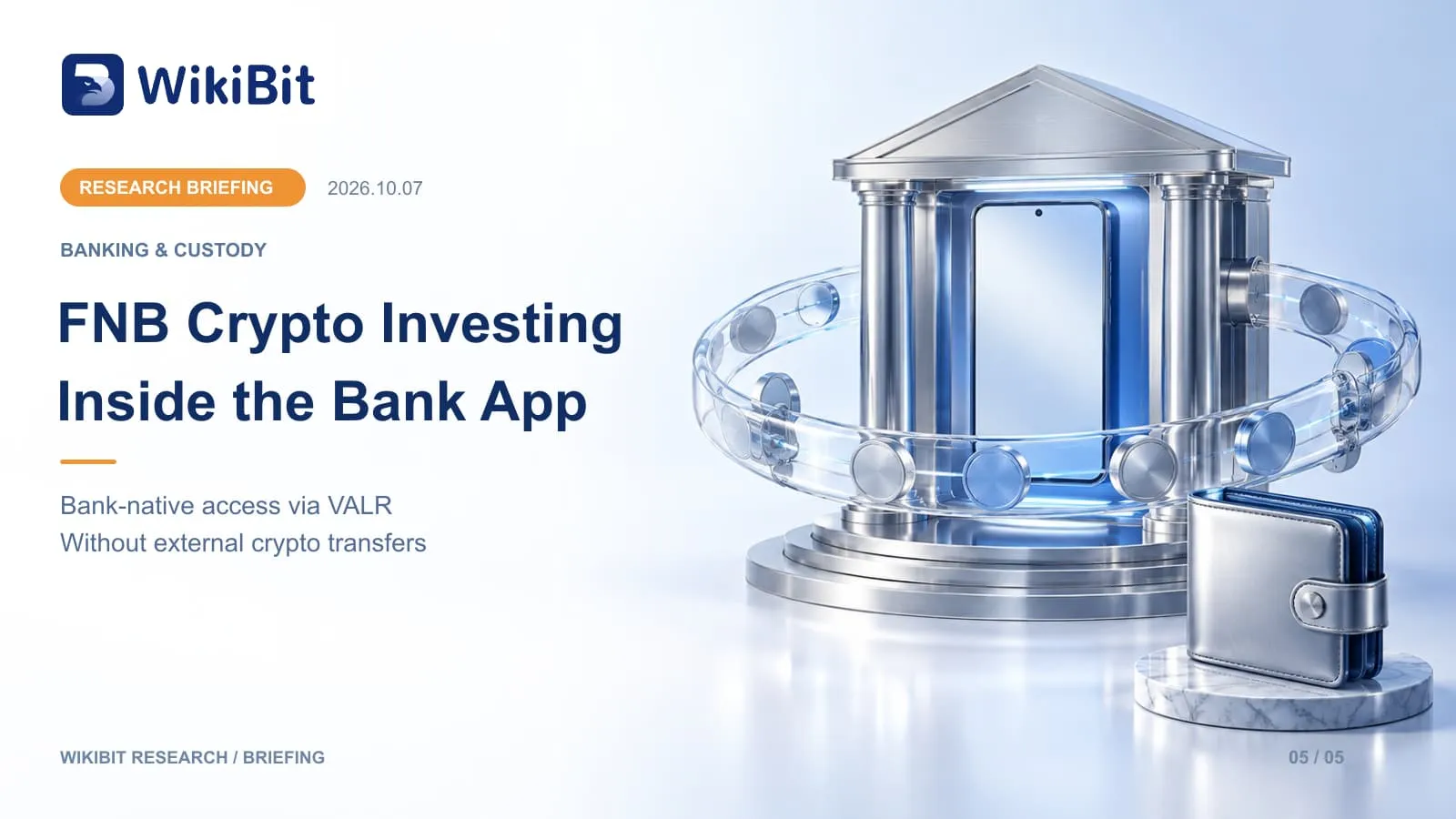
FNB Crypto Investing Explained: VALR Partnership, 24/7 Trading and No Withdrawals

South Africas First National Bank has brought crypto into the same investment interface customers use for conventional assets.  On October 6, FNB launched Crypto Investing through a partnership with local crypto platform VALR.  Customers can buy and sell five digital assets:Bitcoin;Ether;XRP;Solana;USDT.  Minimum trades start at R10.  Trading is available 24 hours a day.  The feature is integrated into FNBs existing Share Saver, Share Builder, Share Investor and Share Zero products.  But there is one major restriction:  crypto cannot be transferred into or out of the FNB ecosystem.  Customers can gain exposure.  They cannot withdraw the coins to a self-custodial wallet.  That makes FNBs launch a useful case study in what crypto adoption looks like when a bank embraces the asset class but deliberately excludes the open-wallet layer.The Product Optimizes for Trust and Distribution  A bank already has several advantages that a standalone crypto exchange has to build.  It has:customer identity;fiat balances;payment rails;an investment interface;regulatory processes;brand trust.  FNB can add crypto without asking a customer to create a new financial relationship.  The customer funds a crypto purchase directly from an FNB account.  There is no separate exchange wire.  There is no new login.  For mainstream adoption, that reduction in friction is powerful.  The user does not need to become a “crypto user.”  Crypto becomes another asset inside a bank investment
10-08Industry Research

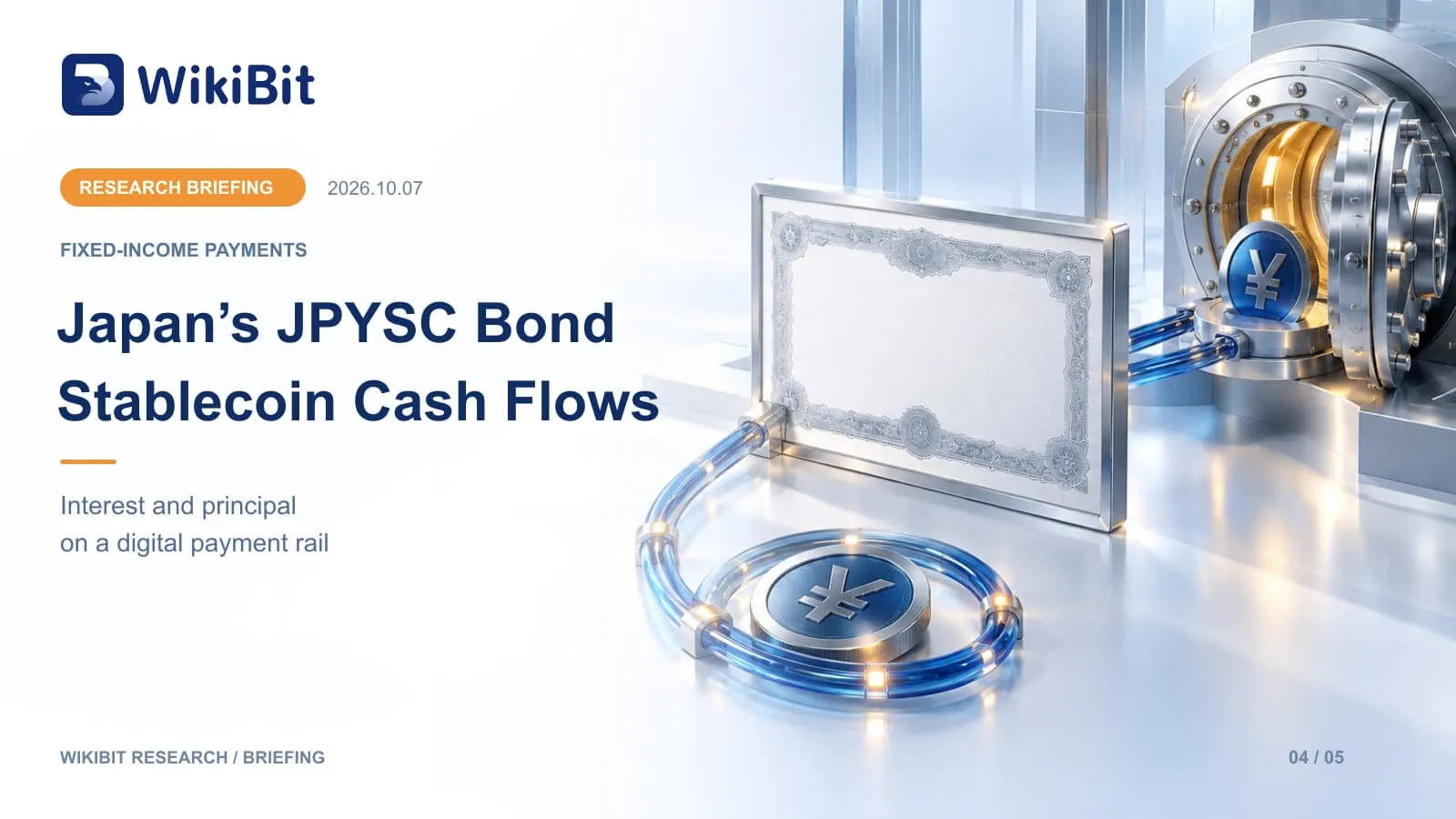
Startale JPYSC Bond Explained: Japan’s Stablecoin Coupon and Principal Payments

Tokenization usually starts with the asset.  A bond, fund or stock is represented digitally.  The payment side often remains conventional.  Startale Japan is testing the reverse question:  What changes when the bonds cash flows themselves settle in a regulated stablecoin?  On October 6, Startale Japan opened subscriptions for its first guaranteed digital corporate bond, marketed as a “Stablecoin Adoption Bond.”  The offering totals ¥99.9 million.  It has a one-year term.  The fixed annual coupon is 5.00% before tax.  The minimum subscription unit is ¥100,000.  Both interest payments and final principal redemption are scheduled to be paid in JPYSC, a yen-denominated trust-type stablecoin issued by SBI Shinsei Trust Bank.  The issuance is small by institutional fixed-income standards.  Its design is more important than its size.  It puts a regulated stablecoin directly into the lifecycle of a conventional corporate liability.The Bond Is Conventional; the Cash Rail Is New  The instrument still has familiar fixed-income economics.  An investor subscribes to a bond.  The issuer owes scheduled interest.  The issuer repays principal at maturity.  The difference is how those payments are delivered.  Instead of sending yen through ordinary bank-transfer rails, the scheduled cash flow arrives in JPYSC through the Startale application.  That distinction matters because a large share of tokenization experiments focus on digital ownership but leave payment and settlement outside the blockchain-oriented stack.  If

10-08Industry Research

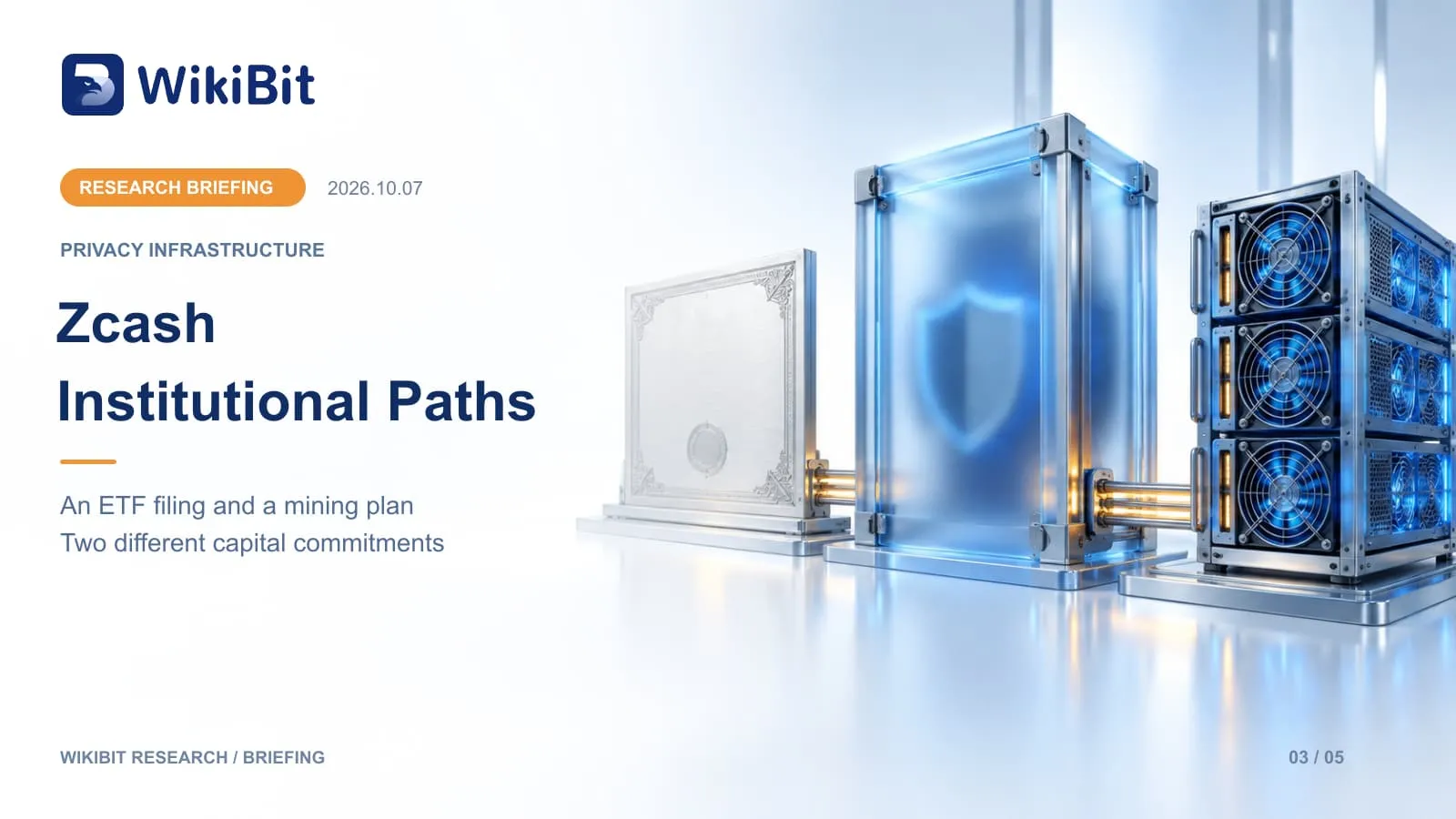
Zcash Institutionalization Explained: WINK ETF, Gemini Custody and a $100M Mining Bet

Zcash is being institutionalized in two very different markets at the same time.  On October 6, Winklevoss Asset Services filed a preliminary S-1 registration statement for the Winklevoss Zcash ETF, which is expected to seek a Nasdaq listing under the ticker WINK.  The proposed product would hold ZEC directly.  Gemini Trust Company would custody the ZEC.  The sponsor fee is proposed at 0.25% annually.  Winklevoss Capital Fund has indicated non-binding interest in purchasing up to $100 million of shares.  Separately, Fortitude Mining Holdings signed a letter of intent with Bitmain for priority access to next-generation Zcash mining equipment, with a non-binding purchase commitment of up to $100 million.  One project packages ZEC for brokerage accounts.  The other invests in the physical infrastructure that secures the network.  Together, they make a stronger narrative than a price rally:  institutional capital is beginning to build both the financial wrapper and the production layer around a privacy asset.WINK Is a Preliminary Filing, Not a Live ETF  The SEC filing is explicit.  The registration statement is preliminary.  The shares cannot be sold until the registration becomes effective.  The trust expects a Nasdaq listing under WINK, subject to the required process.  The funds objective is straightforward: hold ZEC and provide exposure to its price, less expenses and liabilities.  The filing still contains

10-08Industry Research

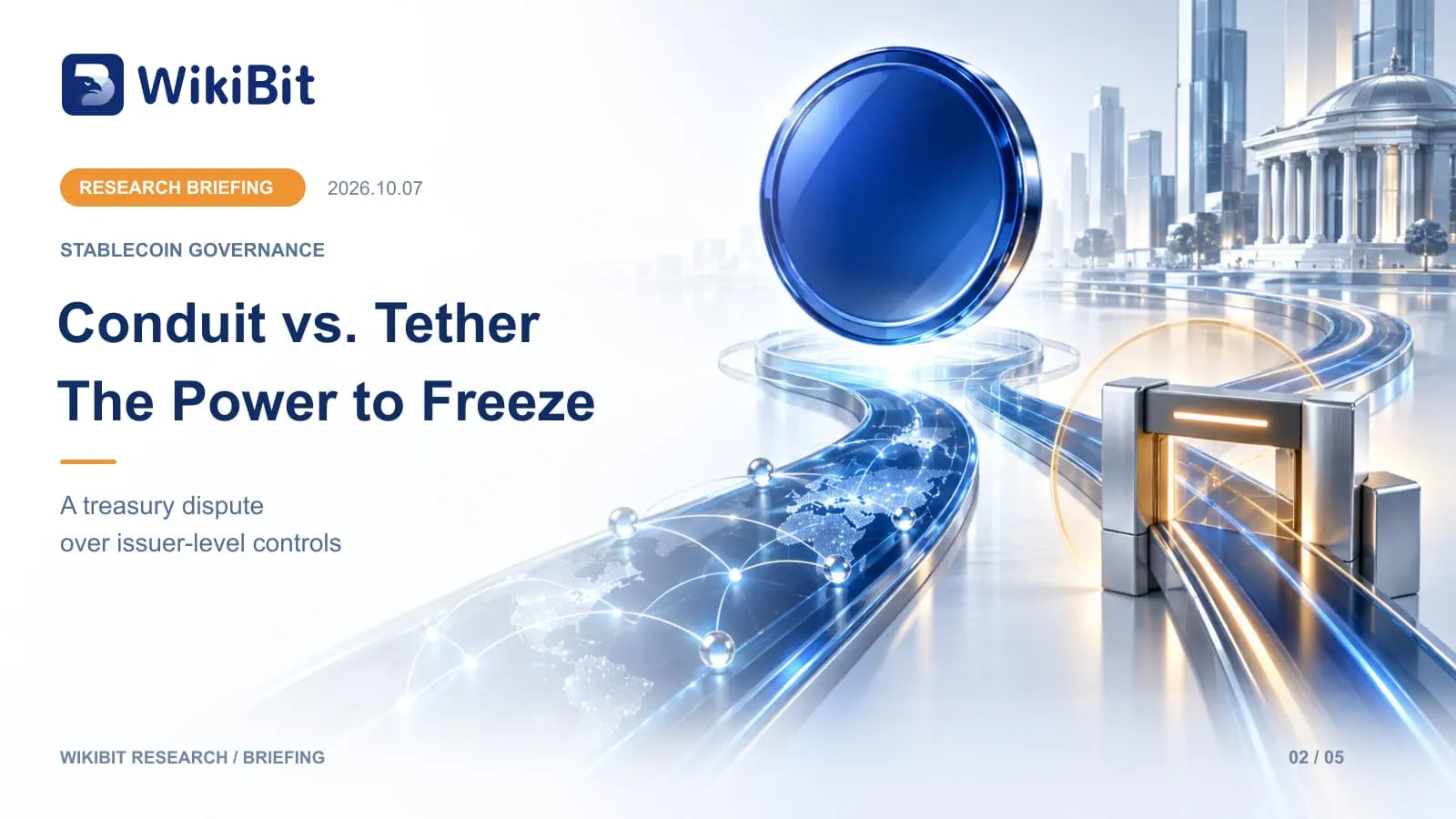
Conduit vs. Tether Explained: The $2.76M USDT Freeze and Stablecoin Issuer Power

Stablecoin issuers have spent years demonstrating why freeze controls can be useful.  A hacked exchange can identify stolen USDT.  Law enforcement can trace the tokens.  Tether can prevent a blacklisted balance from moving.  Conduits new lawsuit asks the opposite question:  What happens if the issuer freezes the wrong wallet — or freezes a legitimate business without a clear legal process for challenging the decision?  Conduit Technology, a cross-border payments company that uses stablecoins to move money internationally, filed suit against Tether entities in the U.S. District Court for the Southern District of New York.  The company alleges that Tether froze approximately $2.76 million of USDT in a Conduit treasury wallet on September 24, 2025 and has refused to release the funds for more than a year.  Conduit says the wallet functioned like an operating bank account.  It is asking the court to order an unfreeze, award at least another $2.76 million in damages and account for profits Tether allegedly earned from reserves backing the frozen tokens.  Those are Conduits allegations.  Tether had not publicly answered the claims in the reporting reviewed for this article.  No court has ruled that the freeze was improper.  That distinction is central.The Case Is Not About Whether Tether Can Technically Freeze USDT  Tethers technical power is well established.  USDT is

10-08Industry Research

Ethereum Glamsterdam Explained: ePBS, Block-Level Access Lists and the 200M Gas Test

Ethereums next major upgrade is no longer only a roadmap document.  Glamsterdam activated on the Sepolia public testnet on October 6, 2026. Early upgraded epochs finalized, and the testnet began a gradual increase from a 60 million gas limit toward a 200 million client target.  The number is attention-grabbing.  The architectural changes underneath it matter more.  Glamsterdam combines changes to Ethereums execution and consensus layers. Its two headline features are enshrined proposer-builder separation, or ePBS, and block-level access lists, or BALs.  Together, they are intended to let Ethereum process and validate more execution without making the validator workload scale in the same naïve way.  That is why Glamsterdam should not be reduced to “Ethereum raises the gas limit.”  The upgrade is testing a different way to build and validate large blocks.A 200M Gas Target Does Not Mean Mainnet Has 3.3x Capacity Today  Before the Sepolia fork, major client configurations were centered around a 60 million gas limit.  The Glamsterdam test pushes the test network toward a 200 million target.  That does not mean Ethereum mainnet has already increased capacity by more than three times.  Sepolia is a public testing environment.  Hoodi and mainnet activation dates had not been announced at the time of writing.  The purpose of the higher limit is to expose

10-08Industry Research

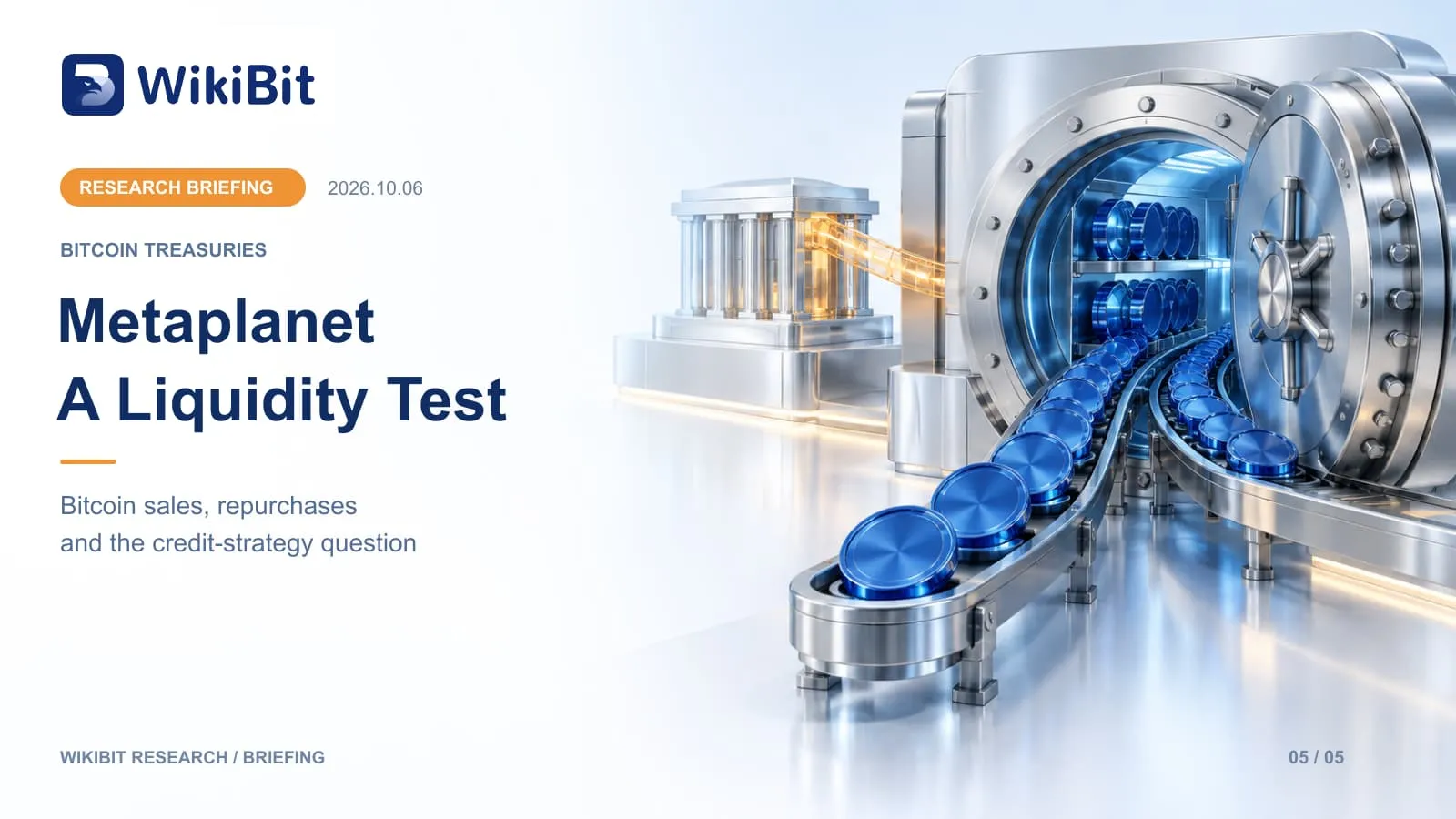
Metaplanet Sold 10,000 BTC and Bought 11,000 Back: The Liquidity Test Explained

Metaplanet did something unusual for a company built around accumulating Bitcoin.  It sold 10,000 BTC.  Then it bought 11,000 BTC back.  The Q3 round trip left the Japanese company with a net increase of 1,000 BTC and total holdings of 44,000 BTC as of September 30.  The sale generated approximately ¥124.7 billion.  The later purchase cost roughly ¥149.9 billion.  The company said the reason was not a change in its long-term Bitcoin thesis.  It was a liquidity demonstration.  CEO Simon Gerovich said rating agencies and credit investors want to know whether a Bitcoin treasury can be converted into cash to meet obligations — and whether management is actually willing to do it.  Metaplanet decided to answer by executing the transaction.  That makes the quarter more interesting than another treasury-company purchase announcement.  It shows a Bitcoin treasury company beginning to behave like a credit institution managing collateral, liquidity and funding credibility.A Bitcoin Treasury Is Only Useful to Creditors If It Can Be Monetized  A balance sheet can show billions of dollars of Bitcoin.  A creditor still has to ask a more practical question:  Can the company turn that Bitcoin into cash when debt comes due?  Bitcoin is globally liquid.  That does not automatically prove the companys operational ability or willingness to sell.  Boards can impose restrictions.  Custody arrangements can

10-08Industry Research

OKXICE 24/7 Tokenized Stocks Explained: ICE, OKX, AMMs and SEC Rules

Tokenized equities are moving from offshore wrappers to an institutional U.S. market design.  OKXICE, the 50-50 joint venture between crypto exchange OKX and Intercontinental Exchange, the parent company of the New York Stock Exchange, has notified the SEC that it plans to launch a Tokenized Securities Venue under the agencys new Innovation Exemption.  The proposed venue would begin with more than 60 U.S.-listed stocks.  Trading would be available around the clock.  The tokenized shares are intended to preserve shareholder rights such as dividends and voting.  Companies whose shares are tokenized would receive a 30-day opportunity to object.  There is no announced launch date yet.  The filing is important because it combines three market structures that rarely coexist:  regulated securities ownership + public blockchain settlement + AMM-style liquidity.This Is Not Just an Offshore Stock Wrapper  Crypto exchanges have offered stock-linked tokens outside the United States for years.  The legal structure varies.  Some products are debt instruments linked to a share price.  Some are synthetic derivatives.  Some have redemption links to underlying shares.  The SECs Innovation Exemption takes a more conservative approach for U.S. tokenized NMS stocks.  Qualifying tokens are expected to preserve the rights and privileges of the traditional share.  That means the token should not merely track Nvidia‘s or Apple’s price.  The ownership experience matters.  Dividends, voting and

10-08Industry Research

FinCEN Withdraws Crypto Mixer and Self-Custody Wallet Rules: What Changes

The U.S. Treasury has removed two of the most controversial unfinished crypto-surveillance proposals of the past several years.  On October 5, the Financial Crimes Enforcement Network announced that it is withdrawing:a 2020 proposal that would have imposed recordkeeping, verification and reporting requirements on certain transactions involving convertible virtual currency and unhosted wallets; anda 2023 proposal for a special measure involving convertible virtual currency mixing.  The withdrawals are significant.  They are also easy to overstate.  Neither proposal had become a final rule.  FinCEN is not eliminating the Bank Secrecy Act.  Crypto exchanges and money services businesses still have anti-money-laundering, customer-identification, suspicious-activity and sanctions-related obligations under existing law.  The change is narrower and more important:  FinCEN has decided not to finalize these two broad, crypto-specific reporting frameworks.The Unhosted-Wallet Proposal Targeted the Boundary Between Exchanges and Self-Custody  The 2020 proposal focused on transfers between regulated institutions and wallets not hosted by another financial institution.  Under the proposed framework, banks and money services businesses would have faced additional information-collection and reporting obligations for certain transactions involving unhosted wallets.  Contemporary descriptions of the proposal highlighted thresholds including recordkeeping above $3,000 in covered circumstances and reporting for certain transactions above $10,000.  The policy question was fundamental.  When a customer withdraws crypto from an exchange to a wallet they control,

10-08Industry Research

Ethereum Transaction Assertions Explained: EIP-7906, Blind Signing and Outcome Protection

Ethereum wallets have spent years trying to help users understand what they are signing.  The Ethereum Foundation now wants to go one step further:  make the chain enforce whether the result matches what the user meant to achieve.  On October 5, the Ethereum Foundations Access Cluster published a research proposal around native transaction assertions as part of its Trillion Dollar Security initiative.  The problem is subtle.  A cryptographic signature proves that a user authorized a transaction request.  It does not guarantee that the transaction will produce the economic or security outcome the user expected.  Code can change.  State can change.  A frontend can be compromised.  Liquidity can disappear.  A solver can choose a route that is technically valid but economically disastrous.  Native transaction assertions would add a separate rule over the transactions final state. If the transaction produces an outcome that violates that rule, execution would revert.  That is a meaningful shift from understanding the request to constraining the result.A Valid Signature Can Still Produce the Wrong Outcome  The Ethereum Foundation divides failures into two broad classes.  The first is an intent mismatch.  The user believes they are approving one action, but the payload they sign does something else.  The Foundation cites incidents such as Bybit and BadgerDAO, where compromised interfaces led users or signers to authorize

10-08Industry Research

CFTC CTX and CAM Explained: Leverage, Self-Custody and U.S. Retail Crypto Rules

The most consequential part of the CFTCs new crypto rulemaking is not a list of approved tokens.  It is a proposed boundary between ordinary spot trading, leveraged retail crypto and derivatives.  On October 5, the Commodity Futures Trading Commission published an Advance Notice of Proposed Rulemaking covering “crypto asset transactions,” or CTXs, under Section 2(c)(2)(D) of the Commodity Exchange Act. The agency is also exploring a purpose-built subcategory of designated contract market called a Crypto Asset Market, or CAM.  The proposal is early. It is a request for comment, not a final rule.  But the structure could become one of the clearest federal frameworks yet for deciding when a retail crypto platform moves from state-level spot-market regulation into direct CFTC oversight.  Chairman Michael Selig described the framework as a three-rung ladder.  Ordinary spot exchanges remain largely in the state money-transmission system, with the CFTC retaining anti-fraud and anti-manipulation authority.  Platforms offering retail crypto on a margined, leveraged or financed basis move onto a second rung where CFTC registration becomes relevant.  Platforms offering perpetuals and other derivatives remain in the existing derivatives framework.  That makes leverage the regulatory hinge.CTX Is a Product Category, Not a New Token Classification  The term “CTX” can sound like a new type of crypto asset.  It is

10-08Industry Research
1
...
79
...
16