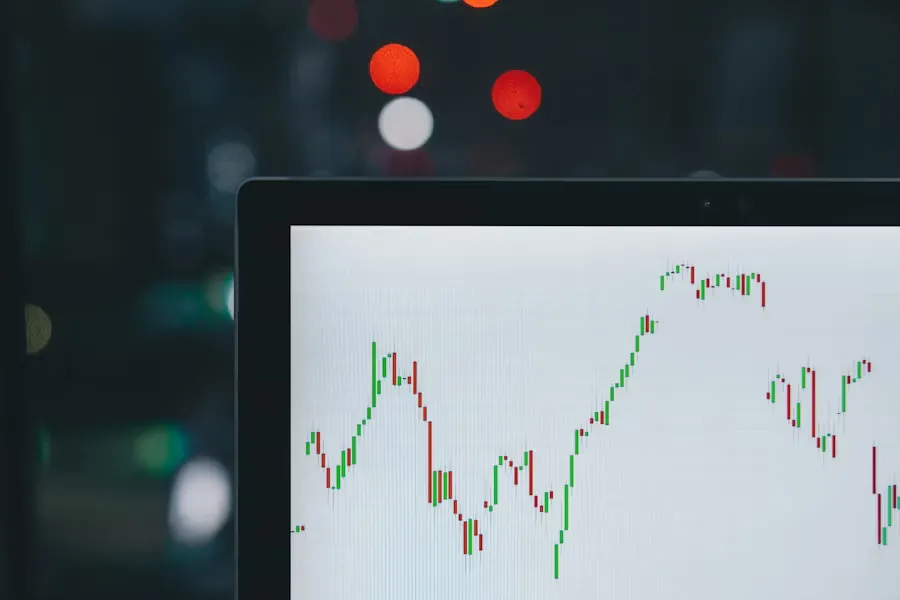
AUD/USD Price Forecast: Softens below 0.7150 after RBA rate hike, but maintains bullish bias

Technical Analysis:  In the daily chart, AUD/USD holds a constructive near-term bias as spot sits essentially on the 20-period Bollinger simple moving average, keeping the short-term trend supported after the recent pullback from this weeks highs. The 100-day exponential moving average (EMA) remains well below price and reinforces the broader upswing, while the Relative Strength Index (14) around 54 suggests moderately positive but not overstretched momentum.  On the downside, initial support is aligned with the Bollinger mid-line at the April 30 low of 0.7110, followed by the lower Bollinger band near 0.7060 and then the 100-day EMA at 0.6963, where a deeper correction would be expected to attract dip buyers. On the topside, the next notable resistance is the upper Bollinger band around 0.7230, and a clean break above this ceiling would strengthen the bullish tone and open the way for a continuation of the broader advance.

05-05Industry

Solana’s Volatility Hits a Multi-Year Low and The Institutional Trade Explains Why

Tech  Solanas Volatility Hits a Multi-Year Low and The Institutional Trade Explains Why  Solana volatility hits a multi-year low, with the 30-day annualized reading dropping to 35.5%. In 2026, it even fell to under 26% for a brief period.   Per BeInCryptos exclusive Solana volatility dashboard, this compression marks one of the lowest sustained 30-day prints the indicator has tracked. The cause sits in a structural shift in who owns SOL. The spot ETF, launched in October 2025, has not had a single month of outflows.  Long-term holder supply has expanded sharply over the past two months. The result is a market that has neutralized a textbook breakdown pattern, but capped the upside in the process.  Solana Volatility Crashes to a Multi-Year Low  Per BeInCrypto‘s Solana volatility dashboard, the 30-day annualized volatility, a measure of how much SOL’s daily returns deviate from their average over the previous month, sits at 35.5% as of May 4. The 90-day reading is 57.4%. The 200-day is 54.0%.  Compare those numbers to early 2024. The same metrics printed 109% on the 30-day, 92.6% on the 90-day, and 78.8% on the 200-day. Even the early 2026 lows of 58.5%, 50.1%, and 25.8% are now being matched by the active 30-day window.  Solana Annualized

05-05Industry

Solana (SOL) Price Eyes Critical $86 Resistance as Bulls Attempt Recovery Rally

From a momentum perspective, the Relative Strength Index (RSI) is positioned near the neutral 50 mark, while the MACD indicator remains marginally below the zero line. These readings indicate diminishing selling pressure without confirming that buyers have established definitive control.  Institutional Flows and Futures Positioning Signal Cautious Optimism  Data from institutional products provided a modestly encouraging development. Spot Solana exchange-traded funds registered $3.28 million in net inflows on Monday, based on SoSoValue tracking. This marked the initial positive flow reading since April 23. Sustained inflow continuation throughout the week could establish additional demand underneath current price levels.  [[IMG_3]]Source; SoSoValue  Within derivatives markets, the long-to-short ratio for SOL on CoinGlass climbed to 1.12 on Tuesday, representing the highest measurement recorded in more than 30 days. When this ratio exceeds one, it indicates that more market participants are positioned for appreciation rather than decline, reflecting moderately bullish positioning across the trader base.  Additional data from CryptoQuant demonstrates stabilizing conditions across spot markets with buy-side dominance evident in futures contracts, while most other indicators remain in neutral territory.  Blockchain Fundamentals Remain Resilient Despite Price Stagnation  A significant factor preventing the long-term outlook from turning completely bearish is Solana‘s persistent network engagement. Trader Symba published data on X revealing that Solana’s

05-05Industry

USD/INR: Underperformance risk and capital outflows – MUFG

Finance  USD/INR: Underperformance risk and capital outflows – MUFG  Michael Wan at MUFG highlights that the Indian Rupee entered the Iran conflict period already facing strong capital outflows, shaping its vulnerability. The Reserve Bank of India is reportedly considering measures to attract Dollar inflows, including a possible FCNR swap scheme and tax changes. MUFG projects USD/INR in a 95.00–96.00 range over 12 months, implying continued Rupee underperformance.  Rupee pressures and RBI support options  “Overall, the key message from us is that the starting point matters for the impact to each currency including in Asia, beyond just the direct sensitivity of the Strait of Hormuz and linkages to oil prices and energy shortages.”  “On this front, the likes of the Indian Rupee and to a smaller extent Vietnam Dong were already facing strong capital outflows to begin the Iran conflict, and our continued bias is to as such see INR underperform across a range and distributions of scenarios.”  “We had news reports from Reuters yesterday that the RBI is considering measures to attract more Dollar inflows, and among other steps the 2013 FCNR swap scheme coupled with elimination of withholding tax on overseas government bond investors are possible ways to support the Indian Rupee.”  “We see USD/INR trading

05-05Industry

Uphold rejects NYAG claims after $5M CredEarn settlement

Uphold has pushed back against the New York Attorney Generals statement on its $5 million CredEarn settlement. Uphold says the NYAG statement misrepresented key facts about its $5M CredEarn settlement.The NYAG said more than 6,000 Uphold customers lost over $34M after Cred collapsed.Uphold said it froze Creds platform access within hours after learning about liquidity issues.  The company shared the update with crypto.news after the regulator said Uphold misled investors by promoting Cred LLCs crypto yield product.  In its response, Uphold said the Attorney General‘s statement misrepresented key facts about the settlement. The company also rejected any claim that it knowingly promoted Cred’s alleged fraud. Uphold said Cred misled the company, its customers and other CredEarn users.  NYAG says Uphold promoted CredEarn  The New York Attorney General said Uphold agreed to pay more than $5 million to harmed investors. The regulator said Uphold promoted CredEarn as a reliable savings product while Cred used customer crypto in risky lending activity.  The settlement document said Uphold advertised CredEarn on its website and mobile app from 2019 to October 2020. It also said more than 6,000 Uphold customers invested about $50 million through the product. Those customers later lost over $34 million after Cred collapsed.  Moreover, Uphold said it

05-05Industry

Silver: Downside risks build on geopolitical shock – OCBC

Finance  Silver: Downside risks build on geopolitical shock – OCBC  OCBC strategists Sim Moh Siong and Christopher Wong highlights renewed weakness in Silver as Middle East tensions and higher Oil prices weigh on risk sentiment. The bank notes Silvers more fragile profile versus Gold, with soft momentum after a failed breakout and rallies likely to be sold unless USD, US Treasury yields and risk sentiment improve. Downside risks dominate with key supports and resistances mapped out.  Geopolitics and soft momentum pressure silver  “Silver fell again, snapping two sessions of gains, as renewed escalation in the Middle East weighed on broader risk sentiment.”  “The move reinforces silvers more fragile and volatile setup versus gold. While geopolitical uncertainty can support precious metals, silver is also exposed to the growth and industrial-demand linkages.”  “With oil prices elevated and markets wary that inflation risks could keep the Fed cautious, silver struggled to find support. ”  “Near term, momentum remains soft after the failed break higher, with rallies likely to be faded unless USD, US Treasury yields and risk sentiment turn more supportive.”  “Daily momentum is mild bearish while the recent rise in RSI moderated. Risks are skewed to downside.”  “Immediate support at 70, 63.50 (200 DMA). Break below those levels risk deeper pullback

05-05Industry

Only 2% of Americans Call the US Economy “Excellent,” Poll Finds

The pattern holds across age brackets. About 84% of 18-24-year-olds rated conditions as bad or terrible. The 25-29 group landed at 81%, while the 30-34s came in at 73%.  Sentiment runs sharper among women, non-binary, and other respondents. Roughly 90% of female respondents chose ‘bad’ or ‘terrible,’ compared with 73% of male respondents.  Meanwhile, among respondents who viewed the economy negatively, responsibility was most often assigned to the President. Overall, 41% attributed poor economic conditions to him.  Within the 18–24 age group, 42% placed the blame on Trump, while 32% cited corporate greed. Among those aged 25–29, opinion was evenly divided, with 33% pointing to Trump and an equal share blaming corporate actors.  The oldest cohort is the harshest. 48% of 30-34-year-olds pin responsibility on Trump, the highest share among any age group surveyed. Just 2% blame former President Biden.  Generation Lab noted that results carry a ±3.1 percentage-point margin of error, with wider margins for subgroup analyses.  Crypto Sentiment Meets Economic Reality  The findings stand out given Trumps loud support for digital assets since returning to office. His administration backed a Strategic Bitcoin Reserve and signed the GENIUS Act, which regulates stablecoins.  Still, headline pressure remains intense. March inflation rose to 3.3%, while gas prices have surged

05-05Industry

Polygon Launches Wallet Privacy Feature to Hide Senders, Receivers and Amounts Onchain

Polygons new feature is that it enables users to hide transactions from the public while maintaining compliance and auditability. Polygon said that “privacy means opacity to the market, not opacity to regulators.”  This happens in two key ways. First, every private transaction on Polygon “passes through KYT (Know Your Transaction) screening before execution.” Meanwhile, Hinkals documentation indicates that users can generate audit files to hand over to tax officials or regulators.  The move from Polygon comes just weeks after layer-1 blockchain Aptos made its own privacy play by launching the Confidential APT coin on April 24.  The coin is pegged to the value of the Aptos (APT) token and uses zero-knowledge proofs to conceal and verify transfer information.  The total market capitalization of stablecoins on Polygon hit an all-time high of $3.6 billion on April 10, according to data from DefiLlama, making it the eighth-largest stablecoin chain.  US passage of the stablecoin-friendly GENIUS Act in July last year sparked an uptick in interest and trading volume for the asset class. On Sunday, Western Union became the latest traditional finance firm to launch a stablecoin through its USD-pegged USDPT on Solana.  Cointelegraph is committed to independent, transparent journalism. This news article is produced in accordance with Cointelegraphs

05-05Industry

Brent: Supply risks support prices – ING

Finance  Brent: Supply risks support prices – ING  ING analysts Warren Patterson and Ewa Manthey note that ICE Brent has surged as renewed conflict in the Persian Gulf raises concerns over supply disruptions. They highlight resumed Iranian attacks on regional infrastructure and stress that guidance of vessels through the Strait of Hormuz under “Project Freedom” may only offer temporary relief. The report suggests markets could remain sensitive to further escalation.  Middle East tensions underpin Brent  “We are seeing the first signs of the ceasefire between the US and Iran breaking down amid a re-escalation in the Persian Gulf. ICE Brent rallied 5.8% yesterday to settle above $114/bbl. The US struck a number of Iranian boats.”  “In addition, Iran has resumed attacks on infrastructure in neighbouring countries, with the UAE intercepting several Iranian missiles, while Fujairah port was hit by a drone. This port is important for UAE oil exports. It is situated outside the Strait of Hormuz, which allowed oil exports to continue (and, in fact, to increase) despite the war and blockade of the Strait.”  “This re-escalation comes at a time when the US has started guiding commercial vessels through the Strait of Hormuz, under ”Project Freedom“. Two US-flagged commercial vessels have passed through the

05-05Industry

Banking Industry Pushback Fails as Senators Close CLARITY Act Stablecoin Debate

Tech  Banking Industry Pushback Fails as Senators Close CLARITY Act Stablecoin DebateOn May 5, 2026, Senators Thom Tillis and Angela Alsobrooks announced their Section 404 stablecoin yield agreement is complete and finalThe agreement prohibits stablecoin rewards that mimic traditional bank deposit interest while permitting activity-driven rewardsBanking industry representatives maintain the final text remains inadequate, though lawmakers have ended further discussionsSenate Banking Committee markup scheduled for mid-May, with potential full chamber vote arriving in June or JulyPrediction market Polymarket now shows 70% probability for CLARITY Act enactment in 2026  In a joint declaration issued May 5, 2026, Senators Thom Tillis and Angela Alsobrooks announced their cross-party agreement regarding Section 404 of the Digital Asset Market Clarity Act has reached its conclusive form.  This finalized, bipartisan text is the culmination of months of hard work to deliver a compromise on yield we can all live with. We are closer than ever to getting the Clarity Act across the finish line. https://t.co/8vF7tzpxpy  — Senator Cynthia Lummis (@SenLummis) May 4, 2026  Both lawmakers emphasized that continued resistance from the banking sector will not trigger renewed negotiations. Their position was unambiguous: “We respectfully agree to disagree.”  This settlement resolves a particularly contentious provision within the legislation. It prohibits stablecoin compensation programs

05-05Industry
1
...
741743
...
1000