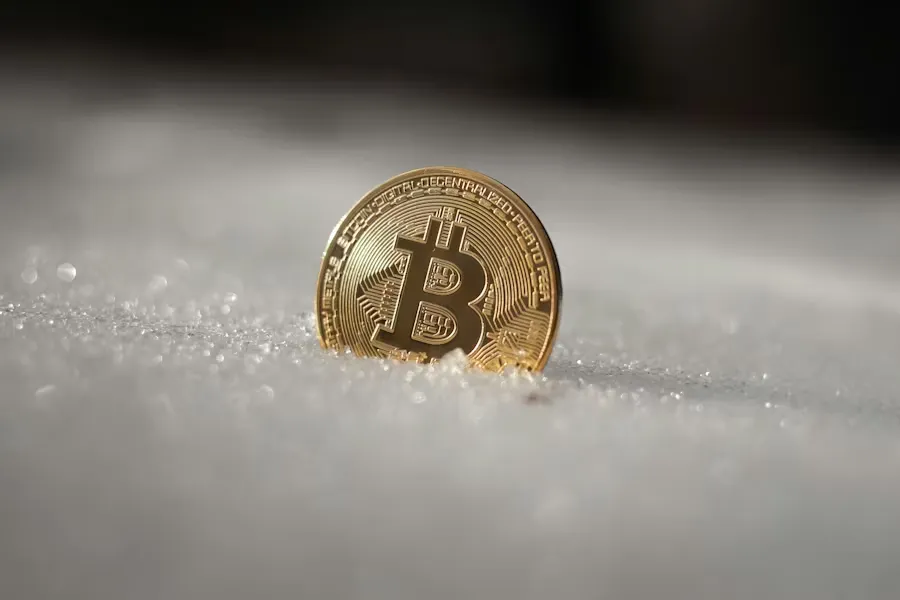
BTC, XRP on the Move Amid Trumps Latest Message on Iran: Details

XRPs breakout actually appears a lot stronger this time.  ;  }  function loadTrinityPlayer(targetWrapper, theme,extras=“”) {  cleanupPlayer(targetWrapper); // Always clean first ✅  targetWrapper.classList.add(‘played’);  // Create script  const scriptEl = document.createElement(“script”);  scriptEl.setAttribute(“fetchpriority”, “high”);  scriptEl.setAttribute(“charset”, “UTF-8”);  const scriptURL = new URL(`https://trinitymedia.ai/player/trinity/2900019254/?themeAppearance=${theme}${extras}`);  scriptURL.searchParams.set(“pageURL”, window.location.href1);  scriptEl.src = scriptURL.toString();  // Insert player  const placeholder = targetWrapper.querySelector(“.add-before-this”);  placeholder.parentNode.insertBefore(scriptEl, placeholder.nextSibling);  }  function getTheme() {  return document.body.classList.contains(“dark”) ? “dark” : “light”;  }  // Initial Load for Desktop  if (window.innerWidth 768) {  const desktopBtn = document.getElementById(“desktopPlayBtn”);  if (desktopBtn) {  desktopBtn.addEventListener(“click”, function () {  const desktopWrapper = document.querySelector(“.desktop-player-wrapper.trinity-player-iframe-wrapper”);  if (desktopWrapper) loadTrinityPlayer(desktopWrapper, getTheme(),  });  }  }  // Mobile Button Click  const mobileBtn = document.getElementById(“mobilePlayBtn”);  if (mobileBtn) {  mobileBtn.addEventListener(“click”, function () {  const mobileWrapper = document.querySelector(“.mobile-player-wrapper.trinity-player-iframe-wrapper”);  if (mobileWrapper) loadTrinityPlayer(mobileWrapper, getTheme(),  });  }  function reInitButton(container,html){  container.innerHTML = + html;  }  // Theme switcher  const destroyButton = document.getElementById(“checkbox”);  if (destroyButton) {  destroyButton.addEventListener(“click”, () = {  setTimeout(() = {  const theme = getTheme();  if (window.innerWidth 768) {  const desktopWrapper = document.querySelector(“.desktop-player-wrapper.trinity-player-iframe-wrapper”);  if(desktopWrapper.classList.contains(‘played’)){  loadTrinityPlayer(desktopWrapper, theme,  }else{  reInitButton(desktopWrapper,‘’)  const desktopBtn = document.getElementById(“desktopPlayBtn”);  if (desktopBtn) {  desktopBtn.addEventListener(“click”, function () {  const desktopWrapper = document.querySelector(“.desktop-player-wrapper.trinity-player-iframe-wrapper”);  if (desktopWrapper) loadTrinityPlayer(desktopWrapper,theme,‘  });  }  }  } else {  const mobileWrapper = document.querySelector(“.mobile-player-wrapper.trinity-player-iframe-wrapper”);  if(mobileWrapper.classList.contains(‘played’)){  loadTrinityPlayer(mobileWrapper, theme,  }else{  const mobileBtn = document.getElementById(“mobilePlayBtn”);  if (mobileBtn) {  mobileBtn.addEventListener(“click”, function () {  const mobileWrapper = document.querySelector(“.mobile-player-wrapper.trinity-player-iframe-wrapper”);  if (mobileWrapper) loadTrinityPlayer(mobileWrapper,theme,  });  }  }  }  }, 100);  });  }  })();  Bitcoin, Ripple‘s token, Solana’s SOL, and several other altcoins made impressive moves over the past few hours, which was rather unexpected given the Sunday market sentiment and lack of major developments.  Interestingly, these recent gains coincided with Donald Trumps latest message on Iran.  The statement on Truth Social from the POTUS reads that Iran has been “playing games with the United States,

05-11Industry

After the $16.5 billion in exploits, DeFi is now being forced toward the controls it once resisted

The rsETH crisis resulted in $200 million in bad debt on Aaves books, despite not a single line of its contracts misbehaving.  On Apr. 18, attackers that Chainalysis preliminarily linked to Lazarus compromised RPC infrastructure, forced a failover to poisoned nodes via DDoS, and injected false data into a 1-of-1 DVN configuration on KelpDAOs rsETH bridge.  The forged message released approximately 116,500 rsETH, and Aaves incident report confirmed that Ethereum accepted nonce 308 while the Unichain source endpoint never advanced past 307.  The attacker supplied the compromised rsETH to Aave and borrowed against it, resulting in bad debt and serving as a frame for the current state of DeFis security.  Exploiters extracted over $635 million across 28 incidents in April, the worst monthly total in over a year. DefiLlama puts the cumulative historical cost of hacks at $16.5 billion, with $7.7 billion specifically targeting DeFi.  The high-profile exploits on Drift and the KelpDAO bridge resulted in DeFi losing nearly $11 bilion in total value locked last month.  That contraction institutional traction in the same capital markets.  DeFi exploiters extracted $635 million across 28 incidents in April, the sectors worst monthly loss in over a year, while cumulative historical hacks reached $16.5 billion.How did DeFi end up here?  Mitchell

05-11Industry

Santiment Warns of BTC Rally Fatigue as Bullish Sentiment Peaks

Bitcoin (BTC) surged to $80,628, up 11.5% over the past 30 days, but crypto sentiment platform Santiment is sounding the alarm. According to a Saturday report, the spike in bullish chatter on social media may signal that the rally could be nearing its end.  Santiment noted a 1.5-to-1 ratio of bullish to bearish comments among active crypto accounts—a level often associated with overconfidence. Historically, markets driven by excessive optimism tend to face sharper pullbacks than those climbing against skepticism. “Rallies that arrive with a confident crowd tend to fade faster,” Santiment explained, suggesting that Bitcoin could benefit from a temporary pullback to $75,000 to flush out overleveraged positions and stabilize for healthier growth.  Sentiment Signals Flash Mixed Messages  The Crypto Fear & Greed Index, which tracks overall market sentiment, underscores the current uncertainty. After dipping into “Fear” territory (38) last Thursday, the index rebounded to a “Neutral” score of 47 by Sunday, reflecting cautious optimism. Such mixed signals make timing the market increasingly challenging for traders.  Adding to concerns, Bitcoin supply on exchanges has increased over the past five days following an extended decline. Santiment interprets this as a potential sign of profit-taking, as holders may believe the current price levels represent a short-term

05-11Industry

Ethereum Price Prediction: ETH Loses Parabolic Support

Ethereum  Ethereum Price Prediction: ETH Loses Parabolic Support  Ethereum is trading near a key level after losing short-term parabolic support while holding a wider reclaim zone. The next move around $2,300 could decide whether ETH extends its recovery or slips into a deeper pullback.  Ethereum Loses Parabolic Support as ETH Fails to Reclaim Key Curve  Ethereum slipped below its parabolic support line on the 12-hour chart, weakening the short-term bullish setup. ETH traded near $2,306 on Bitget after failing to reclaim the curved support zone marked by analyst Ted Pillows.  The chart shows ETH building a recovery structure from late February through April. Price climbed from the $1,750–$1,800 area and moved toward the $2,390–$2,465 range. However, the latest candles show Ethereum falling back below the parabola after losing momentum near the May highs.  ETH Parabolic Support Breakdown. Source:  This matters because parabolic support often acts as a trend guide during strong recoveries. When price stays above it, buyers usually control the move. But when price breaks below and fails to reclaim it, the setup can shift into consolidation or a deeper pullback.  Ted Pillows said ETH has “lost its parabola” and is now failing to reclaim it. He added that Ethereum could still see a final pump once

05-11Ethereum

Crypto Firms Race to Quantum-Proof Wallets Before Bitcoin, Ethereum Networks Catch Up

In briefFirms are building quantum-resistant wallets ahead of blockchain upgrades.Approaches range from MPC upgrades to layer-2 overlays.Experts say user behavior and coordination remain weak points in quantum upgrade rollouts.  Crypto companies are moving to secure their wallet and custody offerings against a future quantum computing threat, aiming to upgrade user-facing infrastructure faster than blockchains can change their core protocols.  The shift reflects a growing view that network-level upgrades to blockchains like Bitcoin and Ethereum could take years, leaving wallets exposed in the meantime. And the timeline for the purported “Q-Day” threat to crypto could be coming faster than expected, with one recent estimate putting it as soon as 2030.  One company working to bring post-quantum security to crypto wallets is Silence Laboratories, which said it has added support for distributed—or multi-party computation (MPC)—signatures using ML-DSA, a cryptographic algorithm selected by the National Institute of Standards and Technology (NIST).  Jay Prakash, CEO and co-founder of Silence Laboratories, said the company‘s work follows recent developments in post-quantum cryptography, including NIST’s approval of three algorithms: SPHINCS+, Falcon, and CRYSTALS-Dilithium.  Prakash said the company spent the past six months evaluating those algorithms for distributed signing systems used by custodians and institutional wallets.  “Not all of SPHINCS+, Falcon, and CRYSTALS-Dilithium will

05-11Ethereum

Court Lets Arbitrum DAO Transfer $71M in ETH Tied to North Korea Hack to Aave

The decision came after Arbitrum delegates showed strong support for the move through an off-chain Snapshot vote as part of Aave‘s broader recovery plan following last month’s North Korea-linked rsETH exploit. Any actual transfer still requires a separate binding onchain governance vote.  Aave asks court to lift freeze on funds  Last week, Aave filed an emergency motion in a New York court seeking to vacate a restraining notice that had blocked Arbitrum DAO from transferring the funds to victims of the Kelp DAO exploit. The notice was served by Gerstein Harrow LLP, which represents families holding $877 million in unpaid terrorism judgments against North Korea and claims the funds belong to its clients because North Korean hackers stole them during the April 18 hack.  Aave pushed back hard, arguing that a thief doesnt gain lawful ownership of stolen property and that attributing the hack to North Korea relies on little more than internet speculation. It also warned that if the court upholds the restraining notice, it could deter future DeFi recovery efforts and give bad actors a roadmap to exploit legal uncertainty following hacks.  Gerstein Harrow has previously pursued similar claims. In January, they sued Railgun DAO, alleging the privacy protocol was used to

05-11Ethereum

Pimco CIO warns Iran war may prompt Fed to hike rates

The Federal Reserve just held interest rates steady at 3.50%-3.75%. That part was expected. What wasnt expected: four Fed presidents voted against the decision, arguing the central bank should have signaled potential rate hikes instead.  That level of internal disagreement hasnt happened in over 30 years. And it tells you everything about how dramatically the Iran conflict has rewritten the script for US monetary policy in 2026.  A four-way split that shook the FOMC  The April 29 vote came down 8-4, with the dissenters pushing for language that would leave the door open to raising rates.  Before the Iran conflict escalated, the consensus view was that the Fed would be cutting rates multiple times this year. Inflation was cooling, the labor market was normalizing, and bond traders were pricing in a relatively smooth glide path toward easier monetary conditions.  The war in Iran has sent energy costs surging, and those costs ripple through everything: transportation, manufacturing, food production, heating.  PIMCO, the worlds largest active bond manager, has taken notice. The firm revised its base case projection to just two rate cuts in 2026, down from four. And even those two cuts, PIMCO expects, would likely be concentrated in the fourth quarter, meaning most of the year

05-11Industry

SUI Price Today: Sui Surges 18% to $1.24 as Institutional Staking and Paga Partnership Drive Demand

Sui is trading near $1.24 on May 10, 2026, up 18.25% in 24 hours with $1.2 billion in volume. The chart tells the story cleanly. Price sat near the $1.0485 open for most of the day, grinding slowly higher through the morning and afternoon, then broke sharply upward in the final hours of the session. That kind of late-session acceleration usually means news-driven buying rather than organic accumulation, and in this case the news is real.  Two catalysts hit on May 9. Both matter.  What Drove the Move  A Nasdaq-listed company disclosed it had staked a significant portion of SUIs circulating supply. Institutional staking at that scale does two things at once: it removes tokens from liquid supply, and it sends a public signal that a regulated entity is comfortable making a long-term bet on the network. The initial price reaction was a 13% jump on that news alone.  The second catalyst came from the Sui Live event in Miami. Nigerian fintech giant Paga announced a deep integration with the Sui blockchain, using the USD/sui stablecoin to offer dollar accounts, tokenized real-world assets, and cross-border payments to its user base. Paga processed $11 billion in 2025. That is not a demo project. It is

05-11Industry

Solana Price Prediction: SOL Eyes $100 After Breaking a Year-Long Downtrend

Solana (SOL) is testing a major breakout zone after clearing its year-long downtrend, with bulls now eyeing a move towards $100, $105, and potentially $115 if momentum holds.  Solana price is starting to attract attention again as both price structure and broader market positioning begin to improve. According to Brave New Coin, SOL is trading near $92.90, down 0.72% in the last 24 hours, but the bigger story is not the small daily pullback. Solana is now entering a much more important technical decision zone.  Solana Breaks Out of a One-Year Downtrend  One of the strongest technical signals on the higher-timeframe chart is the breakout from SOLs year-long descending channel. As highlighted by Team LAMBO, this downtrend started near the $250 region and dragged the price almost 75% lower before the latest breakout attempt.  Solana breaks above its year-long descending channel, putting the $120–$150 liquidity zone back in focus if momentum holds. Source: Team LAMBO via X  The chart now shows Solana price pushing above the upper boundary of that falling structure, which is the first sign of positivity. However, the breakout still needs a clean weekly close above the trendline to confirm that this is not just another temporary move above resistance.  The next major

05-11Industry

Cardano Price Prediction: ADA Tests Breakout Zone as $0.30 Becomes the Key Trigger

Cardano (ADA) is testing a key breakout zone near $0.30 as bulls defend $0.25 support and eye a potential move towards $0.45, $0.60, and $0.70.  Cardano price prediction analysis is turning more interesting as ADA trades near $0.27 while testing the upper side of its descending channel. According to Brave New Coin data, ADA is down 1.56% in the last 24 hours, but the broader setup remains focused on whether buyers can reclaim the $0.28–$0.30 breakout zone.  Cardano Price Prediction: $0.30 Breakout Remains the Main Trigger  The main technical setup comes from the descending channel shown by Sssebi. Cardano price is now pressing against the upper trendline of that structure, with price trading near $0.27 while the breakout confirmation sits closer to $0.30.  This is important because ADA has been rejected from similar trendline areas before. A clean move above $0.30 would suggest that the market is finally breaking out of the lower-range structure and shifting towards a more constructive trend.  Until that happens, ADA is still technically inside a recovery attempt rather than a confirmed reversal. The first positive sign is already there, but bulls need follow-through above $0.28 and then $0.30 to make the breakout more reliable.  Weekly RSI Shows ADA Dominance Is Deeply

05-11Industry
1
...
608610
...
1000