The catch in cryptos Anthropic IPO rush: lock up your money and you could still miss out

Crypto investors seeking Anthropic IPO tokens can commit money and still get a refund instead of an allocation.  Related Company Anthropic AI models and research  Kraken, Bitget, and BigONE disclose subscription terms that make delivery dependent on available shares, while successful fills carry additional costs.  The issue became more immediate on Nov. 12 when BigONE opened indications of interest and warned users they could receive a full allocation, a partial allocation, or none. Krakens Anthropic IPO access terms carry the same three possible outcomes, while Bitget says its commitment caps do not represent the shares it has secured.  Related Company Kraken San Francisco based digital asset exchange  Those warnings come ahead of Anthropics expected Nov. 18 US-time pricing and Nov. 19 Nasdaq debut. Bloomberg News reported on Nov. 11, citing people familiar with the matter, that orders already exceeded the available shares multiple times.  Related Company Bitget Crypto, derivatives and multi-asset trading  The venues terms make clear that money can become unavailable while an allocation is determined, and receiving tokens can mean paying above the offering price without acquiring direct shareholder rights.  Related Company BigONE Spot and derivatives exchange  A commitment can become tokens, a refund, or both  Allocation decides what investors receive. Select a venue to see how money

Within 1 weeksIndustry

Bitcoin Price Taps $67,500 Intraday Low as Bears Tighten Grip

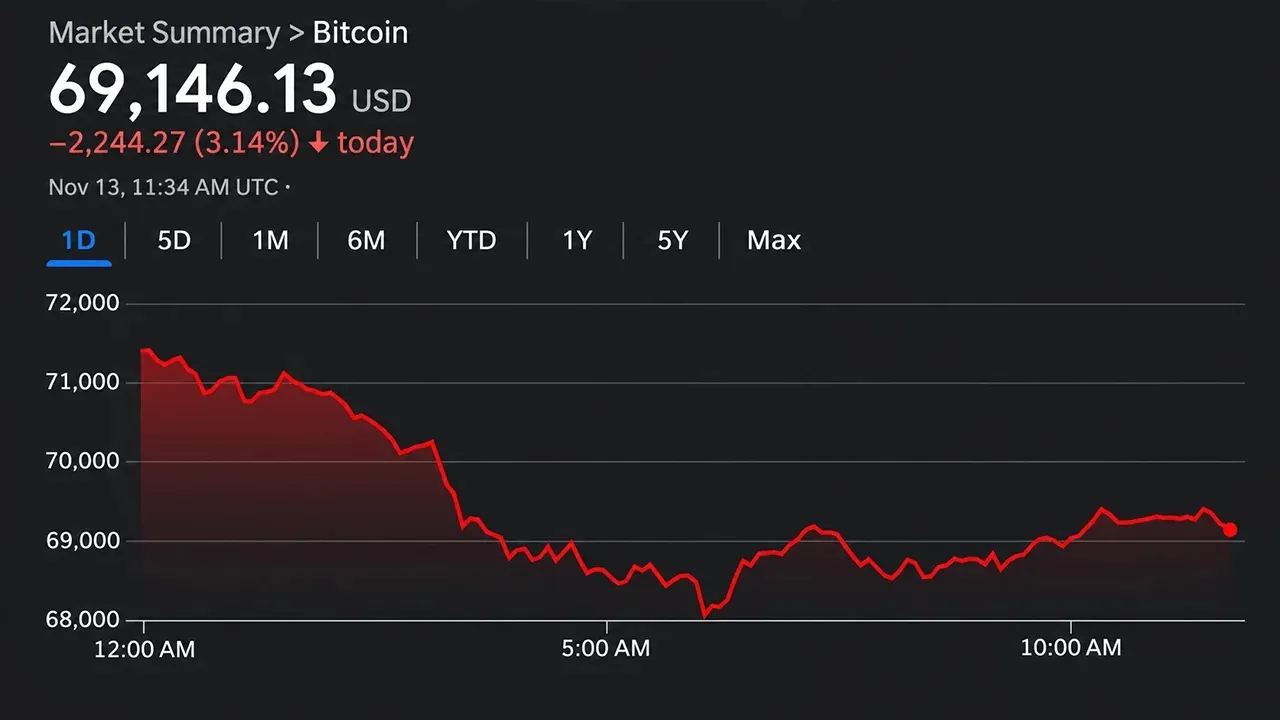
Bitcoin‘s price has deteriorated sharply, with the leading cryptocurrency trading near $69,140 after touching an intraday low of $67,500 per unit. Despite the decline, several oscillators suggest selling pressure has reached stretched levels, raising the possibility of a temporary rebound. The daily timeframe’s technical assessment registers 16 bearish signals against just one bullish signal, while all 15 tracked moving averages sit above the prevailing price, leaving bulls with considerable ground to recover.  Key TakeawaysBitcoins intraday low of $67,500 low sparked a recovery, but something is missing from the comeback.16 bearish signals tell one story, while bitcoins oscillators suggest another.Bitcoin bulls face a critical test near $70,000, with an even bigger obstacle waiting above.  Bitcoin Bulls Confront $70,000 Wall as Technical Signals Flash Red  Bitcoins price dump has left traders confronting an intriguing contradiction: the cryptocurrency is deeply oversold by several technical measures, yet the broader market continues to exhibit unmistakable bearish characteristics. At approximately 6:35 a.m. Eastern time on Friday, Nov. 13, 2026, bitcoin traded near $69,140 after briefly descending toward $67,500 on Bitstamp, while statistics recorded a 5.4% daily decline.  Although bargain hunters have managed a modest recovery, the daily technical readings remain overwhelmingly negative, with 16 negative signals, nine neutral readings, and

Within 1 weeksIndustry

Ethereum treasury firm BTCS sells ETH at a loss to manage $64M Aave loan

Ethereum treasury company BTCS has sold ETH below its purchase price to manage a $64.1 million loan on Aave, as falling Ethereum prices reduce the value of the cryptocurrency backing its debt.  In its November 12 quarterly filing with the U.S. Securities and Exchange Commission, the Nasdaq-listed company disclosed that 46,676 ETH secured its borrowings as of November 9. The collateral was worth approximately $99.3 million at an ETH price of $2,127, covering about 155% of the outstanding debt, including accrued interest.  JUST IN: Ethereum treasury firm BTCS sells ETH at a loss to protect its $64M Aave loan from liquidation  The Nasdaq-listed company has 46,676 ETH backing its $64.1M debt, with liquidation risk emerging if ETH falls to around $1,717, based on its November 9 position. pic.twitter.com/S0bcDHRai2  — crypto.news (@cryptodotnews) November 13, 2026  The company said it monitors its borrowing positions and adjusts collateral or repays debt when market conditions require additional protection against liquidation.  BTCS sells Ethereum below cost to protect Aave collateral  BTCS acknowledged realizing losses on Ethereum sales while managing its decentralized finance borrowing arrangements. The company said, “Sales of ETH were executed at prices below their original cost basis,” explaining that the transactions formed part of its collateral management strategy.  The filing did

Within 1 weeksIndustry

CFTC, DOJ sue Arkansas to stop Kalshi gambling lawsuit

The U.S. Justice Department and Commodity Futures Trading Commission (CFTC) have sued Arkansas to stop its enforcement case against prediction-market operator Kalshi and prevent similar state action against other federally regulated exchanges.  The federal complaint, filed November 12 in the U.S. District Court for the Eastern District of Arkansas, names the state and Attorney General Tim Griffin as defendants. Federal lawyers argue that the Commodity Exchange Act gives the CFTC exclusive authority over derivatives traded on designated contract markets, including the event contracts targeted by Arkansas.  Federal lawsuit seeks protection beyond Kalshi  The government wants the court to declare that Arkansas cannot apply its gambling and consumer-protection laws to the disputed transactions on CFTC-regulated exchanges. Its request for preliminary and permanent injunctions covers investigations and enforcement against registered markets, their affiliates and business partners.  Kalshi is not a defendant in the new federal case. The complaint challenges Arkansas‘s attempt to proceed against the company through a separate state lawsuit filed eight days before. The federal agencies maintain that Kalshi’s event contracts qualify as swaps under the Commodity Exchange Act, placing their regulation within the CFTCs jurisdiction.  The government is relying on federal preemption, the principle that federal law can override state requirements when Congress has

Within 1 weeksIndustry

DOJ moves to seize $1.2B from Binance hack, disrupts FaceStealer scam

The US Department of Justice said Thursday it had obtained court authorization to seize or restrain more than $1.2 billion of the $6.3 billion in cryptocurrency stolen from Binance.  The authorization covers part of the more than $2.7 billion in stolen assets that US authorities and private-sector partners have frozen since the Oct. 29 hack. Investigators are still working to recover additional funds, the department said in its announcement.  The FBI attributed the Binance hack to North Korea‘s TraderTraitor group in a cyber alert. Kim Yo Jong, the sister of North Korean leader Kim Jong Un, denied North Korea’s involvement.  Binance said it had covered the affected assets with its own funds and that a new proof-of-reserves snapshot showed at least one-to-one backing for customer assets, according to its Thursday post on X.  In November 2025, the DOJ announced a separate enforcement action targeting about $15 million in cryptocurrency linked to North Korean hackers known as APT38.  Related: Crypto hack losses equal 57 cents per $1 earned onchain: Arks Valente  FBI warns of FaceStealers deepfake video calls  In a separate case, US authorities seized cloud infrastructure used in FaceStealer, a North Korean social engineering campaign that stole more than $400 million in cryptocurrency over the past 18

Within 1 weeksIndustry

Unocoin keeps deposits and withdrawals halted over suspect transfers

Indian cryptocurrency exchange Unocoin has kept deposits and withdrawals suspended as it investigates whether suspicious transfers from wallets linked to custodian BitGo were made using a recovery feature.  On Friday, the exchange said that BitGo had frozen the exchange‘s enterprise account on Nov. 6 at Unocoin’s request and that the freeze worked as intended. The transactions under investigation were signed and broadcast outside BitGos platform, Unocoin said.  The exchange said BitGos multisignature wallets include a recovery feature that lets wallet holders access funds if BitGo becomes unavailable. Unocoin suspects the feature was misused and has yet to establish how the transfers occured or whether it lost any digital assets.  Unocoin and BiGo did not respond to Cointelegraphs request for more information before publication.  Unocoin first the unauthorized activity on Nov. 6 and suspended all services on Monday after detecting further activity. On Thursday, it disclosed outgoing transactions from an Ethereum address in its BitGo wallet infrastructure and said its servers had been compromised.  The exchange has not announced a date for restoring services.  A Nov. 5 warning from India‘s cybersecurity agency described an AI-assisted campaign targeting crypto exchanges and other financial firms. No connection to Unocoin’s incident has been established.

Within 1 weeksIndustry

A Solana Treasury Firm Made $66.6M Without Making Much Revenue

DeFi Development (DFDV) stock fell 8.95% from its $3.24 previous close to $2.95 on November 12. The drop came on the day the Solana (SOL) treasury firm reported a $66.6 million third-quarter profit.  The company said its net asset value (NAV) per share more than quadrupled from August 12 to September 30. Shares traded above the prior close in the morning before sliding from midday.  Sponsored  Sponsored  DeFi Development stock price on November 12. Source: Google Finance  Follow us on X to get the latest news as it happens  Revenue Nearly Halved, So Where Did the $66.6 Million Come From?  The companys Q3 shareholder letter shows revenue fell 47.4% year over year to $2.4 million. Its quarterly filing shows two gains drove the profit instead.Net gains on digital assets added $37.9 million. That was 49% less than the $74.4 million booked a year earlier.A further $33.4 million came from gains on derivative instruments, up from $4.6 million a year earlier.  Revenue covered only part of $4.3 million in operating costs and $3.4 million in interest expense. SOL holdings and equivalents still grew 13% from August 12, reaching about 2.61 million by November 9.  Shares recovered slightly after the bell, trading at $3.05, 3.39% above the close. The drop added

Within 1 weeksIndustry

KuCoin Crypto Loans Review: Can You Borrow Bitcoin Without Selling?

Crypto-backed lending remains a substantial market. Outstanding crypto-collateralized loans stood at $56.2 billion at the end of June 2026, according toGalaxy Research.  The appeal of crypto loans is accessibility. A traditional personal loan often depends on income, credit checks, and scheduled repayments. A crypto-backed loan uses assets you already own as security.  Users can raise funds without selling, although a falling market can put those assets at risk.  KuCoins Crypto Loans, introduced this year, look promising for investors seeking flexibility. We reviewed its borrowing rules, asset coverage, rewards, and liquidation terms to see where it works well.  KuCoin Crypto Loans at a GlanceFeatureWhat Users GetLoan typeFlexible borrowing without a fixed maturity dateBorrowable assets13 cryptocurrencies, including USDT, BTC, ETH and SOLCollateral options47 assets according to KuCoinInterestVariable rates, calculated hourly. For example, 3.94% on DOGE and 0.54% on BTC.RewardsHold to Earn on qualifying collateralLoan managementOne integrated position across app and webMain riskLiquidation if collateral coverage becomes insufficient  1. Borrowing Without Selling: How Flexible Is It?  Suppose you hold Bitcoin but need USDT for a short-term trade. On KuCoin, you can pledge BTC, borrow USDT and repay later to release your collateral. You maintain exposure to Bitcoins price while the loan is open.  The main attraction is flexibility. Flexible Loan

Within 1 weeksIndustry

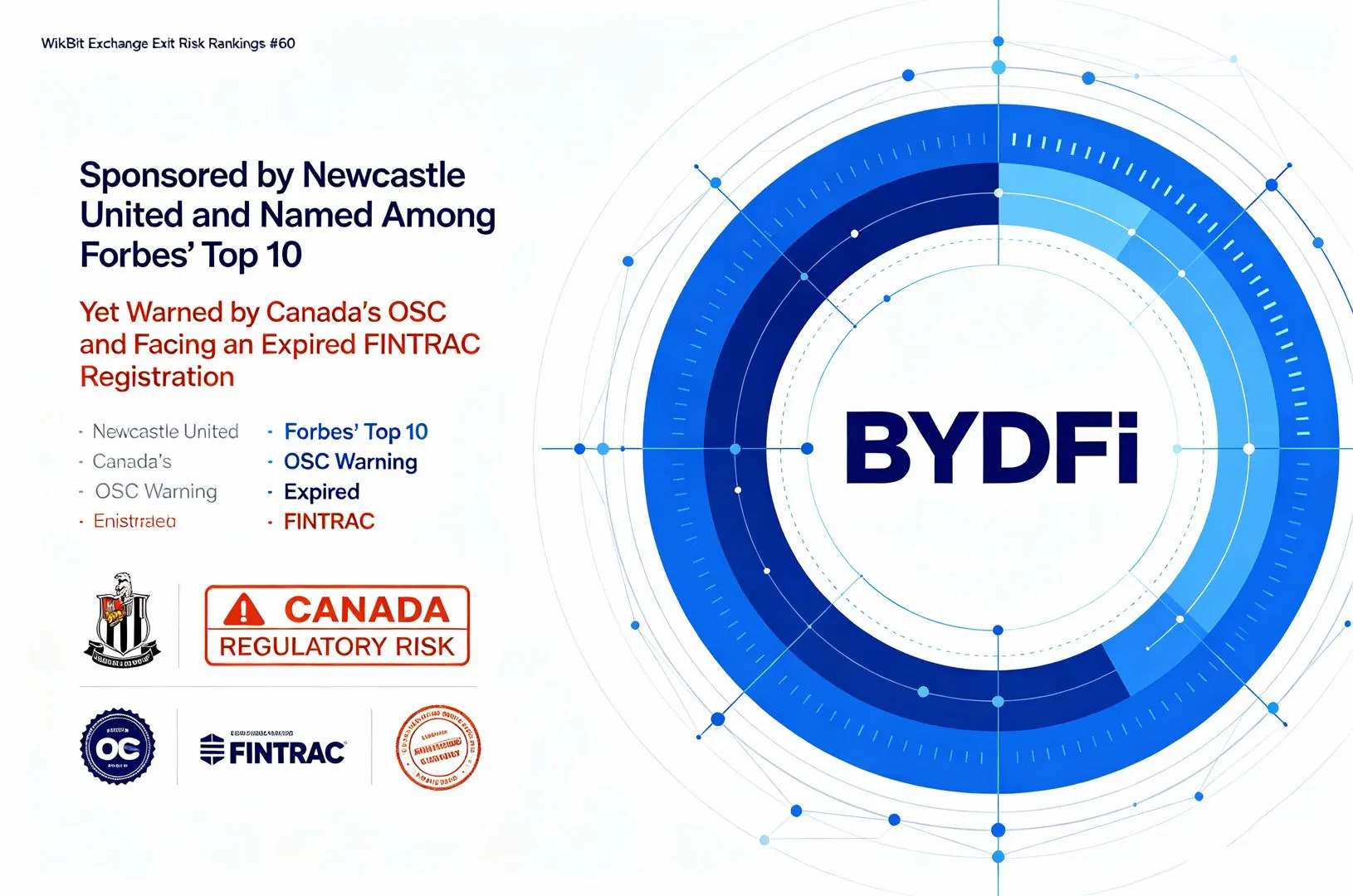
WikiBit Exchange Exit Risk Rankings #60 – BYDFi: Sponsored by Newcastle United and Named Among Forbes' Top 10, Yet Warned by Canada's OSC and Facing an Expired FINTRAC Registration

Introduction: An Exchange Caught Between Awards and Regulatory Warnings  In the first 59 editions, weve investigated a series of exchanges, from HashKey to Zaif. Today, in our 60th edition, were taking a closer look at one that has gone all-in on branding and marketing, but whose underlying fundamentals remain questionable: BYDFi.  When it comes to brand positioning, BYDFi has clearly invested heavily in its image. Founded in 2020 under the name BitYard, the platform was rebranded as BYDFi in January 2023. It claims to have more than 1 million users across over 190 countries, supports more than 1,000 spot trading pairs and 500+ perpetual contracts, and offers leverage of up to 200x.  In August 2025, BYDFi signed a multi-year sponsorship agreement with English Premier League club Newcastle United, becoming its official cryptocurrency exchange partner. In December 2023, Forbes named it among the worlds top 10 cryptocurrency exchanges. In March 2026, it won the “Best All-in-One Crypto Trading Platform” award at Crypto Expo Europe.  Its Proof of Reserves (PoR) is reportedly audited by Hacken, with a reserve ratio exceeding 100%. The platform also maintains an 800 BTC User Protection Fund and offers copy trading, automated trading bots, MoonX (an on-chain Meme coin trading engine), and

Within 1 weeksDeep Dive

Bitcoin Price Crashes Below $69K: Is The Bottom In?

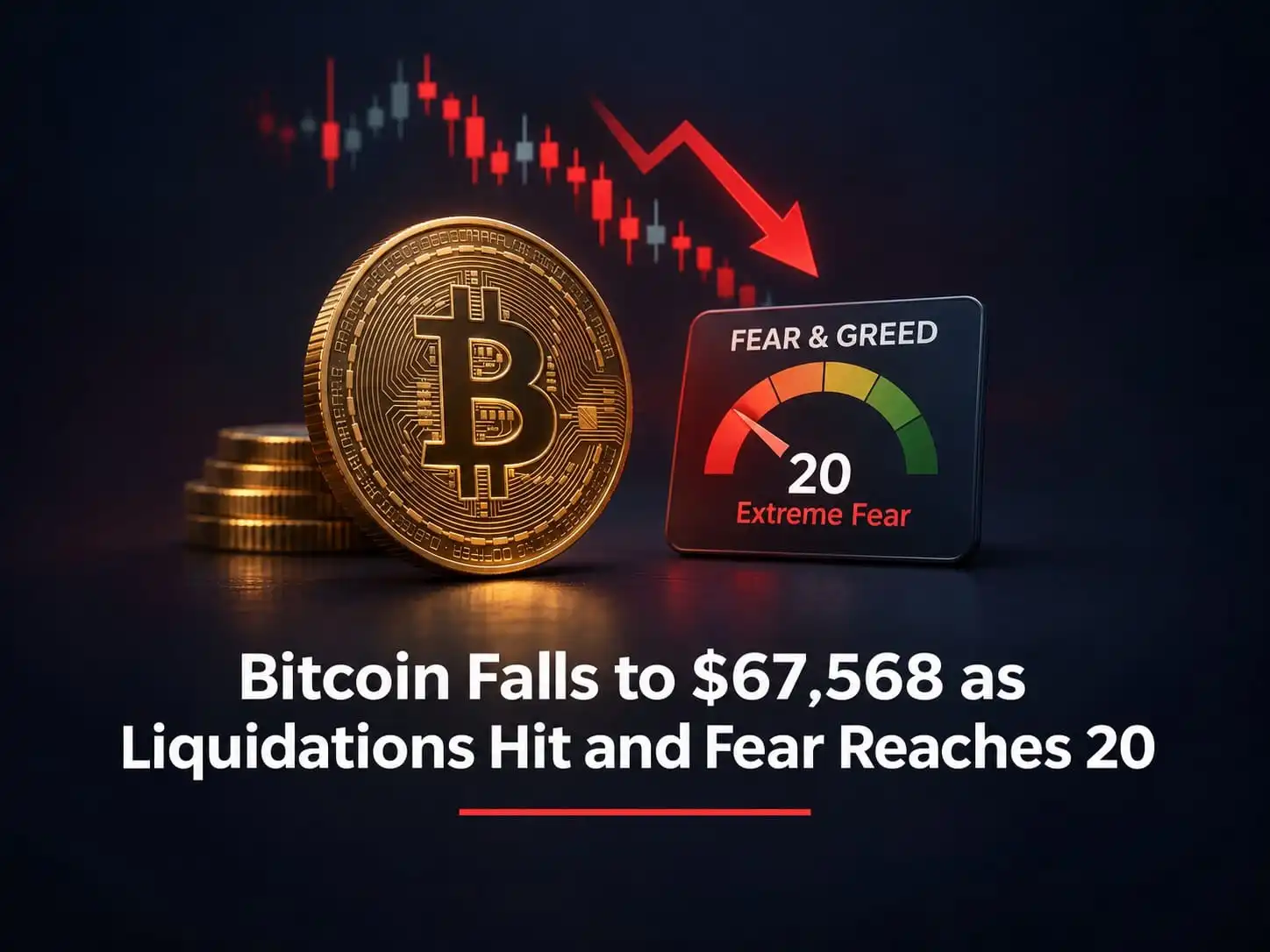
In Bitcoin news on Friday, November 13, the BTC USD price fell as low as $67,568 on Binance as a wave of forced selling wiped out leveraged bets on a rebound. It was the cryptocurrencys lowest price since August 19.  Bitcoin trades at $68,772, down 6.7% in 24 hours and 9.1% in a week. Ether lost 5.5% and Solana 3.4% on the day.  BREAKING: Bitcoin falls below $69,000 and ETH nears $1,900 as selling pressure accelerates in crypto.  Crypto markets have now lost -$150 billion in 48 hours. pic.twitter.com/29QW0khxOh  — The Kobeissi Letter (@KobeissiLetter) November 13, 2026  Most of the damage came from liquidations, when an exchange closes a leveraged trade by force once the traders collateral runs out. CoinGlass data cited by several outlets put the 24-hour total at about $1.4 billion, close to 90% of it from longs, the bets that prices would rise. Those forced sales pushed Bitcoin through $70,000 in about two hours overnight.  The mood has flipped with it. The Crypto Fear & Greed Index dropped from 28 to 20 on Friday, its first Extreme Fear reading since July.  In Bitcoin news this week, the question is no longer whether the market is scared. It is whether Extreme Fear means the bottom

Within 1 weeksIndustry
1
...
3335
...
1000