Arthur Hayes proposes 20% FLOP testnet allocation

Arthur Hayes has proposed allocating roughly 20% of Flop Networks FLOP token supply to testnet participants over 10 years as part of a self-funded decentralized computing network for artificial intelligence agents.  Arthur Hayes said in an Aug. 19 Substack article that Flop Network would connect AI agents seeking computing power with miners operating internet-connected hardware, using FLOP as the networks payment and reward token.  The BitMEX co-founder described the proposed system through a fictional creation story, but the article also provided new information about the projects token distribution, economic model, and intended users. Hayes said the token launch would follow a fair-start model, with no presale needed because he had funded the development team himself.  Under the planned distribution, people who contribute to the Flop Network testnet would collectively receive about one-fifth of the supply by the end of a 10-year period. Hayes did not disclose the total number of FLOP tokens, the rate at which the testnet allocation would be released, or the activities that would determine each participants share.  Flop Network would sell compute through FLOP  Flop Network‘s proposed market would price AI workloads according to the number of floating-point operations, or FLOPs, required within a defined period. Miners would process requests using

08-20Exchange

Trump Crypto Summit Details: Attendees, Clarity Act, Hyperliquid and More

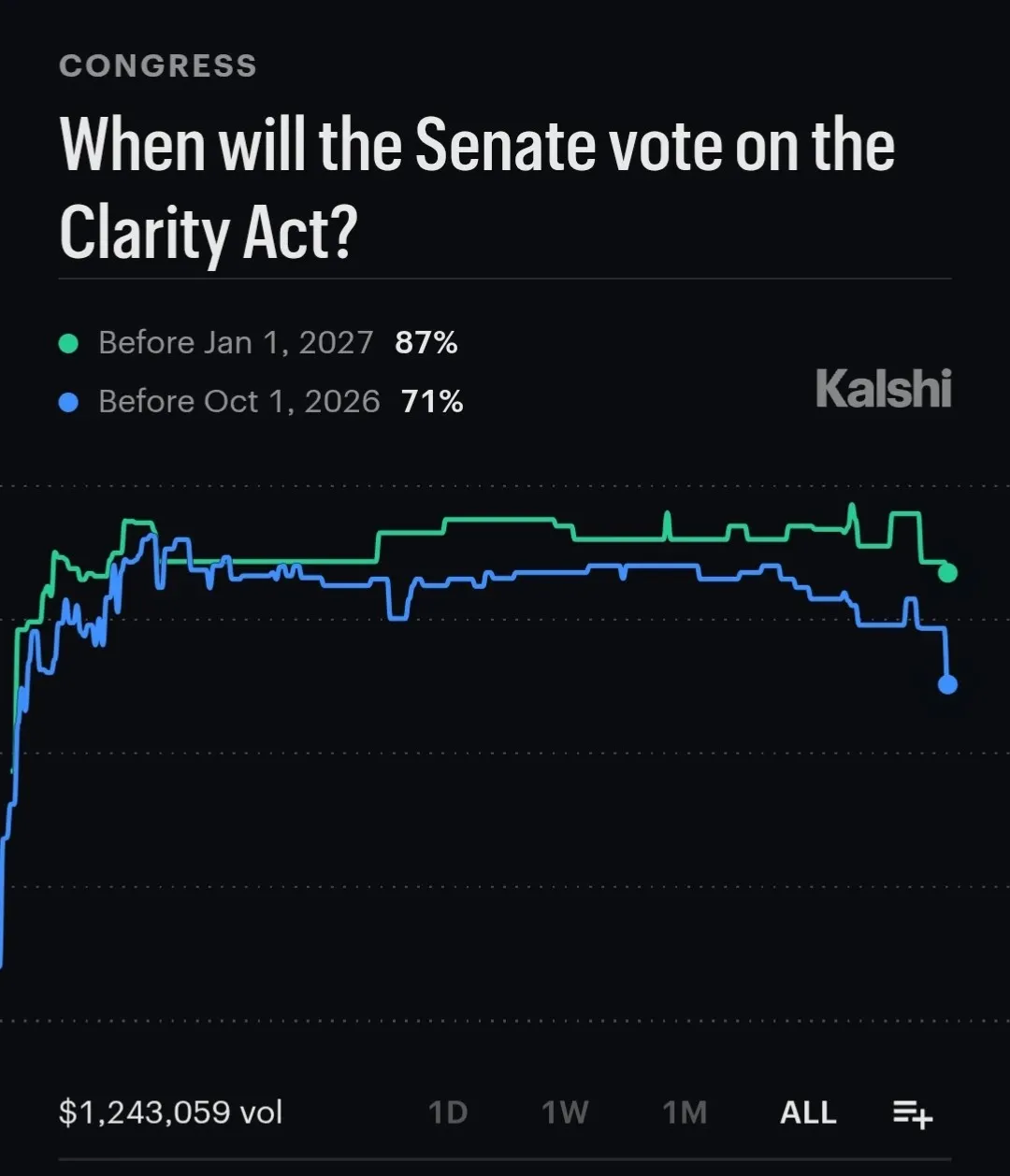
US President Donald Trump just hosted a high-stakes crypto summit at the White House, during which he once again called on the Senate to promptly pass the CLARITY Act so that America may maintain its financial dominance.  CLARITY Act and crypto summit attendance  Notably, the event saw attendance from crypto and traditional finance executives in addition to federal regulators.  Crypto invitees included Coinbase CEO Brian Armstrong, Robinhood Markets CEO Vlad Tenev, Ripple CEO Brad Garlinghouse, Gemini Founders the Winklevoss twins, Chainlink Co-founder Sergey Nazarov and Kraken co-CEO Arjun Sethi.  Traditional finance participants were Chairman of the New York Stock Exchange (NYSE) Jeffrey Sprecher, in addition to representatives from Nasdaq, CME Group and the DTCC.  Regulators present were Chairman of the US Securities and Exchange Commission (SEC) Paul Atkins, and Chairman of the Commodity Futures Trading Commission (CFTC) Mike Selig. Also present was the White House Crypto Advisor Patrick Witt.  Key takeaways  Regarding the CLARITY Act, Armstrong warned about pushback from the banks, saying they “dont want the competition.”  Aside from that, Trump and the regulators touted the new innovative-friendly regulation initiatives and how they starkly contrast to the strict rules of the previous regime. Here, they noted 583 IPOs since Trump‘s inauguration, raising a total of $208 billion

08-20Exchange

240 Million XRP Pulled From Major Exchanges Since Early Summer: Why It Matters

$XRPs struggle near $1 continues even as its peers display modest gains this week. The crypto asset is down by almost 10% over the past month.  Despite the weakness, much more $XRP is being withdrawn than deposited across major platforms.  Reserves Slide  According to the latest analysis shared by CryptoQuant, $XRP reserves across Upbit, Binance, and Bithumb have fallen by roughly 240 million from their late-May and early-June levels, as of August 19. South Korean giant Upbit held 6.40 billion $XRP, down from 6.51 billion on May 30, which is a decline of about 110 million, or 1.7%.  The figures for Bithumb fell to 1.82 billion from 1.85 billion on June 2, a decrease of roughly 30 million, or 1.6%. Meanwhile, Binance recorded the largest percentage decline, with its reserves for the token dropping to 2.62 billion from 2.72 billion over the same period, which translates to a reduction of approximately 100 million $XRP, or 3.7%.  Combined reserves across the three exchanges decreased from about 11.08 billion to 10.84 billion, representing a decline of roughly 2.2%. Despite the overall reduction, Upbit remains the largest holder of the crypto asset among the three exchanges. In fact, Upbit and Bithumb together hold about 8.22 billion $XRP and

08-20Exchange

Coinbase's Base Is Betting Big on AI Agents With $100K Startup Accelerator

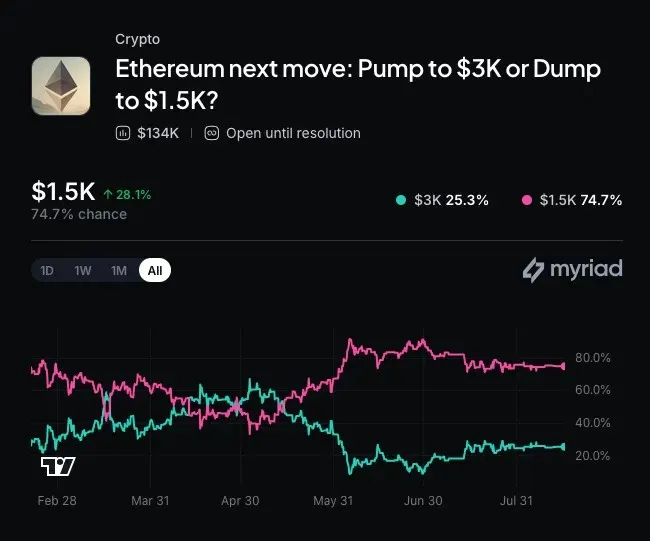
In briefThe Base accelerator plans to select 10 startups for its eight-week Batches 004 accelerator.Each selected team will receive a $100,000 investment from the Base Ecosystem Fund.The program is targeting startups building AI agents, trading, payments, and financing products.  The team behind Base, Coinbases Ethereum layer-2 network, is narrowing its startup accelerator to 10 teams for its latest cohort, with each selected company receiving a $100,000 investment upfront, Coinbase announced on Wednesday.  Applications for Base Batches 004 are open through September 9, Coinbase said. The eight-week virtual program will conclude with a Demo Day in New York in November.  Myriad: Ethereum next price move? Click to make your prediction.  “Weve learned that the best results come from going deeper with a smaller, more focused group of exceptional builders,” Daniel Bronheim, Base Ecosystem Fund Lead, told Decrypt. “For Batches 004, we are shifting away from broad cohorts and zeroing in on high-signal teams, then offering hands-on support and deep Base ecosystem integration.”  The program is seeking pre-seed startups focused on trading, payments, financing, and AI agents, including products that use stablecoins for agent-driven shopping, trading, and payments, as well as infrastructure for lending, e-commerce, and decentralized AI.  “Blockchains are the native financial rails for AI, and agents

08-20Exchange

Binance, Upbit, Coinbase See Surging XRP Outflows, as Investors Pull $2B From Futures Market

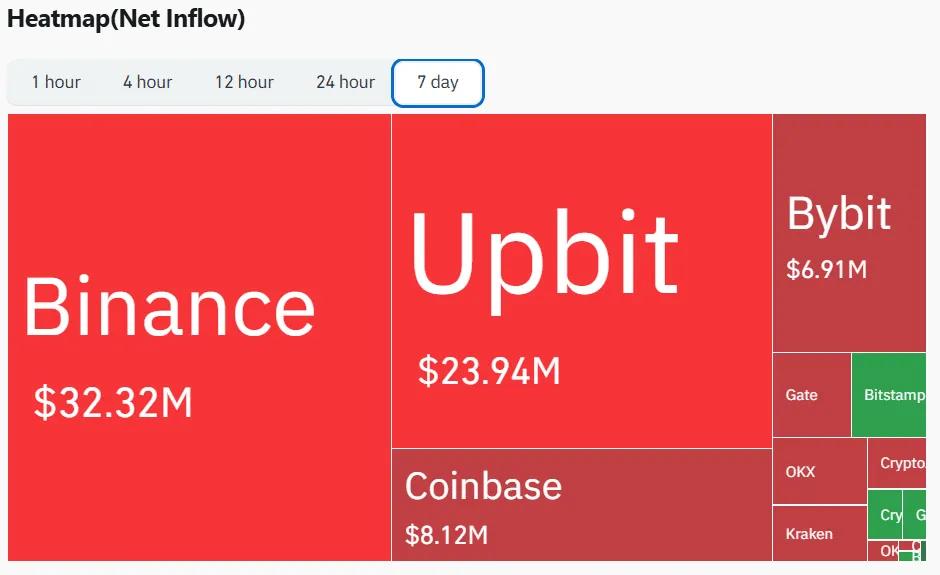
$XRP outflows have dominated major exchanges such as Binance, Upbit, and Coinbase, despite the persistent bearish pressure.  $XRP continues to struggle, trading more than 72% below its all-time high of $3.66. However, despite the downtrend, investors have continued moving $XRP off exchanges. This could reduce the amount of $XRP available for immediate selling and, in turn, ease some of the selling pressure.  Binance, Upbit and Coinbase See $XRP Outflows  Recent CoinGlass data confirms this trend. Over the past seven days, all major exchanges except Bitstamp and Gemini recorded net $XRP outflows.  Binance led the withdrawals, with investors moving $32.32 million worth of $XRP off the exchange. Upbit followed with $23.94 million, while Coinbase recorded $8.12 million in outflows. Bybit ranked next with $6.91 million in withdrawals.  $XRP Exchange Outflows | Source: Coinglass  Essentially, Binance, Upbit, and Coinbase alone accounted for $63.17 million in $XRP outflows during the week.  Other major exchanges also recorded withdrawals. Gate saw $1.25 million leave its platform, while OKX and Kraken recorded outflows of $1.20 million and $1.01 million, respectively.  Bitstamp and Gemini were the only major exchanges to record inflows, but their figures remained small at $1.21 million and $230,000, respectively.  $XRP Futures Flows Turn Negative  The $XRP futures market has shown a different trend

08-20Exchange

Vietnam Advances Crypto Exchange Pilot as It Seeks FATF Watchlist Exit

Vietnam is moving forward with a pilot program to bring cryptocurrency exchanges into its formal regulatory framework, a step tied directly to the countrys efforts to exit the Financial Action Task Force (FATF) grey list. According to The Business Times, Vietnamese authorities are targeting a third-quarter launch for the pilot, with five companies having already passed preliminary screening.  Why This Pilot Matters  Vietnam has long been a hotspot for crypto adoption, yet the market has operated in a legal gray area. The governments move to regulate exchanges is a significant shift, aiming to protect investors while curbing illicit activities such as money laundering and terrorist financing. The FATF has repeatedly urged Vietnam to tighten oversight of virtual assets, and this pilot is seen as a direct response to those demands.  The selection process is not merely a formality. Authorities are reportedly evaluating firms based on strict capital and security requirements. Only companies that demonstrate robust compliance infrastructure will be allowed to participate. This approach signals that Vietnam is not just opening the door to crypto, but is doing so with a cautious, compliance-first mindset.  What the Pilot Entails  While the full details of the pilots operational scope have not been publicly disclosed, industry observers expect

08-20Exchange

AI could supercharge crypto but theres a catch, Fidelity Digital Assets says

AI is rapidly emerging as a major crypto investment narrative, built around the idea that autonomous agents could potentially drive transactions and demand for programmable financial infrastructure.  The infrastructure race is already underway. AI agents settled more than $73 million across roughly 176 million blockchain transactions in the year through April, according to a Keyrock report, while Coinbase, Stripe and Visa are developing competing systems for machine-to-machine payments.  Fidelity Digital Assets, the crypto arm of financial-services giant Fidelity Investments, however, sees a key risk.  More AI-driven activity may not translate into more value for crypto investors. The question is less about how much activity AI generates and more about who captures the economic value.  “As AI lowers barriers to development and participation, competitive advantages may increasingly reside in liquidity, distribution, security, trust, and regulatory integration rather than technology alone,” analyst Max Wadington wrote in the Wednesday report.  The convergence of crypto and artificial intelligence is increasingly centered on AI agents, autonomous software that can make decisions, buy data and computing power, and transact without human intervention.  Crypto proponents argue that stablecoins and blockchains are well-suited to this emerging machine economy because they enable programmable, around-the-clock micropayments that can be difficult or uneconomical on traditional card rails.

08-19Exchange

FASB sets 3 tests for stablecoins to qualify as cash

The Financial Accounting Standards Board (FASB) proposed new U.S. accounting guidance on Aug. 18 that would clarify when companies may present certain stablecoins as cash equivalents.  The proposed Accounting Standards Update would add examples to Topic 230, Statement of Cash Flows. It would not change the existing definition of cash equivalents under U.S. generally accepted accounting principles.  FASB opened the proposal for public comment through Nov. 19. The board will decide whether to issue a final standard and set its effective date after reviewing responses.  FASB would apply three stablecoin conditions  A digital asset could qualify only if its holder has an on demand contractual right to redeem it for cash. The right must allow direct redemption with the issuer for a known amount.  The issuer must also hold at least one to one reserves in segregated accounts. Those reserves would need to consist of short term, highly liquid assets that are readily convertible into known cash amounts.  Meeting those conditions would not force a company to classify the token as a cash equivalent. Companies would retain the option to use that presentation and would need to consider applicable laws and regulations.  The proposal is not final guidance. FASB said the examples are intended to “promote more

08-19Exchange

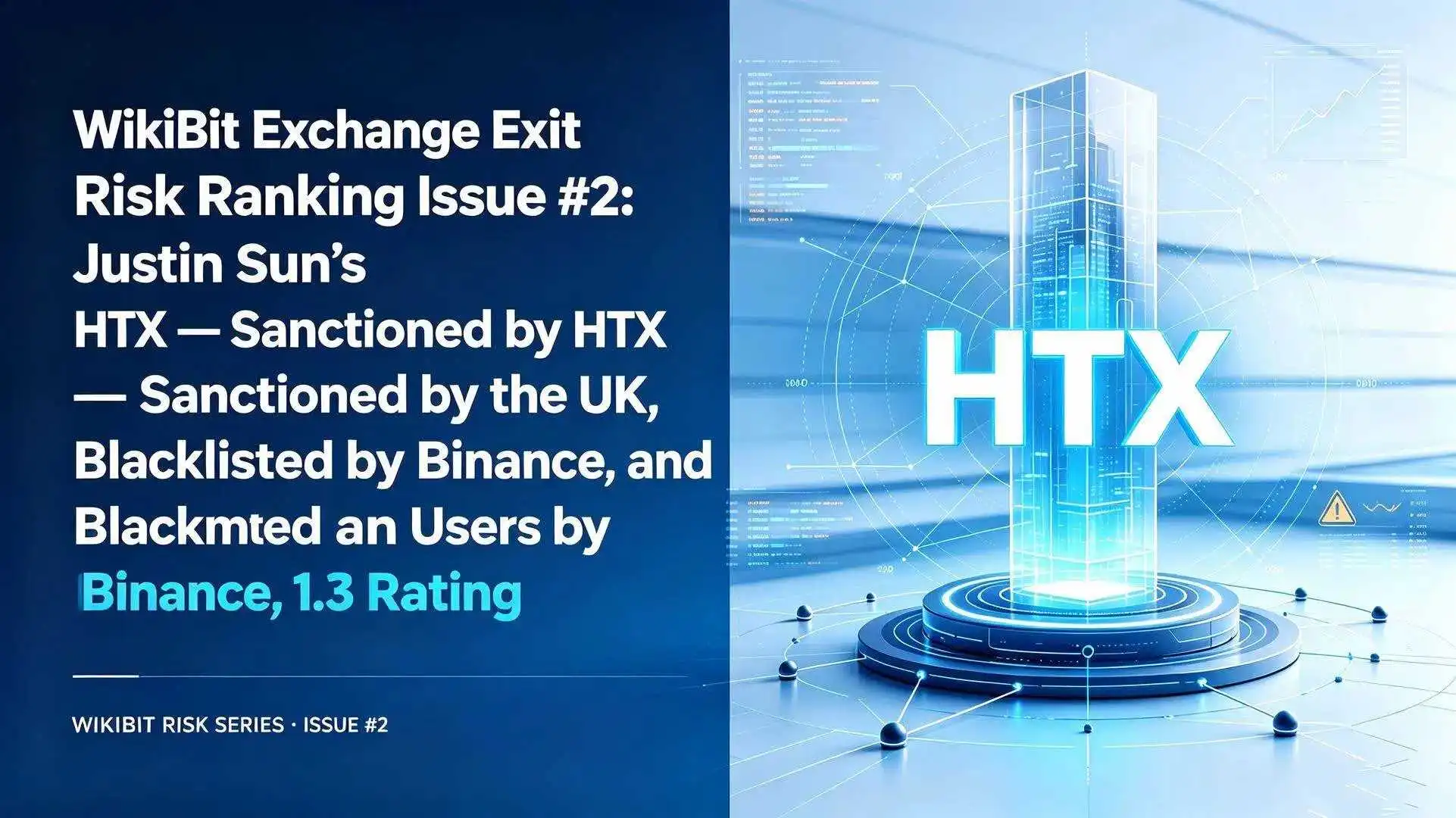
WikiBit Exchange Exit Risk Ranking Issue #2: Justin Sun’s HTX — Sanctioned by the UK, Blacklisted by Binance, and Slammed by Users with a 1.3 Rating

Introduction:  In the previous episode, we examined HashKey — the “compliance top student” of the crypto industry and its hidden problems.  This time, we are looking at a completely different type of exchange:  HTX.  If HashKey is a financial elite wearing a suit, then HTX is the crypto industrys “old-school veteran” wearing a colorful shirt and a thick gold chain.  Its predecessor, Huobi, was founded in 2013 and became one of Chinas earliest cryptocurrency exchanges. It survived the 9/4 crackdown, the 3/12 market crash, the FTX collapse, and countless other storms in crypto history.  It has experienced almost every major crisis in the industry and still survived. (HTX)  After being acquired by Justin Sun in 2022, the platform was renamed HTX, opening a new chapter in the “Justin Sun ecosystem.”  But here comes the question:  How can an exchange that has been sanctioned by the UK, received only a 1.3 rating on Trustpilot, and is constantly criticized by users for “being unable to withdraw funds” continue operating successfully?  Today, we will take it apart layer by layer.1. Regulatory Compliance: What Kind of Exchange Is One That Has Been “Blacklisted” by the UK?  HTXs official website lists a long series of licenses and registrations.  However, the overall picture is:  Many licenses, but questionable regulatory

08-19Deep Dive

Justiin Sun dismisses 'made up' HTX address poisoning rumors

Justin Sun, the founder of TRON and owner of the $HTX exchange, has dismissed a wave of reports that exchange wallets had been spraying small crypto transfers at unrelated addresses.  Sun said that the claims were fabricated, writing in Chinese on X on August 18, which, when translated to English, reads, “The investigation is clear: its all made up.”  However, he did not provide supporting details to the post. Sun linked to an unspecified follow-up but did not name the accusers, describe the transfers, or explain what his team had investigated.  Suns post comes after what is being seen as a noisy day for his exchange, $HTX, formerly Huobi. Traders on the platform had been circulating for hours screenshots of unsolicited $USDT landing in wallets that blockchain explorers tagged as belonging to the exchange.  A trader known as 紫夜 (0xZiye) wrote that he had received 7.5 $USDT to his Coinbase account, and he attributed it to Suns exchange.  0xZiye wrote, “$HTX is crazily transferring out small amounts, polluting other addresses.” The trader claimed that Coinbase informed him that his account would be closed unless he explained where the funds came from.  What users actually received, and what happened next  The amounts that were transferred to the respective

08-19Exchange
1
...
334336
...
1000