S&P 500, Nasdaq Fall as Iran Strikes Send Brent Toward $95

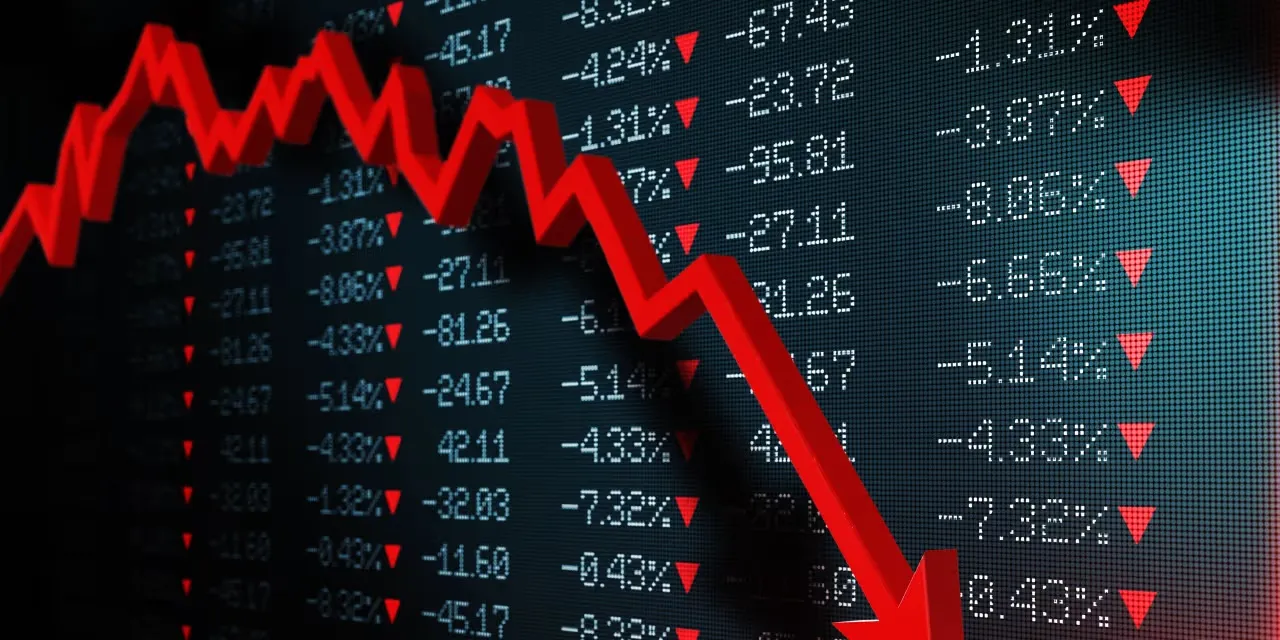
U.S. stocks moved lower Tuesday as renewed fighting between the United States and Iran sent oil prices sharply higher, pushed Treasury yields toward multiyear highs and revived concerns that energy inflation could keep interest rates elevated.  The S&P 500 fell roughly 0.7%, while the Dow Jones Industrial Average lost about 0.9% and the technology-heavy Nasdaq Composite dropped around 1% during Tuesdays session.  The selloff followed another escalation in the Middle East, with U.S. and Iranian forces exchanging strikes and investors again focusing on the risk of disruption around the Strait of Hormuz.  Oil provided the clearest market reaction. Brent crude surged toward $95 per barrel, with the supplied FinancialJuice market update putting the settlement at $94.65, up $4.16, or 4.6%.  That rise is increasingly important for equities because higher energy prices can feed directly into inflation expectations just as investors are debating whether the Federal Reserve may have to keep policy tighter for longer.  Tech Stocks Take the Pressure as Yields Rise  The oil shock quickly spilled into the bond market.  The benchmark 10-year Treasury yield climbed to roughly 4.79%, near its highest level in about 19 months, as traders reassessed the inflation and interest-rate outlook.  Higher yields are especially difficult for richly valued growth and technology companies
09-02Industry

Optimism pushes network speeds to 200 ms, but standard data feeds are dropping key information

Optimism is targeting 200 ms subblocks on OP Mainnet, cutting the preconfirmation interval from 250 milliseconds in a rolling change targeted for Aug. 31. Subblocks, formerly called Flashblocks, are incremental updates the sequencer sends while it is still building a normal block, giving apps feedback before that block is sealed.  Related Company Optimism A low-cost and lightning-fast Ethereum L2 blockchain.  The 20% speedup carries a quiet compatibility risk. Optimisms migration notice says four fields will remain in each streamed payload but stop carrying usable data: state_root, block_hash and withdrawals_root will be all-zero values, while withdrawals will be an empty list.  Related Asset Optimism #123 OP · $0.10 24-hour change: up 7.78% Price history is not available. 24H Up 7.78% 7D Down 7.31% 30D Up 11.34%  The payload type remains ExecutionPayloadFlashblockDeltaV1, so software can continue parsing the stream without raising an error. Fields including receipts_root and logs_bloom will still contain real values. That combination makes the migration easy to miss in systems that treat successful decoding as proof that every field is meaningful.  Why 200 ms subblocks make the provider boundary matter  Subblocks are preconfirmations, not finalized blocks or state commitments. Optimisms technical explainer says direct stream consumers should treat the zeroed state root and block hash

09-02Industry

4 Major Countries Start Their Crypto Regulations This Week

Four governments moved on crypto regulation in the first week of September. Russia and Vietnam switched on new rules Tuesday. Pakistan set a filing deadline for Saturday. Singapore opened a consultation.  Russia‘s regulated and legal crypto market is now open, but it has a hard limit. Vietnam and Pakistan narrowed the scope of what firms can legally do. Singapore’s rules are still in draft form.  Sponsored  Sponsored  Russia Legalizes Trading But Keeps the Payments Ban  Federal Law 282-FZ came into force Tuesday, treating crypto as property. Licensed brokers and exchanges can now serve ordinary buyers.  HUGE: ???????? President Putin officially signed Russias version of the Crypto CLARITY Act into law, with the law taking effect today.  ???????? Pass the U.S. CLARITY Act! pic.twitter.com/198Z6tM0Jp  — Conor Kenny (@conorfkenny) September 1, 2026  While that is the opening, the leash is short because small investors must first pass a test. They can then buy up to 300,000 rubles per year through a single intermediary.  At the central banks rate, that is about $3,500. Spending crypto in Russian shops remains banned.  There is also a contrast. Big banks have to start offering digital rubles, and large retailers have to accept them. Exchanges have until July 2027 to finish registering. Sberbanks crypto collateral plan still needs

09-02Industry

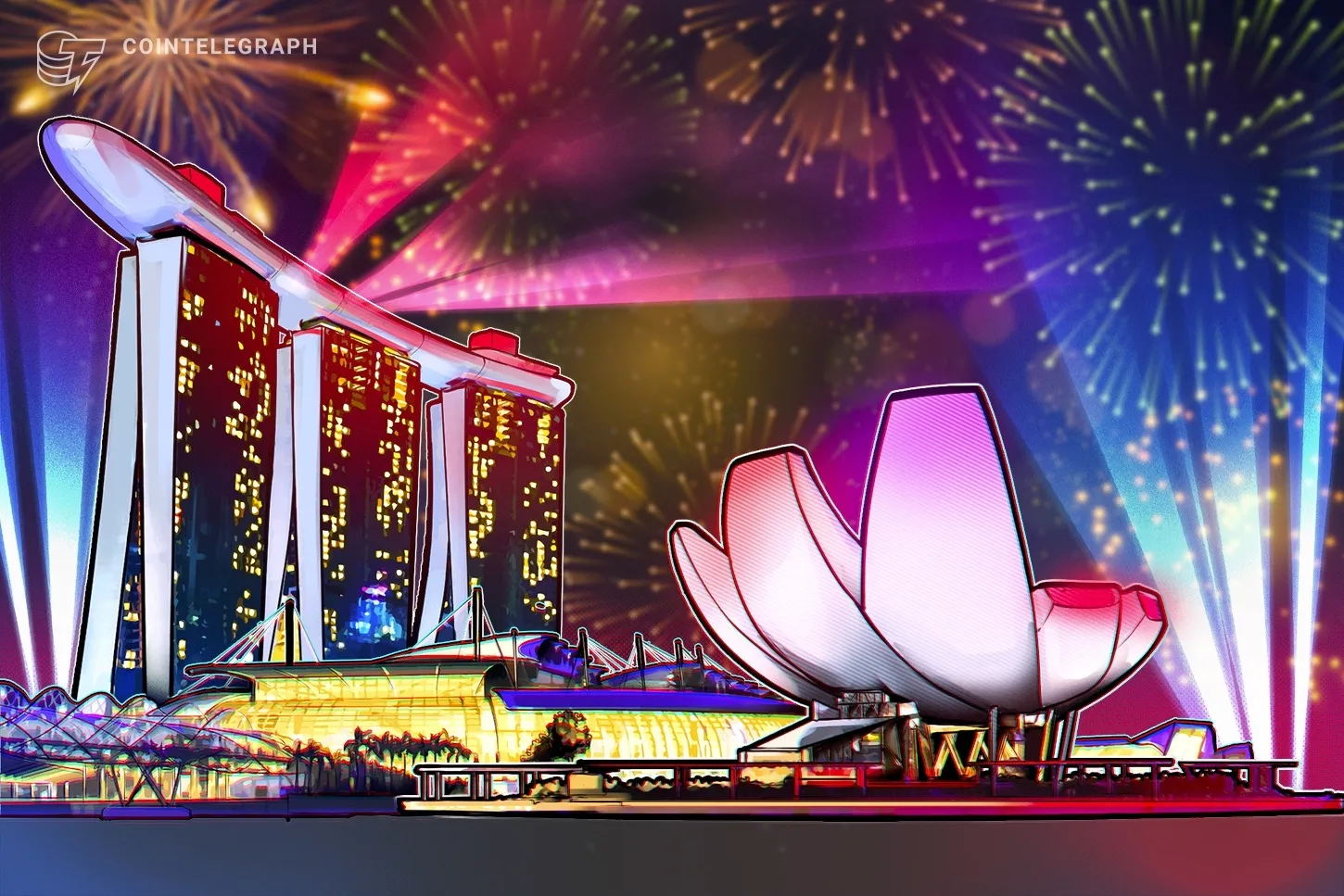
Singapore weighs recognizing some foreign-issued stablecoins

The Monetary Authority of Singapore (MAS) is reconsidering its earlier restriction on stablecoins issued across multiple jurisdictions, proposing a route for some jointly issued tokens to qualify under its regulatory framework.  MAS opened a public consultation on Tuesday, covering legislative amendments to implement its stablecoin framework and additional policy proposals reflecting developments since 2023.  Under one proposal, stablecoins jointly issued by a Singapore issuer and a foreign issuer could be regulated under the framework and labeled “MAS-regulated stablecoins,” provided that the associated risks are sufficiently mitigated.  MAS is also considering recognizing a limited number of foreign-issued stablecoins regulated under comparable overseas frameworks, citing their potential use in cross-border wholesale transactions.  The proposals revisit MASs 2023 position that qualifying stablecoins must be issued solely in Singapore. The regulator finalized a framework that year covering single-currency stablecoins issued in Singapore and pegged to the Singapore dollar or a G10 currency.  At the time, MAS cited difficulties establishing regulatory equivalence and cooperation with other jurisdictions. It also noted technical challenges in tracing where commingled stablecoins originated and determining whether overseas reserves would be sufficient to meet redemption requests.  MAS proposes additional issuer safeguards  The broader consultation seeks to implement the 2023 stablecoin framework through amendments to the Payment Services Act

09-01Industry

London Stock Exchange partners with Kraken parent for tokenized UK stocks: FT

The London Stock Exchange (LSE) and cryptocurrency exchange Kraken are reportedly launching tokenized stock trading on the stock market operators new night-time trading venue.  The LSE has partnered with Kraken‘s parent company, Payward, to launch access to tokenized stocks tracking the value of leading UK equity products starting in 2027, Payward’s chief commercial officer, Mark Greenberg, told the Financial Times according to a Tuesday report.  The tokenized stocks will be listed on LSEs new night-time trading venue, LSE 24, that will offer 24/5 trading, operating from Mondays to Fridays, the company announced on July 21.  The initiative makes the London bourse the latest traditional exchange operator to explore blockchain-based stock offerings that can be traded 24 hours a day with fractional ownership. Other traditional finance (TradFi) institutions exploring tokenized equity products include the Nasdaq, CME Group and the Intercontinental Exchange (ICE), the parent company of the New York Stock Exchange (NYSE).  In August, Nasdaq agreed to acquire LeveL Markets, the third-largest alternative trading system in the US by trading volume, as part of its push into tokenized markets with round-the-clock trading.  Related: Trump Jr.-linked 1789 Capital leads Polymarkets $1B raise: Report  TradFi companies deepen tokenization push  Some of the worlds largest TradFi institutions have been exploring tokenized

09-01Industry

WikiBit Exchange Exit Scam Risk Ranking #12 — CoinUp: The Exchange Personally “Called Out” by Yi He — Would You Still Keep Your Money There?

Introduction: An Exchange Named by the “Crypto Industry Inspector”  In the previous 11 editions, we investigated HashKey (the compliance top student), HTX (a sanctions hotspot), UZX (the DAO penny-stock case), Phemex (the “Morgan Stanley elite” narrative), Tapbit (the MSB registration king), Coincheck (Japan‘s crypto phoenix), Deepcoin (the El Salvador makeover), Upbit (South Korea’s national exchange), Azbit (the Seychelles FSA regulatory embarrassment), FameEX (the three-country license collector), and Bitvavo (Europes compliance champion).  Each one had its own set of problems.  Today, in the 12th edition, we are looking at one of the most explosive cases — CoinUp.  This exchange has an impressive-sounding resume:  “Founded in Silicon Valley in September 2021,”  “Registered in the Cayman Islands,”  “Operating centers in Singapore, Canada, and Hong Kong,”  “Ranked No.29 globally in derivatives trading volume on CoinMarketCap,”  “More than $12.98 billion in 24-hour derivatives volume,”  “Over 15,000 daily active users,”  “300+ spot trading pairs, 700+ spot markets, 100+ futures products,”  “Daily trading volume reaching billions of dollars.”  Sounds like the profile of a top-tier exchange, right?  But on the other side of the story:  Binance co-founder Yi He publicly accused its “operator” of impersonating others for fraud, and even Justin Sun was reportedly deceived by him; WikiBits assessment shows “questionable regulatory credentials” and “no valid regulatory information found”; numerous users complained

09-01Deep Dive

5 top embedded verification SDKs for DeFi in 2026

Identity verification is becoming a core part of the DeFi stack as developers look to embed reusable credentials, privacy-preserving proofs and compliance checks directly into lending, payments, stablecoins and tokenized asset platforms.  SummaryEmbedded verification SDKs are bringing identity, credentials and compliance checks directly into DeFi applications.AIR and zkMe focus on reusable credentials and privacy preserving verification that can work across applications and blockchains.Privado ID uses verifiable credentials and zero knowledge technology for decentralized identity and conditional access.Sumsub offers a more traditional compliance stack covering KYC, KYB, AML screening and transaction monitoring.Civic is now primarily focused on Web3 authentication and embedded wallet onboarding following its move away from Civic Pass verification products.  As decentralized finance expands into lending, payments, stablecoins and tokenized real-world assets, applications increasingly need ways to establish whether users meet specific requirements without turning every interaction into a traditional onboarding process.  That is driving interest in the embedded verification SDK: infrastructure developers can integrate directly into an application to handle identity, credentials or access requirements without sending users through disconnected experiences.  The strongest solutions for DeFi go further. They are increasingly focused on reusable credentials, privacy-preserving proofs and interoperability across applications and chains.  Here are five embedded verification SDKs and identity platforms worth

09-01Industry

Zcash Leads August Rally With Massive 82% Surge

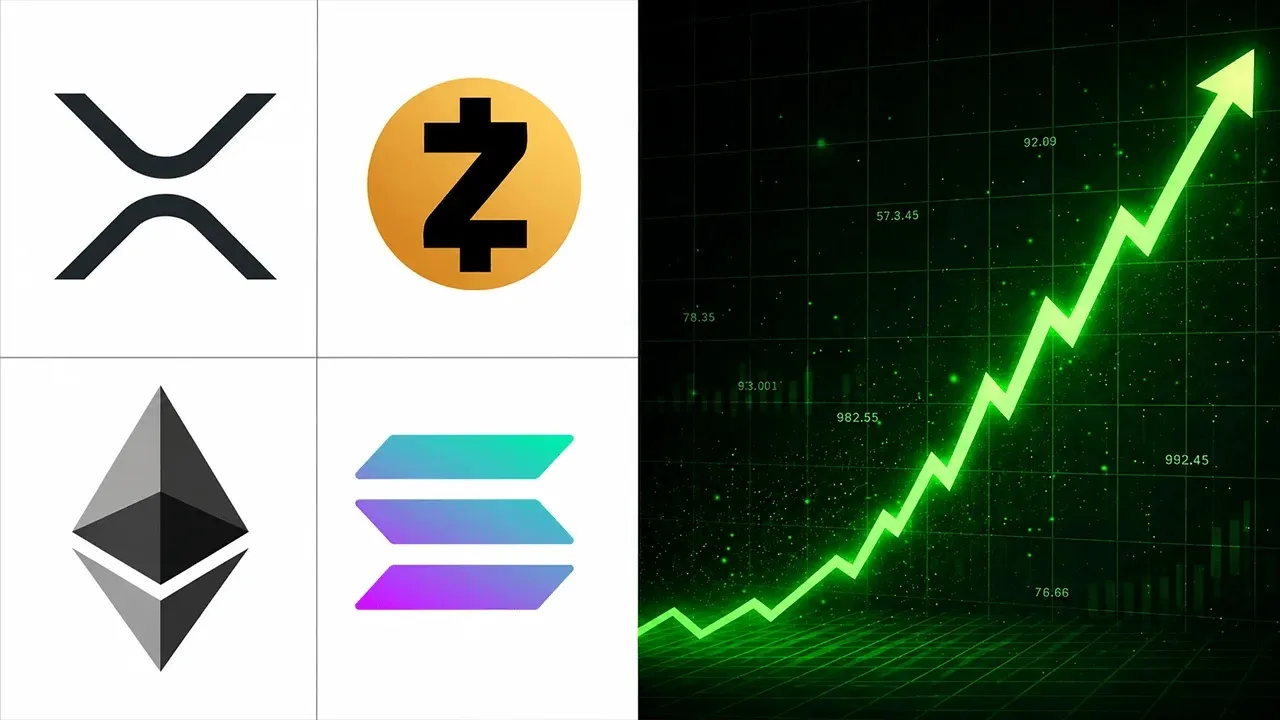
In August 2026, the cryptocurrency market staged a strong recovery, adding approximately $500 billion to reach an aggregate valuation above $2.7 trillion. The primary catalyst was macroeconomic policy—specifically, the U.S. Treasurys decision to double bond buybacks alongside supportive comments from Treasury Secretary Scott Bessent.  Key TakeawaysU.S. Treasury policies pushed total crypto market capitalization past $2.7 trillion in August 2026.Bitcoin rose nearly 25% to breach $81,000, while Zcash outpaced all major coins with an 82% surge.Analysts project nitcoin could close 2026 with net gains if policy-driven market momentum holds.  Bitcoin Rebounds Toward Year-End Profitability  Following a rocky opening, August delivered one of the crypto markets strongest performances of 2026 so far, injecting roughly $500 billion into total market capitalization. Key drivers behind the rally included a U.S. Treasury announcement to double its bond buybacks, coupled with dovish commentary from Treasury Secretary Scott Bessent, which together pushed the aggregate crypto market cap beyond $2.7 trillion.  While critics warned that the U.S. Treasurys strategy posed dire risks to the American financial system, crypto advocates—and bitcoin maximalists in particular—viewed the policy shifts as ultimate vindication. To the crypto faithful, the moves echoed the aggressive monetary expansion and ensuing currency debasement that ultimately prompted Satoshi Nakamoto to launch bitcoin

09-01Industry

Cronos restarts network after emergency halt over Tectonic exploit

Cronos has resumed block production after validators halted the network during an exploit targeting Tectonic and restored the chain state to a point before the attack.  SummaryCronos resumed block production after validators halted the network during an exploit targeting the Tectonic protocol.The chain was restored to its state before the exploit, with block production restarting from block 90,896,189.Cronos remains under observation, while some protocols, RPC providers, explorers and bridges may take longer to return.A full postmortem covering the Tectonic exploit and the networks response will be released soon.  Cronos Network said the blockchain was fully back online after the validator set coordinated an emergency halt designed to protect users while the Tectonic incident was being contained. The restart followed a rollback of the network state, effectively returning Cronos to its condition before the exploit.  The Cronos Network is producing blocks again and is fully back online.  The Cronos Network halted earlier today. This was a validator-consensus emergency action to protect users from an exploit on the Tectonic protocol. The chain state was restored to before the Tectonic exploit…  — Cronos Network (@CronosNetwork) August 31, 2026  Block production resumed at 23:49:01 UTC on Aug. 30 from block 90,896,189. Node operators have been instructed to restart using Cronos

09-01Industry

Trump Jr.-linked 1789 Capital leads Polymarkets $1B raise: Report

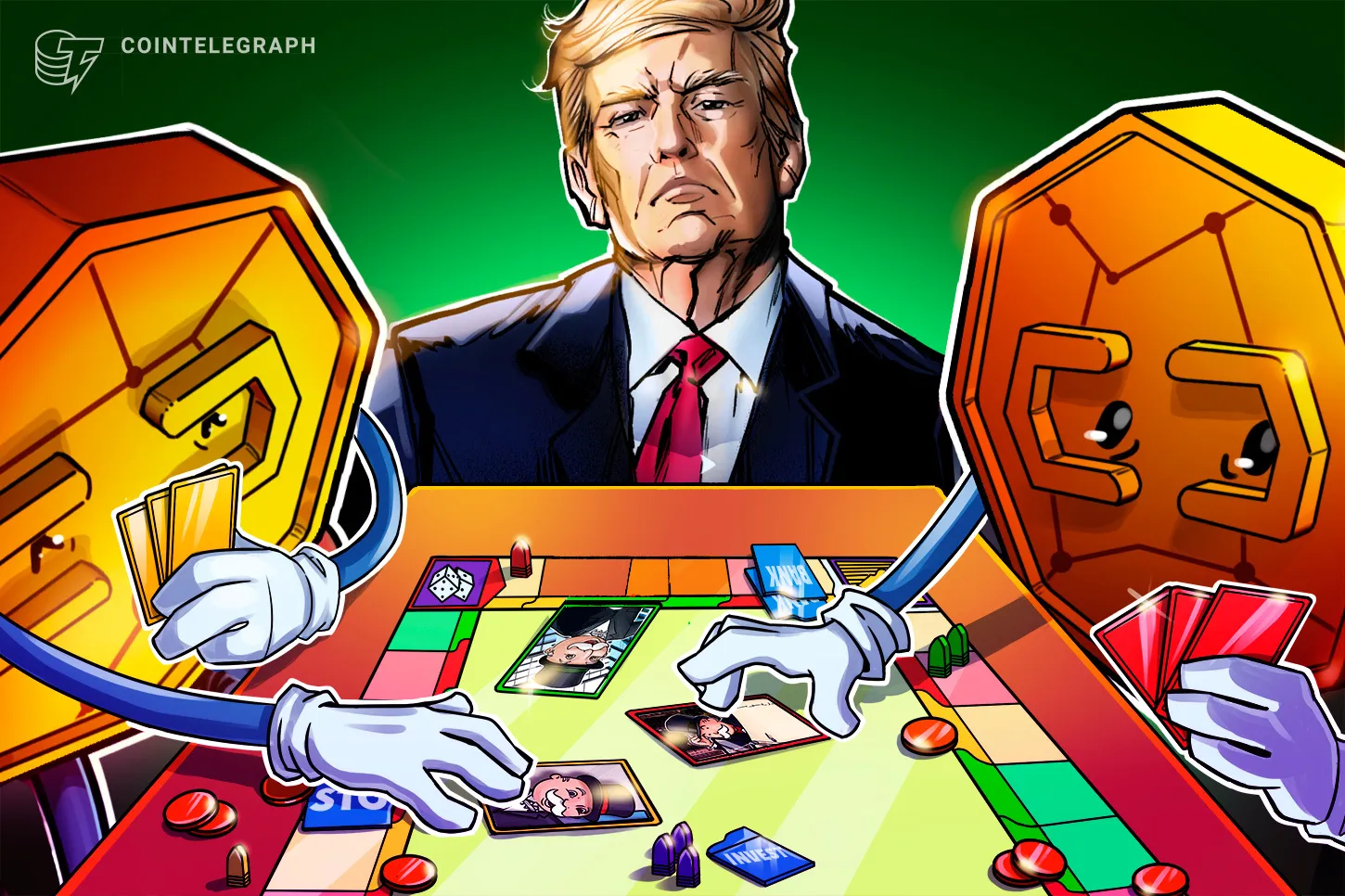
Donald Trump Jr.-linked investment firm 1789 Capital is reportedly investing about $300 million in Polymarket, a blockchain-based prediction market.  1789 Capital, where Donald Trump Jr. is a partner, will make the $300 million investment as part of a $1 billion round that would value Polymarket at $21 billion, people familiar with the matter told the Wall Street Journal on Monday.  The investment would bring 1789 Capital‘s total investment in Polymarket to about $500 million and make it one of the platform’s largest backers.  Cointelegraph has approached 1789 Capital and Polymarket for comment.  ICE remains Polymarkets largest disclosed investor. In a July 30 10-Q filing, ICE said it had invested a combined $1.6 billion in Polymarket preferred shares. The holdings had a carrying value of approximately $2 billion as of June 30 and represented about 22% of outstanding shares, or 14% on a fully diluted basis.  Polymarket reportedly started talks to raise $400 million in fresh capital in April, when it was seeking to raise the funds at a potential $15 billion valuation, below the $22 billion valuation of its main competitor, Kalshi.  Prediction markets are facing increasing regulatory scrutiny in the US and worldwide. On Aug. 14, JPMorgan Chase reportedly ended a banking relationship with Polymarket

09-01Industry
1
...
256258
...
1000