The Bitcoin ‘Dream Entry’ To Wait For Before The Run-Up To $300,000

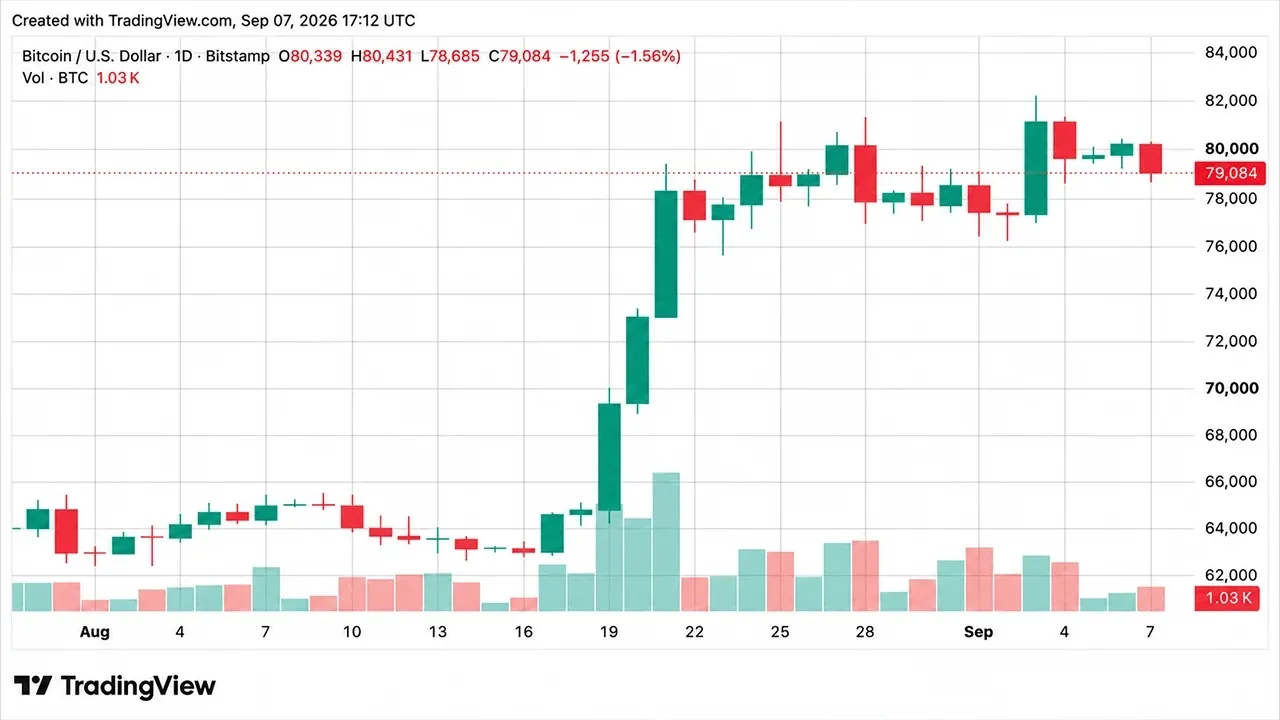
A crypto analyst has identified multiple price levels he believes could be dream entry points ahead of Bitcoins (BTC) long-term price rally. The analyst has shared several ambitious price targets for BTC, expecting the cryptocurrency to skyrocket to $300,000 and even $500,000 in the coming years.  Analyst Identifies Bitcoin Buy Zones Before $300,000 Target  In a recent X post, market expert Crypto Patel stated that while many investors are panicking after Bitcoins recent decline below $74,000, he is using the opportunity to quietly build his position. The analyst said he is preparing to buy more BTC, suggesting that additional dip buying opportunities may still lie ahead as he targets a long-term rally above $300,000.  Crypto Patel has identified three ideal Bitcoin accumulation zones ahead of this projected move. The zones are based on Fibonacci retracement levels highlighted on his accompanying chart. The analyst noted that the first entry point around $60,000 has already been filled, leaving just two ideal points remaining. He noted that this first zone aligns with the 0.382 retracement level and a bullish order block.  Crypto Patel also identified a second accumulation zone near $45,000, which aligns with the 0.5 Fibonacci retracement level. He noted that he is patiently waiting for

05-31Industry

Caribbean Food Security, One Year After The Collapse Of USAID

In 2024 an eggplant farmer in Suriname made a wager on the future.  Encouraged by a USAID-funded agricultural program, he borrowed money to dig a well, clear land, and prepare new fields. Project advisers had urged him to diversify into ginger and adopt climate-smart farming techniques. The promised support, he believed, would help transform a struggling smallholding into a viable business.  The support never arrived.  Within months of returning to office in 2025, President Donald Trump effectively dismantled USAID, bringing a sudden end to an agency that had spent more than six decades distributing over $40 billion a year in American foreign assistance.  The program supporting that Surinamese farmer was among the thousands of projects abruptly terminated, leaving him with debt, unfinished investments, and no access to the market linkages he had been promised.  “He was left financially ruined and emotionally battered, and his taste for agriculture became a bitter one,” recalls Sandiford Edwards, who directed the Caribbean Agricultural Productivity Improvement Activity (CAPA), the USAID-funded project that had been working with him.  Disillusioned and unable to recover from the setback, the farmer abandoned agriculture altogether.  His experience was not isolated. Across the Caribbean, similar accounts offer a glimpse into the human cost of dismantling the agency.  More than

05-31Industry

Top 3 Cryptos That Could Deliver Bigger Gains Than Ripple (XRP) Did in the Last Bull Run

Many investors still remember watching XRP explode during past bull runs and feeling they entered too late. Thats why traders are now searching for projects that still look early before the broader market fully heats up again. Some meme coins have already made their biggest move. Others are only starting to build momentum quietly in the background. And in crypto, timing often matters just as much as the project itself. Here are three cryptos traders are watching closely as they hunt for the next major breakout opportunity.  One of the hardest parts of crypto investing is realizing the biggest returns usually happen before everyone agrees a project is real. That realization is part of why Little Pepe (LILPEPE) is beginning to stand out among traders seeking earlier-stage opportunities rather than chasing established meme ecosystems. Unlike many meme projects built purely around attention, Little Pepe is developing its own Layer-2 blockchain focused on ultra-fast transactions, low fees, and infrastructure specifically designed for meme coin activity. LILPEPE is currently priced at $0.0022 in Stage 13, with more than $28 million already raised and the current stage nearing completion. For many investors, the appeal is not just the memes branding, but the idea of

05-31Industry

Injective Price Rally Tests $7 After Binance US Staking News

Key Insights:Injective price holds above $6 after Binance US adds weekly staking for U.S. usersShort liquidations lift INJ as open interest and derivatives volume expandSpot netflow turns positive, keeping resistance near $6.40 in focus  Injective price has staged a sharp recovery after weeks of weak trading. INJ traded near $6.10 at press time, after gaining about 39% over the past 7 days and around 8% on the day. INJ traded around $6.07 before pushing to $6.30, the highest level since November 2025.  The move also marked the first sustained hold above $6 in 2026, following months of trading between $3 and $4. Traders tied the surge to Binance US adding Injective staking for U.S. users.  INJ Staking Adds New Support for Injective Price Rally  The main catalyst came from Binance US, which enabled INJ staking for users in the United States. The feature gives holders a simple way to stake tokens and earn network rewards. It also provides another reason for users to hold INJ rather than sell immediately.  Source: X  That matters because staking can reduce liquid supply on exchanges. Around 58% of INJ is already staked. More staking access through a regulated U.S. platform could further tighten available supply.  Derivatives activity also expanded. Open interest

05-31Industry

OpenAI Outlines Playbook for Third-Party AI Model Evaluations

OpenAI has published a comprehensive guide for conducting trustworthy third-party evaluations of frontier AI models, highlighting the importance of rigorous testing frameworks to assess model capabilities and mitigate risks. Released on May 28, 2026, the document offers a detailed playbook for evaluating advanced systems, such as GPT-5.5, in environments where traditional chatbot-style assessments are no longer adequate.  The guide addresses a growing need for standardized evaluation practices as AI systems become more sophisticated and capable of complex, multi-step tasks. OpenAI underscores that evaluations must go beyond simple question-and-answer setups, advocating for customized “harnesses”—the configurations of tools, prompts, and environments that allow a model to perform a task. These harnesses can significantly affect measured performance, particularly for tasks requiring long-term memory, tool use, or error recovery.  Three Core Evaluation Areas  OpenAI identifies three primary claims that evaluations should seek to test:Capability elicitation: Can the model demonstrate the desired ability under optimal conditions?Safeguard performance: How robust are the systems safeguards against misuse or malicious attacks?Comparative performance: How does the model stack up against others under identical conditions?  To ensure validity, the report emphasizes the need to account for potential distortions such as reward hacking (where models exploit loopholes to achieve high scores), refusals to complete tasks,

05-31Industry

XRP news: Ripple-linked ETFs drew inflows last week as bitcoin, ether funds lost $2 billion

That divergence comes as XRP remains one of the few large tokens with a specific policy and product narrative. Traders are watching U.S. market-structure legislation, XRP ETF adoption and whether institutional demand for the token can keep growing even as bitcoin and ether funds see redemptions.  The flow story also lands against an older XRP treasury thread that remains unresolved.  In October 2025, Bloomberg reported that Ripple Labs was leading an effort to raise at least $1 billion through a SPAC to accumulate XRP inside a new digital asset treasury vehicle. Ripple was also expected to contribute some of its own XRP, the report said at the time.  CoinDesk has reached out to Ripple for confirmation and an update on whether the plan advanced, changed or was shelved.  If completed, the deal would be among the largest known XRP treasury vehicle to date. Digital asset treasury companies became one of cryptos biggest stock-market trades in 2025, as listed firms used SPACs, reverse mergers and equity issuance to buy tokens. The model worked while crypto prices rose and investors paid premiums for balance-sheet exposure.  Still, the context matters because XRP is now showing two possible demand channels. ETF buyers adding exposure in public markets and, if

05-31Industry

Coinbase Offers Regulated Crypto Options and Perps to US Institutions

Coinbase Financial Markets has launched access to global crypto options and perpetual futures for U.S. institutional clients, marking a significant step in bringing crypto derivatives into regulated U.S. markets. The offering, enabled through Coinbases regulated futures commission merchant (FCM) and Deribit, comes under the oversight of the Commodity Futures Trading Commission (CFTC), according to an announcement on May 29, 2026.  Deribit, acquired by Coinbase in August 2025, is the largest crypto options exchange by open interest. It held approximately $31 billion in bitcoin options open interest as of May 27, 2026, dwarfing competitors like OKX ($2.7 billion), Binance ($1.8 billion), and Bybit ($1.2 billion), according to CoinGlass data. This positions Coinbase to leverage Deribits liquidity dominance to attract institutional demand.  The launch aligns with recent moves by U.S. regulators to “onshore” crypto derivatives trading. In September 2025, the CFTC and SEC jointly stated their interest in expanding regulated markets for perpetual futures, which have traditionally been a domain of offshore exchanges. Perpetual futures, or “perps,” are derivatives contracts with no expiration, popular among crypto traders for their flexibility and high leverage. Historically, these instruments have been traded primarily on platforms like Binance and OKX, which together account for nearly 50% of the

05-31Industry

Kalshi Sues Minnesota to Block First US Felony Ban on Prediction Markets

Prediction market platform Kalshi has filed a federal lawsuit to block a first-in-the-nation Minnesota law that would make operating or advertising prediction markets a felony, escalating a nationwide fight over who regulates the fast-growing sector.  Key Takeaways:Kalshi sued the state of Minnesota on May 28 to block SF4760, a felony ban set to take effect August 1, 2026.The CFTC filed its own suit against Minnesota within 24 hours of the bills May 18 signing.More than a dozen states have moved against Kalshi; the case could decide who regulates the sector.  Minnesotas First-in-Nation Felony Ban  Kalshi, a federally regulated prediction market where users trade contracts on the outcome of real-world events, asked a federal court to strike down Minnesotas SF4760, a law it says would criminalize its business in the state. Governor Tim Walz signed the measure on May 18, and it is set to take effect on August 1, 2026, making Minnesota the first U.S. state to treat the operation and advertising of prediction markets as a felony.  The lawsuit, filed on May 28, argues the ban cannot stand because prediction markets are not gambling products but federally regulated derivatives. Kalshi contends that Minnesota is attempting to outlaw an activity that Congress placed under

05-31Exchange

Senator Lummis says China will 'write the rules' of the new financial era if CLARITY fails

The United States will lose its leadership position in crypto to other countries, including China, if US lawmakers fail to pass the Digital Asset Market Clarity Act (CLARITY), a crypto market structure bill, according to Wyoming Senator Cynthia Lummis.  Passing a comprehensive crypto regulatory framework would “ensure” that other countries “do not write the rules of the next financial era,” Lummis said. She added in a separate X post:  “America built the dollar-dominated financial system that has anchored global stability for a century. The Clarity Act ensures we build the next one. The time to act is now, before Beijing decides it will.”  In May, the Senate Banking Committee voted to advance the CLARITY Act after the legislation had stalled for months, reviving crypto industry hopes that the bill might be codified into law in 2026.  Source: Senator Cynthia Lummis  The crypto market structure bill is one of the most significant pieces of crypto regulations in the US, but it is unclear if it will be signed into law in 2026 due to opposition from the banking lobby and the looming US midterm elections.  Related: ‘We are so close this time’ — Senator Lummis on market structure bill  JPMorgan CEO says banks will oppose CLARITY, as the

05-31Exchange

Monero Jumps on $23 Million Mystery Buy as Zcash Rally Cools

Zcash ($ZEC) fell by over 6% in the past 24 hours to $520.05 as traders booked profits on a multi-month rally. Meanwhile, Monero ($XMR) climbed 11% to $396.75 after an unexplained $23 million on-chain purchase.  The divergence has reopened a long-running debate over which privacy coin offers the stronger product.  Zcash ($ZEC) and Monero ($XMR) Price Performance. Source: TradingView  Capital appears to be rotating from $ZEC‘s institutional narrative back toward $XMR’s default-privacy design.  Zcash Cools After 56% Monthly Surge  $ZEC trades near $520 after touching highs above $640 earlier in May, a level it last visited in 2017. The token is still up almost 57% over the past 30 days and more than 900% year-on-year.  Zcash ($ZEC) Price Performance. Source: BeInCrypto  The recent climb followed:A January decision by the U.S. Securities and Exchange Commission to close its probe into the Zcash Foundation without enforcement action,A May position disclosure by Multicoin Capital, andGrayscales filing to convert its Zcash Trust into a spot ETF.  The Grayscale spot ETF filing added an institutional layer to the rally.  Roughly 30% of total $ZEC supply now sits inside the networks shielded pools, tightening effective float.  The current pullback brings the token back toward its 200-day moving average near $500, a level flagged as a key

05-31Exchange
1
...
227229
...
1000