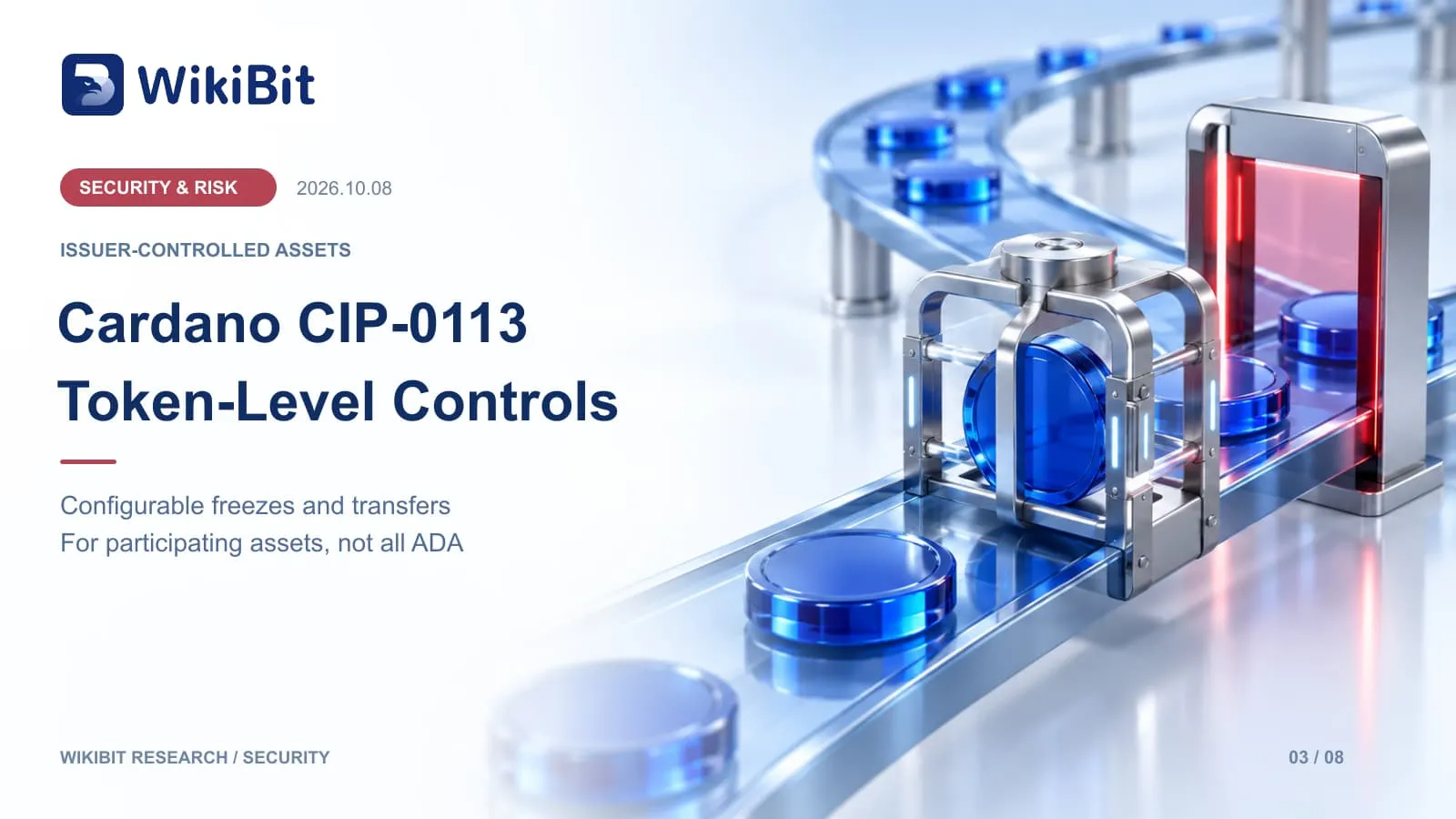
Cardano CIP-0113 Makes Issuer-Level Freeze and Transfer Restrictions Possibl
The Cardano Foundation announced on October 7, 2026 that its CIP-0113 programmable token standard is live on mainnet after development with community contributors and multiple independent security audits. The standard allows issuers of selected regulated tokens—such as stablecoins, tokenized funds, bonds or shares—to bind compliance logic to the asset and have that logic checked when the asset is transferred, minted or burned. This is a major market-structure and custody-control change. It is not a hack, and it is not an announcement that all Cardano funds can now be confiscated.What the standard introduces Cardano has long supported native assets. CIP-0113 adds configurable compliance behavior for a token whose issuer opts into the programmable architecture. Rule modules may express KYC eligibility, allowlists, denylists, sanctions screening, freeze functions, seize/reassignment powers and restrictions on who can receive or hold tokens. The issuer chooses the modules and may update them as laws or product requirements change. The Foundation says compliance checks are enforced by Cardanos ledger rather than by a proprietary custodial wrapper. This means an issuer can issue a native Cardano token with programmable behavior while still using normal network infrastructure. The release required no hard fork.What happens on an attempted transfer? The relevant policy is evaluated when