Indias Arya.ag to put grain ownership records on Avalanche

Indian agricultural warehousing and lending company Arya.ag is testing a system to tokenize warehouse receipts for stored grain on a dedicated Avalanche layer-1 blockchain.  Arya.ag is working with Finternet to connect grain deposits, warehouse receipts, collateral commitments and loan status through the network.  Devika Mittal, Ava Labs head of India, told Cointelegraph that testing was underway and said each tokenized receipt would represent ownership of the stored commodity. The companies did not disclose an expected launch date or how much grain or lending the initial deployment would cover.  Sanmesh Kalyanpur, a director at Finternet Labs, said Arya.ag‘s samplers collect information about stored grain and enter it into the company’s portal. Finternet will combine farmer, commodity, warehouse and insurance information into what Kalyanpur called a “composite token” that banks can use when assessing collateral risk.  Arya.ag stores about $2 billion in agricultural commodities across its warehouse network and supports approximately 120 billion Indian rupees (about $1.26 billion) in loans annually, according to the announcement. Its lending arm, Arya Dhan, issues about $230 million in loans each year.  The figures describe Arya.ags existing business and do not represent assets or loans already brought onchain.  Related: Pineapple Financial puts $1B in mortgage records on Injective  Finternet concept traces back to

09-10Industry

Bitcoin sell-side risk returns to rare lows as $80K sellers fade from view

Bitcoin (BTC) sell-side risk remains near historic lows as August profit-taking cools, new data shows.  Key points:Bitcoins sell-side risk ratio fell to seven from 16 in September, placing it among its lowest-ever readings.Selling pressure eased while Bitcoin held most of its 25% August gains.Bitcoin ETF investors have spent 229 sessions below their aggregate breakeven level near $86,000.  Bitcoin hodlers are “selling less” in September, Glassnode says  In the latest edition of Glassnodes The Week Onchain newsletter, the crypto analytics platform said Bitcoins sell-side risk ratio (SSRR) had reset lower.  Sell-side risk sums total onchain realized profits and losses and divides that figure by Bitcoins realized market cap. The result is a snapshot of the US dollar value realized over a given period relative to realized cap.  Glassnode describes lower values as signals of “macro market bottoms, accumulation phases and relatively low sell-side risk environments.”  SSRR reached 16 as Bitcoins price hit multimonth highs above $80,000 in late August. As of this week, however, the metric has more than halved to 7, one of the lowest readings on record.  Bitcoin SSRR data. Source: Glassnode  Glassnode said the August Bitcoin price rebound had “drawn little supply,” as measured by onchain activity.  “At the July 2025 and October 2025 highs the same

09-10Industry

Paolo Ardoino says 650 million people decentralized US debt, but Tether still controls the T-bills

Paolo Ardoino offered a striking answer to a familiar U.S. debt problem: replace concentrated foreign buyers with hundreds of millions of stablecoin users.  Related Asset Tether USDT · Stablecoin  In an Aug. 31 episode of The Wolf of All Streets, the Tether CEO said the company had created “the decentralized ownership of the US debt” through 650 million people who were “basically holding some US Treasuries.” His point was about concentration risk. Unlike a foreign government, hundreds of millions of users are unlikely to decide together to sell U.S. debt in a single morning.  The macroeconomic intuition has force. Demand for USDT gives Tether funds that it can place in a Treasury-heavy reserve portfolio. But calling token users owners of government debt collapses several different relationships into one. Tethers own documents say users own USDT, eligible verified customers have a personal contractual right to redeem, and Tether International owns and manages the reserve assets.  Related Person Paolo Ardoino CEO · Tether Limited  The 650 million figure is also attributable to Tether, not an independently established count of Treasury investors. In an Aug. 13 audit announcement, the company said more than 650 million users across emerging markets rely on Tether daily, without publishing a methodology for

09-10Industry

XRP Ledger Targets 2028 Quantum Readiness, Outpaces Ethereum

XRP Ledger (XRPL) developers have joined the global technology race, officially aiming to make the ledger fully quantum-resistant by 2028. According to Vet, an XRPL Foundation contributor and validator on the decentralized Unique Node List (dUNL), major progress and the launch of a hybrid deployment of new security protocols are expected as early as 2027.  The announced timeline puts XRP Ledger ahead in the industry-wide race: the network plans to complete the transition one year earlier than its key competitor, Ethereum, whose equivalent roadmap extends through 2029.  Experts point to three key architectural features as XRPLs main technological advantage in this migration:Native key rotation:XRPLs architecture will allow cryptographic keys to be updated while fully preserving existing r-addresses. This eliminates the risk of panic and confusion among custodians. On most other blockchains, the transition to post-quantum standards will require users to manually transfer their assets to new wallets.The “Quantum-Day” emergency response protocol: In the event of an unexpected technological breakthrough by quantum computer developers, XRP Ledger and RippleX developers have introduced a contingency plan. It will allow vulnerable accounts to be instantly isolated and moved into a secure mode without shutting down the ledger itself.Active cryptography testing: Developers have already begun practical testing

09-10Industry

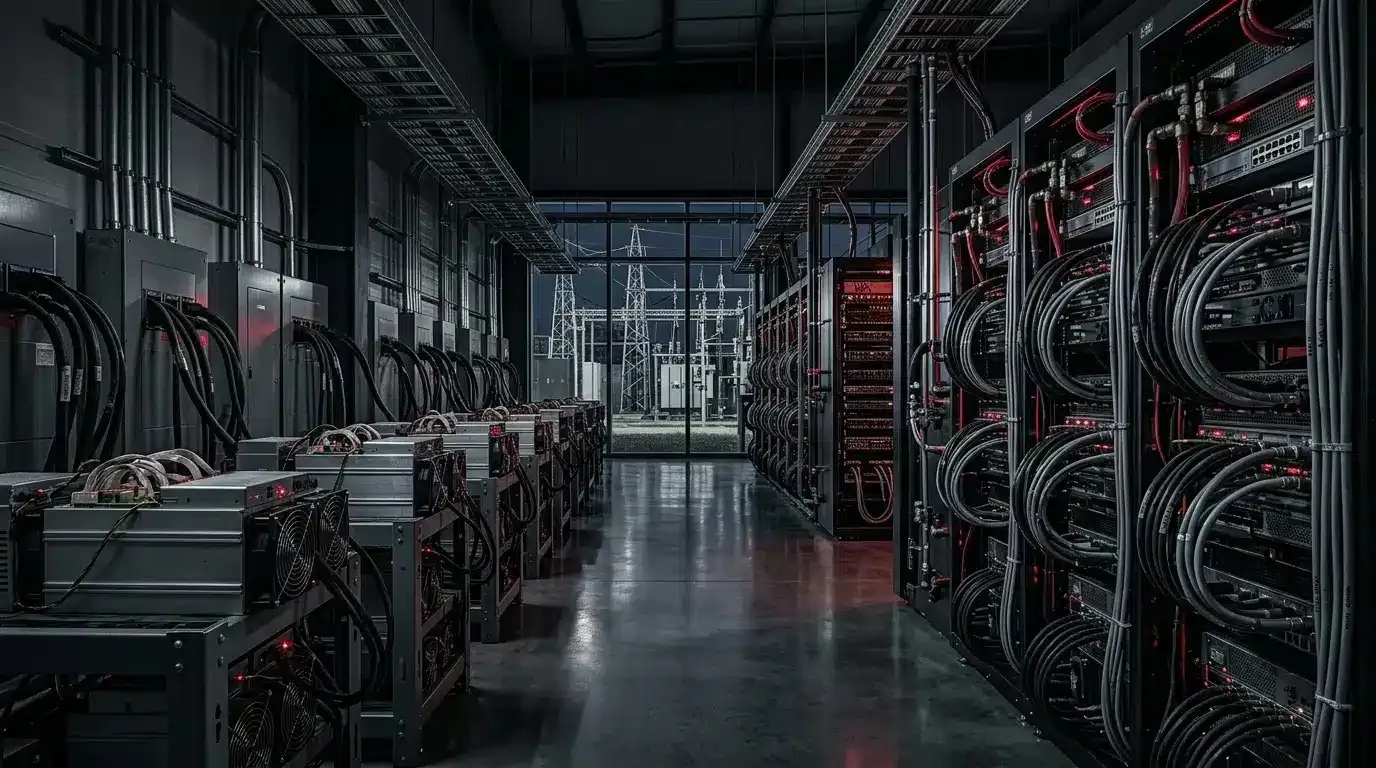
Bitcoin News Today: Mining Faces AI Competition

Bitcoin news Today: Hash price for Bitcoin mining fell to approximately $29 to $30 per petahash per second per day in early Q1 2026, down from roughly $36 to $38 in Q4 2025, according to CoinShares Q1 2026 Bitcoin Mining Report. The report says listed miners could derive as much as 70% of revenue from artificial intelligence infrastructure by the end of 2026, up from roughly 30% today. It also puts the weighted-average cash cost of producing one bitcoin among publicly listed miners at approximately $79,995 in Q4 2025.  Bitcoin hashrate Coinshares  The pressure on mining is increasingly a question of competing uses for scarce electricity, rack space, and capital. CoinShares says AI infrastructure offers higher and more stable returns while hash prices remain near cyclical lows.  This gives miners with scalable energy access and existing data-center capabilities an economic reason to redirect resources toward high-performance computing.  That does not necessarily describe a broad retreat from US mining infrastructure. CoinShares says the US share of global hash rate rose by roughly two percentage points quarter over quarter.  Its analysis instead points to a changing mix of activity: some listed miners are expanding AI capacity while mining remains an important, though increasingly pressured, part of their

09-10Industry

Upbit lists BFC in KRW and USDT markets

Upbit opened Bifrost trading against the South Korean won and USDT on Sept. 10, giving BFC two additional markets on South Koreas largest cryptocurrency exchange by trading volume.  Upbit scheduled BFC/KRW and BFC/USDT trading to begin at 13:45 Korea Standard Time, or 04:45 UTC, on Sept. 10. The exchange published the listing notice shortly before the planned opening.  The announcement specified Bifrost Network as the only supported blockchain for BFC deposits and withdrawals. Users must not send alternative versions of the token through other networks, even if another exchange or wallet supports them. Upbit warned that deposits sent through an unsupported network would not be credited automatically. Recovering those assets could require a lengthy return process and may depend on whether the transaction can be identified and technically recovered.  The exchange also said trading could be postponed if deposits and withdrawals failed to establish enough liquidity before the scheduled opening. Upbit did not announce a delay for BFC in the information available at publication. The new markets expand BFC beyond Upbits existing Bitcoin-denominated market. Before the listing, the exchange displayed a previous BTC-market closing value of 0.00000015 BTC. Upbit estimated that amount at 15.96 won and 0.1788 USDT.  Those figures were reference prices used

09-10Industry

Osmosis freezes 22.65 BTC after Nomic forwarding bug compromises Bitcoin reserves

Osmosis has frozen 22.65 BTC after a flaw in Nomics custom forwarding system allowed a double-spend that left the allBTC asset partly unbacked by Bitcoin.  Related Asset Bitcoin #1 BTC · $78,042.57 24-hour change: down 1.65% 24H Down 1.65% 7D Up 0.40% 30D Up 21.71%  allBTC is issued against a basket of Bitcoin variants held on Osmosis, including nBTC from the Nomic bridge. The official allBTC dashboard showed 110.57 allBTC in circulation and 39.84 nBTC in the basket at the reporting cutoff.  Infographic traces allBTCs recovery path from Nomic forwarding failures through paused activity and governance decisions over frozen Bitcoin and reserve backing.  Osmosis said the nBTC was created from false vouchers, putting 36.03% of allBTCs backing in question and leaving about 70.73 BTC-equivalent of other backing.  Related Asset Osmosis OSMO · $0.03 24-hour change: down 7.13%  The statement also noted that neither its chain nor the Inter-Blockchain Communication protocol was compromised, and the bug was in Nomics forwarding logic.  SlowMists incident database also described the event as a Nomic bridge double-spend.  The public disclosure came more than two months after the apparent exploit activity. On-chain researcher Rarma traced the principal minting to June 25 and said 22.65060846 allBTC created during July 17 activity remained unmoved when the

09-10Industry

Binance Delisting: $100 Million FDV USD Stablecoin Removed

Following its most recent periodic review, Binance is getting ready to remove Pax Dollar (USDP) from its platform because the stablecoin did not meet the exchanges requirements. All USDP spot trading pairs will stop trading on September 24, 2026, at 03:00 UTC, according to Binance.  Spot orders are being cancelled  Spot orders that are already in place will be automatically canceled after trading stops. The decision is noteworthy because USDP, a dollar-pegged stablecoin issued by Paxos, has traditionally functioned as one of the stablecoin industrys regulated alternatives.  Souce: CoinMarketCap  Binance did not pinpoint a single infraction that led to the ruling. Rather, the exchange restated the factors it considers when reviewing listings, such as trading volume and liquidity, development activity, network security, legal requirements, transparency of projects, tokenomics, and community sentiment.  The removal will go far beyond trading on the spot market. On September 11, at 06:00 UTC, Binance Margin is set to delist USDP; however, Binance Buy and Sell Crypto will cease to support the asset a few hours earlier. The remaining positions will be automatically redeemed and moved to users Spot Accounts after Simple Earn support expires on September 17.  Withdrawals and deposits are the most crucial deadlines. Standard withdrawals are still accessible until

09-10Industry

Bitcoin ETFs Bleed $147 Million in Two-Day Outflow Streak

U.S. spot Bitcoin exchange-traded funds have extended their losing streak to two consecutive sessions.  They have now shed more than $147 million, which can be potentially interpreted as a sign of waning institutional demand.  According to data shared by Onchain Lens, the ETFs recorded $100.7 million in net outflows on Sept. 9. This followed $46.6 million in withdrawals on Sept. 8. This brought the combined outflows over the two sessions to $147.3 million.  This comes after Bitcoin ETFs attracted substantial fresh capital earlier in the month.  Still, September flows remain firmly positive, with Onchain Lens putting month-to-date inflows at roughly $622.7 million.  Strong September start loses momentum  September had a very strong start. On Sept. 3 alone, U.S. spot Bitcoin products attracted roughly $731 million, according to industry flow trackers.  The inflows came as Bitcoin rallied back above $80,000 amid renewed optimism surrounding monetary policy and cryptocurrency regulation.  However, institutional demand weakened sharply after the long U.S. holiday weekend.  SoSoValue data showed that the ETFs posted $46.65 million in net redemptions on Sept. 8.  Grayscales GBTC makes up a substantial portion of selling with roughly $65.5 million in outflows. Fidelitys FBTC and Invescos BTCO also recorded withdrawals.  Those losses were partially offset by inflows into several competing products. BlackRocks IBIT attracted

09-10Industry

Tether is pushing USDT into a cracking $3 trillion Wall Street debt machine as defaults hit five-year highs at major funds

Tether is pushing USDT into the private-credit market as defaults and withdrawals strain the $3 trillion industry.  Related Asset Tether USDT · Stablecoin  On Sept. 9, the stablecoin issuer and London-based Fasanara Capital launched StableFund with $400 million in combined sponsor capital and plans to raise up to $3 billion more from institutional investors.  Fasanara will manage the portfolio, while Tether will help originate USDT-linked financing opportunities and provide settlement and treasury infrastructure.  The expansion takes Tether beyond a crypto lending market it already dominates and closer to financing businesses and consumers in the real economy. Galaxy Research estimates that Tether controlled around 60% of the $23 billion centralized crypto-lending market at the end of June, giving it roughly $13.5 billion of outstanding secured loans.  StableFund therefore represents an attempt to extend Tethers existing credit operation into a much larger asset class, at a time when regulators and investors are scrutinizing private credit more closely  Private credits boom is running into a tougher test  StableFund arrives after years of rapid growth turned private lending into one of Wall Streets most sought-after businesses, but the credit cycle is becoming less forgiving.  An August Wall Street Journal analysis found worsening loan health and investor returns across publicly traded funds overseen

09-10Industry
1
...
208210
...
1000