Luxembourg's CSSF issues green light for Ripple's preliminary CASP approval

Ripple announced that the Luxembourg Commission de Surveillance du Secteur Financier (CSSF) has issued a Green Light Letter granting preliminary CASP approval under the EUs Markets in Crypto-Assets (MiCA) regulation. However, the approval is tentative, subject to meeting outstanding final conditions.   Ripple had already acquired the EMI License in Luxembourg, and this additional milestone allows Ripple to start scaling its regulated cryptoasset services to other financial institutions and corporates across the entire European Economic Area (EEA).  More licensing momentum!  The license comes during a week when institutional attention in Europe is unusually high as the MiCA CASP deadline looms. For Ripple, this milestone marks the end of a multi-year regulatory build-out that started with its registration of Ripple Payments Europe.  How Ripple benefits from EMI and CASP licenses  The EMI license held by Ripple covers fiat-denominated electronic money services. It allows for regulated stablecoin payments, direct debit, and e-money issuance. On the other hand, the CASP layer covers crypto-asset exchange, transfer, and custody services under MiCAs unified rulebook.  With both licenses, Ripple can now handle the full spectrum in-house. The platform can now legally handle a customer sending euros by converting them into RLUSD or $XRP, then routing the payment cross-border and issuing the local

06-23Exchange

Ripple Wins Preliminary MiCA Nod in Luxembourg, Full License Still Pending

Ripple has won preliminary approval from Luxembourgs financial regulator to operate as a crypto-asset service provider across the European Union, a step that still leaves the firm short of a full license.  Ripple Joins the MiCA Queue  The Commission de Surveillance du Secteur Financier issued what Ripple called a green light letter, an early-stage sign-off that remains subject to final conditions before the company can scale regulated services in the bloc.  The permission, once finalized, would let Ripple offer cryptoasset services to banks, fintechs and corporate clients in all 30 countries of the European Economic Area.  It builds on an electronic money institution license the company already holds in Luxembourg, which together with the crypto permission would make Ripple compliant with the EUs Markets in Crypto-Assets regime, the firm said.  More licensing momentum!  Ripple has secured its preliminary Crypto Asset Service Provider (CASP) license in Luxembourg, paving the way for the full rollout of Ripple Payments across the EEA and full MiCA compliance:  That mirrors the path Ripple Ripple Ripple was co-founded by Jed McCaleb and Chris Larsen and was debuted in 2012 as both a digital disbursement network and a pre-mined digital coin denoted as $XRP. Possessing less market cap than both Bitcoin and Ethereum, Ripple

06-23Exchange

Ripple Secures Preliminary MiCA License: Here‘s Why That’s Important

Ripple announced today that it has managed to secure preliminary approval for a Crypto Asset Service Provider (CASP) license from Luxembourg‘s Commission de Surveillance du Secteur Financier under the European Union’s Markets in Crypto-Assets regulation (MiCA).  The approval was issued through a Green Light Letter and remains subject to final conditions. However, if granted entirely, it could allow the firm to roll out regulated cryptoasset services throughout the EEA.  It‘s worth noting that this move builds on Ripple’s earlier push into Luxembourg. As CryptoPotato previously reported, the firm had already obtained preliminary approval for an Electronic Institution license in the country, which allows it to provide digital payment services once granted. The CASP approval adds another layer to the strategy, as the firm continues to expand its $RLUSD stablecoin, which recently gained more visibility through Mastercards broader stablecoin settlement plans.  A Larger European Payments Push  Ripple said the CASP license, combined with its existing EMI license, would allow European banks, fintechs, and corporates to access its cryptoasset and stablecoin payments infrastructure through a single integration. This includes actions such as collecting, exchanging, and disbursing funds across supported rails.  This matters. MiCA has become the EUs main framework for regulating crypto companies, stablecoin issuers, and service

06-23Exchange

Bithumb to list Canton in KRW market as CC momentum stays weak

Bithumb, South Koreas second-largest crypto exchange, will add Canton (CC) to its Korean won market on June 23.  The exchange said deposits and withdrawals would open within two hours of the notice, while trading would start at 14:00 local time.  The exchange will support Canton through Canton Mainnet only. Bithumb set the reference price at 234 won and said it would apply its usual trading limits for new listings. It said, “Canton (CC) will be added to the KRW market,” while warning users that crypto assets carry high risk.  Under the listing rules, buy orders will face a five-minute pause after trading starts. Sell orders will also face a five-minute price band linked to the reference price. For about two hours after launch, Bithumb will allow limit orders only.  Canton (CC) is the native token of Canton Network, an institutional blockchain developed by Digital Asset for privacy-preserving tokenization, trading and settlement of real-world assets, with backing and participation from major Wall Street firms including Goldman Sachs, Citadel…  Canton attracts Wall Street and Korean attention  Canton (CC) is the native token of Canton Network, a blockchain built by Digital Asset for privacy-focused tokenization, trading and settlement. The project targets institutions that need blockchain settlement while keeping selected

06-23Exchange

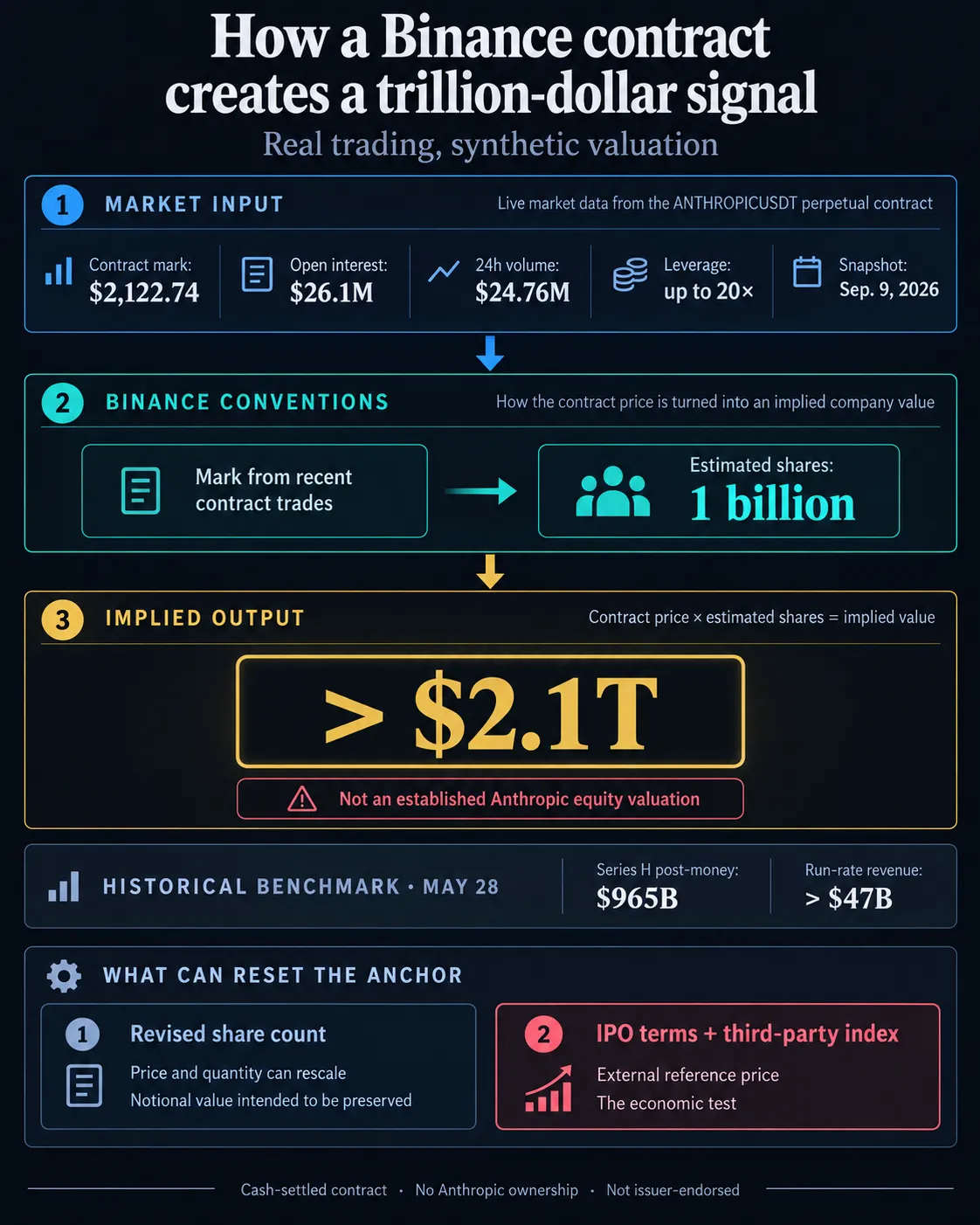
Coinbase Expands Pre-IPO Trading With OpenAI and Anthropic Futures

Coinbase has widened its pre-IPO trading lineup by launching perpetual futures tied to OpenAI and Anthropic, two of the most closely watched artificial intelligence companies. The move gives eligible international traders a new way to speculate on the firms valuations before either company reaches public markets. The launch also signals growing demand for products that offer exposure to private technology giants, especially as investor interest in AI continues to accelerate across global financial markets.  Coinbase Deepens Its Push Into Pre-IPO Markets  The exchange officially opened trading for its ANTHROPIC-PERP and OPENAI-PERP contracts on June 22. Shortly after launch, Coinbase enabled a full range of trading functions, including market, limit, stop, and stop-limit orders.  The new products follow the companys earlier introduction of SpaceX-linked perpetual futures. That launch attracted significant attention from traders seeking access to private firms with strong brand recognition and high growth expectations.  Two of the biggest, most hyped private companies are due to go public soon (OpenAI and Anthropic).  But because they‘re private, regular people can’t get exposure.  We launched pre-IPO perps for both these companies on Coinbase (non-US customers).   Consequently, Coinbase has moved quickly to broaden its offerings in the emerging pre-IPO derivatives sector. The company aims to provide alternative ways for

06-23Exchange

OpenAI and Anthropic Pre-IPO Trading: Coinbase Launches Exposure to 2 AI Giants Still Private

Coinbase Promotes New Access to OpenAI and Anthropic Valuations  Crypto exchange Coinbase (Nasdaq: COIN) has introduced pre-IPO perpetual futures (perps) tied to OpenAI and Anthropic, offering eligible non-U.S. customers a way to trade exposure to two of the most closely watched private artificial intelligence (AI) companies. The launch expands Coinbase International Exchanges lineup of perpetual products into private-market valuation trading.  Coinbase CEO Brian Armstrong highlighted the challenges retail investors face when trying to access private companies before public listings. OpenAI and Anthropic remain privately held, limiting traditional investment opportunities for most market participants.  On June 22, Armstrong wrote on X:  “Two of the biggest, most hyped private companies are due to go public soon (OpenAI and Anthropic). But because they‘re private, regular people can’t get exposure. We launched pre-IPO perps for both these companies on Coinbase (non-US customers).”  Platform access is restricted to eligible users outside the United States through Coinbase International Exchange. The contracts allow traders to take long or short positions while using the exchanges existing perpetual futures infrastructure, including margin requirements, funding mechanisms, and risk controls.  Valuation-Based Contracts Transition Into Equity-Linked Perpetual Futures  Coinbases pre-IPO perpetual futures use company-wide valuation metrics instead of hypothetical share prices, reflecting the lack of finalized capital structures before

06-23Exchange

Trump launches quantum race as crypto faces Q-Day threat

President Donald Trump has signed two executive orders designed to accelerate U.S. quantum computing development and prepare federal agencies for the potential security risks posed by future quantum machines.  According to the White House, Trump approved the measures on June 22 as part of a broader effort to strengthen American leadership in quantum technologies, a field widely viewed as critical for future advances in computing, communications, and cybersecurity.  Investing in American quantum leadership like never before.  President Trump signs executive orders on quantum, supercharging a national effort in innovation in quantum technologies, ensuring national security and continuing American growth in a critical industry.   Speaking during the signing event, Trump said “quantum technologies represents the next generation of innovation across computing, sensing, and networking,” adding that the sector carries significant implications for economic growth, scientific research, and national security.  The first order, Executive Order 14411, establishes the Quantum Computer for Application Development and Discovery Science, or QC-ADDS, initiative. Under the directive, the Department of Energy must identify technical requirements for an advanced quantum computer within 90 days and work toward deploying at least one such system at a federal research facility.  The Department of Commerce is also tasked with exploring ways to encourage participation from private-sector

06-23Exchange

Is a 60% Bitcoin Crash Still on the Table? Analyst Points to Wall Street

Diplomatic efforts between Iran and the United States showed early signs of progress after senior officials from both countries held talks in Switzerland.  Mediators from Qatar and Pakistan said the discussions were constructive, as both sides agreed to a 60-day timeline to secure a final deal. Further technical meetings are scheduled to take place at the Burgenstock resort later this week. The optimism surrounding the talks briefly pushed Bitcoin ($BTC) above $64,000, although the asset later gave back some gains and fell below the level.  However, tensions between the two countries still linger as the deal was not signed by June 19 as promised and there are new attacks between Israel and Lebanon. One analyst has outlined a potential downside scenario for Bitcoin if wider market conditions deteriorate.  Worst-Case Scenario  Bitcoin could fall to $23,979 in 2026 if the broader stock market suffers a crash of more than 50%, according to technical analyst Jesse Olson. He shared a two-week Bitcoin chart that depicted $BTC potentially declining toward the $23,980 level, based on a long-term volume-weighted support line derived from his proprietary Market Sniper Pro VWAP indicator.  Olson said such a move would likely require a major stock market downturn while adding that he does not

06-23Exchange

Arthur Hayes: “When the AI Bubble Bursts, Cryptocurrencies Will Be Peoples Escape Route”

Arthur Hayes, the founder of the cryptocurrency exchange BitMEX and a leading figure in the industry, made striking predictions that will profoundly shake global markets during his appearance on the Bankless podcast.  Hayes argued that the Artificial Intelligence (AI) craze sweeping the technology world has turned into a massive financial bubble, and that after this bubble bursts, the only escape route for global capital will be cryptocurrencies.  Arthur Hayes noted that global capital is currently flocking to the artificial intelligence sector, which it views as “the fastest-running horse.” However, arguing that this is leading to a very serious misallocation of capital, Hayes made the following warning, referring to the railroad craze of the 19th century:  “People are always overly optimistic at the beginning of any new technology. Right now, inflated balance sheets, cyclical revenue agreements, and flawed amortization calculations are being made for AI investments. Companies are assigning a lifespan of 5-6 years to microchips that become obsolete every two years. This mathematical reality will hit the market like a slap in the face no later than 2027-2028. A collapse in the AI-driven credit market will be far greater than the 2008 mortgage crisis.”  Related News The Price of an Altcoin Backed by Billion-Dollar

06-23Exchange

The 2026 Litecoin Summit Has Begun: What to Expect

The 2026 Litecoin Summit opened in Amsterdam today (June 22), the sixth edition of the event and its first outside the United States. Over two days, the Litecoin Foundation (@LTCFoundation) is running keynotes, panels, and workshops at the Tobacco Theater, with the institutional adoption story front and center for a network that has spent most of its 14 years known mainly as a payments coin.  That shift is the thing to watch. Litecoin arrives in Europe with a Nasdaq-listed treasury company, a spot ETF, and fresh SEC guidance behind it, and the schedule leans hard into what all of that means next.  A first for Europe  The summit runs June 22 and 23 at the Tobacco Theater, a historic venue on the Nes in central Amsterdam, with nine rooms and space for up to 600 people. It doubles as the official kickoff to Dutch Blockchain Week, which puts Litecoin at the front of one of Europes larger Web3 gatherings.  Tickets are€84 for the full two days, covering all sessions, workshops, the exhibitor area, and networking. Payment is in fiat through Eventbrite or in $LTC or $BTC through Coinbase. For a multi-day industry event, that price is well below the norm, which aligns with the

06-23Exchange
1
...
206208
...
1000