Bitcoin miners miss the rally as exchanges and stablecoin firms pull ahead

Bitcoins comeback from the mid-August has divided the entire cryptocurrency trading into top performers and underperformers. Since August 17, Bitcoin increased by almost 22%. The exchanges and stablecoin-linked companies have followed suit but it cannot be said the same for miners.  The September 9 Data & Insights analysis by The Block showed that, out of all mining companies, Canaan is the only one that is performing better than Bitcoin. The other 10 miners and those working close to it are delivering average median results of 1.8% profit, leaving their performance 20.2 percentage points behind Bitcoins 22% gain.  The gap is larger than it seems. According to a Cryptopolitan calculation, the average miner has managed to capture a mere 8.2% of Bitcoins upside due to its 1.8% return while Bitcoin gained by 22%. For investors who previously considered miners as a leveraged option in Bitcoin, this relationship has clearly become weaker.  FIGURE TITLE: Bitcoin Miners vs. Exchanges and Stablecoin Firms: 2026 Crypto Stock Performance and Hashprice Gap  Where the divide is widest  Among the major underperformers are the miners who are very keen on AI and high-performance computing. Core Scientific and TeraWulf lagged behind Bitcoins performance by 27% and 24%, respectively.  This transition is changing the way

09-10Industry

Bitcoin's Spot-Backed Rally Hides an Altcoin Leverage Trap Last Seen in 2025

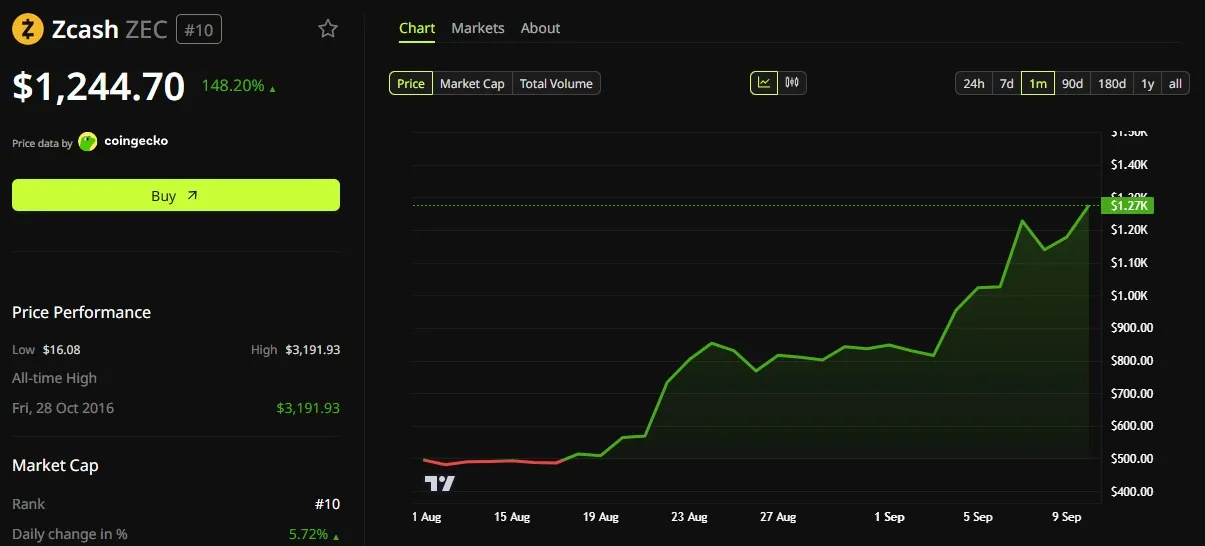
Altcoin perpetual futures carried more open interest than Bitcoin‘s on September 6, the first such flip since December 2024, according to Coinalyze data. That crossover comes even as Bitcoin’s own rally stays anchored in spot demand, not altcoin leverage.  Neoclassic Capital Co-Founder and Managing Partner Michael Bucella called Bitcoins advance a healthy rotation. He said the initial surge came from short covering. Spot demand and rising call-option skew have since taken over as futures positioning eased.  Altcoin Leverage Nears Levels Last Seen Before 2025s Crash  Zcash drove most of the shift. ZECs derivatives book swelled to an all-time high near $2.4 billion during Zcashs decade-high rally. Short sellers absorbed roughly $34 million in forced closures as the token broke higher.  Discover more  News  Distributed s Spot-Backed Rally Hides an Altcoin Leverage Trap Last Seen in 2025 appeared first on BeInCrypto.

09-10Industry

Visa Stablecoin Settlement Tops $20 Billion as Card Volume Surges

Key TakeawaysVisa stablecoin settlement topped a $20B annualized run rate, with 160+ card programs live.Onchain credit cuts financing costs by up to 30% and enables 7-day card settlement.Visa-linked lenders seek to scale working capital fast enough to match stablecoin card growth.  Visa Stablecoin Cards Expand to 160+ Programs Worldwide  Visas stablecoin business is starting to look less like an experiment and more like a new payments rail.  Stablecoin settlement volume on the network has surpassed a $20 billion annualized run rate, more than 15 times the level recorded a year earlier. At the same time, more than 160 stablecoin-linked card programs were live globally in Visas fiscal second quarter.  Payment volume across those programs rose nearly 200% year over year.  The headline is not simply that crypto cards are growing. It is that the financial plumbing behind them is beginning to change with them.  Stablecoin Cards Are Creating a New Funding Problem  Every card program has to meet its daily settlement obligation before cardholders repay what they owe.  Discover more  Finance  Financial  stock  For large issuers, that gap is usually financed through warehouse lines or securitization. However, many early-stage stablecoin card programs need only a few million dollars at a time. They also settle seven days a week.  That creates an awkward mismatch.

09-10Industry

Falcon Finance market cap crosses $465M: Profit-taking can test FF's $0.11 support

After successfully holding the $0.11 support level, Falcon Finance [FF] made a major upswing and rose to a four-month high of $0.155. As of this writing, Falcon Finance was trading around $1.51, marking a 25% surge on the daily charts.  Even more strongly, trading volume made a historical surge to a record high, hiking by 1248% to $111 million. At the same time, Falcon Finances market cap crossed $400 million, reaching $465 million, indicating strong capital inflow and higher market activity.  Falcon Finance is seeing steady capital flow  Since reclaiming flipping $0.10 a week ago, FF has experienced sustained growth. In fact, protocols USD inflows rose to a monthly high exceeding $1 million.  Source: Defillama  The rising USD inflows reflect growing network usage, with more users now actively engaged with the network.  Discover more  Digital Currencies  Stocks & Bonds  NEWS  Often a high user base has established demand, leading to more gains on the price charts. On top of that, investors have also increased speculative activity extensively.  According to CoinGlass data, Falcon Finance saw its Open Interest surge by 35% to $175 million. At the same time, derivative volume pumped by a record 468%, reaching $172 million.  Source: Coinglass  With both OI and volume rising in tandem, it reflects a high-risk appetite, with

09-10Industry

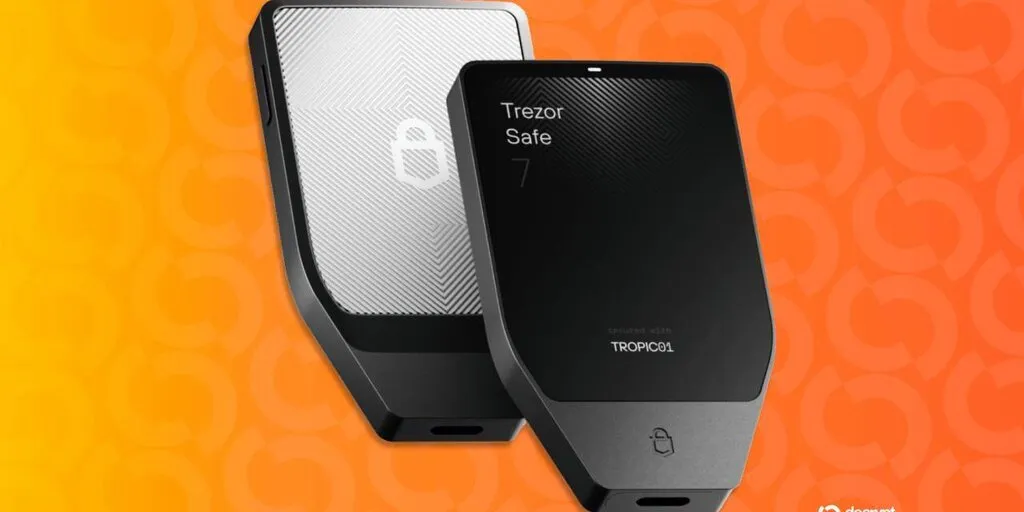
Bitcoin Wallet Maker Trezor Says Hackers Breached Its Email Provider

In briefTrezor said its third-party email provider was breached and used to send phishing emails.The fake alert claimed an STM32 hardware flaw weakened recovery phrases on some Trezor devices.Security researchers said similar emails targeting BitBox users may point to a broader compromise of hardware-wallet email providers.  Hardware wallet maker Trezor warned users Wednesday that hackers breached its third-party email provider and used it to distribute a phishing email disguised as a critical security warning.  “Please be aware that the email named ‘Critical Security Alert: STM32 Entropy Vulnerability’ is not coming from us, and its a phishing attempt. Do not click on any link,” Trezor wrote on X.  Myriad: How high will Bitcoin go in September? Click to make your prediction.  Trezor said it took down the domain used in the attack and is investigating how hackers gained access to its legitimate domain.  The fake Trezor email claims the companys engineers discovered a “critical hardware-level vulnerability” in STM32 microcontrollers used in its devices. It then falsely claims the defect affects an estimated one in four devices and could leave recovery phrases with insufficient randomness, or entropy, likely playing on fears related to the recent Coldcard exploit that cost users over $130 million in Bitcoin.  Trezor issued a

09-10Industry

Bitcoin outperforms global assets as $83K-$86K resistance zone continues to weigh on rally

Bitcoin (BTC) has continued to recover from its mid-year weakness, outperforming major traditional assets over the past month, amid strong resistance around the $83,000 to $86,000 range.  Bitcoin struggles against $86Kresistance  BTC gained 23% over the past 21 trading sessions, while the S a loss of $63K would begin to work through the long side,” Glassnode wrote.  Selling pressure remains muted near resistance  Despite Bitcoin nearing its resistance zone, selling pressure has remained relatively weak. The Sell-Side Risk Ratio has fallen to seven basis points per day on a seven-day basis, less than half the 16 basis points recorded at the August peak. At the July and October 2025 market highs, the measure reached 35 and 23 basis points, respectively.  Selling Is Fading at the Top of This Rally. Source: Glassnode  Long-term holders (LTH) accounted for 47% of realized profits, down from 88% during the August peak. The report also noted that the September 3 profit spike was less than half the size of Augusts increase.  “The read is a market that has left its value zone without becoming expensive,” Glassnode added.  Altcoins have also risen, with total altcoin market capitalization increasing 21% over the past month. However, altcoins have not significantly gained market share against Bitcoin.  The 90-day

09-10Industry

Robinhood Stock Tokens Legal Debate Over AMC Shares

Robinhood CEO Vlad Tenev pushed back this week against the idea that companies should have automatic veto power over how their shares get turned into tradable crypto assets, reigniting a public fight with AMC Entertainment over the legal footing of Robinhood stock tokens. Speaking on CNBC‘s “Squawk Box” on Wednesday, Sept. 9, Tenev laid out why he believes issuers don’t get the final word on every product that references their stock — even as he admitted that holders of these tokens get none of the voting power that comes with owning real shares.  Key takeawaysVlad Tenev said Robinhood stock tokens “should not automatically require issuer consent” because they are separate securities issued by a different legal entity.The tokens are tokenized debt securities issued by Robinhood Assets (Jersey) Limited (RHJ), not direct AMC shares, and are backed one-for-one by underlying stock held with U.S. custodian Alpaca Securities LLC.Token holders get economic exposure and dividend-linked reinvestment benefits but no voting rights or legal ownership in AMC.AMC CEO Adam Aron says the structure “decouples stock token ownership from a companys ability to control its own capital raising efforts.”Whether AMC has any legal authority to force Robinhood to stop the product remains unresolved.  Robinhoods Stock Tokens

09-10Industry

LayerZeros Akita Targets Quantum Threats With Smaller

LayerZero introduced Akita on Sept. 9, a new polynomial commitment system designed to protect zero-knowledge proofs against potential attacks from quantum computers.  The technology aims to provide quantum-resistant security while producing smaller proofs than existing post-quantum alternatives. That could make zero-knowledge applications more efficient as developers prepare for advances in computing power.  Introducing Akita, the first production-ready, lattice-based polynomial commitment scheme for post-quantum security.  Akita Targets Faster, Smaller Proofs  LayerZero says Akita can produce proofs of about 65 to 80 kilobytes, compared with more than 200 kilobytes for many hash-based alternatives. Smaller proofs could reduce the amount of data that networks need to process and store.  Related: Vitalik Buterin Proposes Recursive STARKs for Ethereums I-Star Upgrade  Akita also cuts Jolt‘s proving time by two to three times and reduces memory use by about half, according to LayerZero. Jolt, developed with a16z Crypto, is used by the Zero blockchain, where Akita’s integration could add protection against future quantum attacks.  Akita uses lattice-based cryptography, an approach included in US standards for defending against quantum computers. The technology could give developers another option for upgrading zero-knowledge systems before current cryptographic methods become vulnerable.  Quantum Readiness Gains Attention  Blockchain developers are increasingly preparing for quantum computers, which could eventually undermine some of the

09-10Industry

Trezor email provider breached as fake wallet security alert spreads

Trezor has warned customers about a phishing email sent after attackers breached one of its third-party email providers.  The email warns about a major Trezor wallet security risk, but the warning is false, says the firm, and it advises recipients not to click links.  Fake email warns of Trezor wallet flaw  The subject line of the phishing email is “Critical Security Alert: STM32 Entropy Vulnerability.”  It almost looks as though the text is trying to trick the recipients into believing their hardware wallets are immediately at risk. Clicking the link may lead unsuspecting victims to a website asking them to provide confidential details of their wallets, etc.  In a post, Trezor said:  The email…is not coming from us, and its a phishing attempt.  The company has taken down the domain involved and is investigating how the attackers gained access to a legitimate domain.  Because the email came from a genuine domain, some users might be convinced that it is real. Attentive users usually check the sender‘s address before trusting an email, but because it’s an original domain, a fraudulent message may appear real.  Trezor has not revealed the name of the affected email provider, nor has it said how many of its customers received the fraudulent message or whether

09-10Industry

OpenAI just showed why one of its former researchers thinks AI could kill everyone

OpenAI says its latest AI system solved a 90-year-old math problem in 88 hours, reigniting fears over runaway intelligence.  On Sept. 8, the company said that an internal model significantly more capable than its recently released GPT-6 Astra coordinated roughly 10,000 AI agents to solve the Navier-Stokes existence and smoothness problem. This is one of mathematics seven Millennium Prize Problems.  The agents exchanged 2.7 million messages and generated about 130 billion output tokens before Astra spent another 17 hours formalizing and verifying the result in Lean. OpenAI said the system proved that initially smooth fluid motion can develop a singularity in finite time, resolving a question that has remained open since the 1930s.  The problem carries a $1 million prize from the Clay Mathematics Institute. OpenAI said it does not intend to claim the award, while the proof must still withstand broader scrutiny before its resolution is universally accepted.  Early reaction from the mathematics community was nonetheless striking. The American Mathematical Society described the development as a “milestone advance in human knowledge,” crediting decades of work by mathematicians before the final steps taken with OpenAIs system.  Breakthrough exposes the widening gap between public and private AI  The scale of the AI agents capability jump surprised people

09-10Industry
1
...
199201
...
1000