September CPI Tonight Could Become the “Starting Gun” for Bitcoin’s October Rally: Where Are Inflation, Rate Cut Expectations, and the Next Wealth Opportunities Heading?

At 8:30 PM Beijing Time tonight, the U.S. September CPI data will be released.  What the market truly cares about is not just the number itself, but the three questions behind it:Will the Federal Reserve continue tightening policy at the end of October?Will the liquidity environment improve during the remaining months of 2026?Is Bitcoins current rebound the beginning of a new bull market, or simply a bear market rally?  Currently, BTC is trading at a critical level: the price is consolidating around $82,000–$84,000.  Key levels:Resistance: Around $85,000Major support: $80,000 and the $77,000 area  The market is waiting for CPI to provide the next directional signal.  Recently, BTC has remained in a narrow trading range ahead of the CPI release, suggesting that investors are reducing risk exposure and waiting for a macro catalyst.  Tonight‘s CPI data could determine the direction of the rest of October’s market.1. What Could September CPI Look Like?  Current market expectations:  Headline CPI YoY: Around 3.6%–3.7%  Core CPI YoY: Around 2.5%  The monthly increase is expected to be mainly driven by rising energy prices. Many institutions believe that the rebound in September inflation is primarily caused by oil prices, while underlying core inflation pressure remains relatively moderate.  Therefore, tonights CPI release may create three possible scenarios:  Scenario 1: CPI

10-14Deep Dive

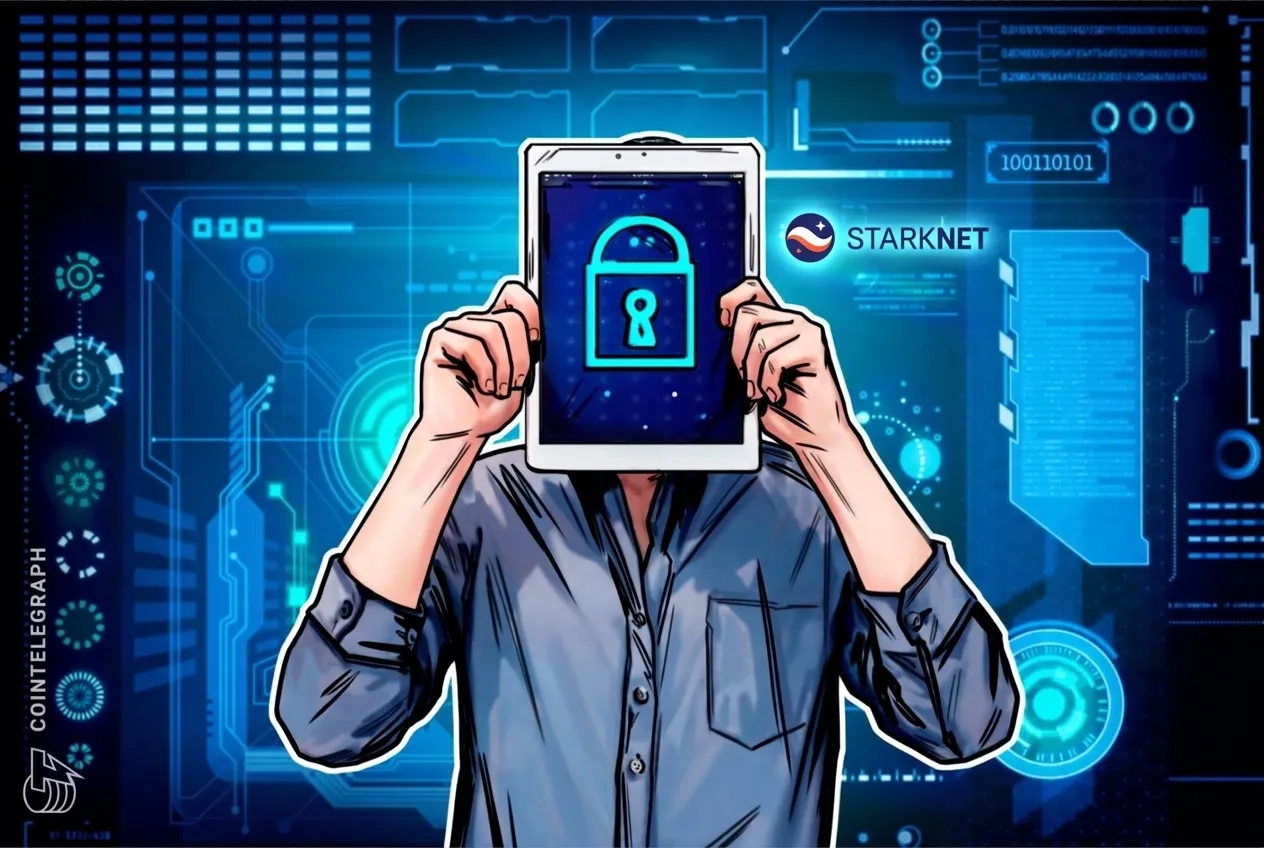
Starknet introduces wallet privacy feature for DeFi activity

Ethereum layer-2 network Starknet has launched a wallet privacy feature that lets users interact with decentralized finance (DeFi) apps without publicly linking activities to their main wallets.  StarkWare, the team behind Starknet, said that its new Shadow Accounts feature creates separate, persistent addresses for individual applications. Users can fund the accounts using shielded balances held in the networks STRK20 privacy pool. This allows them to maintain lending, trading or other DeFi positions under different onchain identities.  The new privacy feature obscures the connection between the shadow account and the wallet funding it. However, balances, transactions and positions of these shadow accounts remain publicly visible onchain, according to Starknet.  Once integrated into a DeFi application, the feature allows users to connect their wallets, switch from public to private mode and deposit assets into a vault. Their Shadow Accounts then maintain their positions until they withdraw funds back into a shielded balance.  StarkWare said the functionality could eventually extend beyond vaults to liquidity provision, lending, borrowing, staking, derivatives trading, prediction markets and NFT marketplaces.  The launch follows StarkWares broader blockchain privacy push. In June, the company introduced its STRK20 privacy framework, which allows private transfers and shielded token balances on Starknet.  Later that month, StarkWare demonstrated a Private

10-14Industry

Tether invests in stablecoin payments across 17 countries

Tether has invested in Latin American financial technology company EFY Finance through its seed funding round, seeking to expand institutional access to USDT and USAT stablecoin payments across 17 countries.  Tether announced the investment on October 13, confirming that the funding would support EFY Finance‘s infrastructure for international payments, digital asset custody and connections to local banking systems. The company serves more than 25,000 active individual and business accounts and operates across several Latin American markets. Financial details, including Tether’s investment amount and EFYs valuation, were not disclosed.  Tether investment targets stablecoin payments in Latin America  According to the announcement, EFY Finance provides payment infrastructure that allows businesses and financial institutions to move funds using dollar-backed stablecoins. Its services connect digital assets with traditional bank accounts, enabling customers to receive, convert and settle payments through local financial networks.  The company supports transactions involving USDT and USAT, with conversion services across more than 12 currencies and payment corridors. Customers can access digital wallets, payment cards, over-the-counter trading services and infrastructure for converting conventional money into stablecoins or exchanging stablecoins for local currencies.  Tether Invests in EFY Finance to Accelerate Institutional Stablecoin Usage in LATAM  Learn more: https://t.co/GFcFx1EH5H  — Tether (@tether) October 13, 2026  EFYs settlement network currently reaches local

10-14Industry

NFT Limited releases RWAIX protocol, plans live NFT trading pilot within 90 days

NFT Limited has released its RWAIX verification protocol as open source software and announced plans to test it on a live NFT transaction within 90 days.  According to the companys announcement, the NYSE American-listed firm has completed 50 internal software tests without recording any failures and published a reference implementation on GitHub for independent review.  The proposed protocol is designed to create verifiable records of agreements, asset delivery, payments, and disputes between buyers and sellers. NFT Limited intends to begin with its existing digital art marketplace before considering applications involving artificial intelligence agents and robotics.  A limited pilot is targeted for the first quarter of 2027, subject to an independent security review and other conditions. The company has not yet integrated RWAIX into its production platform.  RWAIX protocol to undergo its first live trial on an NFT marketplace  NFT Limited plans to introduce RWAIX through Metaverse Digital Payment Co., Limited, its wholly owned Hong Kong subsidiary, which operates the companys existing digital art trading platform.  The initial trial will involve one NFT order, covering the purchase agreement, delivery confirmation, independent verification, payment, and any dispute that may arise during the transaction.  Under the proposed system, participants would be able to review records of what was agreed upon

10-14Industry

Ripple Secures Major Korean Securities Partnership

Blockchain payments firm Ripple has announced its latest big partner in the South Korean financial industry, namely South Korean financial firm Meritz Securities, as the firm ramps up institutional adoption in one of the largest crypto markets in Asia.  This is the first time Ripple is partnering with a Korean securities firm. With this latest partnership, Ripple now has four institutions it has partnered with in the country this year.  Through the partnership, Meritz Securities will be exploring the potential uses of Ripples custody solution and tokenization platform for digital asset services integrated with its existing securities businesses.  Ripples custody solution, Ripple Custody, aims to facilitate secure storage, movement, and settlement of digital assets for regulated financial institutions without having to build their own custody infrastructure.  Ripple and Meritz Securities partnership will be within the framework of South Koreas existing financial laws.  The two firms are open to gradually ramping up their collaboration depending on the development of South Koreas regulatory landscape.  Big push for tokenization  The partnership with Ripple comes as Meritz Securities is currently looking into a range of potential opportunities in the emerging digital asset space.  The South Korean securities firm is considering spot crypto exchange-traded funds (ETFs), fractional investments, security tokens, digital asset trading,

10-14Industry

Coinbase proposes ways to protect Bitcoin from quantum risks

Coinbase has urged Bitcoin developers to begin preparing for quantum computing threats, warning in an October 13 technical paper that upgrading the cryptocurrencys security could take several years.  SummaryCoinbase holds approximately 5% of existing Bitcoin and recommends early preparations against future quantum threats.Bitcoin‘s transition to quantum resistant security could take several years, according to Coinbase’s technical paper.Coinbase identified BIP-360 and P2TRv2 as flexible designs for introducing future quantum resistant signature systems.The company proposed hybrid wallets supporting existing Bitcoin signatures alongside future post quantum authentication methods.Coinbase urged developers to address dormant Bitcoin and lost private keys separately from technical upgrades.  Coinbase published its recommendations on Tuesday, outlining how Bitcoin could gradually adopt quantum-resistant digital signatures while protecting existing wallets and institutional holdings. The company, which says it holds approximately 5% of all existing BTC in custody, called for flexible transaction designs, stronger wallet protections and a migration process that does not depend on resolving every dispute over older coins.  You might also like:  Coinbase joins DOJ and UK crime agency to target West Africa scams  Coinbase warns Bitcoin quantum security upgrades could take years  In its October 13 paper, Coinbase explained that Bitcoins move toward quantum-resistant security involves more than introducing a new digital signature algorithm. Developers

10-14Exchange

Coinbase proposes ways to protect Bitcoin from quantum risks

Coinbase has urged Bitcoin developers to begin preparing for quantum computing threats, warning in an October 13 technical paper that upgrading the cryptocurrencys security could take several years.  Coinbase published its recommendations on Tuesday, outlining how Bitcoin could gradually adopt quantum-resistant digital signatures while protecting existing wallets and institutional holdings. The company, which says it holds approximately 5% of all existing BTC in custody, called for flexible transaction designs, stronger wallet protections and a migration process that does not depend on resolving every dispute over older coins.  Coinbase warns Bitcoin quantum security upgrades could take years  In its October 13 paper, Coinbase explained that Bitcoins move toward quantum-resistant security involves more than introducing a new digital signature algorithm. Developers must consider transaction fees, network capacity, wallet compatibility and the ability of Bitcoin nodes to verify transactions independently.  Coinbase, Which Holds About 5% of Existing BTC in Custody, Outlines Bitcoin Post-Quantum Security Recommendations  Coinbase, which holds approximately 5% of all existing BTC in custody, outlined technical considerations for Bitcoins transition to post-quantum security. The… pic.twitter.com/9D9aUAXTa2  — Wu Blockchain (@WuBlockchain) October 13, 2026  The company warned that consensus changes and wallet migrations often require years of planning and coordination. It encouraged developers to begin preparing before researchers demonstrate a

10-14Industry

Coins.ph faces Philippine regulatory scrutiny over alleged gambling payments

Philippine cryptocurrency exchange Coins.ph has reportedly come under increased scrutiny from the Bangko Sentral ng Pilipinas (BSP) over alleged transactions involving restricted offshore gambling operators, raising concerns about its regulatory standing.  The allegations, disclosed in October 13 reporting citing people familiar with the situation, concern whether the exchange handled payments connected to offshore gaming businesses. Coins.ph has not publicly confirmed the allegations, and no official BSP finding establishing gambling-related misconduct was identified. However, the company has acknowledged that the central bank ordered improvements to its internal controls and restricted certain payment services.  Coins.ph faces scrutiny over alleged gambling payments  According to people familiar with the reported regulatory concerns, Coins.ph allegedly processed transactions involving offshore gambling businesses that faced restrictions in the Philippines. One source suggested that the suspected compliance failures could put the companys operating license at risk, although no confirmed revocation order has been published.  Philippine Crypto Giant Coins ph Faces Regulatory Scrutiny Over Alleged Gambling Links  Coins ph, one of the Philippines largest crypto exchanges with over 18 million registered users, is reportedly facing regulatory scrutiny from the Bangko Sentral ng Pilipinas (BSP) over… pic.twitter.com/kyA9kVsS2Y  — Wu Blockchain (@WuBlockchain) October 14, 2026  The October 13 allegations came after the BSP restricted incoming transactions through DCPay

10-14Industry

Polymarket CEO hints at possible crypto token launch

Polymarket CEO Shayne Coplan has renewed speculation about a potential cryptocurrency token and airdrop after discussing an onchain asset at TOKEN2049 in Singapore on October 7, while the company considers further equity financing.  SummaryPolymarket CEO Shayne Coplan discussed a potential onchain asset but announced no token launch date.Polymarket has not confirmed an airdrop, token distribution rules, eligibility criteria, or public launch schedule.ICE agreed in 2025 to invest up to $2 billion in the prediction market company.Polymarket US operates through QCX, a contract market designated by the CFTC in July 2025.Reports of Polymarket pursuing another funding round remain separate from any confirmed cryptocurrency token plans.  The official TOKEN2049 listed Coplan in a fireside conversation with Balaji Srinivasan on October 7, where the Polymarket founder discussed the possibility of introducing an asset with “real programmable utility” connected to the platforms economy.  His comments stopped short of confirming a token launch, distribution method or timeline. The remarks followed earlier hints from company executives that Polymarket could eventually introduce its own cryptocurrency.  You might also like:  Polymarket V2 could change how users bet on events  Polymarket token rumors return after CEOs comments  During his TOKEN2049 appearance, Coplan discussed the concept of an onchain asset that could perform specific functions within Polymarkets

10-14Industry

South Korea locks out crypto users as 27 exchange sites go dark

South Korea has ordered the blocking of domestic access to 27 crypto websites, including KuCoin and MEXC, extending its crackdown on unregistered operators and raising concerns about existing customers ability to withdraw.  The country‘s Financial Intelligence Unit (FIU) disclosed the decisions on Oct. 13. South Korea’s communications standards regulator made them following two deliberations on Oct. 6-7, at FIUs request.  Both exchanges appear in the official list of websites covered by the decisions. FIU says foreign providers serving Korean customers face the same registration requirements as domestic businesses.  Related Company KuCoin Peoples exchange  The requirements include certification under Koreas Information Security Management System (ISMS), and they consider Korean-language websites, marketing aimed at Koreans, and support for won payments when assessing whether a foreign provider is doing business in the country.  App marketplaces had already blocked new installations and updates for unregistered operators, FIU said.  South Korea had already restricted 17 Google Play apps, including KuCoin and MEXC, on March 26, 2025. At that point, FIU was pursuing website restrictions alongside further app-market action.  Related Company MEXC Centralized cryptocurrency exchange  For users who already hold assets on a platform, a website block can interfere with reaching an account and requesting a withdrawal. FIU acknowledged that blocking could cause withdrawal

10-14Industry
1
...
179181
...
1000