ECB picks 36 payment providers to test digital euro ahead of 2027 pilot

The European Central Bank is moving the digital euro from planning into testing, with dozens of payment companies joining the next stage of the project.  The ECB selected 36 payment service providers (PSPs) to participate in a digital euro pilot, according to an official announcement published Tuesday.  The list of selected PSPs includes fintechs Stripe and Revolut alongside traditional banks including Deutsche Bank, UniCredit and BPCE. Revolut has recently adjusted some cryptocurrency services for EU users by phasing out support for Tether USDt.  The pilot comes as governments take different approaches to digital currencies. While Europe is expanding testing of its proposed central bank digital currency (CBDC), the US has moved to block the Federal Reserve from issuing a CBDC.  Italy tops list of digital euro pilot providers  The ECB began selecting providers from across the euro area for its digital euro pilot earlier this year, with the 12-month trial set to begin in the second half of 2027.  The central bank said it received more than 50 applications from payment companies after opening a call for interest in March 2026. The selected participants include traditional banks, payment processors and non-bank service providers.Source: ECB  Italy has the largest number of selected participants, with seven companies joining the

07-14Industry

South Korea to test tokenized government bonds with CBDC in 2027

South Korea plans to conduct a 2027 pilot linking tokenized government bonds to its institutional central bank digital currency (CBDC) infrastructure, moving sovereign debt tokenization from a proposal to an official government timeline.  On Tuesday, the government unveiled its 2026 Economic Growth Strategy for the Second Half, which includes the plan. In addition to assigning a date for the pilot, the strategy said authorities would study how to make the Bank of Koreas (BOK) CBDC infrastructure interoperable with other blockchains, enabling a potential connection between external distributed ledgers and the banks permissioned system.  The project would test whether South Koreas wholesale CBDC, designed for use by financial institutions, can support capital markets infrastructure, rather than serving only as a digital payment instrument.  The document did not identify which bonds would be included, the size of the pilot, the participants, or which blockchain technologies would be used. It also did not provide specifics on whether the project would cover the initial issuance of government debt, secondary-market trading or only post-trade settlement.  South Korea expands blockchain and tokenization agenda  The idea was first outlined publicly on July 1 by BOK Governor Hyun Song Shin during a panel at the European Central Bank Forum on Central Banking. Shin

07-14Industry

Ark Invest doubles down on SpaceX with $52m weekly buying spree

Cathie Woods Ark Invest has increased its exposure to SpaceX with purchases worth about $52.1 million during the week ended July 10, while cutting positions in semiconductor, streaming and genomics companies as it continued adjusting its portfolios.  SummaryArk Invest bought about $52.1 million worth of SpaceX shares while adding to positions in Coinbase, Circle and several AI and healthcare companies.The firm reduced holdings in AMD, Roku, Deere and multiple genomics stocks as it continued rebalancing its ETF portfolios.The latest purchases extend Ark‘s recent strategy of increasing its SpaceX position after earlier buying during the stock’s post IPO decline.  According to Ark Invest‘s latest weekly trading disclosure, Space Exploration Technologies Corp. (SPCX) received the firm’s largest allocation by value across multiple exchange-traded funds.  Here is every move Cathie Wood and Ark Invest made in the stock market today 7/13 pic.twitter.com/Y63Rp2vSls  — Ark Invest Tracker (@ArkkDaily) July 14, 2026  The investment manager also bought shares of Eli Lilly, Meta Platforms, X-Energy, Coinbase Global and Circle Internet Group, alongside several healthcare, artificial intelligence and defence-related companies.  Across individual funds, Ark added SpaceX shares to ARKK, ARKQ, ARKW and ARKX. The latest filings also showed fresh purchases of X-Energy across three ETFs, while Block, Kratos Defense & Security Solutions, Oklo,

07-14Industry

Coinbase CEO Admits Base ‘Messed Up’ on Content Coins, Shifts Focus to Trading and AI

For one of the largest exchange-backed layer-2 networks, the message was blunt. Coinbase CEO Brian Armstrong told the community that Base‘s earlier experiments with content coins had failed. “They didn’t work… We messed up, time to turn the page,” he said, according to the original report. The admission marks the end of a chapter that once promised to fuse creator economies directly into blockchain rails but instead delivered user losses and little long-term stickiness.  The content coin push—embodied by projects like Zora and various creator tokens—aimed to give artists and communities a direct monetization path. In practice, many of those initiatives flared briefly and then faded. While some $NFT communities have seen continued sales activity, the creator coin model on Base struggled to build a defensible user moat. Community pushback highlighted how those experiments often distributed risk unevenly, leaving ordinary users holding assets that quickly lost value. Armstrongs acknowledgment signals that Coinbase is drawing a hard line between speculative content tokens and infrastructure with measurable demand.  Turning the page to trading, payments, and AI agents  Base had already pivoted away from content coins earlier this year, but Armstrongs comments make the strategic shift explicit. Most engineering resources are now allocated toward trading infrastructure.

07-14Exchange

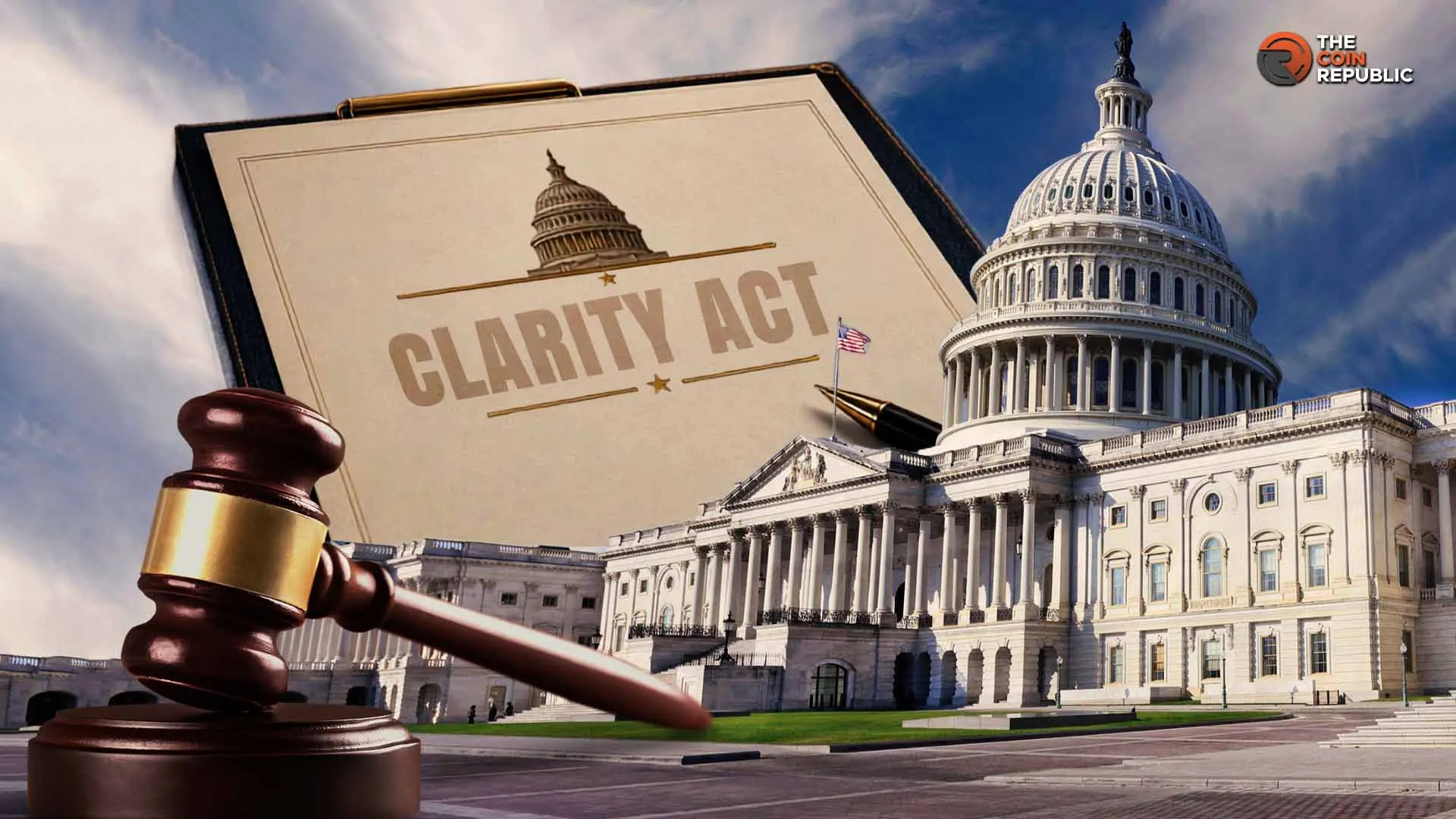
Polymarket Odds Plummet Despite Trump Pushing CLARITY Act With Urgent China Warning

President Donald Trump pressed the Senate to pass the CLARITY Act, warning that China could seize control of crypto and artificial intelligence (AI) if lawmakers fail to act.  The appeal arrives with the Senate back in session and a narrow window before the recess that begins August 8. Lawmakers have roughly four weeks, widely viewed as the bills last realistic chance this year. Yet, success odds on prediction market Polymarket have plummeted by almost 5% today.  Sponsored  Sponsored  Trump Frames the CLARITY Act as a China Race  Trump posted the appeal on Truth Social, linking it to the late Senator Lindsey Graham. The South Carolina Republican, whom he called a supporter of the bill, died over the weekend.  “China, and many other countries, would like to take complete and total control of this major financial ”happening,“ as well as A.I., where we are now leading, but where they are fighting hard. Dont let China win on either subject!!!” Trump articulated.  Follow us on X to get the latest news as it happens  The warning frames a wider contest between Washington and Beijing over digital assets and AI. CLARITY would build on the GENIUS Act, the first major US crypto law, signed last July.  The House passed the Digital Asset

07-14Industry

Paradigm shifts vs bubbles: AI chips and bitcoin show powerful trends can still produce severe corrections

SummaryThe AI infrastructure boom propelled memory-chip companies to extraordinary valuations before sharp pullbacks.Similar reversals in precious metals and Strategy demonstrate that genuine long-term trends are not immune to market cycles.The lesson is that structural trends can be real while their valuations remain cyclical.  The term “paradigm shift” is often applied casually to what may simply be rapid rotations between fashionable assets, the latest example being the AI-driven semiconductor boom.  Hyperscalers such as Amazon (AMZ) and Google (GOOG) are spending heavily on data centres containing thousands of AI accelerators. These systems require enormous quantities of high-bandwidth memory for processing and NAND flash for storage, tightening supply and lifting chip prices.  Micron Technology (MU) produces DRAM, NAND and other memory products, while Sandisk (SNDK) specialises in NAND flash and solid-state storage. Micron rose roughly 700% year over year, and Sandisk gained more than 4,000%. Both have subsequently retreated from their peaks, illustrating how quickly enthusiasm can reverse.  The excitement created the largest U.S. IPO of all-time in SpaceX (SPCX), while SK Hynix (00060), a leading supplier of high-bandwidth memory, raised $26.5 billion through the largest-ever U.S. listing by a foreign company. Its ADRs initially surged, but subsequent volatility exposed the risks of buying into peak optimism

07-13Industry

Cardano's Next Major Upgrade Almost Here: What's Left?

Intersect shares a fresh update on the van Rossem hard fork status in a recent post on X. The intra-era hard fork to Protocol Version 11 will boost Plutus performance, improve ledger consistency as well as the security of nodes. This upgrade also introduces enhanced primitives, VRF key uniqueness, and updated reference input rules.  Intersects update on the van Rossem hard fork is necessitated as the Cardano network approaches the final 12 hours of epoch 642.  Cardano currently has a number of governance actions that are imminent, as well as the hard fork ratification. Currently, the hard fork can ratify on July 8, 13, and 18. It expires on July 18.  Epoch 642 coincides with July 13, with one ratification date left, which is July 18 if all due conditions are not met today. The remaining possible enactment dates are July 18 and 23.  The van Rossem hard fork governance action has made progress in on-chain voting, with DRep and SPO support now above their required ratification thresholds and four of the five required Constitutional Committee approvals recorded.  Ecosystem adoption and readiness continue to increase, while attention shifts to the possible effect of a hard fork ratification on other active governance actions, according to governance-action

07-13Industry

Bonzo Lend loses $9M in oracle exploit on Hedera

Hedera-based lending protocol Bonzo Lend lost about $9 million after an attacker manipulated the price of the SAUCE token used as collateral, allowing the account to borrow assets far beyond the value deposited.  In a preliminary incident report published Saturday, Bonzo said the attacker deposited 250 SAUCE, worth only a few dollars, before submitting a price update that inflated the tokens value by roughly 12 orders of magnitude. The wallet then borrowed 6.63 million USDC and 34.5 million wrapped HBAR from the lending pool.  The case illustrates how oracle failures can turn low-value collateral into a tool for draining large amounts of liquidity from lending protocols, even when the application and underlying network continue operating as designed.  Bonzo attributed the incident to a flaw in Supras onchain oracle verifier, which accepted a manipulated SAUCE price carrying a zeroed signature, that is, a digital signature that has no content or is empty, effectively deleting any existing signature.  The protocol said Supra acknowledged the issue and deployed a fix, while stressing that the incident was not a vulnerability in Bonzo Lend‘s contracts or Hedera’s core network.  Estimated economic impact of the incident. Source: Bonzo Finance  DeFi hacks continue to pressure the sector  The incident adds to a growing number

07-13Industry

The Complete Dive Into Bitget Stocks 2.0 and Its Comprehensive Approach to U.S. Equities

In January 2026, Bitget announced that spot trading volume for stock tokens had surpassed $1 billion, capturing approximately 89% of global market share among Ondo-issued tokenized stock tokens. The trend has also extended into derivatives. According to TokenInsights Q1 2026 Derivatives Market Report, Bitget ranked second globally in stock perpetual contracts, with a 22.61% market share.  These figures matter because they show that demand for stock-linked crypto products is no longer limited to early adopters. Users are looking for ways to access equity markets through the same tools, balances, and interfaces they already use for digital assets. Bitget ranks among the first major crypto exchanges to support tokenized equities at scale, helping establish it as a go-to venue for users seeking stock exposure inside a crypto-native trading environment.  Stocks 2.0 builds on that position by expanding Bitgets equity ecosystem beyond tokenized exposure alone. The upgrade brings together rTokens, which provide tokenized U.S. equity exposure through Reality, and Stock+, which allows eligible users to purchase real U.S. stocks through U.S.-licensed brokers using USDC. With U.S. stock options now being added to Stock+, Bitget is extending that ecosystem from stock access into more flexible trading strategies around market direction, earnings events, and portfolio positioning.  This

07-13Industry

XRP Victory Day marks 3 years since Ripples SEC lawsuit win

The XRP community is marking July 13 as “XRP Victory Day,” three years after Judge Analisa Torres issued a split summary judgment in the SECs case against Ripple.  The 2023 order rejected the regulators claim that every XRP transaction followed the same legal pattern. It also gave public exchange sales a different outcome from direct institutional deals. The SEC had accused Ripple and two executives of conducting unregistered securities offerings through years of XRP sales and distributions across several channels.  The court did not issue a blanket ruling that every future XRP sale falls outside securities law. Torres wrote that XRP, as a token, was not “in and of itself” an investment contract. She then examined how Ripple offered and sold the asset in separate transaction categories under the Howey test.  Exchange and institutional sales received different outcomes  Ripple‘s programmatic sales on exchanges did not qualify as investment contracts, the court found. Those trades used blind bid-and-ask systems. Buyers did not know whether Ripple or another holder sold the XRP. The record therefore failed to show that those buyers reasonably expected profits from Ripple’s work.  The decision went the other way for about $728.9 million in institutional sales. Ripple sold those tokens through written agreements

07-13Industry
1
...
163165
...
1000