Vitalik Buterin Backs AI Model That Deliberately Cut Its Hacking Skills

Ethereum co-founder Vitalik Buterin has backed Moonshot AIs decision to strip top-end hacking skills from its new Kimi K3.1 Pro model. In his view, limiting what AI can do beats limiting who may use it.  However, the safeguard comes at a measurable cost. Moonshot says the filtered model solved 81% of tasks on its internal exploit benchmark, while an unfiltered version solved 90.5%.  Sponsored  Sponsored  Why Vitalik Buterin Prefers AI Limits Over User Checks  Buterin shared his stance, arguing that discriminating against use cases is far less harmful than discriminating against users.  I am okay with Kimi 3.1 deliberately leaving out top-end offensive cyber capabilities from their training data.  Discriminating against use cases is MUCH less bad than discriminating against users. And the world does need all the time it can get to prepare, harden, check old…  — vitalik.eth (@VitalikButerin) October 26, 2026  Moonshot, a Beijing-based AI startup, plans to release the models open weights by November 4. Anyone can then download it and run it on their own hardware.  For that reason, the company says it removed cyber-related data from its training corpus and reinforcement learning environments. General coding tasks stayed in.  According to Vitalik Buterin, AI-powered attacks will eventually hit at full force. Until then, developers need time to

10-26Industry

What Did Jack Dorsey Mean by “There Is No Moat”? Elon Musk and Michael Saylor Weigh In

Block CEO Jack Dorsey posted “there is no moat” on X and drew more than 3.5 million views. The phrase echoes a leaked 2023 Google memo, which warned that open-source AI would erode the lead of Google and OpenAI.  The term comes from investor Warren Buffett, who uses “moat” for a lasting edge that shields a company from rivals. Strategy executive chairman Michael Saylor and Tesla CEO Elon Musk both responded, yet each pointed to a very different kind of protection.  Sponsored  Sponsored  Why Did Jack Dorsey Say There Is No Moat?  Dorsey did not tie the post to any product. However, it came shortly after he introduced Dessa, a voice AI model from a small research lab inside Block.  there is no moat  — jack (@jack) October 24, 2026  The team says it trained Dessa only on human conversation, with no text and no pretrained models. According to Block, a single Nvidia GB200 NVL72 rack was enough.  Dorsey called the model small enough to run on a MacBook. Block has given a small group of AI safety researchers early access before any wider release.  One user linked the “no moat” post to that launch. In their view, a payments company now builds AI that rivals the largest labs, so

10-26Industry

Wall Street Is Moving Finance On-Chain: Who Will Be the Biggest Winners, and What Should Retail Investors Watch Out For?

Traditional finance is entering the crypto world through ETFs, tokenization, and on-chain services. But institutional adoption does not automatically mean ordinary users will benefit. The real questions are: As Wall Street moves on-chain, who gains access to new opportunities, and who is simply being swept along by the hype?  This article is based on the transcript of an X Space livestream organized by WikiBit on the theme “Wall Street Goes On-Chain.” The discussion focused on a straightforward question: As Wall Street moves onto the blockchain, who stands to benefit the most in the crypto world?  The host opened by highlighting a central contradiction. On one hand, traditional finance is accelerating its entry into crypto, with ETFs, tokenized assets, and on-chain services emerging at a rapid pace. On the other, markets remain caught between inflation, interest rates, global risk sentiment, and concerns over user protection. Institutional activity is growing, but confidence has not automatically translated into demand.  This raises two key questions:Who actually benefits from Wall Streets entry into crypto?For ordinary crypto users, what constitutes meaningful adoption?  The livestream featured three guests from different backgrounds: MEJ from Gold House, a representative from RBC Group, and Akai, Community Manager at Bazaars.  The diversity of the panel highlighted

10-26Deep Dive

FCA proposes personal-wallet checks in nonbinding crypto guidance

Britains Financial Conduct Authority has proposed treating enhanced checks on crypto transfers involving personal, or unhosted, wallets as good practice in nonbinding guidance. It also criticizes firms that cannot explain the risk scores they use.  The regulator opened consultation CP26/38 on Oct. 23, seeking feedback on changes to its Financial Crime Guide until Dec. 24, 2026. The proposals address how firms assess transfers and operate their financial-crime controls.  Draft section FCG 3.2.8 lists applying enhanced due diligence, meaning more intensive checks, to transactions involving unhosted wallets as a good-practice example. For someone moving crypto from a personal wallet to a UK firm, the proposed example concerns how the receiving firm checks that transfer.  The proposed guidance is nonbinding. The FCA says the Guide contains no rules and imposes no new requirements, although it expects firms to read and consider it when establishing effective controls. Departing from the guidance would not, by itself, establish a breach of FCA rules.  Risk scores and tracing rules  The monitoring proposals also address how firms reach those decisions. Draft FCG 3.2.5 identifies as poor practice using third-party technology without being able to explain or evidence the basis of its findings or scoring.  It also criticizes rigid rules about how many transaction

10-26Industry

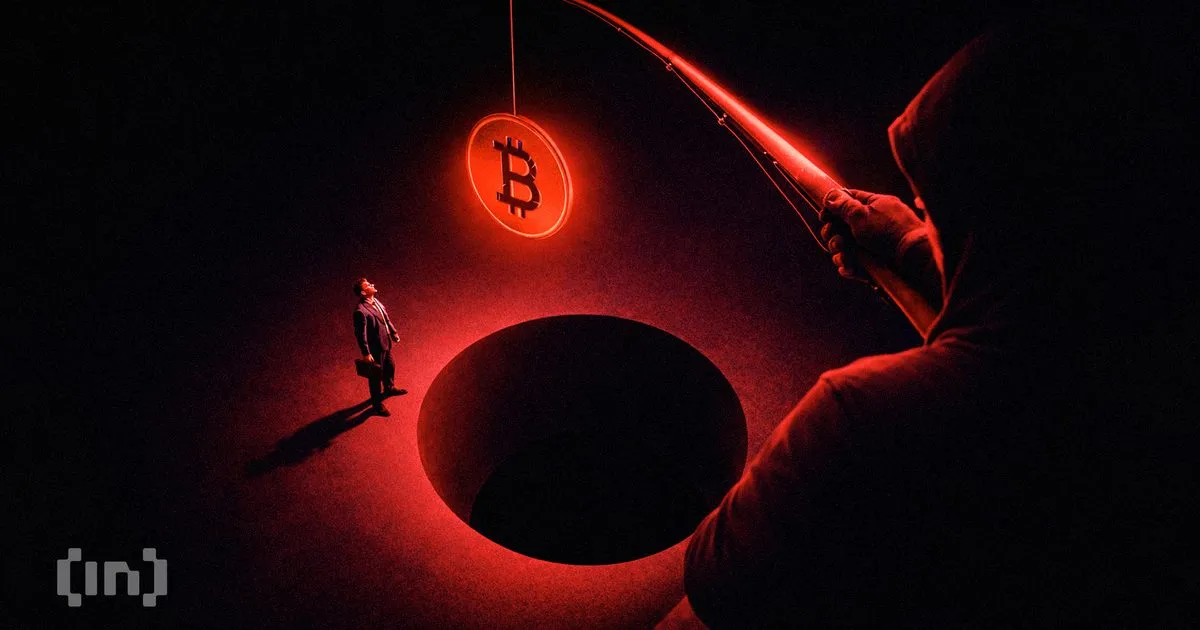
Is Your Passport Wallet Safe? What Foundation Says About the Phishing Emails

Bitcoin wallet phishing emails posing as an urgent Passport recall reached Foundation customers from the companys own domains. The wallet maker blames compromised Cloudflare API keys, yet recipients say the messages also exposed their home addresses.  Foundation builds Passport, a Bitcoin-only hardware wallet. However, its explanation covers how the emails went out, not how attackers knew who owns the devices.  Sponsored  Sponsored  How Did a Fake Recall Reach Real Customers?  The emails arrived on Sunday under an urgent recall banner. They claimed a supplier had modified a display module and that attackers were draining funds from affected devices.  The message urged readers not to wait for a replacement. Instead, a link sent them to foundation.support, a fake site that mimicked Envoy, Foundations companion wallet app.  The page showed an empty wallet with a deposit button, apparently to lure victims into sending Bitcoin.  The Bitcoin wallet phishing lure plays on a real fear. Reports of tampered hardware wallets have spread throughout 2026, which makes a supply-chain warning look plausible.  Foundation responded early Monday on X. According to the company, attackers abused one or more compromised Cloudflare API keys, and it has since revoked every key.  The team says it has also taken down the malicious domain. Moreover, Foundation says funds on

10-26Industry

Fhenix brings encrypted smart contract computation to Ethereum, Arbitrum mainnets

Fhenix has moved its confidential computing technology into production on Ethereum and Arbitrum, allowing smart contracts to process encrypted information without directly exposing the underlying data.  The company announced the mainnet launch on Oct. 21, 2026, alongside the production release of CoFHE, its fully homomorphic encryption (FHE) coprocessor. The infrastructure is designed to let decentralized applications execute operations involving sensitive information while preserving the confidentiality of balances, positions and trading strategies.  The launch addresses a longstanding challenge for blockchain applications: public networks make transactions and contract activity broadly observable, which can complicate their use for financial services that depend on private information.  Fhenix is positioning the technology as infrastructure for confidential decentralized finance and tokenization, with the company identifying a potential $1.5 trillion tokenization opportunity currently constrained by privacy limitations.  How CoFHE processes encrypted data  CoFHE performs computationally intensive encrypted operations offchain before returning results to smart contracts on Ethereum and Arbitrum. According to Fhenix, its dynamic throughput adjusts to demand instead of restricting applications to a predetermined processing rate.  The company is also seeking to simplify implementation for developers. Its approach uses a Solidity import and encrypted data types intended to function similarly to ordinary variables, allowing builders to incorporate confidentiality into existing smart contract

10-26Industry

ECB says digital euro will give Europe control over its payment systems

The European Central Bank has renewed its push for a digital euro as a way to reduce Europes dependence on foreign payment providers, with a pilot scheduled for 2027 and a possible rollout in 2029.  In an October 24 interview with Italian financial newspaper Milano Finanza, ECB Executive Board member Piero Cipollone said Europe needs its own payment infrastructure to ensure that essential financial services can continue operating without relying entirely on companies based outside the region.  Cipollone compared Europes dependence on foreign payment networks to its reliance on external suppliers for energy and defense, arguing that payments should be treated with the same importance.  “In recent years Europe has learned that, for some essential services, we cannot rely only on third parties,” he said.  However, he clarified that European payment sovereignty does not mean excluding international providers. The ECB wants to give consumers and businesses another option that operates on infrastructure controlled within Europe.  Digital euro could reduce Europes dependence on foreign payment networks  Cipollone pointed to the growing use of digital payments as one of the main reasons Europe needs an alternative to existing payment systems.  In Italy, online payments accounted for 24% of total payments in 2024, compared with just 6% in 2019. According

10-26Industry

Anchorpoint weighs retail stablecoin launch after HSBC RedCoin debut

Standard Chartered-backed Anchorpoint has maintained plans to launch its Hong Kong dollar stablecoin for retail customers on a public blockchain, but has declined to commit to a release date after HSBC introduced RedCoin to PayMe users.  According to an October 26 South China Morning Post report, Anchorpoint CEO Dominic Maffei said the company would take a cautious approach to bringing regulated digital money into everyday payments, despite growing competition among Hong Kongs licensed stablecoin issuers.  Previously, the company identified the end of 2026 as a possible timeline for retail access. However, Maffei declined to confirm that target at a Friday press conference, maintaining that the business must prepare its distribution network and customers before proceeding.  Anchorpoint keeps retail stablecoin launch date open  The announcement came shortly after HSBC introduced its Hong Kong dollar-backed RedCoin stablecoin through PayMe, bringing the product to an existing customer base of approximately 3.3 million users.  As crypto.news previously reported on October 23, the bank began a phased rollout allowing customers to activate RedCoin wallets, transfer money to other users, and make payments to participating merchants.  Anchorpoint has chosen a different route for its HKDAP stablecoin, relying on authorized distributors to connect financial institutions, businesses, and eventually retail customers with the product.  Maffei

10-26Industry

Gold Miners Go From Record Month to Washout in 21 Sessions

Nearly 92% of stocks in the VanEck Gold Miners ETF (GDX) now trade below their 50-day moving average. The share last ran this high in late July, just before miners posted a record month.  The reading lands days before Wednesdays Federal Reserve decision, with traders still pricing a possible rate hike this year.  Sponsored  Sponsored  How Gold Miners Went From August Leaders to Oversold in 21 Sessions  SentimenTrader data shows the share of GDX stocks above their 50-day average dropped from over 90% to 8% in 21 sessions.  Gold Miners ETF Breadth. Source: The Kobeissi Letter/SentimenTrader  Follow us on X to get the latest news as it happens  About 90% also trade below their 200-day average, the highest share in 3 months, per The Kobeissi Letter.  Gold has fallen less sharply, trading at $3,983.91, down 3.19% from a month ago. The metal slipped below $4,000 on Friday for the first time since July.  Operating leverage amplified miners gains over the summer. The MSCI global gold miners index jumped 43% in August, while gold gained about 13%.  Sponsored  Sponsored  Miners also trade as stocks, so they caught last weeks equity selloff. Newmont fell 3.7% in Australia on Friday as the ASX mining sector dropped 3.74%, Capital Brief reported.  What Past Washouts Signal for Gold Miners

10-26Industry

Bettors Expect a Democratic Midterm Win. How Gold, Bitcoin, and Stocks Could Feel It

Voters on each side fear what the other party would do with Congress, a CNBC survey shows. For investors, the question is how a Democratic majority could reshape oil, AI, and policy risk.  Polymarket gives Democrats a 93% chance of winning the House and 65% for the Senate. A recent World Gold Council note maps four policy areas a Democratic Congress could influence, each with implications for gold, Bitcoin, and stocks.  Does Gridlock on Spending Help or Hurt Gold?  Spending is the first area. According to the WGC, a Democratic Congress could limit the White Houses ability to pass deficit-expanding bills. Edward Jones similarly expects gridlock to make large new fiscal initiatives less likely.Gold could feel mixed effects. Smaller deficits could ease fiscal concerns and revive demand for Treasuries and the dollar, weighing on gold. However, pressure to reduce tariffs could cut government revenue and widen the deficit, potentially supporting the metal.Stocks: Lower Treasury yields could support equities by reducing borrowing costs and increasing the present value of future earnings. Edward Jones data also shows the S&P 500 has generally risen after midterm elections since 1970, regardless of which party won.Bitcoin (BTC)tends to move opposite the dollar, and Glassnode data shows that inverse

10-26Industry
1
...
128130
...
1000