Zoomex Review 2026: Fees, Leverage, KYC and Safety

Zoomex is built primarily for active crypto traders rather than investors looking for a simple place to buy Bitcoin and leave it untouched.  The platform combines ordinary spot markets with perpetual futures, copy trading, automated strategies and a wallet-connected DEX. Its most aggressive product is a separate 1000x Futures section, where users can select leverage as high as 1,000 times their input capital.  That feature makes Zoomexs central trade-off unusually clear.  Its standard trading fees are competitive. Spot costs 0.1% for both makers and takers, while standard USDT perpetual contracts charge 0.02% maker and 0.06% taker. But on a highly leveraged position, trading commission quickly becomes a secondary issue. Funding, liquidation mechanics, position size and regional eligibility matter much more.  Zoomex has also improved the amount of security and reserve information it publishes. Its current transparency page states that customer assets are backed 1:1 and displays a 100% reserve-coverage figure, while Hacken publishes multiple penetration tests covering Zoomex systems.  Those disclosures are useful, but they need to be read carefully. Zoomexs public reserve page does not provide the same clearly exposed customer-level Merkle liability verification used by some exchanges, and a penetration test answers a different question from whether customer liabilities are fully covered.  For a
09-20Industry Research

Hotcoin Review 2026: Reserves, Fast Listings and Trading Risks

Hotcoin is a centralized crypto exchange built around breadth and speed. Its platform combines spot trading, perpetual futures, copy trading, P2P, Earn products, Web3 features and an increasingly large selection of tokenized traditional-market assets.  That rapid product cycle is one of Hotcoins main attractions. It is also one of the main reasons users need to monitor the platform more actively than they might on an exchange focused on a smaller set of established markets.  New tokens can appear quickly. Futures contracts can be introduced or removed. Blockchain deposits and withdrawals can be suspended for maintenance. Smaller assets can be delisted with a fixed withdrawal deadline. Tokenized stocks may launch with temporary zero-fee campaigns that expire only days later.  The other major issue is custody transparency.  Hotcoin publicized approximately $137.45 million in exchange assets as of June 15, 2026, based on wallet data displayed by CoinMarketCap. But reserve values move with asset prices, deposits, withdrawals and changes in disclosed wallets. At the time of this review in September 2026, CoinMarketCap was displaying roughly $56.7 million in total assets attributed to Hotcoin, substantially below the June snapshot.  That change should not automatically be interpreted as customer withdrawals, a reserve deficit or financial distress. CoinMarketCap itself notes that

09-20Industry Research

KCEX Review 2026: Zero Fees, Restrictions and Risks

KCEX has one of the simplest fee pitches among centralized crypto exchanges in 2026: spot trading costs 0% for both makers and takers, while standard USDT-margined perpetual futures charge 0% maker and 0.01% taker.  There is no VIP ladder to climb before reaching those headline rates, and KCEX now describes its zero-fee spot structure as standard pricing rather than merely a limited campaign.  For an active trader generating substantial turnover, that difference can be meaningful.  But fees are not the hardest part of evaluating KCEX.  Its current User Agreement excludes residents of a long list of countries, including the United States, Canada, Singapore, Indonesia, mainland China and Hong Kong. KCEX simultaneously publishes a U.S. FinCEN MSB registration for a subsidiary, which can easily be misunderstood as authorization to serve American traders even though its own terms explicitly reject U.S. registrations and transactions.  Reserve transparency is another important limitation. Unlike exchanges that publish customer-verifiable Merkle-tree proof of reserves, KCEX does not currently surface an equivalent public verification system. CoinMarketCaps KCEX exchange page currently labels its reserve data as unavailable.  KCEX does have independently inspectable security evidence. Hacken conducted penetration tests covering its Web/API infrastructure, Android app and iOS app in 2025, with most identified issues subsequently fixed.  The

09-20Industry Research

Deepcoin Review 2026: Derivatives, Fees and Account Risks

Deepcoin is built more like a derivatives trading workstation than a simple place to buy and hold crypto.  Its product emphasizes perpetual futures, flexible position management, copy trading, strategy tools and APIs. Traders can use USDT-margined or coin-margined contracts, choose cross or isolated margin, maintain split or merged positions and access market, funding, leverage and position data programmatically.  That makes Deepcoin potentially useful for experienced derivatives traders.  It also makes the platform harder to evaluate through a conventional exchange checklist.  Execution fees are only one part of the cost. Funding, leverage and liquidation can matter substantially more. Account structure also needs to be understood correctly: Deepcoins newer unified-balance tools can display equity across Funding, Spot, USDT Swap, Coin-margined Swap, Copy Trading, Robot and other sections, but those account categories do not automatically form one universal collateral pool. Cross-margin exposure applies according to the trading mode and product being used.  There is also a significant regulatory development that cannot be omitted from a 2026 review.  On July 5, 2026, the Seychelles Financial Services Authority issued a public warning concerning Deepcoin, stating that an entity it identified as DC Group Ltd., formerly DEEPCOIN Global Limited, had not been authorized under Seychelles Virtual Asset Service Providers Act 2024. The

09-20Industry Research

Why Was Bitcoin Rejected at $82K? 3 Reasons Behind the Sunday Pullback

The tension in the Middle East is on the rise once again on several fronts.  Despite the overall macro calamity experienced last week, bitcoins price surged from $75,000 to almost $82,000 within days, hitting its highest level since the start of the month.  However, the breakout attempt was halted at $82,000 due to more worrisome news from the Middle East. Theres also a technical aspect that helped prevent another leg up.  New Escalation  Numerous reports online suggested on Sunday that the United States had warned that hostilities between Saudi Arabia and Iran-backed Houthis have escalated, with some even suggesting that the latter‘s capital was under drone and ballistic missile attacks. BBC added that even some energy sites on the country’s Red Sea coast were targeted.  Saudi authorities reported that they intercepted and destroyed a ballistic missile fired at Riyadh on Saturday evening, claiming that there were no casualties and no new attacks.  “Iranian-supported Houthis have engaged in hostilities against Saudi Arabia, including civilian airports. This military conflict has the potential to escalate rapidly,” said the US State Department. The statement also warned Americans to “seriously reconsider travel to and through the region.”  Meanwhile, Daily Iran News, an X account with over 500,000 followers, claimed that Iran had

09-20Industry

AI Is Rereading Cryptos Old Code, and Finding What Humans Missed

Key TakeawaysZcash had a 4-year-old flaw hiding in its code until Claude Opus 4.8 helped a researcher finally uncover it.Coldcards 2021 firmware flaw preceded more than $100 million in estimated bitcoin thefts across thousands of addresses.Chainalysis says malicious onchain dead-drop activity jumped 440%, showing how quickly AI-assisted threats are picking up steam.  Things are certainly changing fast. An encrypted German Army transmission from July 1941 survived 85 years before an AI-assisted effort finally cracked it this month. The message was almost comically ordinary, essentially someone in Rosenow asking which way to march, but AI agents helped search archives, write code, simulate Enigma, and test possibilities until the old problem gave way. Crypto has spent 2026 discovering what happens when that ability to look again gets pointed at software containing actual money.  AI Goes Hunting Through Old Code  Zcash provided one of the cleanest examples in May. Researcher Taylor Hornby, working for Shielded Labs, used Claude Opus 4.8 in a custom audit agent and uncovered a flaw in the Orchard shielded-pool circuit dating to 2022. In testing, the vulnerability could create unlimited counterfeit ZEC without detection. No theft was established, and developers patched it within days, but a potentially catastrophic bug had survived roughly

09-20Industry

VanEck flags Metaplanet as 'Bad' - Calls its executive pay a 'shareholder trap'

VanEck, a global investment management firm, examined executive compensation across the 10 largest Digital Asset Treasury companies (DATs) and marked Metaplanet as “Bad” on executive compensation practices.  According to VanEck‘s report, Metaplanet’s executive compensation adds to shareholder dilution. Hence, its 14.7% option pool represents potential dilution on a fully diluted basis. This happens along with the firms officer exposure reaching 8.2% and its largest individual officer position sitting at 3.8%.  By comparison, Strategy, BitMine, Hyperliquid Strategies, Sharplink, Tron, and Bit Digital were given the “Good” band. This was because of fixed pools, shareholder approval required for increases, and officer exposure of 1% or less.  For context, Strategy has a fixed 8.35 million-share pool, which is about 2% of fully diluted shares, with executive exposure of 0.5%. On the other hand, BitMines pool is 3.2%, with officer exposure around 1%.  Whereas Twenty One Capital, Strive, and Forward Industries were placed in the “Acceptable” category due to weaker safeguards.  Why did Metaplanet lose the DAT game?  Speaking of Metaplanet, aka Japans MicroStrategy, its structure originated when Metaplanet was a struggling hotel operator and was designed to protect executive compensation from dilution.  After its shift to a Bitcoin [BTC] treasury strategy, the mechanism remained, allowing the executive option pool to

09-20Industry

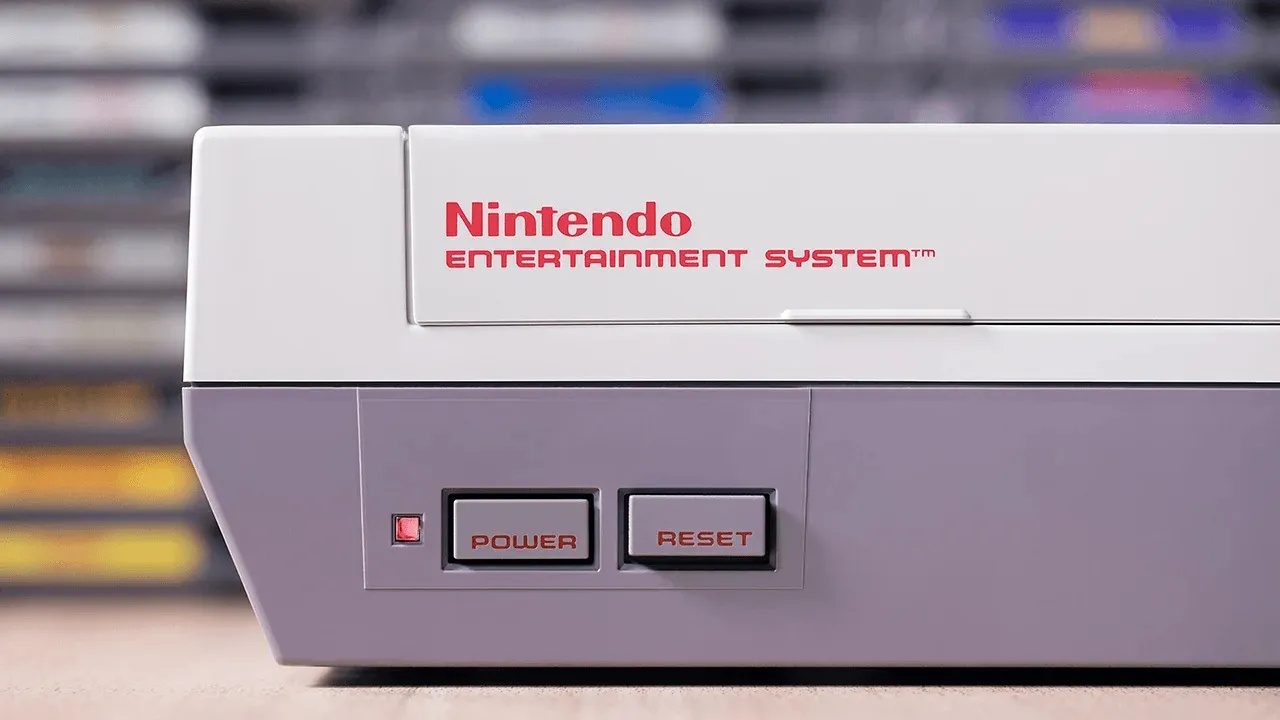
A Factory-Sealed NES Set From 1986 Just Sold for $120,000. Here's Why Old Games Are the New Gold

Key TakeawaysNintendos sealed 1986 NES Deluxe Set fetched a record $120,000 at Heritage Auctions.Heritages $1.8M auction showed sealed gaming collectibles can command six-figure prices.Athlon Sports sees the retro gaming market hitting $4.18B in 2026, with 10% growth ahead.  The plastic wrap on a never-opened 1986 Nintendo Entertainment System Deluxe Set proved more valuable than the console inside when it sold for $120,000 at Heritage Auctions on November 3-4, 2023. Graded VGA 85 NM+ and packed with two controllers, R.O.B. (Robotic Operating Buddy), the Zapper light gun, and boxed copies of Gyromite and Duck Hunt, it set the auction record for a commercially released video game console. Heritages Valarie Spiegel called the sale “This event was a walk through video game history,” and the numbers since have made clear why collectors showed up ready to pay like investors. Athlon Sports now pegs the global retro gaming collectibles market at $4.18 billion in 2026, with millennials and a growing wave of Gen Z buyers chasing sealed, graded rarity.  Three years can feel like a lifetime in tech, but in collectibles it can turn a single sale into a benchmark. One such benchmark came out of Dallas, and it keeps getting cited as the retro

09-20Industry

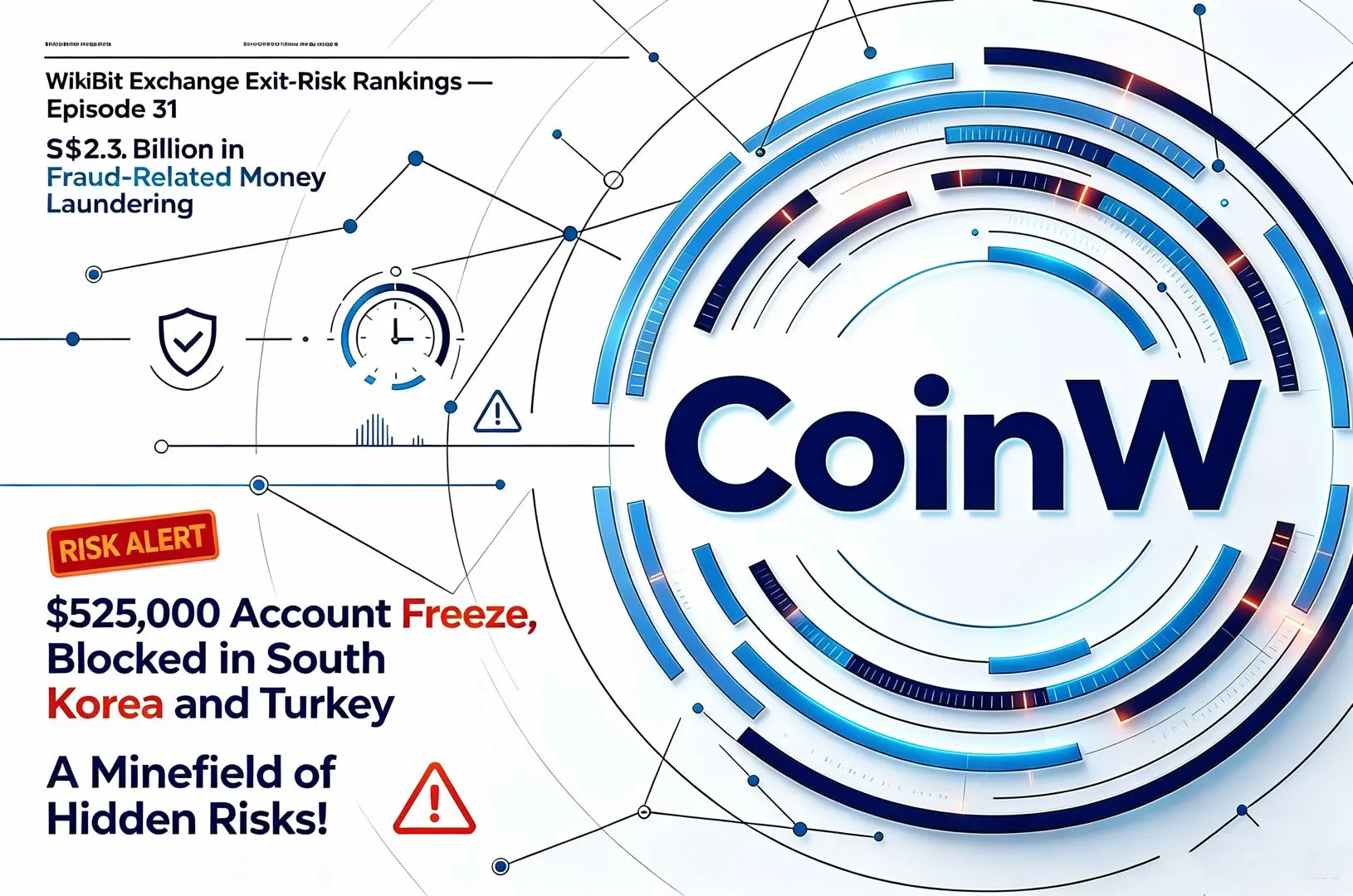
WikiBit Exchange Exit-Risk Rankings — Episode 31: CoinW: NT$2.3 Billion in Fraud-Related Money Laundering, $525,000 Account Freeze, Blocked in South Korea and Turkey

Introduction: An Exchange That Keeps Winning Awards — While Facing Serious Legal and Regulatory Action  For the first 30 episodes, we dug into a series of exchanges ranging from HashKey to Deepcoin. Today, in Episode 31, were taking on one of the most “split-personality” exchanges of them all — CoinW.  Its résumé under the “marketing” section is almost fully maxed out: “Founded in 2017,” “serving more than 20 million users,” “daily trading volume exceeding $5 billion,” “a team of more than 1,000 people from 30 countries,” “global ambassador Luka Modrić,” “Europes Most Trusted Crypto Exchange” at the 2026 Next Block Expo, “1,000+ cryptocurrencies, 200x leverage,” and “ISO 27001 certification.”  Sounds like the perfect profile of a top-tier exchange, doesnt it?  But on the other side of the story: in July 2026, a Taiwanese court sentenced Shi Qiren, CoinW‘s Taiwan regional head, to 22 years in prison at first instance, finding that CoinW had colluded with a fraud syndicate and used more than 40 franchise stores to launder over NT$2.3 billion, involving more than NT$1.25 billion in fraudulent proceeds and 1,529 victims. Turkey’s Capital Markets Board (SPK) imposed an access ban on CoinW. South Koreas Financial Intelligence Unit (FIU) identified CoinW as a key enforcement

09-20Deep Dive

Ourbit Review 2026: Zero Fees, Reserves and Trading Risks

Ourbit has positioned itself at the aggressive end of the centralized-exchange market: zero-fee spot trading, rapid token listings, meme-coin markets, high-leverage futures and an expanding range of tokenized stocks and other traditional-market products.  The most unusual part is the spot fee.  Ourbit currently charges 0% maker and 0% taker across its standard spot markets, with no VIP threshold or platform-token requirement. The exchange describes this as its standing fee structure rather than a short-term rebate campaign.  That makes the headline cost genuinely competitive.  But it also makes execution quality more important. On a thin meme coin, a trader can save the entire trading commission and still lose several percentage points to spread and slippage. Futures introduce a different cost structure again, while withdrawal fees depend on the network.  Ourbit also provides a proof-of-reserves system covering BTC, ETH, USDT and USDC, with user-level open-source verification. The scope is narrower than the phrase “all assets backed 1:1” may initially suggest: its published PoR includes wallet, spot and futures balances but explicitly excludes assets locked in financial products.  For users evaluating Ourbit in 2026, the most useful questions are therefore not whether spot trading is really free. It is.  The more important questions are how deep the market is, which

09-20Industry Research
1
...
103105
...
1000