Wells Fargo and five others object to OKX-ICE tokenized stock listings: Report

Six more companies have reportedly filed objections to having their stocks listed in tokenized form on the proposed platform as part of a joint venture between cryptocurrency exchange OKX and the New York Stock Exchanges parent company, the Intercontinental Exchange (ICE).  According to a Friday Reuters report, the proposed stock platform, called OKXICE, had 22 companies total objecting to having their US stock listings tokenized. Among the most recent objections reportedly included Wells Fargo, Arm Holdings and Intuit, adding their names to Microsoft and Googles parent company Alphabet in the last week.  Notably, 16 of the companies were listed on Nasdaq, while only six of the stocks were available on the NYSE. Nasdaq released guidance for companies considering the US Securities and Exchange Commission (SEC) innovation exemption for trading tokenized stocks in September, noting issuers “must be cautious about their participation,” saying “consequences for liquidity, price discovery, and long-term shareholder value may not become apparent until well after the experiment is underway.”  Speaking to Cointelegraph on Tuesday, OKXICE co-chair and former New York Governor Andrew Cuomo said that company expected there to be more objections in an effort to avoid being the first ones testing the stock model. The venture proposed 62 companies


10-24Industry

JPMorgan's JPM Coin Shows Zero Supply on Ethereum (ETH) After Oct. 19 Launch

Zero Supply on JPMDs Ethereum Contract  JPMorgans deposit token has been live on Ethereum ($ETH) since Oct. 19, and the contract data so far reads a flat zero. As of Oct. 22, the Ethereum deployment of JPM Coin (JPMD) showed zero circulating supply and zero recorded transfers, with exactly one allowlisted address registered in the verified smart contract. The bank, whose shares trade under JPMorgan (JPM), opened the token to approved institutional clients on the network that day, extending a rollout that began in November 2025 on Base, Coinbases Layer 2 network. The Base contract tells a quieter version of the same story: about 1,001,000 tokens held across two addresses, unchanged since Nov. 20, 2025. JPM Coin is a tokenized claim on dollar deposits held at the bank, and its structure differs from an open stablecoin: the contract sits on a public blockchain, but only approved customer addresses can receive the token. Sentora, the on-chain research firm behind the review published Oct. 23, notes that an address count measures registered addresses, not customers or actual users, and that a standing supply figure cannot capture payments where issuance and redemption happen within the same day. In plain terms, supply is the amount

10-24Exchange

Aave changes USDT borrowing rules and loan costs suddenly jump

Aave has lowered the utilization threshold at which borrowing rates for Tethers USDT rise sharply on its Ethereum Core market, making loans more expensive sooner as pool liquidity tightens.  Related Asset Tether USDT · Stablecoin  Using the supply balance in an Oct. 20 recommendation by DeFi risk service provider LlamaRisk, the shift corresponds to roughly 57.8 million USDT more modeled unborrowed liquidity at the threshold.  The change was executed on Oct. 21 in Ethereum block 26,241,799. The threshold fell from 94% utilization, the share of borrowed pool liquidity, to 92%. Borrowers can still go beyond that point, but the rate climbs more sharply once they do.  Related Asset Ethereum ETH · $2,397.26 24-hour change: up 0.35%  The trade-off for lenders is earlier pressure on borrowers to preserve withdrawal headroom. The intended cushion remains available to be borrowed or withdrawn.  The price of earlier withdrawal headroom  Aaves two-slope model increases borrowing rates gradually up to an optimal utilization point, often called the kink, then more sharply between that point and full utilization. Lowering the kink moves the more expensive part of the curve earlier.  The deployed USDT parameters at the Oct. 23 block were a 92% optimal usage ratio, a zero base rate, a 4.5% first slope, and a

10-24Industry

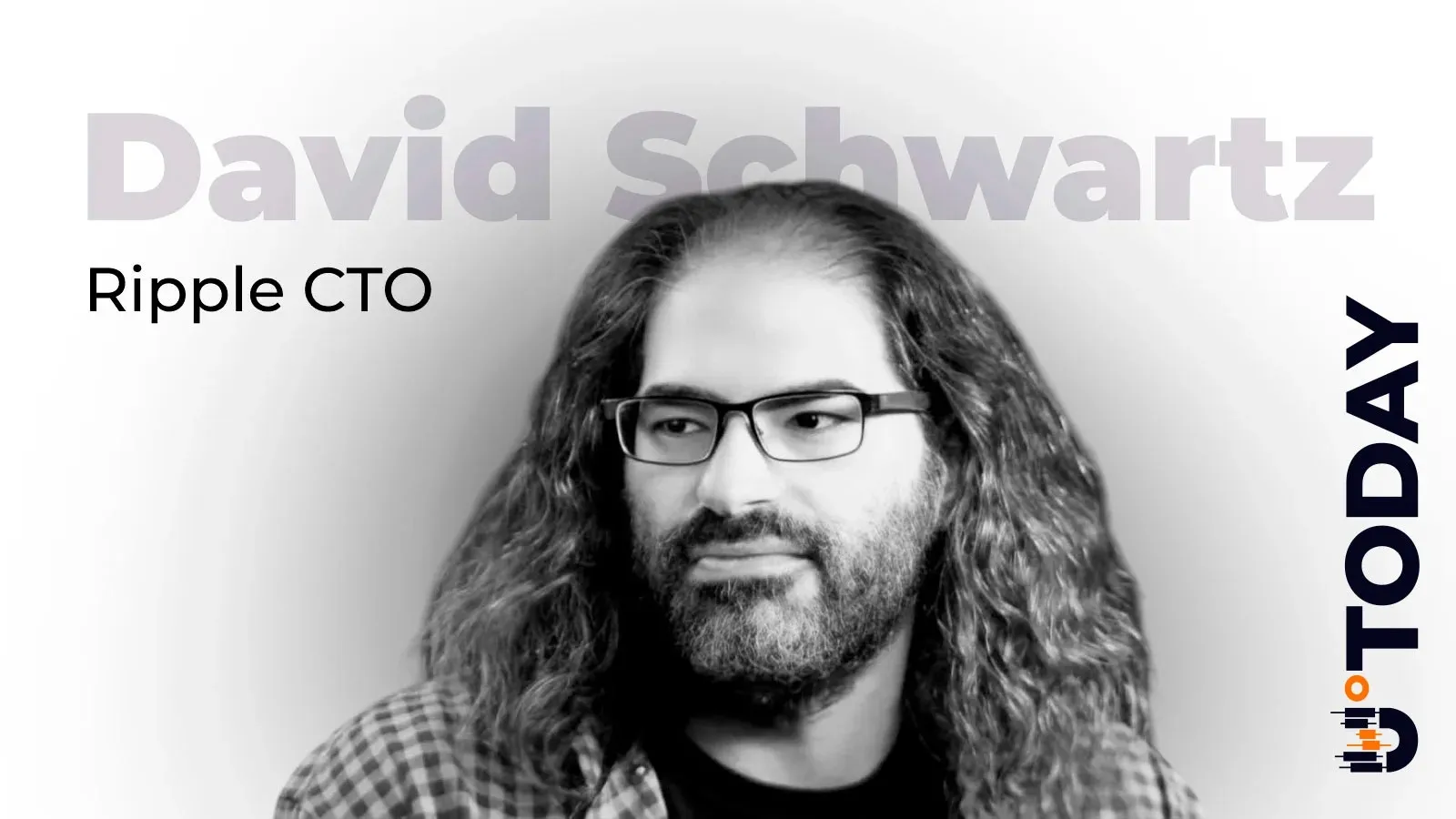
XRP Price May Benefit From XRPL Success, Ripple CTO Says

David Schwartz, Ripples CTO emeritus and one of the original architects of the XRP Ledger (XRPL), has argued that the networks growing adoption could eventually translate into stronger demand and higher prices for its native cryptocurrency, XRP.  In a recent discussion on X, the prominent blockchain developer expressed skepticism about the possibility of the XRP Ledger becoming a major financial infrastructure platform without its native token benefiting from that success.  “I think a world where XRPL is highly successful in financial applications but XRP does not have high demand and value is very unlikely,” Schwartz wrote.  According to Schwartz, XRP possesses several unique advantages within the network that could help drive its long-term demand.  For starters, XRP is the only native, counterparty-free asset on the XRP Ledger, meaning that it does not depend on any third-party issuer.  Moreover, XRP is required to pay transaction fees and maintain account reserves on the network.  “All of those things can help drive value and demand,” Schwartz explained.  His comments address a persistent debate within the XRP community about whether the growing adoption of the XRP Ledger necessarily translates into increased demand for XRP itself.  XRP could thrive even if Bitcoin dominates  Schwartz also outlined a hypothetical scenario in which Bitcoin becomes the

10-24Industry

IRS plans lower tax disclosure penalties, including for crypto: Forbes

The US Internal Revenue Service (IRS) is preparing to overhaul its voluntary disclosure program, with plans to reduce penalties and accelerate the resolution of tax violations, including those involving cryptocurrencies, according to a Friday report by Forbes.  IRS Criminal Investigation Chief Jarod Koopman said the agency aims to introduce the revised program before December, with a target of resolving cases within 120 days of taxpayers completing the required submission process.  The overhaul would reportedly not establish a separate disclosure process for digital assets. Koopman told attendees at the UCLA Extension Tax Controversy Conference that the IRS would handle digital assets through the same voluntary disclosure procedures used for other forms of tax noncompliance.  The IRS official also indicated that penalties under the revised program would be substantially lower than those currently imposed, although he did not provide specific figures. The agency is considering allowing taxpayers to settle outstanding liabilities through installment plans or offers in compromise.  The proposed changes would mark a shift from the existing process, which can take a year or longer to complete, according to Forbes. The IRSs current voluntary disclosure program is intended for taxpayers whose willful failure to comply with tax laws could expose them to criminal prosecution, rather

10-24Industry

UK’s FCA says crypto apps may need licenses when algorithms choose trade routes

Britains financial watchdog warned that crypto trading apps could need regulatory approval if their software decides customer transactions.  In draft guidance published Oct. 21, the Financial Conduct Authority (FCA) said applications that select trading venues or transaction routes based on assessments of price, liquidity, costs or execution speed may be arranging crypto deals, an activity requiring authorization under rules taking effect in October 2027.  The interpretation could bring decentralized finance (DeFi) aggregators and automated trading interfaces within the UKs licensing regime, potentially forcing operators to obtain regulatory permission or change how their software handles customer trades.  The proposal forms part of the FCAs efforts to define which crypto businesses qualify for exemptions from the new framework, scheduled to take effect on Oct. 25, 2027.  DeFi trading algorithms face licensing scrutiny  The FCAs consultation focuses on a technical-services exemption intended to protect software providers whose applications simply connect customers to third-party trading platforms or decentralized protocols.  Under the proposed interpretation, an interface that transmits customer instructions without influencing their execution may qualify for the exemption.  However, applications that evaluate competing liquidity sources, recommend trading venues, or determine how transactions are executed could be performing activities that require regulatory authorization.  That distinction matters for DeFi aggregators, which often compare prices

10-24Industry

Senate Democrat Probes Tether Payments to Ex-White House Crypto Advisers Firm

In briefSen. Richard Blumenthal asked Tether to hand over records on its dealings with Bo Hines and his consulting firm, Nxum, by Nov. 3.The Wall Street Journal reported that Nxum earned $6.3 million from a Tether deal struck while Hines, who kept a one-third stake, helped craft the GENIUS Act.A Nxum representative said Hines wasnt involved in the deal and received no Tether-derived funds while in government.  Tether is facing fresh scrutiny in the Senate over millions of dollars that reportedly flowed to a firm co-owned by Bo Hines while he helped shape U.S. stablecoin law at the White House.  Sen. Richard Blumenthal, D-Conn., the top Democrat on the Senate Permanent Subcommittee on Investigations, sent Tether CEO Paolo Ardoino a letter Thursday demanding records of the companys dealings with Hines and Nxum, the consulting firm he co-founded. Blumenthal gave Tether until Nov. 3 to respond.  Myriad: Who will win the midterms? Click to make your prediction.  Hines was executive director of President Donald Trumps Presidential Council of Advisers for Digital Assets and a key architect of the GENIUS Act, signed in July 2025. He left the White House on Aug. 9, 2025, and Tether named him CEO of its new U.S. division the following

10-24Industry

JPM Coin has zero Ethereum supply after launch, Sentora says

JPMorgan‘s JPM Coin has recorded zero supply and zero transfers on Ethereum in a contract review by Sentora, days after the bank announced the deposit token’s arrival on the network.  SummarySentora reported zero JPM Coin supply and transfers on Ethereum, with one allowlisted address.JPM Coins Base supply remained near $1 million across two addresses, according to Sentora.JLTXX recorded $400 million in Ethereum redemptions as its Solana deployment reached $450 million.Sentora found no live on-chain integration connecting JPM Coin with JPMorgans funds or DeFi protocols.  Sentora said its review found exactly one allowlisted address in the verified Ethereum contract, while the tokens Base deployment held roughly $1 million across two addresses, unchanged since November 2025.  The research firm‘s findings cover the deposit token and separate movements in J.P. Morgan Asset Management’s tokenized liquidity fund. Its briefing reported $400 million in JLTXX redemptions on Ethereum across Oct. 21–22, alongside a rise in the funds Solana deployment from near zero to $450 million.  Sentora attributed those figures to its contract-level analysis. The timing does not establish that the same investors redeemed on Ethereum and subscribed on Solana, and the briefing did not identify transactions connecting the two movements.  You might also like:  JPMorgan brings JPM Coin to Ethereum for

10-24Industry

Bitcoin security debate turns to AI phishing after CZs warning

Binance founder Changpeng Zhao has warned that artificial intelligence can harm Bitcoin users through leaked personal data and social engineering without breaking the cryptocurrencys cryptography, according to posts from CoinMarketCap and Bitcoin Archive.  CoinMarketCap described Zhaos warning as a concern about more advanced phishing enabled by exposed information, while Bitcoin Archive attributed to him a claim that banks rely on weaker encryption than Bitcoin. Neither post in the screenshot provides the algorithms, key lengths, or bank systems needed to check that comparison.  FBI guidance documents AI-assisted financial deception  The FBIs December 2024 warning describes criminals using generative AI to make fraud more convincing and reach potential victims with less effort. Its examples include fake cryptocurrency investment websites, fabricated social media profiles, and chatbots that direct visitors toward malicious links.  Criminals can use generated text and translations to remove spelling and grammar mistakes that might otherwise expose a scam, the agency said. Its guidance describes synthetic images used for false identities and fraudulent identification documents, alongside video calls impersonating executives or other authority figures.  The FBI warned that cloned audio can imitate relatives seeking emergency payments or be used to impersonate bank customers. Such examples concern deception and identity abuse; the advisory does not report AI

10-24Industry

SpaceX Filing Gives Elon Musk the Final Word on Tesla Merger He Says Hes Staying Out Of

In briefA SpaceX SEC filing states any merger with Tesla requires approval from its “controlling shareholder”—Elon Musk, who controls roughly 85% of the companys voting power.Musk recused himself from both special committees but publicly endorsed the deal; his comments reportedly created a “mess” for the independent process.Tesla shareholders must clear a 50%-of-all-outstanding-shares approval threshold; a vote is expected at or near Teslas December 3 annual meeting.  Elon Musk recused himself from the SpaceX-Tesla merger talks. His company‘s SEC filing suggests that doesn’t mean much.  SpaceX‘s October 22 10-Q disclosed that any potential combination with Tesla “would be subject to further approval by our special committee, our board of directors and our controlling shareholder.” Musk controls roughly 85% of SpaceX’s voting power. He is the controlling shareholder.  Myriad: How low will Tesla stock go? Click to make your prediction.  Both companies formed special committees on October 20 to evaluate a proposed deal analysts estimate could create a combined entity worth around $3.5 trillion. Musk described staying out of the talks as “an odd kabuki dance where two groups of people are talking, and I can‘t be in the conversation.” The filing language suggests he’ll have the last word anyway.  Elon Musk explains where a SpaceX–Tesla merger

10-24Industry
1
...
99101
...
1000