






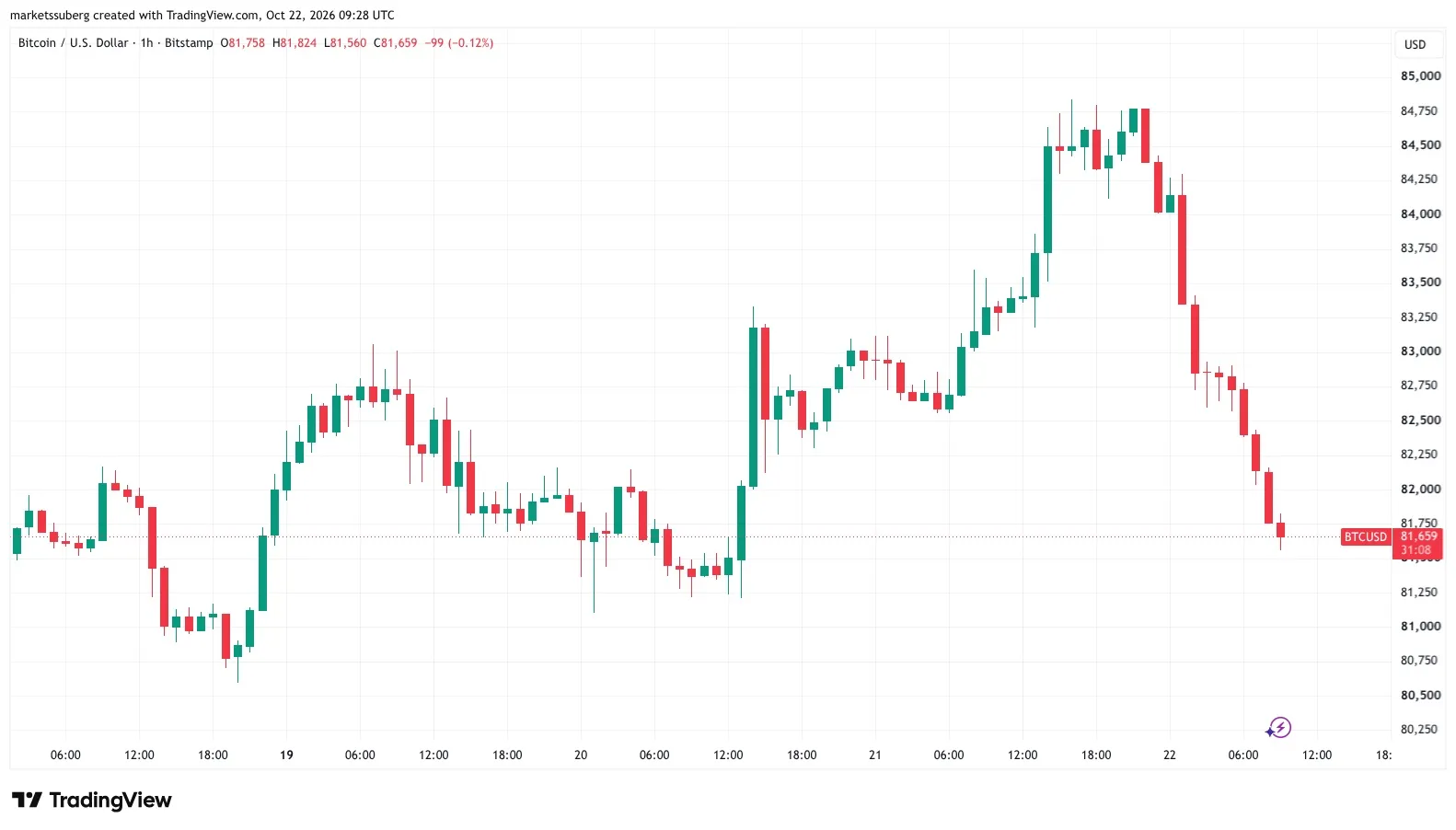
Bitcoin (BTC) fell nearly 3% on Thursday after an attempt to break higher was rejected near $85,000.
Key points:
- Bitcoin returned to near $81,500 after Tesla reported a lower-than-expected Q3 capital expenditure (capex) of $4.73 billion.
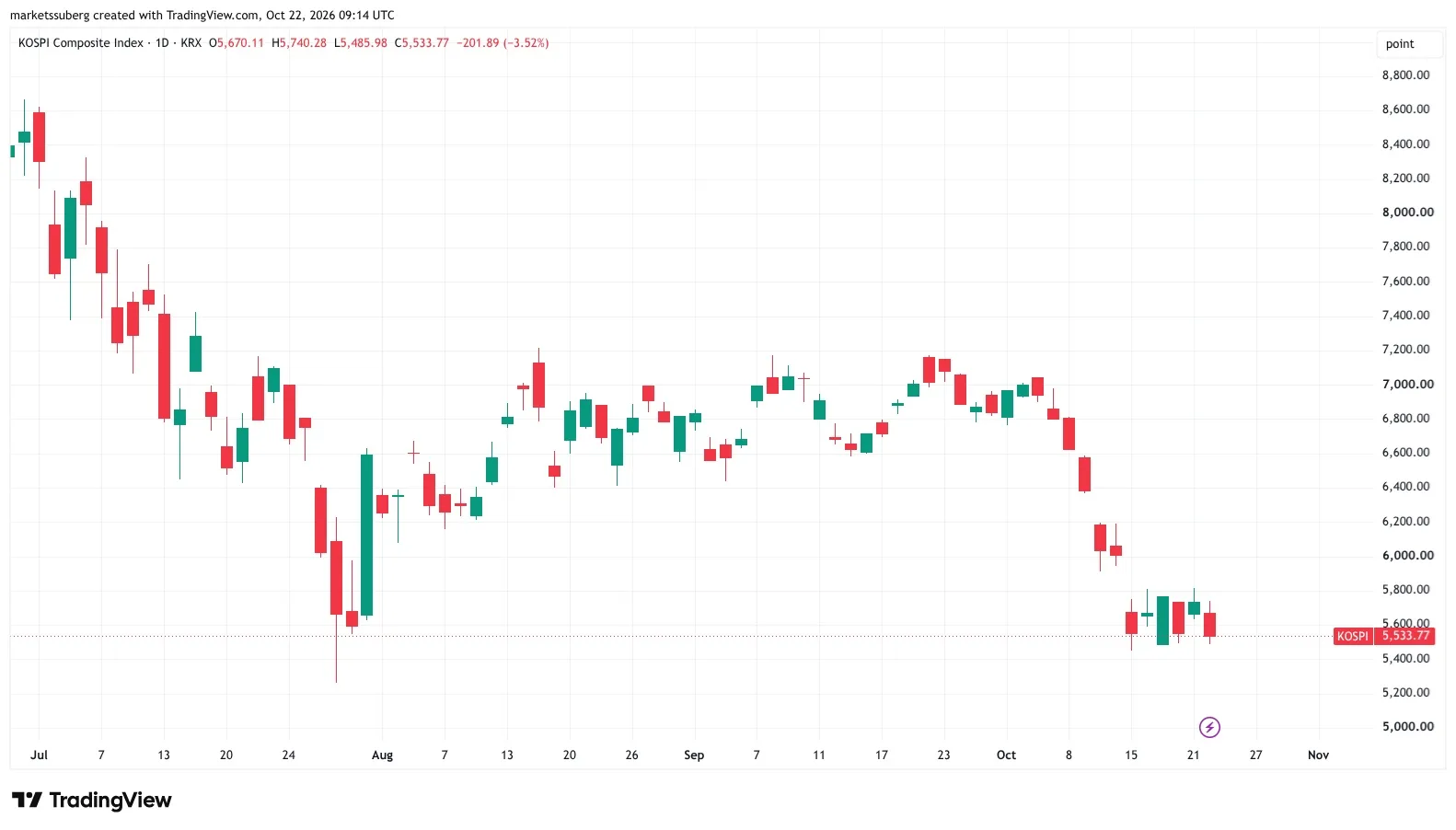
- South Koreas KOSPI Composite Index saw fresh weakness, closing down 3.5% on Thursday.
- BTC price action rejected from a resistance trend line at $84,840, preserving a pattern of lower highs.
Tesla capex underspend raises questions
Data from TradingView showed BTC/USD retracing around Wednesdays daily close, subsequently returning below $82,000. The pair gave back the entirety of the gains made on that day, when price peaked at around $84,840 on Bitstamp.
Higher-than-expected US corporate earnings had helped spark a rally in both crypto and stock markets. However, results from Tesla after the Wall Street closing bell did not provide the same promising signals as seen from SpaceX and General Motors earlier in the week.
The company reported Q3 revenue of $28.05 billion, just short of Bloomberg‘s $28.13 billion estimate. However, capital expenditure came in at $4.73 billion, well below the projected $7.96 billion. The capex numbers appeared to fuel concerns over the AI sector as markets recovered from last week’s Asia tech-stock sell-off.
“Lower capex suggests less of an ‘all-in’ approach to the AI arms race than one would expect from Elon,” Ryan Lee, senior vice president of product and strategy at Direxion, told Reuters, referring to Tesla CEO Elon Musk.
On the companys earnings call, Musk said spending would rise through 2028.
“I think capex is actually ending up being a little lower than we anticipated, but we‘ll start to become more meaningful next year. And then noticeable in the tens of billions in ’28,” he said, quoted by Bloomberg.
South Korea‘s tech-heavy KOSPI Composite Index finished Thursday’s trading session down 3.52%, struggling to sustain a recovery after dropping to 5,460 points last week, its lowest level since late July.
Bitcoin sees lower high with resistance trend line still in place
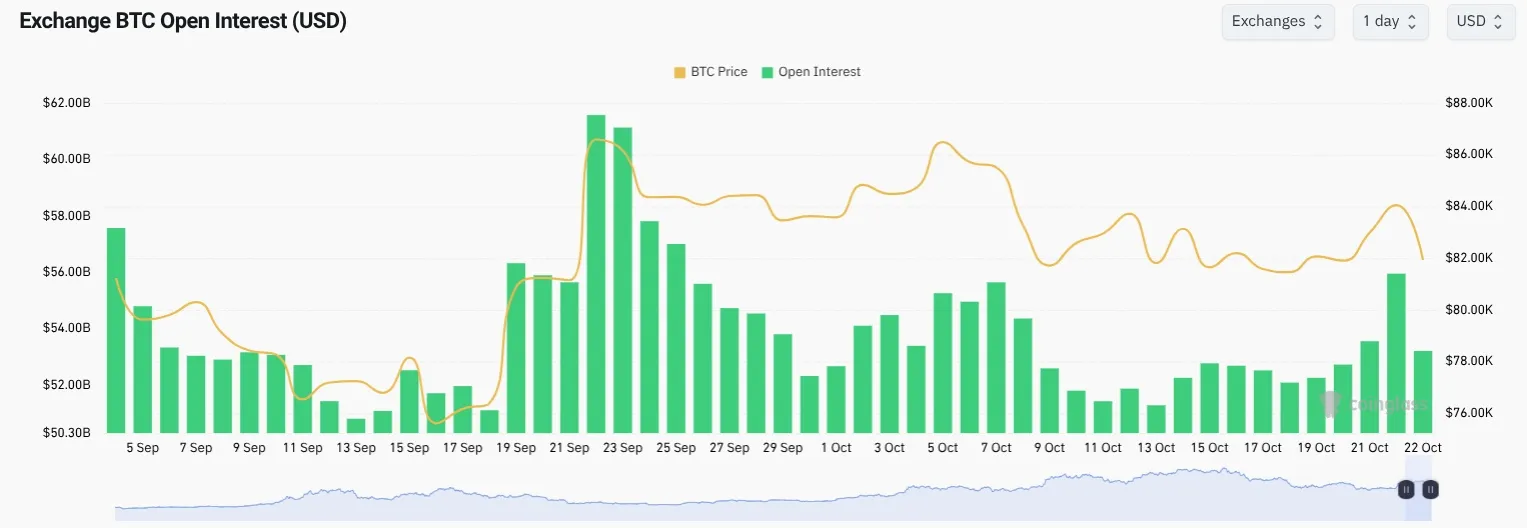
Onchain data showed a marked increase in open interest (OI) across crypto trading platforms prior to Bitcoins reversal.
Related: XRP 30-day exchange inflows pass 6B tokens as whales move to the sidelines
OI reached $55.95 billion late Tuesday, per CoinGlass figures, after gaining 4.5% over 24 hours to reach its highest tally since Sept. 25. Such increases in OI heighten the markets susceptibility to long or short cascades that can turn brief reversals into deeper corrections.
On three-day time frames, BTC/USD saw rejection at a downward-sloping trend line, preserving a cycle of lower highs. On Tuesday, crypto trader and analyst Rekt Capital argued that this trend line resistance needed to be broken as a prerequisite for sustained upside momentum.
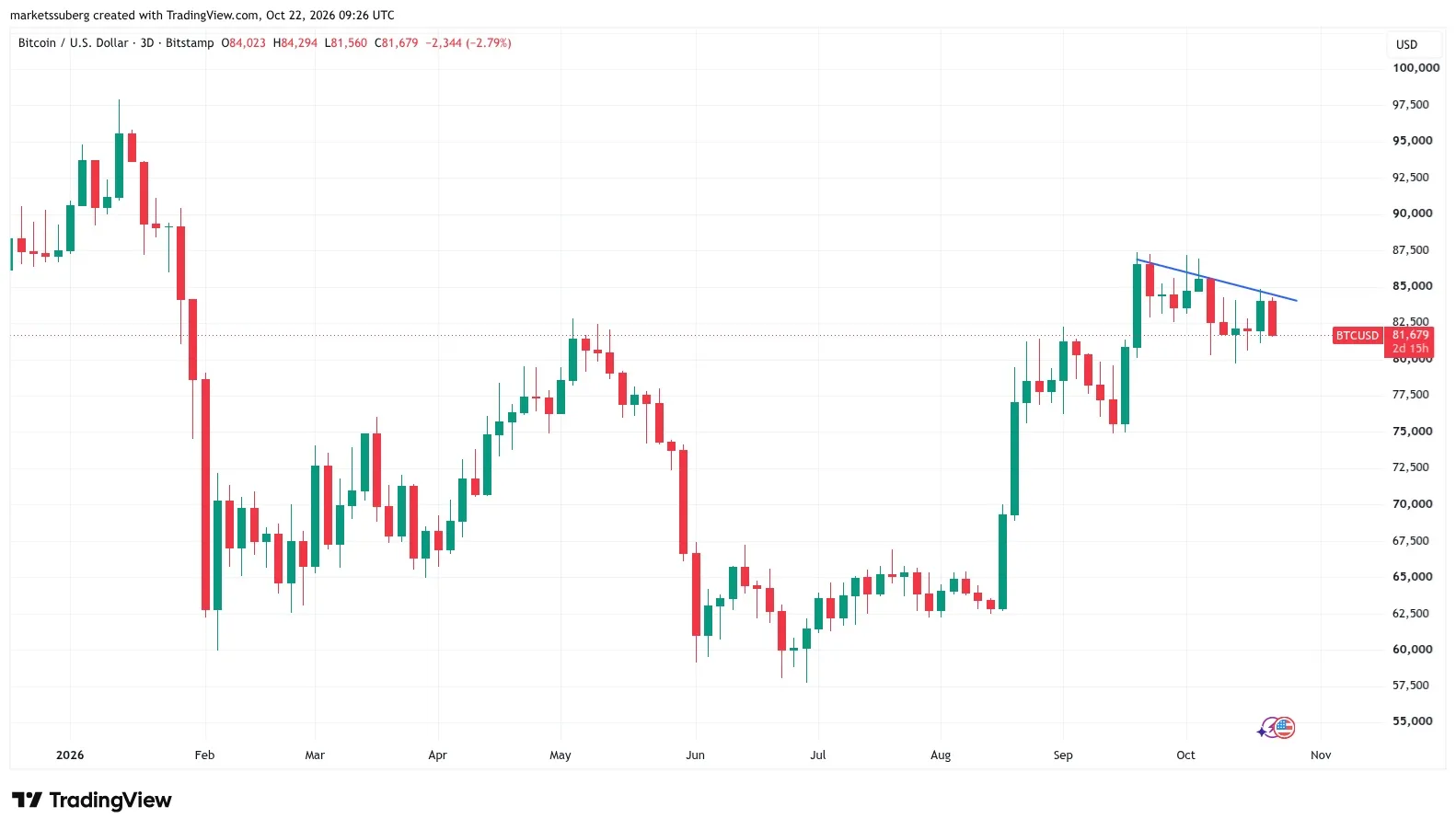
BTC/USD 3-day chart with resistance trend line. Source: Cointelegraph/TradingView
Previously, Cointelegraph reported on the area between $80,000 and $81,500 now forming key support, because it hosts the cost basis for the US spot Bitcoin exchange-traded funds (ETFs).