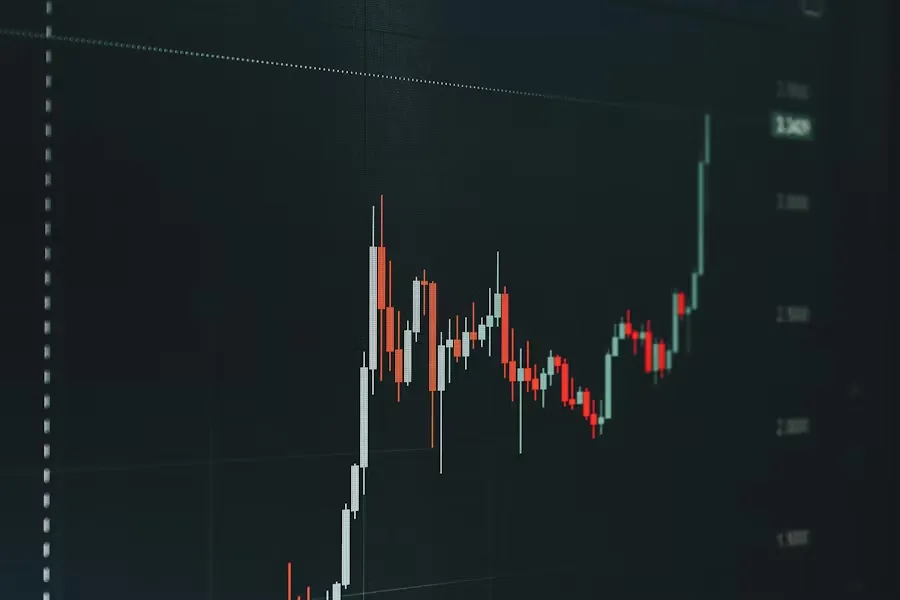
Iran holds 1,000 pounds of enriched uranium, complicating US acquisition

Tech  Iran holds 1,000 pounds of enriched uranium, complicating US acquisition  Irans possession of 1,000 pounds of 60% enriched uranium makes US acquisition by May 31 unlikely. The Iran agrees to surrender enriched uranium by April 30, 2026 market has collapsed to 0.8% YES, down from 6% just 24 hours ago, as the massive stockpile with no peaceful use makes any near-term deal harder to structure.  With only six days left on the April 30 contract, traders are pricing in almost no chance of a diplomatic agreement. The June 30, 2026 market sits at 21.5% YES, suggesting traders see some possibility of movement over the next two months but nothing close to a consensus expectation.  The Iran uranium surrender market saw $57,314 in USDC traded over the last 24 hours, with the largest price movement being a 1-point spike at 11:14 AM. It would take $9,561 to move the April 30 odds by 5 percentage points, meaning a single large trader could meaningfully shift the market.  The short-term prospect of Iran agreeing to surrender its enriched uranium is near zero by the markets own pricing. Buying YES at 1¢ is a lottery ticket: a 100x return, but only if an agreement materializes in the next

04-28Industry

Venom Foundation Says 80% of Web3 Projects Are Not Ready for Institutional Scale

Venom Foundation has released new research arguing that most of todays Web3 ecosystem is still not prepared for serious institutional adoption, even as traditional finance continues to pour more capital into digital assets. According to the foundation, roughly 80% of Web3 projects lack the architectural, security, and operational foundations needed to handle institutional-grade demand.  The report combines on-chain data, incident analysis from the April 18 Aave–Kelp DAO exploit, findings from the 2026 Chainalysis Crypto Crime Report, EY-Parthenons 2026 institutional investor survey, and recent academic work on blockchain scalability. Its central message is blunt: institutional money is arriving faster than the infrastructure is capable of safely absorbing it.  Venoms research points to three major weaknesses that it says continue to hold the sector back. The first is the way total value locked, or TVL, is used as a proxy for success. The foundation argues that TVL often creates an inflated picture of adoption and maturity, masking structural risks that matter far more to institutions than headline numbers.  The second weakness is cross-chain bridging, which Venom says remains the largest source of losses in Web3. The third is composability, a core feature of many DeFi systems that can turn a single localized failure into a

04-28Industry

Centene’s Obamacare Enrollment Drops By 2 Million After Congress Strips Subsidies

Health insurer Centene reported first quarter net income of more than $1.5 billion despite a drop of 2 million enrollees in individual coverage under the Affordable Care Act also known as Obamacare.  Centene is one of the nation‘s largest providers of Obamacare and the enrollment disclosure Tuesday as part of the company’s first quarter earnings report is a snapshot into what health insurers and Americans who buy their coverage are facing after Congress and the Trump administration failed to renew enhanced subsidies.  Centene said Tuesday its enrollment in “marketplace” plans it sells under the Ambetter brand dropped to 3.58 million at the end of the first quarter compared to 5.54 million at the end of last year and 5.62 million in the year ago quarter.  The big dip in Centene‘s enrollment is what Democrats in Congress and health insurance industry analysts said would happen after Republicans in Congress and the Donald Trump White House wouldn’t agree to extend enhanced tax credits for buyers of Obamacare. A KFF analysis last fall said middle income Americans “as well as those with low incomes” will see “major out-of-pocket premium increases” if tax credits arent extended. And they are with customers reporting a doubling and even tripling

04-28Industry

DOGEBALL’s DOGEPAY and DOGECHAIN Combo Takes Aim at TRON’s ICO Fame

The biggest crypto regret is often not buying early when the numbers were still small. TRON (TRX) once looked risky, crowded, and easy to ignore, yet early buyers who understood the upside saw one of cryptos strongest ICO-era runs. That same early-entry mindset is why many investors are now watching DOGEBALL ($DOGEBALL) as the next 100x crypto to buy in the DOGEBALL crypto presale 2026 market.  This blog looks at TRONs missed ICO opportunity, then breaks down why DOGEBALL is attracting attention before its presale closes. With a live crypto presale price of $0.0004, a planned launch price of $0.015, 227K+ raised, 820+ participants, and a limited PAY35 bonus code offering 35% extra $DOGEBALL tokens, DOGEBALL is building a strong case for early buyers.  TRON Turned a $0.0019 ICO into a 150x Lesson for the Next 100x Crypto to Buy  TRON (TRX) launched with an ICO price of around $0.0019 and later climbed above $0.30, giving early buyers gains of more than 150x. At the time, many doubted TRON because the market was already full of blockchain projects, but strong marketing, exchange visibility, and a clear content-sharing vision helped it break through.  That is the emotional lesson many investors remember today. TRON did not

04-28Industry

India Warns of Trust Wallet Scam Using Fake Verification Links

The advisory points to a growing trend of “wallet drainer” attacks. These scams target retail cryptocurrency users who rely on self-custody wallets.  How the Scam Operates  Scammers first approach potential victims on peer-to-peer trading platforms such as Binance. Once contact is established, conversations move to private messaging platforms like WhatsApp or Telegram. The aim is to reduce the chances of detection or intervention by platform operators.  The attackers then introduce a fabricated requirement described as “crypto asset verification”. Victims are told this step is mandatory to complete a transaction, a tactic that creates urgency and increases compliance.  Users are directed to fraudulent websites that mimic legitimate blockchain services. These sites prompt users to connect their wallets. Once connected, victims unknowingly approve malicious smart contract permissions.  Instant Wallet Draining Mechanism  Authorities said the key risk lies in the permissions granted during the process. Once approved, attackers gain programmatic control over the wallet.  The transfer process is automated and near-instant. No additional confirmation from the victim is required after the initial approval. This makes the attack difficult to stop once it begins.  Because blockchain networks operate without central oversight, transactions cannot be easily reversed. This leaves victims with limited options for recovery.  Warnings and Safety Measures  The I4C urged users to take

04-28Industry

Israeli Regulators Approve Shekel Stablecoin in Notable Regulatory Signal

Tech  Israeli Regulators Approve Shekel Stablecoin in Notable Regulatory Signal  Israel‘s Capital Market, Insurance and Savings Authority (CMISA) has granted full regulatory approval to BILS, a shekel-pegged stablecoin developed by Bits of Gold – Israel’s licensed crypto broker and custodian – following a two-year pilot conducted on the Solana blockchain under the regulator‘s sandbox framework, marking the conclusion of a process that began formally with the Bank of Israel’s 2023 discussion paper on stablecoin principles.  This is not simply the launch of a domestically useful payment token. It is evidence of a deliberate structural pattern – jurisdictions with mature financial regulators are now moving to anchor stablecoin issuance to local-currency rails, establishing compliant alternatives to dollar-denominated tokens before the network effects of USD-pegged instruments become structurally irreversible.  Source: ICM  We suspect the timing of CMISA‘s approval is not incidental. With the global stablecoin market capitalization exceeding $320 billion at the time of approval – overwhelmingly concentrated in USDT and USDC – regulators in smaller reserve-currency jurisdictions face a narrowing window in which to establish local-currency stablecoin infrastructure before dollar-denominated settlement becomes the de facto standard for on-chain commerce. Israel’s approval is, in that sense, a calibrated preemptive move as much as it is a domestic

04-28Industry

Israeli Regulators Approve Shekel Stablecoin in Notable Regulatory Signal

Israel‘s Capital Market, Insurance and Savings Authority (CMISA) has granted full regulatory approval to BILS, a shekel-pegged stablecoin developed by Bits of Gold – Israel’s licensed crypto broker and custodian – following a two-year pilot conducted on the Solana blockchain under the regulator‘s sandbox framework, marking the conclusion of a process that began formally with the Bank of Israel’s 2023 discussion paper on stablecoin principles.  This is not simply the launch of a domestically useful payment token. It is evidence of a deliberate structural pattern – jurisdictions with mature financial regulators are now moving to anchor stablecoin issuance to local-currency rails, establishing compliant alternatives to dollar-denominated tokens before the network effects of USD-pegged instruments become structurally irreversible.  Source: ICM  We suspect the timing of CMISA‘s approval is not incidental. With the global stablecoin market capitalization exceeding $320 billion at the time of approval – overwhelmingly concentrated in USDT and USDC – regulators in smaller reserve-currency jurisdictions face a narrowing window in which to establish local-currency stablecoin infrastructure before dollar-denominated settlement becomes the de facto standard for on-chain commerce. Israel’s approval is, in that sense, a calibrated preemptive move as much as it is a domestic fintech milestone.  DISCOVER: Best Crypto to Buy Right Now  BILS

04-28Industry

Here’s How Much Jeopardy’s Jamie Ding Could Take Home—After 31 Game Winning Streak

Jeopardy contestant Jamie Ding‘s streak of 31 consecutive wins ended on Monday night, the fifth-best run in the game show’s history, with a final winning prize of more than $880,000, although he is likely to take home a much smaller payout after taxes and deductions.  Getty Images  Key Facts  Dings run ended with him winning $882,605 in total.  The winnings will first be subject to a mandatory federal withholding of 24%, which will be approximately $211,825.  If he filed in the top bracket, Ding would be taxed at a marginal rate of 37%, bringing his total federal liability to around $276,564—although this includes the 24% withholding.  Ding is a New Jersey resident, but since California taxes non-residents on income sources from the state, he‘ll likely end up with a state tax bill of $89,731.52 under the state’s 12.3% top progressive rate.  When filing in his home state, he can claim a credit for the tax paid in California, so hell owe New Jersey zero state tax.  After deducting both the federal and state taxes, Ding will take home $516,309.38 of his total winnings.  Big Number  74. That is the length of the longest winning streak in Jeopardy history, a record that is held by the shows current host, Ken Jennings.  Key

04-28Industry

XRP Ledger Bounces by 20% in Key Payments Metric, Markets New Weeks Reversal

Tech  XRP Ledger Bounces by 20% in Key Payments Metric, Markets New Weeks Reversal  With a discernible increase in on-chain activity, XRP is starting the new week with early indications of stabilization. The quantity of payments made between accounts, one of the important metrics, has increased by about 20% following a precipitous drop in the preceding phase.  XRPs direction  This change implies that network usage is starting to pick up steam following a period of contraction, but it does not by itself signify a complete recovery. Payment volume, however, exhibits a comparable pattern. The most recent data points show that activity is no longer collapsing after multiple spikes and a cooldown. Rather, there is a slight upward bias as it levels out.  XRP/USDT Chart by TradingView  This is significant because XRPs extended decline coincided with earlier weakness in these metrics. Price and network activity are currently beginning to rebalance. In the larger context of the price chart, XRP is still under pressure. The long-term trend has not reversed, and the asset is still trading below major moving averages.  Hyperliquid (HYPE) Regains 101% in Weekly Futures, Ethereum (ETH) Suddenly in Downtrend, Bitcoin (BTC) Has 1 Week Left: Crypto Market Review  Ethereum Nears 190 Million Holders, What About XRP?  Decline slows

04-28Industry

Bulls want the bitcoin (BTC) price above $80,000. Macro says not so fast: Crypto Daily

Bitcoin pulled back to $76,500 from above $79,000 earlier this week, stalling the rally from late-March lows below $65,000. Those expecting a swift return to form may want to take note that recent economic releases do not support a big bullish move.  The most important is the University of Michigans Survey of Consumers, which showed the consumer sentiment index falling to an all-time low of 49.8 this month, largely driven by inflationary pressures tied to the Iran conflict.  Inflation expectations also moved sharply higher, with the one-year gauge surging to 4.8% in April from 3.8% the previous month. Long-term expectations (five to 10 years) have risen to 3.5%, the highest reading since October 2025.  Inflation expectations can become self-fulfilling, which is why central banks like the Federal Reserve monitor them closely and try to anchor them. The sharp rise, therefore, could limit the Feds ability to signal interest-rate cuts or liquidity easing in the near term, as additional monetary easing risks reinforcing inflationary pressures. That hawkish tilt could, in turn, cap upside or slow gains in BTC and other risk assets.  “For the Federal Reserve, the long-term expectations move is the more dangerous data point. It is the variable the central bank watches most

04-28Industry
1
...
972974
...
1000