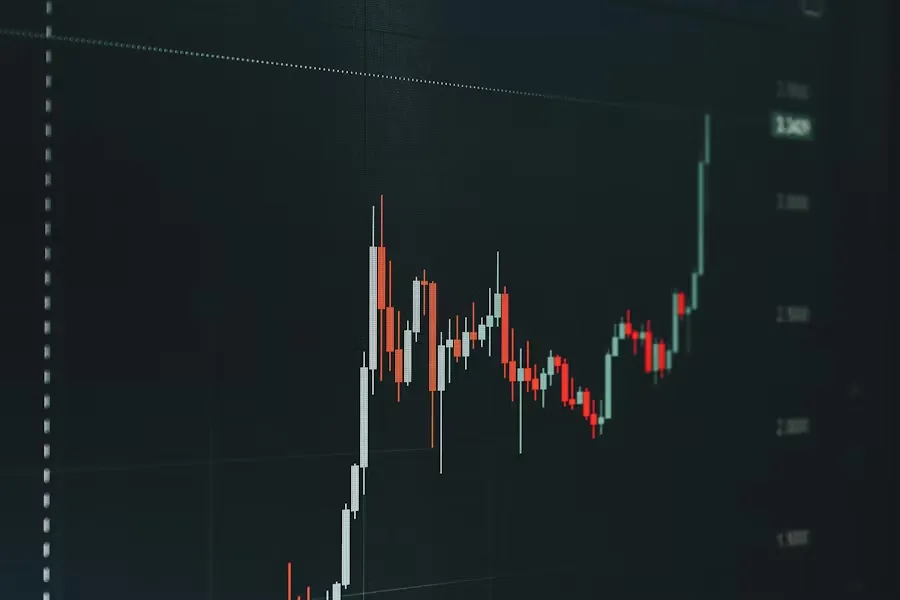
L3Harris (LHX) Stock Climbs After Strong Q1 Results and Raised 2026 Earnings Forecast

L3Harris Technologies, Inc., LHX  Chief Executive Christopher Kubasik highlighted strengthening demand and an increasingly complex geopolitical landscape as primary growth catalysts. He emphasized that the organization is rapidly expanding manufacturing capabilities and boosting output throughout its operations.  The company revised its full-year adjusted earnings per share projection upward to $11.40–$11.60, compared with the earlier guidance of $11.30–$11.50. Annual revenue expectations remain steady at $23 billion to $23.5 billion.  FactSet consensus estimates currently show analysts anticipating adjusted EPS of $11.59 on sales of $23.44 billion.  Mission Systems and Missile Divisions Power Growth  The space and mission systems division delivered exceptional performance with $2.99 billion in revenue — a 24% surge compared to the prior-year quarter. Expansion was fueled by increased production of intelligence, surveillance, and reconnaissance platforms for classified government programs and international aircraft contracts.  The missile solutions business generated $990 million in sales, reflecting 18% year-over-year growth. This division manufactures propulsion technologies and hypersonic weapon systems.  The communication and spectrum-defense segment showed more moderate expansion, recording $1.86 billion in revenue, representing a 2.5% increase from last year.  Confidential IPO Filing for Missile Division  L3Harris submitted a confidential initial public offering registration late Wednesday for its missile solutions division. This filing follows through on an arrangement with the Department of

04-30Industry

Solana Partners Shinhan Card to Scale Stablecoin Payments

Tech  Solana Partners Shinhan Card to Scale Stablecoin Payments  South Koreas leading card issuer Shinhan Card has moved deeper into blockchain finance through a new partnership with Solana Foundation. The agreement targets stablecoin-powered payments for millions of users while testing how decentralized infrastructure can integrate with traditional financial systems.  With access to roughly 28 million customers, the initiative signals a significant step toward mainstream adoption of blockchain-based payments. Moreover, the collaboration reflects growing institutional confidence in high-speed networks like Solana despite ongoing market volatility.  Expanding Stablecoin Payment Infrastructure  Shinhan Card plans to develop real-world payment scenarios using Solanas test environment. Engineers will simulate transactions between consumers and merchants while assessing network performance.  Additionally, the project will evaluate non-custodial wallets that give users direct control over their funds. This approach reduces reliance on intermediaries and aligns with broader decentralization trends.  Besides testing payments, the companies will explore hybrid financial systems. These systems combine traditional banking rails with decentralized finance tools.  Consequently, Shinhan Card expects to unlock new services that bridge conventional and blockchain-based ecosystems. The firm will also integrate oracle technology to connect real-world data with blockchain networks securely.  Building Toward a Regulated Web3 Future  The partnership places strong emphasis on compliance and long-term deployment. Shinhan Card aims to refine its

04-30Industry

Oobit delivers secure, controlled spending access for AI agents with Agent Cards launch 

Oobit, a crypto payments platform backed by stablecoin giant Tether, has unveiled Agent Cards, a virtual Visa product that grants AI agents direct, programmable spending authority without requiring human sign-off on individual transactions or exposing corporate card credentials to automated systems.  The launch comes as more businesses deploy AI agents to run core operational workflows, from marketing automation and cloud procurement to software-as-a-service (SaaS) management and advertising, among others.  According to McKinseys State of AI 2025 survey, 23% of organizations are already scaling agentic systems within their operations, with a further 39% in the experimental phase.  However, payments have remained a persistent bottleneck, as companies cannot just hand over their corporate cards to agents, and routing every charge through a human approver undermines the efficiency that automation is supposed to deliver.  As adoption of agentic AI continues to pick up, so too does the urgency of solving the payments problem, and the Oobit Agent Card enters as a timely intervention.  How does Oobit propose to solve the AI payments problem?  Agent Cards allows businesses to issue a dedicated virtual Visa card for each AI agent, funded directly from a USDT stablecoin treasury with no fiat conversion required.  Companies can configure the spend policies at the point of

04-30Industry

Celsius Founder Alex Mashinsky Faces $4.72B FTC Judgment, Gets Lifetime Ban From Crypto

Crypto  Celsius Founder Alex Mashinsky Faces $4.72B FTC Judgment, Gets Lifetime Ban From CryptoA federal judge entered a $4.72 billion FTC judgment against Celsius founder Alex Mashinsky on April 28, 2026.Mashinsky faces a lifetime ban from crypto and financial services while serving a 12-year federal prison sentence.The FTC requires only $10 million in actual payment, coordinated with Mashinskys DOJ criminal forfeiture obligations.  FTC Enters $4.72B Celsius Judgment Against Mashinsky, Bans Him From Industry  U.S. District Judge Denise L. Cote signed the stipulated order in the Southern District of New York, resolving the Federal Trade Commissions civil claims against Alex Mashinsky personally. The order carries a $4.72 billion monetary judgment but requires only $10 million in actual payment, an amount Mashinsky can satisfy through his existing criminal forfeiture obligations with the Department of Justice.  Mashinsky is currently serving a 12-year federal prison sentence. He pleaded guilty in December 2024 to commodities fraud and securities fraud, admitting he misled customers about Celsius‘s financial health and manipulated the price of CEL, the platform’s native token, while quietly offloading his own holdings.  The FTC first filed its complaint against Celsius and three of its executives in July 2023, charging them with deceptive and unfair practices under the FTC Act.

04-30Industry

TRX Technical Analysis Apr 30

TRX, despite giving short-term uptrend signals, is in a risky position under Supertrend bearish and BTC pressure. Investors should prioritize capital protection with tight stop loss strategies against the breakdown of the $0.3216 main support level.  Market Volatility and Risk Environment  TRX is currently trading at $0.33 and showed a slight 0.80% increase in the last 24 hours. The daily range $0.32 – $0.33 is quite narrow, indicating a low volatility environment. However, the general structure of the crypto market always carries high risk in volatility; according to ATR (Average True Range) analysis, the recent narrow band movement may pave the way for sudden expansions. RSI at 57.28 is in the neutral zone, although overbought/oversold risk is low, Supertrend‘s bearish signal and position above EMA20 ($0.32) weakens the short-term bullish outlook. In multi-timeframe (MTF) evaluation, 5 strong levels were detected in 1D, 3D, and 1W timeframes: 3 supports/2 resistances dominant in 1D. No significant developments in news flow, but BTC’s 2.12% drop with sideways trend creates an additional risk layer for altcoins. Even when volatility is low, sudden BTC movements can affect TRX in the 5-10% band; therefore, reviewing positions before volatility expansion is critical.  Risk/Reward Ratio AssessmentPotential Reward: Target Levels  In the bullish

04-30Industry

Powell Steps Down as Fed Chair While Retaining Governor Seat

He‘s basically playing goalie for the Fed’s independence, ensuring the institutional… pic.twitter.com/yMzpOyAyZh  — Lark Davis (@LarkDavis) April 29, 2026  Powell Retains Seat as Governor Following Stepping Down as Fed Chair  In his latest statement, Jerome Powell has asserted that following his resignation as the Feds Chair, he will keep serving as a Governor. He stressed his move to be a key endeavor to ensure the independence of the agency. This development has triggered an interesting market-wide debate, with observers anticipating implications for market stability and monetary policy.  The choice to maintain a place within the structure of the U.S. Fed signifies Powell‘s commitment to consistently maintain monetary governance. This also guarantees that the institutional architecture of the Fed does not conveniently bend to outside political forces. Additionally, the market onlookers consider this endeavor to be an indication of Powell’s focus on influencing policy direction.  Fed Chair‘s ’Ultimate HODL‘ Triggers Debate over Agency’s Credibility  Keeping this in view, the U.S. President Donald Trump has significantly rebuked Powells decision. He claimed that Powell intends to maintain a Fed position because there is no other place where he can get a job. Specifically, Trump made these remarks in his recent post on Truth Social.  BREAKING: President Trump says Fed Chair

04-30Industry

Visa Adds Five Blockchains to Its Stablecoin Layer Amid $7 Billion Milestone

Stablecoin Momentum, Source: VisaMulti-Chain Settlement Becomes Competitive Necessity  Visas expansion reflects a fundamental shift in how financial institutions approach payment infrastructure. Rather than choosing a single blockchain, partners now demand flexibility across multiple networks with different strengths.  “Our partners are building in a multi chain world, and they expect their options to reflect that reality,” said Rubail Birwadker, Visas global head of growth products and strategic partnerships.  Each blockchain serves a specific use case. Arc, developed by Circle, targets programmable money and onchain innovation. Base, incubated by Coinbase, targets high-volume retail flows.  Canton serves regulated capital markets with configurable privacy. Polygon delivers low-cost throughput for mass adoption. Tempo focuses on private, real-time stablecoin settlement.  This specialization mirrors a broader trend in blockchain infrastructure where no single network attempts to solve every problem.  From Proof of Concept to Live Deployments  The pilot has moved beyond experimental territory. Visa has deployed stablecoin settlement across Europe, Latin America, Asia Pacific, and the CEMEA region.  The company recently extended USDC settlement to U.S. banks and now supports 130+ stablecoin-linked card programs across 50 countries.  The 50% quarterly growth in settlement volume indicates institutional confidence is genuine, not speculative. Banks are integrating stablecoin rails into actual payment flows, not just testing them in sandboxes.  “Visa

04-30Industry

XRP price prediction: Ripple-linked token zooms to FOMO levels on Japans Rakuten partnership

Ripple-linked xrp tokens are back in positive social media chatter in a historically contrarian price signal.  The token‘s positive-to-negative sentiment ratio on social media spiked into what Santiment calls the “FOMO zone” on April 29, hitting 3.9 on the firm’s tracker, per data shared on X. The reading is the highest since March 19, when a similar spike preceded a sharp pullback.  Sentiment ratios above the FOMO line indicate that crowd commentary is overwhelmingly positive, which Santiment treats as a contrarian signal. Historically, when retail chatter hits these levels, the token tends to consolidate or correct in the days that follow as the buyers driving the social wave run out of fresh demand.  The trigger appears to be the Rakuten Pay integration that went live in the first week of April, which added XRP as a payment method across the major Japanese wallet applications ecosystem. The deal an estimated 44 million Rakuten users spend XRP at over 5 million merchant locations, spot trade it inside the Rakuten Pay app, and convert their Rakuten points, of which 3 trillion are in circulation worth roughly $23 billion, directly into XRP.  That announcement was framed by Ripples senior ecosystem growth manager Tatsuya Kohrogi as “one of the

04-30Industry

Meta Launches USDC Payments on SOL and Polygon

Tech  Meta Launches USDC Payments on SOL and Polygon  The social media giant Meta, owner of Facebook and Instagram, has launched stablecoin-based payments for content creators. This feature, brought to life with Stripe‘s infrastructure support, is currently available to a select group of creators in Colombia and the Philippines. Eligible users can connect their crypto wallets to receive Circle’s USDC token on SOL detailed analysis or Polygon networks. The innovation announced on Meta‘s website signals the company’s return to crypto payments. This step shows the platform, which has long relied on traditional payment systems, is shifting toward blockchain.  Meta had previously abandoned its project, which started as Libra and evolved into Diem, in 2022 due to regulatory pressures. Now, its integrating stablecoin payments through third-party providers; Stripe has been a leading candidate since February. The payment company will provide reporting services for crypto transactions to users and prepare tax documents alongside Meta. A Stripe spokesperson confirmed their involvement. The service enables content creators to quickly receive earnings via digital assets, expanding global reach. Other fintech players are also preparing similar integrations.  SOL Technical Analysis and Market Status  SOL price is currently at $83.02, down -2.47% in the last 24 hours. RSI at 44.98 is in

04-30Industry

ConocoPhillips (COP) Stock Falls After Slashing Production Forecast Amid Qatar Pullout

The energy producer delivered adjusted Q1 EPS of $1.89, surpassing Wall Streets $1.68 forecastQuarterly net income declined to $2.18 billion versus $2.85 billion in the year-ago periodThe company removed Qatar operations from its Q2 and 2026 annual production forecasts citing Middle East conflict risksAnnual production guidance reduced to 2.3M–2.33M barrels/day from previous 2.33M–2.36M estimateShares of COP dropped approximately 1.8% during premarket hours Thursday following the announcement  Despite delivering better-than-expected first-quarter results, ConocoPhillips faced selling pressure in early trading after announcing reduced production targets for the remainder of 2026.  ConocoPhillips $COP Q1 Earnings  Earnings Beat  Adj. EPS: $1.89  (Beat vs $1.67 est)  Revenue  Beat Sales: $16.054B  YoY: ↓ 6.12% (from $17.101B)  Net Income Beat  Adj. Net Income: $2.3B  (Beat vs $2.03B est)  The Houston-based energy giant reported adjusted quarterly profit of $1.89 per share, comfortably exceeding the FactSet consensus estimate of $1.68. Reported earnings registered at $1.78 per share.  Quarterly net income totaled $2.18 billion, representing a significant decline from the $2.85 billion recorded in the corresponding quarter of 2025. This contraction stems primarily from weakened natural gas pricing in the Permian Basin alongside diminished production volumes.  ConocoPhillips, COP  The companys average realized price per barrel of oil equivalent stood at $50.36, marking a 5.6% decrease compared to Q1 2025. Daily production reached 2.31 million barrels

04-30Industry
1
...
792794
...
1000