Anthony Scaramucci Predicts Invisible Crypto Adoption

SkyBridge Capital founder Anthony Scaramucci believes cryptocurrency is approaching a stage where mainstream users will interact with blockchain technology without even realizing it.  Digital Currencies  The prominent Bitcoin advocate claims that cryptos success will depend on whether or not the underlying technology will manage to become practically invisible to customers.  An X user claimed that normal people would never use crypto, which is rather common sentiment. In response, Scaramucci countered that ordinary users “will soon use crypto/blockchain without even realizing it.”  Many developers see a future where crypto infrastructure quietly powers payments, identity systems, loyalty programs, tokenized assets, and so on. However, it remains to be seen whether or not crypto will be able to offer the same level of convenience.  Mirroring internet evolution  This concept has become increasingly popular among industry executives in recent years. Several major crypto firms have changed their focus toward improving user experience by abstracting away technical complexities. The goal is to make blockchain as seamless as internet protocols that billions of people use daily, without even a basic level of understanding of how these processes work.  Digital Currencies  The idea of “invisible crypto” mirrors the evolution of the internet itself. Most people today rely on technologies such as TCP/IP, HTTPS, or cloud

08-07Industry

A bitcoin pattern taking shape right now could send prices soaring to $76,000

SummaryBitcoins price is tracing out a potential bullish inverse head-and-shoulders patter on the daily chart.Prices could rise to $76,000 if the pattern is triggered.The pattern isnt confirmed yet. Chart reading remains subjective, and the Clarity Act uncertainty is a reason to watch for renewed weakness below the 50-day average.  Bitcoins recent price action has been unremarkable and boring, the kind that sends traders looking for excitement elsewhere.  But look closer, through a technical analysts lens, and the token appears to be hammering out a bullish pattern, which, if confirmed, could suggest a rally to $76,000.  That pattern is the popular inverse head-and-shoulders (Hs daily chart: a low near $60,000 in early June formed the left shoulder, a deeper trough near $57,700 in late June or early July marked the head, and the recent bounce from around $62,500 formed the right shoulder. Each trough was followed by a rebound toward a similar resistance zone.

08-07Industry

Bitcoin whales load up on $1.2 billion in BTC as ETFs attract $750 million

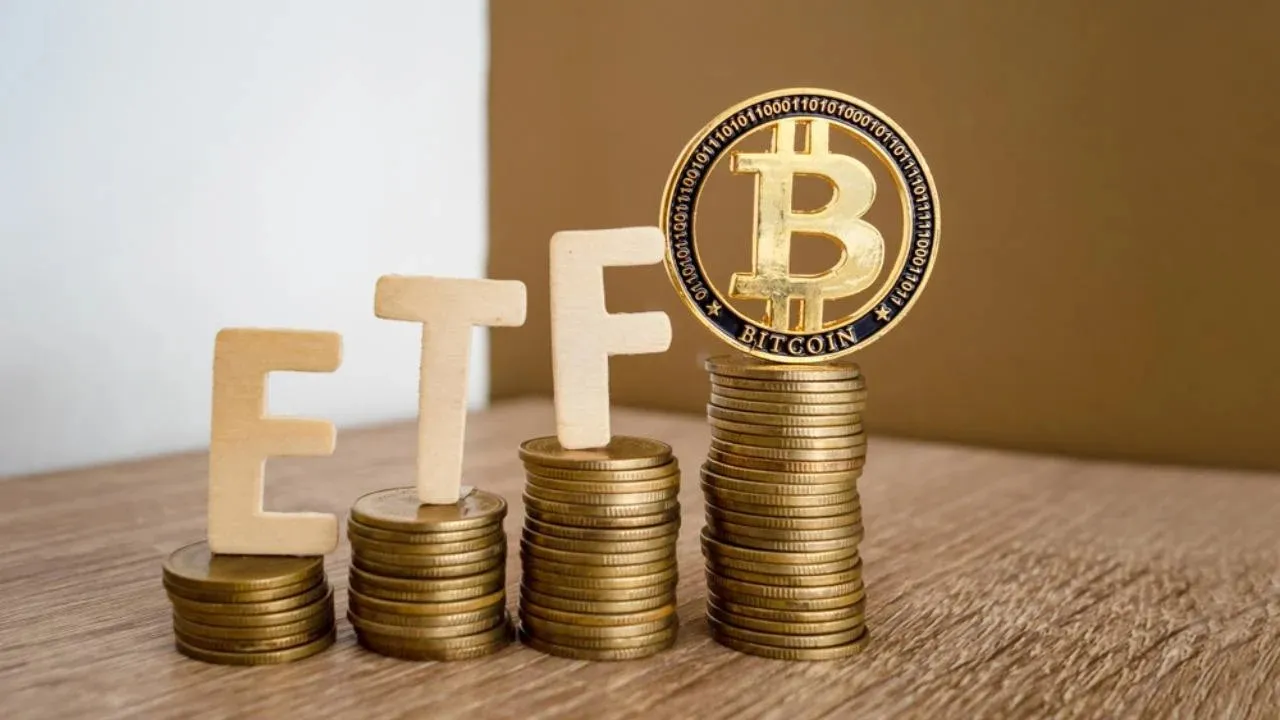
The U.S.-listed spot bitcoin exchange-traded funds have pulled in $754.69 million in investor funds this week, according to data source SoSoValue. That puts these funds on track for their best week since April.  “The clearest shift has come in institutional flows,” Liya Kalchev, Analyst at Nexo, said, explaining the ETF inflows.  “Spot Bitcoin ETFs have taken in more than half a billion dollars so far in August, with inflows building through the week and Wednesday alone contributing over $240 million — a sharp reversal from June, when the funds recorded their worst month on record,” Kalchev added.  Note that despite the on-chain and ETF accumulation, BTCs spot price has not yet been able to chalk out a meaningful rally. That, according to Kalchev, is a telltale sign of the kind of buyer stepping into the market right now.  “That the reversal has not yet lifted price meaningfully is itself informative: some desks argue the marginal buyer looks more tactical than convicted, and that a genuine recovery narrative likely needs a decisive close above $65,000 to take hold,” Kalchev explained.  BTCs price chart patterns point to a potential for a notable price rally. At the same time, the fact that the U.S. Senate is unlikely to

08-07Industry

Bitget explores licensed crypto presence in Bhutan

Bitget has signed an agreement with Bhutan‘s Gelephu Mindfulness City Authority to explore establishing a licensed local operation, as the crypto exchange seeks a foothold in the country’s developing digital asset sector.  The agreement could pave the way for Bitget to establish a legal presence and prepare its application for a relevant financial services license in GMC, a $100 billion autonomous economic zone backed in part by Bhutans national Bitcoin reserves that aims to create high-value roles in finance, tech and wellness.  “GMC is the emerging hotbed for digital finance, and Bitget looks forward to contributing exchange experience, infrastructure knowledge and local talent development as this ecosystem grows,” said Gracy Chen, CEO at Bitget.  Last week, GMC appointed Canadian digital-asset manager 3iQ to manage a mandate backed by part of its Bitcoin treasury.  Under the partnership, 3iQ will manage an undisclosed portion of the Bitcoin allocated to support Gelephus development. The company will also establish a long-term presence in the city, invest in local talent and provide training and knowledge transfer.

08-07Industry

Japan FSA asks crypto exchanges to impose withdrawal delays to fight scams

Japans financial regulator has asked crypto exchanges to introduce withdrawal delays and other safeguards as authorities respond to increasingly sophisticated scams involving digital assets.  On Thursday, the Financial Services Agency (FSA) said it had jointly requested the measures with the National Police Agency amid growing losses among crypto exchange users and cases where funds obtained through fraudulent schemes are being transferred to exchange accounts.  The request calls on exchanges to restrict crypto withdrawals for a specified period after customers deposit fiat currency or purchase digital assets. Platforms were also asked to require users to pre-register crypto withdrawal addresses and impose a waiting period before newly added addresses can be used.  The request was submitted to the Japan Virtual and Crypto Assets Exchange Association, the countrys self-regulatory body for crypto exchanges.  Other proposed safeguards include customer-specific withdrawal limits, stronger transaction and access-environment monitoring, phishing-resistant multifactor authentication and checks to ensure that the name of a bank remitter matches the crypto account holders name.  The measures are not binding rules. The FSA said exchanges should determine how to implement these based on their operations, services and exposure to misuse.

08-07Industry

Sui targets 2027 mainnet rollout for native quantum safe account authentication

Sui has added two NIST-approved post-quantum signature schemes to its blockchain roadmap as it prepares optional quantum-safe accounts and vaults for future network upgrades.  According to Suis latest announcement, the blockchain plans to introduce ML-DSA-65 as a native signature scheme for regular accounts and SLH-DSA-SHA2-128s for high-value smart contract vaults, giving users an optional way to protect accounts against future quantum computing risks without replacing their recovery phrases or moving assets.  Learn more: https://t.co/2BEGG4pr4d  — Sui (@SuiNetwork) August 6, 2026  The rollout comes as blockchain developers and infrastructure providers increasingly prepare for the possibility that future quantum computers could break todays public-key cryptography.  Unlike traditional systems where public keys often remain hidden until needed, Sui said blockchain accounts expose public keys onchain once transactions occur, allowing attackers to collect them years before practical quantum computers exist.  The network warned that such “harvest-now-forge-later” attacks do not require quantum hardware today because attackers can simply archive exposed public keys and wait until sufficiently capable machines become available.  Citing research from Google Quantum AI published in March 2026, Sui said recovering a private key from an exposed public key could eventually take minutes on a fault-tolerant quantum computer using fewer than 500,000 physical qubits.  Sui also pointed to changing government timelines

08-07Industry

XRP price falls 2% as CLARITY Act vote slips to September

XRP traded near $1.03 on Aug. 7 as selling pressure kept the token among the weaker large-cap cryptocurrencies ahead of fresh U.S. labor data.  SummaryXRP traded near $1.03, down about 2.2% as selling pressure persisted across major exchanges today.Binance XRP open interest rose roughly 8% while perpetual CVD moved deeper into negative territory.Spot CVD fell more than 52%, showing a sharp decline in aggressive centralized exchange buying.Whales accounted for 81% of Binance XRP outflows, versus 72% across centralized exchanges overall globally.Senators return September 14, while July employment data arrives August 7 before inflation data Wednesday.  According to crypto.news market data, XRP dropped about 2.2% over 24 hours, compared with smaller moves in Bitcoin and Ether, while its market capitalization remained near $64.2 billion.  crypto.news showed XRP down 5.7% over seven days and 6.7% over 30 days. Trading volume was approximately $1.44 billion, with circulating supply near 62.53 billion tokens.  You might also like:  Bitwise XRP ETF sees reported $3.58M redemption  The decline came as the U.S. Senate pushed consideration of the CLARITY Act beyond its August recess. Senate Majority Leader John Thune said the bill would be queued when lawmakers return in September. The delay removes an expected near-term regulatory catalyst, although XRPs price move cannot

08-07Industry

Real-World Asset Deposits Jump to $7.4 Billion Through DeFi Downturn

Deposits of tokenized real-world assets across decentralized finance more than tripled to $7.4 billion over the past year, even as total funding in the sector declined.  CoinShares highlighted the split in its latest report with Token Terminal, noting that demand for tokenized assets is now driven by utility rather than by crypto market cycles.  Sponsored  Sponsored  Tokenized Assets Pull Away From the DeFi Slump  An earlier CoinShares report put the on-chain market value of tokenised assets above $40 billion. The new data measures how much of that is actually being used. The report covers on-chain activity from the second quarter of 2025 through the second quarter of 2026.  It showed that RWA deposits climbed from $2.3 billion to $7.4 billion year-on-year. Deposits stayed concentrated in yield-bearing products.  Tokenized Treasury and multi-strategy funds, including JTRSY, BUIDL, and sUSDS, drove most of the growth. Aave (AAVE), Morpho (MORPHO), and Kamino (KMNO) held the deepest liquidity.  Follow us on X to get the latest news as it happens  Tokenised Funds Emerging As The Primary Collateral Asset. Source: CoinShares  Total DeFi deposits moved in the opposite direction. It fell roughly 15% as investors withdrew capital and token prices dropped. The pattern repeated in trading.  Sponsored  Sponsored  Crypto-native spot volumes on decentralized exchanges dropped about 70% over the

08-07Industry

Ripple's Alderoty Says Crypto Is No Longer Just for 'Crypto Boys'

Ripple Chief Legal Officer Stuart Alderoty has pushed back against a recent Wall Street Journal editorial that referred to supporters of cryptocurrency regulation as “the crypto boys.”  Digital Currencies  He claims that the industrys user base is far more diverse than its critics tend to believe.  Beyond stereotypes  Alderoty said the label misrepresents the millions of Americans who now own digital assets.  According to the Ripple executive, roughly 67 million Americans currently hold cryptocurrency.  He added that about one-third of U.S. crypto owners are women. What is particularly striking is that more holders are over the age of 55 than under 25.  “Theyre teachers, construction workers, veterans, nurses, parents, and small business owners,” Alderoty wrote.  His comments came in response to a highly controversial Wall Street Journal Opinion editorial criticizing the Senates proposed CLARITY Act.  card  The editorial acknowledged that the CLARITY Act would provide much-needed and long-awaited regulatory certainty. However, the newspapers editorial board also argued that lawmakers should amend the legislation before passing it. It specifically took issue with stablecoin-related rewards and some exemptions for some decentralized networks.  As reported by U.Today, there was obviously a swift pushback from the crypto community. Blockchain Association CEO Ji Kim described it as containing “factual and legal inaccuracies.”  Digital Currencies  Overwhelming hate from the

08-07Industry

Thailands 0% crypto tax raises stakes in global capital...

Thailands five-year crypto tax exemption has returned to the spotlight after Binance founder Changpeng Zhao drew fresh attention to the policy this week, prompting new claims that the country has become a “0% crypto tax haven.”  The exemption is real, but it is neither new nor unlimited. Thailands Cabinet approved the measure on June 17, 2025, and Ministerial Regulation No. 399 was published in the Royal Gazette on September 5, 2025.  The rule exempts qualifying personal income derived from gains on cryptocurrency and digital-token transfers from January 1, 2025, through December 31, 2029. Crucially, the transaction must take place on a digital asset exchange, through a broker, or with a dealer licensed under Thai law. That condition makes the policy less a blanket tax holiday than an incentive to move trading activity into Thailands supervised market.  https://twitter.com/SantimentData/status/2085574208457695491?s=20  Thailands 0% crypto tax is an existing five-year rule  Thailands Ministry of Finance described the measure as part of a plan to establish the country as a global “Digital Asset Hub.” The Cabinet approved the principle in June 2025, while the final regulation entered the legal framework months later. Because the rule applies to assessable income received from the start of 2025, its tax benefit reaches back to

08-07Industry
1
...
4547
...
1000