Japanese Yen struggles despite retreating oil prices

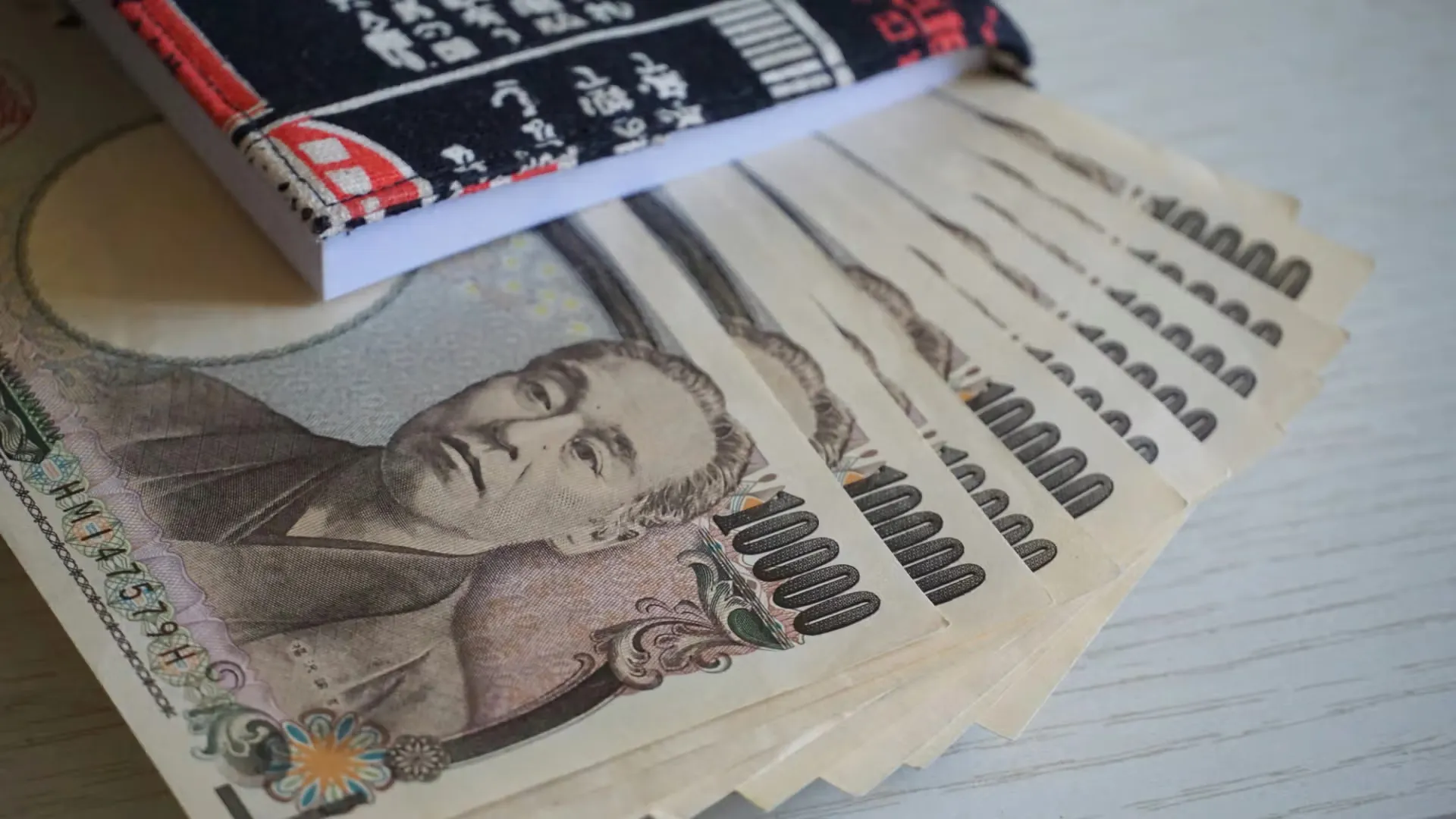
USD/JPY continues its winning streak for the sixth consecutive day, trading around 158.90 during the European hours on Monday. The pair appreciates as Japanese energy importers are forced to sell massive amounts of Japanese Yen (JPY) to buy the US Dollars (USD) needed to pay their inflated energy bills amid higher oil prices. However, oil prices pare daily gains after reports that Iranian and Omani technical teams met last week in Oman to negotiate a mechanism for safe transit in the Strait of Hormuz.  Elevated oil prices intensified inflation concerns and strengthened expectations for a near-term rate hike by the Bank of Japan (BoJ), which could limit the downside of the JPY. Last week, Bank of Japan board member Kazuyuki Masu urged a swift interest rate hike, pointing to growing, persistent inflation risks driven by the ongoing war.  Japans Chief Cabinet Secretary, Seiji Kihara, stated that the administration is monitoring market movements, including long-term interest rates, with a very high sense of urgency. Despite the heightened vigilance, Kihara declined to comment on the possibility of government intervention in the foreign exchange markets.  However, the upside of the USD/JPY pair could be restrained as the US Dollar (USD) faces selling pressure on easing safe-haven

05-18Industry

US Dollar: Fed pressure and bond sell-off – ING

INGs Chris Turner highlights that rising US Treasury yields and a bearish yield curve steepening are pressuring the Federal Reserve (Fed) to sound more hawkish, even without immediate hikes. He notes high Oil prices and higher yields are negative for risk assets but supportive for the Dollar. Turner flags US Dollar Index (DXY) resistance at 99.50 and support near 99.00 in the near term.  Fed rhetoric and yields support Dollar  “While UK politics may be blamed for a small part of the global bond market sell-off, the bigger story is 10-year US Treasury yields rising to their highest levels since early 2025. This followed a raft of higher-than-expected US inflation data last week, where final demand PPI rose at 6% year-on-year in April – levels we have not seen since early 2023. ”  “This kind of inflation is pressure-testing the Federal Reserve and swinging behind the three dissenters at the April FOMC meeting, against the implicit easing bias in the FOMC statement.”  “Looking at the bearish steepening in the bond market today, the narrative is one of the Fed potentially ‘falling behind the curve’ and the need to at least sound hawkish, even if it does not necessarily hike.”  “Wednesday‘s release of the FOMC minutes

05-18Industry

Aave WETH borrowing recovery restores LTV across Aave V3

Aave WETH borrowing recovery entered a new phase on May 18, with the lending protocol restoring wrapped Ether borrowing across affected markets after advancing the rsETH recovery plan tied to the Kelp DAO exploit. For users who rely on Ether-backed leverage, the move marks a return to more normal conditions after weeks of emergency restrictions.  The change is more than a parameter update. It reopens a core part of DeFi lending markets that had been partially shut down after attackers used stolen rsETH as collateral to borrow WETH on Aave V3, triggering one of the more painful knock-on effects in recent months.  Now, with rsETH backing restored and withdrawals reopened, Aave has rolled back those WETH limits. As a result, several major markets are back on pre-incident footing, and traders, borrowers, and liquidity providers have a clearer signal that the protocols technical recovery is moving forward.  Aave restores WETH borrowing across affected markets  Aave restored WETH borrowing across affected markets after advancing the rsETH recovery plan. Just as importantly for active users, WETH loan-to-value ratios returned to pre-incident levels across multiple Aave V3 markets.  Aave founder Stani Kulechov said the reset applied across Aave V3 Ethereum Core, Ethereum Prime, Arbitrum, Base, Mantle, and Linea. In

05-18Industry

1,000 Bitcoin ATMs removed globally since start of 2026

After enjoying steady expansion throughout 2025 as Bitcoin (BTC) first hit a new all-time high (ATH) above $125,000 before retreating, the global network of cryptocurrency ATMs saw a notable contraction in the first five months of 2026.  Specifically, there were 39,456 such BTC machines worldwide on January 1 and, by May 18, the number dropped to 38,484 for a total loss of 972: just 28 short of 1,000.  Notably, the decline began only in March, as an additional 360 Bitcoin ATMs were added globally through the first two months of the year, indicating the trend didn‘t follow the cryptocurrency’s price performance.  Global Bitcoin ATM installations chart. Source: CoinATMRadar  Indeed, after starting the year at $88,732, BTC dropped to $62,851 by February 5 and hovered around $70,000 by March when it temporarily rallied to approximately $75,000.  The cryptocurrency then found its local bottom on March 28 at approximately $66,000 and rallied some 17% to $77,438 by press time.  Bitcoin price YTD chart. Source: FinboldU.S. leads in Bitcoin ATM removals while Canada defies the downtrend  Elsewhere, Bitcoin ATM removals were largely concentrated in the United States. There were 30,844 such machines in the country at the start of 2026, and 289 were added by March 1.  The subsequent trend reversal

05-18Industry

Crypto ATM Operator Bitcoin Depot Files for Chapter 11 Bankruptcy

Bitcoin Depot has filed for Chapter 11 bankruptcy in Texas federal court and shut down its entire ATM network.The company operated over 9,000 Bitcoin ATM locations across North America before closure.CEO Alex Holmes blamed transaction limits, state bans, and rising litigation costs for the collapse.  Bitcoin Depot, North Americas largest Bitcoin ATM operator, filed for Chapter 11 bankruptcy protection and shut down its entire network of over 9,000 machines.  CEO Alex Holmes blamed an increasingly hostile regulatory landscape for the publicly-traded company‘s collapse in a statement, arguing that the regulatory environment for Bitcoin ATM operators operators has “shifted significantly,” rendering Bitcoin Depot’s business model “unsustainable.”  “States have imposed increasingly stringent compliance obligations, including new transaction limits, and in some jurisdictions, outright restrictions or bans on BTM operations; and operators have faced increasing litigation and regulatory enforcement,” Holmes said, noting that the crackdown has “materially affected Bitcoin Depots business and financial position.”  The company exhausted other alternatives before seeking court protection, Holmes said, explaining that, “After evaluating all options, we determined to initiate this court-supervised process to facilitate an orderly wind-down of operations and a sale of the Companys assets.”  The U.S. Bankruptcy Court for the Southern District of Texas will oversee proceedings that include Bitcoin

05-18Industry

Elon Musk and Sam Altman face off in OpenAI lawsuit trial

Two of the most powerful people in artificial intelligence are now sitting across from each other in a federal courtroom instead of a boardroom. Elon Musk and Sam Altman, who co-founded OpenAI with a stated mission to develop AI for the benefit of humanity, are locked in a jury trial that could reshape how the world thinks about nonprofit promises in the age of billion-dollar technology.  The trial, which began with jury selection on April 27, 2026, in the US District Court for the Northern District of California, centers on Musks allegation that OpenAI abandoned its founding principles. In English: Musk says he gave roughly $44 million to a charity, and that charity turned itself into a profit machine partnered with Microsoft.  What Musk is actually claiming  Musk filed the lawsuit on February 29, 2024, naming OpenAI, Altman, and others as defendants. His core argument is straightforward: OpenAI was created as a nonprofit with the explicit goal of pursuing artificial general intelligence, or AGI, for the public good. Instead, Musk alleges, the organization pivoted to a profit-seeking model that benefits insiders and corporate partners rather than humanity at large.  The approximately $44 million Musk donated to OpenAI forms the financial backbone of his case.

05-18Industry

CoreWeave, Nvidia and Palantir Stocks: Which Is The Better AI Buy?

The AI boom kicked off in May 2023. Thats when AI chip designer Nvidia announced a surprising leap in demand for its graphics processing units – convincing me that the rapid growth in ChatGPT users was evidence of the next big thing.  While Nvidia leads the pack of publicly-traded AI companies, CoreWeave, which went public in March 2025 by monetizing its stash of GPUs, has also benefited from the growth in spending on AI data centers which train and operate AI chatbots like ChatGPT, Gemini and Claude. Palantir, which uses data analysis to help some government agencies and private companies get their jobs done, is different from Nvidia and CoreWeave because it uses AI chatbots, but does not invent and deploy its own.  Nvidia, CoreWeave And Palantir At A Glance  Although Nvidia, CoreWeave and Palantira are leaders in their respective industries, they offer potential investors very different potential rewards and risks.  The Case For Nvidia (NVDA)  Nvidia, whose shares have risen 79% in the year ending May 12, is the leader in AI chip design. It competes primarily in the hardware accelerator and semiconductor market, providing the GPUs (like the H100, B200 Blackwell, and Rubin architectures) that AI data centers use to train and operate

05-18Industry

Garlinghouse: Ripple is the Infrastructure for the Internet of Value

Ripple CEO Brad Garlinghouse, during an ‘XRP in a Minute’ segment at XRP Las Vegas, positioned the XRP Ledger as a specialized payment infrastructure capable of settling transactions in three to five seconds for mere fractions of a penny.  He highlighted its processing of over 4 billion transactions since 2012 and its potential as the foundational layer for the Internet of Value. Garlinghouse emphasized the ledger‘s technical architecture, tracing its origins to former Bitcoin developers, as XRP’s competitive advantage over Ethereum and Bitcoin.  This approach aims to shift XRPs audience from retail investors to institutional players, such as treasury managers and banks. By framing XRP as a payment infrastructure rather than an investment, Ripple is seeking to engage mainstream financial services and expand beyond niche crypto payments.  Following Garlinghouses comments, XRP USD is trading at $1.38, down -3.2% on the day amid a broader market-wide cooldown that has wiped more than $100Bn from the total crypto market cap.  $XRP/USDT 4H Analysis  XRP is riding an ascending trendline since late March, currently testing that support after a rejection from the $1.48–$1.50 resistance zone  Key levels to watch:  – Support: Trendline $1.38  – Resistance: $1.48–$1.50  Ripple Architecture and the Internet of Value: How Garlinghouses Payment-Focused Design Philosophy Actually Functions  The XRP Ledger

05-18Industry

Intel stock just $8 billion away from overtaking Oracle in market cap

American semiconductor giant Intel (NASDAQ: INTC) is closing in on overtaking Oracle (NASDAQ: ORCL) in market capitalization, with the gap between the two technology companies narrowing to just over $8 billion.  Based on market closing data for May 15, Intel held a valuation of approximately $546.67 billion, compared to Oracles $554.93 billion, a difference of $8.26 billion.  The gap places Intel at rank 23 among the largest U.S. companies, directly behind Oracle at rank 22.  The narrowing difference reflects Intel‘s dramatic resurgence in 2026, with the chipmaker’s stock rallying almost 200% year-to-date. As of press time, INTC shares were trading at about $108.  A major driver behind the rally has been Intels strong first-quarter 2026 earnings report. The company posted revenue of $13.6 billion, beating guidance by roughly $1.4 billion.  Intels data center and AI segment revenue rose 22% year-over-year, while AI-related businesses now account for nearly 60% of total revenue after expanding 40% annually.  The report also showed improving profitability, with adjusted gross margins climbing to about 41%, supported by stronger factory yields, tighter cost controls, and improved manufacturing execution.  At the same time, Intels advanced 18A process node is reportedly progressing ahead of schedule, with improving yields expected to support higher margins and faster production

05-18Industry

Ethereum hosts 72.6% of all tokenized ETFs as market eyes $20 trillion by 2030

Nearly three out of every four tokenized ETF products live today sit on Ethereum. That 72.6% market share isn‘t a rounding error. It’s a structural moat.  The broader tokenization market, which includes everything from Treasury bills to equity funds represented as blockchain tokens, is projected to reach somewhere between $16 trillion and $20 trillion in tokenized assets by 2030. Ethereum has quietly positioned itself as the default rails for this migration, and the biggest names in traditional finance are the ones laying the track.  Why Ethereum keeps winning the institutional vote  Ethereum was the first programmable blockchain with meaningful liquidity, and institutions tend to go where the liquidity already is. The ERC-20 token standard has become something like the PDF of on-chain finance. Not because its perfect, but because everyone already knows how to use it. Wallets support it. Exchanges list it. Custody providers understand it.  Franklin Templeton offers one of the clearest case studies. Its BENJI token, which manages over $500 million, originally launched on Stellar. In 2023, the firm moved operations to Ethereum. Thats not a small decision for a company managing hundreds of billions in traditional assets.  Then theres Ondo Finance, which has emerged as one of the most aggressive players in

05-18Ethereum
1
...
371373
...
1000