Irish Gangs Are Renting Private Vaults to Hide Crypto Keys

In briefIrelands Criminal Assets Bureau says gangs store crypto wallet seed phrases and private keys in rented vaults alongside cash, watches and passports.It has reported the practice to the government committee preparing Ireland for new EU anti-money laundering rules.Cash still dominates, and the bureaus chief says criminal use of crypto in Ireland remains “basic.”  Organized crime gangs in Ireland are renting vaults to store the private keys and seed phrases that control crypto wallets, alongside cash, luxury watches and handbags, the head of the Criminal Assets Bureau has said.  Detective Chief Superintendent Michael Gubbins, who runs the bureau, the Irish states asset-seizure agency, told the Sunday Independent the practice emerged from its own investigations and has been reported to the governments Anti-Money Laundering Steering Committee.  Myriad: Bitcoin next price move? Click to make your prediction.  Vault contents, he said, “could be cryptocurrency keys or cash or watches or could even be passports.” He added: “Again, its from our experience, what we would have seen around those matters.”  The committee is preparing Ireland for EU rules due next summer that will ban cash transactions above €10,000 and require businesses to identify anyone spending €3,000 or more in cash. Crypto-asset service providers, luxury goods retailers and crowdfunding

09-07Industry

XRP Sits at $1.40: Nobody Wants to Sell, Nobody Wants to Buy

Ripple released 1 billion XRP from escrow at the start of September, and by the end of the day, only 300 million sat outside new time locks.  XRP price still holds near $1.40. The headline sounded bearish. The ledger says less happened than it looked.  Ripple Released a Billion, Then Re-Locked 700 Million  Three old escrows ended, releasing 500 million, 400 million, and 100 million XRP. Hours later, two new escrows took 500 million and 200 million back.  Sponsored  Sponsored  Ripple Escrow Release Versus Relock: BeInCrypto  That leaves 300 million XRP, worth about $422 million, outside those locks. It moved between Ripple-labelled wallets, so the monthly release is not a sale or an exchange deposit. But it matters anyway.  It still matters because the market could not take it. Buy orders sitting close to the current price add up to $108.2 million, so those 300 million coins are worth almost four times what buyers are ready to absorb.  XRP Near-Price Buying Depth: Charlie Quant Lab  The market held only because nobody tested it.  Older Coins Stopped Moving. So Did the Volume.  So the coins are still there. The question is who is willing to move them, and the answer is almost nobody.  Sponsored  Sponsored  XRPs 1-2 year holding band rose from 17.3% of supply in

09-07Industry

Hyperliquid tests allowlists that let operators restrict access to their own markets

In a Sept. 3 developer update, Hyperliquid API Announcements said the onchain derivatives exchange was adding optional wallet allowlists to builder-run perpetual markets. The testnet-only extension, called HIP-3*, would let a market deployer decide which wallets may trade on its venue without imposing the same access policy across Hyperliquid.  Related Product Hyperliquid DEX A decentralized trading application  HIP-3 is Hyperliquids framework for perpetual markets deployed by independent builders. The current API reference says a new venue can be designated HIP-3* when it is created, enabling an onchain allowlist and proxied user actions. Hyperliquid described the feature as optional and strictly additive, with existing markets unchanged. The specification is preliminary, available only on testnet and has no announced mainnet date.  Related Asset Hyperliquid #9 HYPE · $85.16 24-hour change: down 4.10% 24H Down 4.10% 7D Up 3.32% 30D Up 55.58%  How HIP-3* wallet allowlists work  A HIP-3* deployer can act for a user in five defined ways: add or remove allowlist approval, cancel specified resting orders, cancel all of the users resting orders and time-weighted average price orders on the venue, place reduce-only orders, and move collateral to another account on the same venue.  Each power is limited by the venue boundary. The documented bulk-cancellation tool leaves

09-07Industry

FCA weighs easing UK prediction market ban

Britains Financial Conduct Authority has reportedly discussed easing restrictions on retail financial prediction markets, but the regulator had announced no policy change as of September 7, 2026.  The FCA held discussions with trading platforms about potentially reopening financial prediction markets to retail investors, according to a Times report. Industry representatives reportedly argued that British consumers already access overseas platforms, including Kalshi and Polymarket.  The discussions have not produced a public consultation, proposed rule or implementation date. The regulators latest published position continues to classify prediction contracts linked to financial and certain climate events as binary options.  The FCA permanently prohibited firms from selling binary options to retail consumers in April 2019. It has maintained that these contracts resemble gambling, carry a high risk of losses and are difficult for consumers to value accurately.  UK prediction market rules divide regulatory control  Prediction markets allow users to trade contracts based on whether an event will occur. A contract may pay a fixed amount when an outcome happens and nothing when it does not. Financial examples can cover interest rates, stock indexes or economic data.  The FCA regulates products tied to financial and certain climate events. Sports, political and other non-financial contracts generally fall under the Gambling Commissions authority.

09-07Industry

Ethereum’s Vitalik Buterin puts 60% odds on a cryptography breakthrough that could weaken Wall Street middlemen

Vitalik Buterin sees a 60% chance that advanced cryptography becomes cheap enough to reshape Ethereum privacy.  Related Asset Ethereum #2 ETH · $2,469.17 24-hour change: down 0.48% 24H Down 0.48% 7D Down 0.11% 30D Up 28.55%  On Sept. 6, the Ethereum co-founder said there is a 60% probability that SNARKs, fully homomorphic encryption and indistinguishability obfuscation will eventually operate at less than 10 times the cost of ordinary computation. He put the odds at 33% that all three could approach near-zero additional overhead at sufficient scale.  The forecast reaches well beyond hiding transactions.  Related Person Vitalik Buterin Co-Founder · Ethereum  Cheap SNARKs could make private proofs easier to generate. Fully homomorphic encryption (FHE) could let applications compute directly on encrypted data. Indistinguishability obfuscation (iO) aims to let software run without exposing its internal logic.  Together, the technologies could move privacy from a specialized feature toward a default layer for financial and computational systems.  Buterins timeline is more cautious than the probability headline suggests. He said there is a good chance that at least one of the three, probably SNARKs, reaches single-digit overhead by the end of the decade. He did not assign a probability to that specific deadline.  Ethereum can improve privacy before the big breakthrough  Ethereum does not

09-07Industry

Coldcard Hacker Moves $7.7M, Nearly Half of Third-Wave Bitcoin Haul

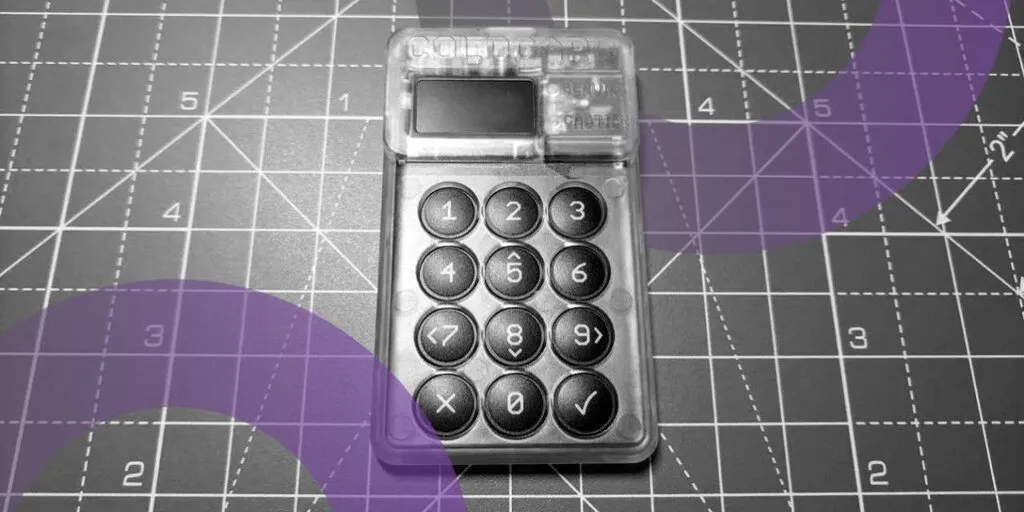
In briefGalaxy Research said Monday that 97.09 BTC, worth about $7.7 million, has left the Wave 3 vaults.The coins went out through THORChain on September 2 and into CoinJoin rounds over the weekend.Across the whole Coldcard exploit, 82% of the stolen Bitcoin has still not moved.  The attacker behind the third wave of thefts from Coldcard hardware wallets has moved 97.09 BTC, roughly 45% of that waves haul and about $7.7 million at Mondays prices, according to Galaxy Research.  The first exit came on September 2, when around 20.5 BTC from the largest vault went through THORChain and came out as Ethereum. The coins spent on Sunday night went into CoinJoin rounds instead, a Bitcoin privacy technique that pools transactions from multiple users to break the trail between inputs and outputs. Only 20.56 BTC actually reached Ethereum. Another 57.24 BTC is sitting unspent as CoinJoin change in a single address, and Galaxy says its trail ends on roughly 19 BTC more.  Coldcard ‘Wave 3’ exploiter continues to move funds  In wave 3, the exploiter created 293 2-of-2 multisig vaults for each victims coins.  The first movements on 9/2 sent coins over THORChain to Ethereum.  Tonights movements are going into coinjoins rounds. pic.twitter.com/H7HIpcI7ah  — Galaxy Research (@glxyresearch) September

09-07Industry

Cozy Finance Exploit Drains $170,000 From DeFi Insurer for a 2nd Time

Blockchain security firm Blockaid flagged a Cozy Finance exploit on Optimism early Monday. The attacker drained roughly $170,000 and bridged the funds out within 13 minutes.  Cozy Finance runs protection markets that let users buy cover against DeFi failures. An earlier Optimism attack cost the protocol about $427,000 in August 2025.  Sponsored  Sponsored  Attacker Bridged the Money Out in 13 Minutes  The exploit transaction landed at 05:43 UTC on Monday, according to OP Mainnet explorer data. It moved about 163,326 USDC.e out of the protocol across 63 token transfers.  Meanwhile, the same transaction burned roughly 1.6 million Cozy PToken (CPT). The attacker then approved a token and pushed the funds through a bridge at 05:56 UTC.  That exit came before Blockaid published its alert. Explorer records show no further movement from the wallet since.  The attacker also prepared well ahead. Records show the attack contract went live on September 2, five days before the drain. The wallet drew its first funds from a Relay solver.  Blockaid also named Cozy Set (CSET) as the abused token contract. That contract remains unverified and still holds about $4,168 in USDC.e.  ????Community alert:  Blockaid detected an ongoing exploit on @cozyfinance on Optimism.  170k$ drained so far.  More details in ????  — Blockaid (@blockaid_) September 7, 2026  Blockaid. Source: X  Sponsored  Sponsored  Cozy

09-07Industry

Arthur Hayes Buys $2 Million in Uniswap (UNI) Over Two Days With No Catalyst in Sight

The Arthur Hayes UNI position topped $2 million on Monday. A wallet that Etherscan labels as his now holds 284,102 tokens after two days of buying.  Onchain Lens put the split at roughly 244,400 UNI on Sunday and 39,700 on Monday. No governance vote, no protocol upgrade, and no obvious market trigger accompanied either order.  Sponsored  Sponsored  Arthur Hayes UNI Buying Ran Across 2 Days  A tracker flagged the second tranche early Monday. It named an address that Etherscan labels “Arthur Hayes 4.”  Etherscan values that stake just above $2 million. The same address also carries roughly 8,013 Ethereum.  Hayes keeps large orders away from open markets. The same wallet has pulled Ethereum and stablecoins from Galaxy Digital, Cumberland and FalconX. That habit predates this trade.  In August he paid up to rebuild an Ether.fi position he had exited earlier in the year.  Hayes made the case himself on X. “Time to run it back turbo,” he posted, recalling the profits he made during the 2020 decentralized finance (DeFi) boom.  He also called UNI his favourite type of sushi. Uni is the Japanese name for sea urchin, a premium sushi topping.  He bought more the next day.  Sponsored  Sponsored  Time to run it back turbo. I made a nice bag on the initial pump

09-07Industry

Will AI Crash Bitcoin 50%? Vitalik Buterin Weighs In

Ethereum co-founder Vitalik Buterin has rejected a warning that artificial intelligence (AI) will trigger a Bitcoin crash. He took the opposite side of a claim that BTC could lose more than half its value within two years.  The exchange played out on X on Monday. AI risk commentator Liron Shapira set the terms, and Buterin answered that his portfolio already sits on the other side.  Sponsored  Sponsored  Where the AI Bitcoin Crash Claim Came From  Shapira, who hosts the Doom Debates podcast on AI risk, published his prediction on Monday. He assigned 50% confidence to a fall of more than 50% in BTC prices over two years.  His case for an AI Bitcoin crash rests on security rather than demand. AI, in his view, will erode the guarantees that holders believed protected the network. Buterin answered in the same thread within hours.  I take the opposite side of that.  My basic reasons are that I am quite optimistic about cybersecurity in the long term and I see the primary problem as being getting the transition, and I expect BTC to handle at least any issues that do not require social consensus well…  — vitalik.eth (@VitalikButerin) September 7, 2026  Bitcoins security rests on mining power and cryptographic hashing. Shapira did not

09-07Industry

CZs Kyrgyzstan visit highlights why state backing cannot guarantee a stablecoin exit

Changpeng Zhao‘s September 5 visit to Kyrgyzstan’s crypto council came as President Sadyr Japarov set a three-month deadline for new regulations and officials discussed the risks posed by international sanctions. The decisions put the limits of domestic crypto policy in focus: approval at home does not ensure access abroad.  Related Person Changpeng Zhao Former CEO counterparties provide retail liquidity; administrators retain specified powers over token movement.  Japarov‘s September deadlines now create concrete milestones for Kyrgyzstan’s domestic framework: secondary regulations, possible legislative amendments and the licensing-platform pilot. Those measures can shape how the country supervises virtual assets.  For USDKG holders, the practical test is whether those services connect to an exit they can use. A retail sale still needs a counterparty, institutional redemption still requires issuer approval, and UK-facing services still have sanctions obligations. The next regulations will shape domestic supervision; access depends on how those separate conditions are met.

09-07Industry
1
...
210212
...
1000