What's New in the Final CLARITY Act Ahead of the Senate Vote
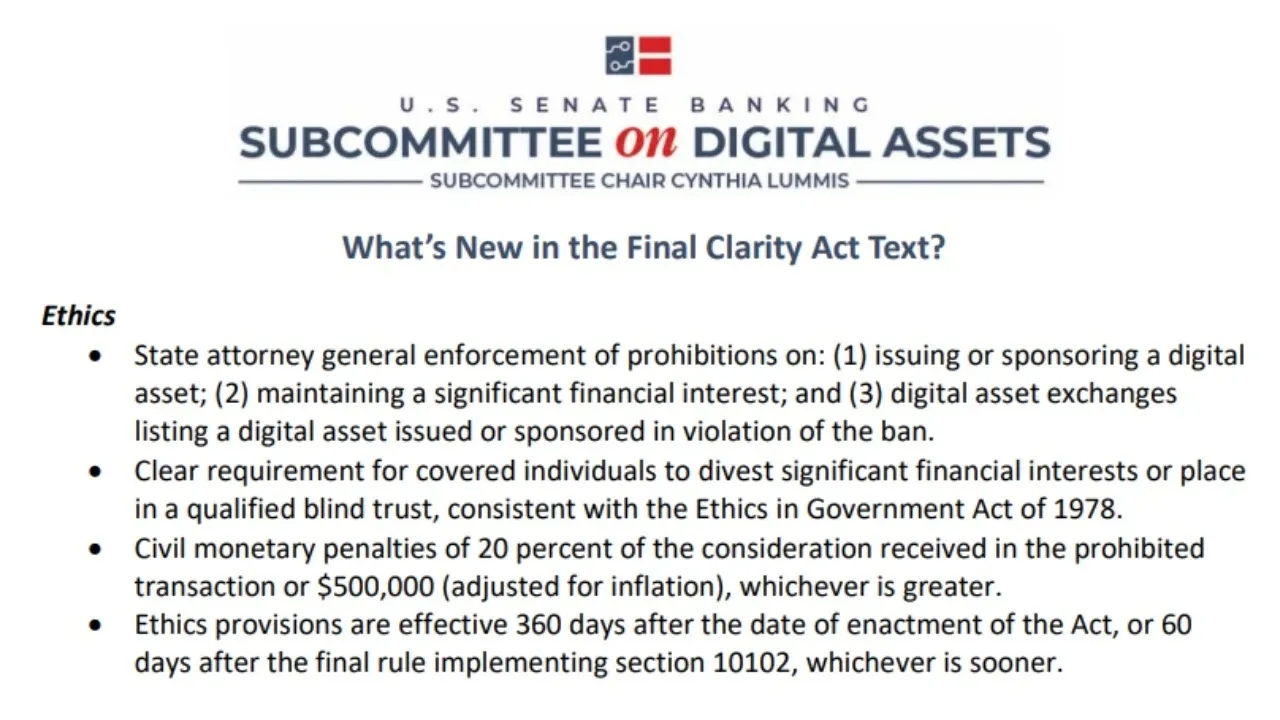
Key TakeawaysState attorneys general could enforce new federal ethics restrictions.Stablecoin reward limits would require a deposit-flight finding.Developer protections would extend to miners and validators. Whats New for Federal Officials U.S. Senators Cynthia Lummis (R-WY), John Boozman (R-AR) and Tim Scott (R-SC) released the final draft Sept. 14, turning proposed ethics restrictions into enforceable financial obligations. Under the new ethics language, covered federal officials and their spouses could not issue or sponsor digital assets in exchange for consideration, or maintain significant financial interests. They would have to sell those interests or place them in qualified blind trusts. State attorneys general could enforce the restrictions, including the ban on exchanges that list assets issued or sponsored in breach of those rules. Violators would face a civil penalty equal to 20% of the consideration received in the prohibited transaction or $500,000, adjusted for inflation, whichever is greater. The ethics provisions would take effect 360 days after enactment or 60 days after the final implementing rule, whichever occurs first. They form part of the broader 126 Democrat-requested changes identified by Senate Republicans. Whats New for Stablecoin Rewards The final draft does not impose an immediate restriction on rewards offered to payment stablecoin holders. Instead, it creates a conditional response that