CLARITY Act vote fails as crypto adoption faces uneven path

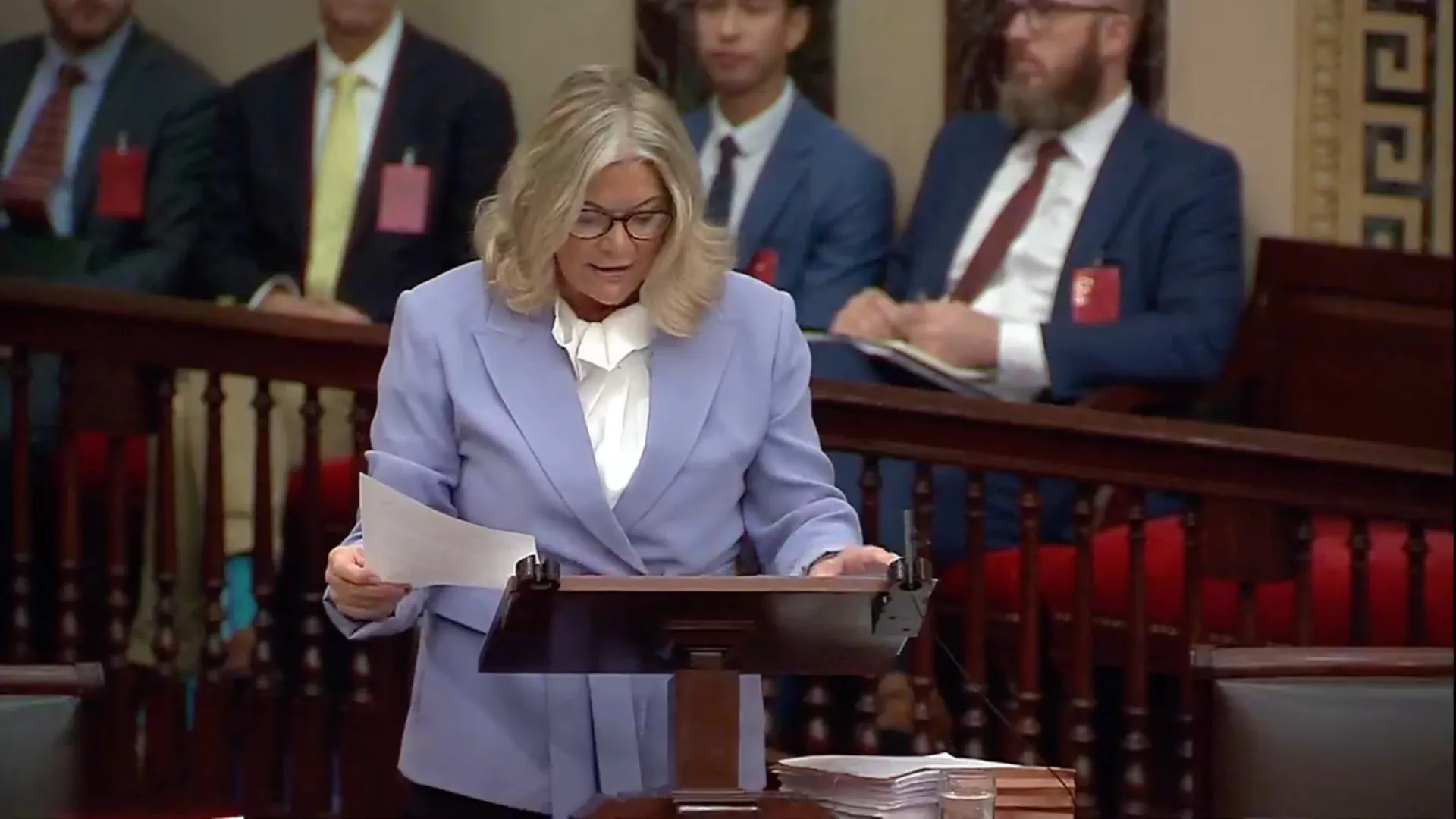
The CLARITY Act has stalled after a Senate cloture motion received 50 votes to 49, falling 10 votes short of the 60 needed to begin debate on the crypto market structure bill.  CLARITY Act falls 10 votes short in the Senate  The U.S. Senates floor proceedings showed that the chamber failed to invoke cloture on the motion to proceed with H.R. 3633, the House version of the Digital Asset Market Clarity Act. Cloture required 60 votes, and clearing it would only have allowed senators to start debating the measure rather than approving it as law.  Several senators who had participated in negotiations opposed the motion. Democratic Senators Angela Alsobrooks, Ruben Gallego, and Kirsten Gillibrand voted no, while Republican Senators Susan Collins, Josh Hawley, Jerry Moran, and Thom Tillis also withheld support.  Tillis, who had worked on disputes involving government ethics and stablecoin rewards, voted against cloture and moved to recommit. Senate Majority Leader John Thune may file another cloture motion, but any new attempt would still require support from both parties.  Hours before the vote, Democrats had delivered a late counteroffer addressing ethics rules and other contested provisions. The proposal followed talks involving Senate Minority Leader Chuck Schumers office, although its full text was not


09-16Industry

Major Bitcoin Core update changes default wallet protocols, risking temporary disruption across popular apps

Bitcoin Core v32.0rc1 has turned the Sept. 14–Oct. 10 window into a concentrated compatibility test for node operators, wallet providers and services that depend on Bitcoin Cores RPC interfaces.  Related Asset Bitcoin #1 BTC · $75,869.78 24-hour change: down 4.13% Loading price history… 24H Down 4.13% 7D Down 3.20% 30D Up 20.23%  The candidate was tagged with a verified signature on Sept. 14. The live release schedule lists Oct. 10 as the aim for the final v32.0 tag, leaving a 26-day elapsed interval. CryptoSlates August preview recorded a Sept. 10 RC1 target, while the live schedule now shows Sept. 14, creating a four-day discrepancy without establishing that an unchanged deadline was missed.  The v32.0rc1 tag identifies prerelease software, not a production-final upgrade. It also does not signal a new consensus-rule activation. One change tied to draft BIP 323 alters how Bitcoin Core treats signaling bits and unknown-deployment warnings, but the proposal itself remains in Draft status.  Operators can begin with the high-level pattern in Bitcoin Cores most recent RC testing guide: exercise regularly used features in separate temporary data directories and compare the candidate with the prior release. The official download page lists 31.1 as the current baseline. That comparison can expose differences in

09-16Industry

Crypto industry reacts after Clarity Act fails Senate vote

SummaryThe Senate‘s failure to advance the Clarity Act dealt a major blow to the crypto industry’s push for a durable statutory framework, leaving firms reliant on agency rules that future administrations could reverse.Industry executives said the vote would not halt regulatory work at the SEC and CFTC or the broader adoption of regulated digital-asset infrastructure by banks, asset managers and crypto companies.The prolonged uncertainty could push investment and development toward jurisdictions such as the European Union, where the Markets in Crypto-Assets (MiCA) regulation provides a clearer rulebook.  The Senate‘s failure to advance the Clarity Act on Tuesday was a major setback for the crypto industry’s push to lock market structure rules into law, but the reaction from industry leaders was notably measured.  Crypto executives said the vote does not unwind the regulatory progress already underway at the SEC and CFTC, nor is it likely to stop banks, asset managers and crypto firms from continuing to build.  What it does leave unresolved is the question of durability: agency rules can change with a new administration, while legislation would have given the industry a more permanent framework.  For some, that means the U.S. now risks extending the uncertainty that has pushed companies to look toward jurisdictions

09-16Industry

DOJ Charges Robinhood Engineers With Fraud Over Hyperliquid Perpetual Trades

Two Robinhood engineers face federal fraud charges for allegedly using confidential cryptocurrency listing information to make profitable perpetual futures trades on Hyperliquid.  Ad  Ad  Robinhood Engineers Face Federal Fraud Charges  Federal prosecutors charged Hefu Chai and Huaisong Xiang, also known as “Jerry Xiang,” with commodities fraud and wire fraud. Defendants were both engineers at Robinhood Markets at the time of the alleged trading activity.  They held the power of access to confidential information regarding planned cryptocurrency listings on Robinhood Crypto. Prosecutors say the engineers were aware of which cryptocurrencies Robinhood intended to support before it publicly announced them.  Between 2025 and 2026, Chai and Xiang allegedly used that information to trade perpetual futures on Hyperliquid. They reportedly opened positions linked to cryptocurrencies before Robinhood announced support for those tokens.  Discover more  News  Distributed & Cloud Computing  Finance  Prosecutors claim prices moved after several listing announcements, allowing the engineers to profit from their positions. All the defendants allegedly made over $50,000 in trades related to Robinhoods private listing efforts.  Ad  Ad  Prosecutors Detail Hyperliquid Perpetual Trades  Hyperliquid has a decentralized derivatives exchange (DEX) offering perpetual futures based on cryptocurrencies and other underlying assets. These products give traders a chance to wager on price changes without having to buy and possess the underlying asset.  Unlike traditional futures contracts,

09-16Industry

Standard Chartered sees ARB at $0.50 by end-2026, ahead of bitcoin and ether

Standard Chartered has initiated coverage of Arbitrums ARB token, setting a $10 target for the end of 2030 and a target of $0.50 before the end of this year.  The bank expects ARB to outperform bitcoin and ether over that period, though its own note acknowledges holders capture little of the revenue underpinning the call.  Robinhood Chain pushed Arbitrum revenue past 5 times its pre-launch level  The $10 figure is about 66 times what ARB traded on Tuesday at ~$0.15. Standard Chartered set out a staircase of $0.50 by the end of 2026, $1.50 in 2027, $3.50 in 2028, $6.50 in 2029, and then the 2030 goal.  Geoff Kendrick, who runs digital assets research at the bank, said in a note to clients that ARB should outperform the two largest cryptocurrencies over that window. This same house pegs ether at $4,000 this year and $40,000 by 2030.  Bitcoin gets $100,000 this year and $500,000 by 2030.  Discover more  Currencies & Foreign Exchange  Merchant Services & Payment Systems  News  Kendricks team started covering Chainlink last month with a 2030 target of $200 and has made similar 2030 calls for Uniswap and other DeFi names.  All these depend on the same tokenization forecast. Each frames its token as a better performer than bitcoin

09-16Industry

NVIDIA Groq 3 LPX Boosts AI Efficiency with Deterministic Execution

Caroline Bishop  Sep 15, 2026 18:59  NVIDIAs Groq 3 LPX accelerators enhance AI efficiency via deterministic execution, cutting power needs while boosting real-time inference.  NVIDIAs Groq 3 LPX accelerator technology is setting a new benchmark in AI efficiency, leveraging deterministic execution to optimize power consumption while handling demanding high-interactivity inference workloads. Announced for integration into the NVIDIA Vera Rubin platform in the second half of 2026, the Groq 3 LPX promises up to 35x higher throughput per megawatt compared to prior-generation systems when working with large AI models exceeding two trillion parameters.  At the core of this advancement is the Groq 3 LPX deterministic execution model. Unlike traditional accelerators that rely on reactive hardware mechanisms such as caches and branch predictors, Groq 3 LPX schedules every computation and data movement cycle by cycle, ensuring predictable performance. This approach not only enables ultrafast interactivity but also allows for precise power management, addressing a critical bottleneck in AI factories: energy efficiency.  Power Efficiency: A Game of Margins  AI factories are constrained by power budgets, making performance per watt the ultimate metric of success. The Groq 3 LPX integrates technologies like Preemptive Power (PEP) and Clock Period Synthesis (CPS), which work together to significantly reduce voltage droops—temporary dips in

09-16Industry

Crypto market sinks as Fed hike odds climb above 92%

The crypto market has lost more than 2% of its value, pushing Bitcoin below $76,000 as traders prepare for a likely Federal Reserve rate hike and a key Senate vote on the CLARITY Act.  SummaryThe global crypto market capitalization fell more than 2% to about $2.6 trillion.Bitcoin dropped over 3% and traded below the $76,000 level.Fed futures placed the probability of a 25-basis-point rate increase above 92%.The Senates CLARITY Act cloture vote presents another source of uncertainty for traders.  Crypto market loses $76,000 Bitcoin support  Data from the crypto market showed widespread losses on Sept. 15, with the total value of digital assets falling to around $2.6 trillion as investors reduced risk before two major U.S. events.  Bitcoin (BTC) dropped more than 3% and moved below $76,000 after failing to hold its earlier gains. Losses also spread across major altcoins, while U.S.-listed companies with direct exposure to crypto came under pressure.  The decline accelerated as traders assessed the Federal Open Market Committee meeting scheduled for Sept. 15–16. Futures tied to the federal funds rate placed the probability of a 25-basis-point increase above 92%, making a hike the markets main expectation rather than a low-probability risk.  An increase of that size would lift the Feds target range

09-16Industry

XRP gets 26% share in Grayscale's 'next gen' portfolio - No space for Bitcoin

Grayscale has come up with ready-made crypto investment portfolios that financial advisors can use for their clients, but there is something unusual. The investment giant launched four different model portfolios, each with a different purpose.  In this, the “Digital Assets Core Plus portfolio” is designed as a broad, foundational crypto allocation and includes Bitcoin [BTC], Ethereum [ETH], Solana [SOL], and Chainlink [LINK].  Meanwhile, ‘Digital Assets Leaders’ focuses on the five largest eligible crypto assets available through Grayscales single-asset products. Whereas “Digital Assets Next Gen” is designed to give investors exposure to crypto assets beyond Bitcoin, including both established and emerging projects.  Finally, “Digital Assets Infrastructure” focuses on assets tied to protocols that support areas such as smart contracts and tokenization.  Grayscale gives more weightage to XRP than Bitcoin  Now the catch here is that Ripples XRP has received a huge allocation in the Digital Assets Next Gen portfolio. As of the 31st of August, the portfolio had seven holdings, with Ethereum at 42.34%, XRP at 26.11%, and Solana at 21.09%.  Bitcoin, however, has been left out of this portfolio. Together, those three assets account for roughly 90% of the portfolio. Meanwhile, the remaining allocation is spread across Hyperliquid [HYPE], LINK, Avalanche [AVAX], and Sui [SUI].  Interestingly, Grayscale

09-16Industry

Trump ethics fight sinks CLARITY Act in dramatic Senate defeat

The CLARITY Act stalled in the Senate after a final round of bipartisan negotiations broke down and several Democrats who helped shape the bill refused to advance it.  Related Law CLARITY Act: US Digital Asset Market Structure United States · Passed  The measure failed to secure the 60 votes needed to invoke cloture on the motion to proceed with H.R. 3633, preventing the most consequential US crypto market-structure proposal from reaching the Senate floor.  While the vote did not decide the bills final passage, falling short leaves the legislation off the floor and forces its sponsors to decide whether another round of negotiations is possible.  The outcome was particularly damaging because Democrats who had spent months working on the legislation opposed it. Sens. Kirsten Gillibrand, Mark Warner, Cory Booker, Raphael Warnock, Ruben Gallego, Angela Alsobrooks and Catherine Cortez Masto all voted against moving forward.  Their defections followed an unsuccessful attempt to close remaining differences over ethics rules shortly before the vote.  Senate staff had reportedly met in the Capitol hideaway office of Sen. Thom Tillis to discuss possible final changes to restrictions governing crypto interests held by public officials. Staff working for Senate Banking Committee Chairman Tim Scott later ended the talks without an agreement.  That left

09-16Industry

Arc Blockchain Mainnet Launch Set for September 2026

Circles long-awaited Layer 1 network is about to go live, and the timing has drawn an unusual mix of institutional players and speculative traders to the same starting line. The Arc Blockchain mainnet launchis scheduled for September 16, 2026, arriving with a validator lineup that includes names like BlackRock, Visa and Mastercard alongside a growing roster of decentralized finance projects hoping to capture retail attention from day one, according to BeInCrypto.  Key takeawaysArc Blockchains public mainnet launches on September 16, 2026, with transaction fees denominated in USDC rather than a native gas token.Circle opened the network with 11 founding validators drawn from traditional finance, including BlackRock, Visa and Mastercard, according to BeInCrypto.Six early projects — aka.fun, UnitFlow, Synthra, Tower, Hibachi and Sidoor — are building out the Arc DeFi ecosystem ahead of launch.aka.fun applies a 2% trading fee, funneling 30% of it into a real-world asset treasury.Traders are already positioning for a meme coin rush similar to what happened on Robinhood Chain after its July 2026 debut, BeInCrypto reports.  Arc Blockchain Mainnet Launch Details  Arc goes live as a Layer 1 network purpose-built for financial applications, with every transaction fee paid in USDC instead of a separate gas token. That design choice is

09-16Industry
1
...
145147
...
1000