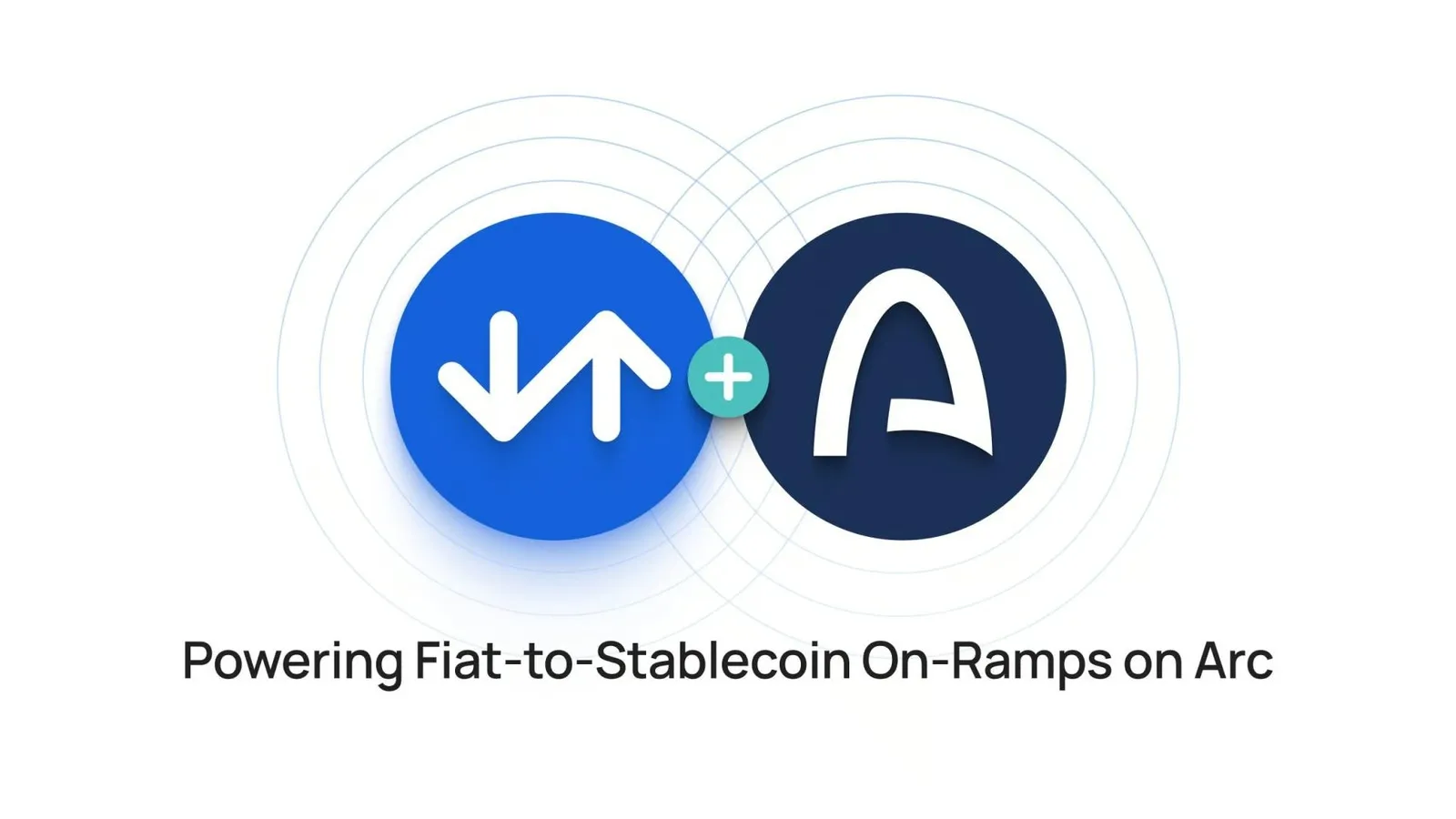
Banxa And LI.FI Connect Fiat Payments To 60+ Blockchain Networks

Banxa, a compliant fiat-to-crypto payment infrastructure firm, has integrated LI.FI, a cross-chain bridging and liquidity infrastructure entity. The integration aims to streamline access to cutting-edge digital assets across over 60 blockchains via a single transfer. The partnership permits users to shift from fiat to on-chain assets of choice without any manual swapping or bridging of assets. The development is poised to utilize the liquidity infrastructure of LI.FI to remove technical complexities of cross-chain transfers.  LI.FI Integration Improves Cross-Chain Asset Accessibility on Banxa  LI.FI‘s integration into Banxa underscores the growing interest in effective and seamless on-chain experiences amid the continuous evolution in the world of digital assets. Thus, Banxa’s ecosystem of up to 400 collaborators will leverage the liquidity routing mechanism of LI.FI. The integration permits consumers to buy more than 300 crypto assets as well as other assets on-chain, with the platform automatically determining the most effective route in the background.  Simultaneously, the intent-based execution model eliminates the requirement for separate moves like buying, swapping, and bridging assets ahead of moving to the intended destination. Additionally, LI.FIs infrastructure has reportedly processed over $81B in transfer volume across more than 100M transfers. The platform also reported nearly 99.9% uptime as well as over 98%

07-23Industry

APT Price Prediction: Coiling Below $0.63 With a Long Squeeze Primed — Bears Hold the Edge

APT is pinned at $0.62 in a textbook compression zone while open interest bleeds 6% and aggressive sellers dominate the tape — the stacked resistance wall at $0.63–$0.64 is rejecting every push, an…  The Immediate Setup  APT opened the UTC Wednesday session without urgency and without direction — and that indecision is itself the signal. Price is pressing against the SMA 20 at $0.62 with the kind of listless price action that precedes a sudden, violent resolution. The daily range today ($0.60–$0.63) is compression at its most obvious: Bollinger Bands tightening, EMAs converging, and momentum indicators sitting dead at mid-range where neither side has conviction. Buyers aren‘t stepping in with size. They’re testing. And every test so far has been sold into.  The macro context makes this worse for bulls. APT is trading nearly 37% below its 200-day SMA, which is parked at $0.98 — a number so far away it barely registers as a relevant reference point. This isn‘t a token in healthy consolidation; it’s a token in a structural downtrend catching its breath. As tracked across the broader Layer-1 landscape at Blockchain.news, Aptos has produced no fresh fundamental catalyst in the current news cycle to justify a reversal bid. That puts

07-23Industry

Changpeng Zhao Ignored This One Market, Now It Is Worth Over $311 Billion

Changpeng Zhao (CZ) missed one of cryptos biggest markets. The Binance founder now admits he misjudged the stablecoin market for years.  He told the Talking Tokens Podcast that he wrote them off. Today those tokens are worth more than $311 billion.  CZ Says He Missed the Stablecoin Boom  Zhao spoke on the Talking Tokens podcast. He looked back at the calls he got wrong. Leaving Binance gave CZ time to study the market again.  Stablecoins are crypto tokens tied to the US dollar. Each one aims to stay worth about a dollar. Traders use them to move money fast, day or night.  He is blunt about what he got wrong.  “when I was running Binance, I actually kind of missed stablecoins. I didnt think stablecoins will get that big, but they actually have.”  Follow us on X to get the latest news as it happens  A Temporary Patch Job That Became a Giant  Changpeng Zhao saw stablecoins as a quick workaround. He thought they only moved money between exchanges. He was wrong.  “I thought that was a temporary patch job technology just to bridge some transactions between crypto exchanges, but then got big…”  Stablecoins were tiny when Binance launched in 2017. Now the market tops $311 billion. Tether (USDT) leads with

07-23Industry

BlackRock, Coinbase, Strategy back $15M Bitcoin Security Consortium

Some of the world‘s largest financial institutions and Bitcoin-focused companies have launched the Bitcoin Security Consortium, pledging a combined $15 millionover the next three years to support Bitcoin’s long-term security and resilience.  The founding members include BlackRock, Coinbase, Fidelity Digital Assets, Strategy, ARK Invest, Anchorage Digital, Block, Blockstream, and Galaxy.  The group said it will help fund Bitcoin developers and researchers, with a particular focus on long-term security initiatives such as post-quantum cryptography.  Consortium pledges $15M to strengthen Bitcoin security  The consortium said each member will independently direct funding to the developers, researchers, and organizations it chooses, rather than pooling funds under a central body.  Its day-to-day activities will be coordinated by Mike Schmidt, executive director of Bitcoin development non-profit Brink, who will serve in a volunteer capacity.  According to the announcement, the initiative is designed to support the developers already maintaining Bitcoin while providing investors, the public, and the media with reliable information about the networks long-term security efforts.  “As long-term holders, we have every incentive to see Bitcoin remain secure for generations,” Strategy CEO Phong Le said. “Funding the people who do this work, and helping inform the conversation around it, is a natural way for us to contribute.”  The consortium stressed that it will not

07-23Industry

SecondFi to wind down after $2.6M ADA theft linked to wallet flaw

Cardano-based wallet SecondFi is preparing to shut down after a security breach exposed issues around wallet security and left hundreds of users awaiting recovery options.  SecondFi said it will wind down SecondFi and Yoroi wallet services after attackers stole about 16.1 million ADA, worth roughly $2.6 million, due to a cryptographic flaw in its wallet software, according to an update published on Wednesday.  The platform said an independent investigation by blockchain intelligence provider Groom Lake identified a sophisticated external actor behind the attack and found indicators potentially linked to North Koreas Lazarus Group, although no attribution has been confirmed. It added that the breach hit 374 wallets.  The update came nearly a month after SecondFi first disclosed the exploit in late June, with victims still waiting for recovery tools and migration options that the company says are now targeted for release in August.  SecondFi plans recovery tools as users await next steps  SecondFi said it is developing a recovery tool based on zero-knowledge proofs to help exploited users recover assets while limiting the information they need to share.  The tool is still undergoing testing and will be reviewed by a third-party auditor before its planned release in August.  The platform is also preparing wallet export functionality that

07-23Industry

Bipartisan support 'critical' as Democrats push back on GOP crypto bill on ethics grounds

Quick TakeDemocrats are pushing back over the latest Clarity Act draft‘s ethics provisions, calling them too weak to address President Trump’s crypto interests and warning they wont support the legislation without stronger guardrails.The crypto industry praised the bill for providing regulatory clarity, while major banks opposed it, arguing it doesnt do enough to protect deposits from competition by stablecoin rewards.  Senate Republicans on Wednesday released a 616-page version of the so-called Clarity Act cryptocurrency regulation bill, the first major legislative effort to oversee the digital asset industry. While crypto advocates welcomed the measure, Democrats quickly signaled opposition over what they called weak ethics provisions tied to President Trump‘s crypto holdings, raising doubts about the bill’s path forward in the Senate.  The legislation, which combines earlier versions passed by the Senate Banking and Agriculture committees, drew strong support from the crypto industry. Advocates praised the retention of software developer protections and said the bill would deliver long-sought regulatory clarity to help the U.S. lead in digital assets.  Crypto Council for Innovation CEO Ji Hun Kim called bipartisan support “critical,” while Solana Policy Institute CEO Miller Whitehouse-Levine urged Congress to “seize the moment.” Coinbase CEO Brian Armstrong said the lack of a federal framework had

07-23Industry

UK Treasury races to solve cash barrier before tokenized bond debut

The UK Treasury has set Q1 2027 for its first tokenized sovereign bond transaction, but the project has remained dependent on finding a workable method to settle its cash leg on-chain.  CoinDesk reported that the missing payment mechanism has held back institutional use of digital bonds for almost seven years, even as governments and financial firms have built platforms for issuing tokenized securities.  Known as the Digital Gilt Instrument, or DIGIT, the pilot will test whether distributed ledger technology can reduce costs and improve the operation of UK capital markets. HM Treasury first announced the project in 2024 before selecting HSBCs Orion platform through a competitive process in February 2026.  According to a July 16 Treasury update, HSBC received Gate 2 approval under the Digital Securities Sandbox on July 13. The decision made HSBC the first sandbox participant cleared to provide live digital securities depository services.  The first DIGIT transaction will take place on HSBC Orion by the end of the first quarter of 2027, subject to the pilot meeting its remaining conditions. Chancellor Rachel Reeves also instructed the Treasury to prepare for possible additional issuances if the initial transaction succeeds.  HSBCs platform had supported more than $3.5 billion of digital bond issuance across sovereign,

07-23Industry

Bitcoin ETFs extend inflow streak to 6 days with $203M added

US-listed spot Bitcoin exchange-traded funds (ETFs) recorded their sixth consecutive day of net inflows on Tuesday, adding $203.1 million.  The Bitcoin ETFs attracted about $930 million over the six-session streak, their longest run of consecutive inflows since April, according to SoSoValue data.  The inflows came as Bitcoin traded above $65,000 and briefly climbed to $66,700 on Tuesday. At publication, Bitcoin traded at $65,802, up about 2% over the previous 24 hours, according to CoinGecko.  Broader crypto market sentiment also improved on Wednesday, with the Crypto Fear & Greed Index rising to “fear” from “extreme fear.”  The recovery comes as analysts said Bitcoin needs to break above and hold the $65,000 to $65,500 range to strengthen the case for a sustained uptrend.  The funds have accumulated $51.8 billion in cumulative net inflows since launch, while total net assets reached $80.9 billion. US spot Bitcoin ETFs remain at about $4.84 billion in net outflows year-to-date.

07-23Industry

Polymarket takes France to court after regulators block website

Polymarket has announced a French court challenge five days after regulators ordered internet providers to block the platform over gambling-loss and market-manipulation concerns.  Reuters reported on July 22 that the crypto-based prediction market intends to contest the National Gambling Authority‘s decision through France’s legal system.  “We are disappointed by the French gaming authority‘s (ANJ’s) sudden decision to unilaterally block our website — we intend to challenge this decision through the legal process in France,” Polymarket stated.  ANJ President Isabelle Falque-Pierrotin issued the order on July 16, directing French internet service providers to restrict access to Polymarket. According to ANJs statement cited by Reuters, the website attracted a large French audience while offering gambling and betting services that the regulator considers illegal under national law.  A spokesperson for ANJ told Reuters that the block would remain until the regulator considers Polymarket compliant with France‘s gambling rules. Polymarket’s planned case will now test whether the authority can continue restricting the website under its current classification of the platform.  Unlike conventional sportsbooks, Polymarket lets users trade contracts tied to outcomes in politics, economics, sports, weather and armed conflicts. Traders buy positions representing possible results, with contract prices changing as market expectations move.  French regulator focuses on losses and manipulation  ANJ

07-23Industry

Senate Republicans Push CLARITY Act With 15 Days Left as Bitcoin Struggles Near $66K

Bitcoin struggled to hold $66,000 on Wednesday, trading near $66,200 after bouncing between a low of $65,536 and a peak of $66,921.  Key TakeawaysBitcoin slid below $66,000 on Wednesday before steadying near $66,200 as market momentum stalled.The CLARITY Act update includes ethics rules for U.S. officials and $164 million in crypto liquidations.Bitwise CIO Matt Hougan noted that passing the Senate bill before the August recess ends crypto winter.  Intra-Day Volatility and Price Movement  Bitcoin, which came within a whisker of breaching $67,000 on July 21, struggled to hold $66,000 on Wednesday amid slow progress on the CLARITY Act in the U.S. Senate. Market data show the top cryptocurrency plummeted from its 24-hour peak of $66,921 to $65,727 during a seven-hour sell-off that lasted into the early hours of Wednesday.  A subsequent relief rally saw bitcoin reclaim $66,000, but momentum stalled, triggering a period of intense volatility that subsided shortly before 8 a.m. EST. Bitcoin then plunged to an intraday low of $65,536, quickly erased the losses, and then dropped back near $65,500.  At the time of writing (12:52 p.m. EST), the top cryptocurrency was trading just under $66,200, down 0.4% over 24 hours. Reclaiming the $66,000 threshold lifted Bitcoins market capitalization to just over $1.32

07-23Industry
1
...
135137
...
1000