





Bitcoin wallet dormant since 2011 moves $3.2 million toward FalconX-linked address

Extrait:A dormant 2011 Bitcoin wallet moved 50 BTC to an address that has received funds from wallets labeled as a Nexo hot wallet and Prime Trust custody, though on-chain evidence does not yet show the coins were sent to an exchange or sold. Such early-era transfers are often ambiguous, reflecting custody changes or upgrades rather than imminent sales. The activity follows a serious cold-wallet exploit affecting Bitcoin: Coinkite disclosed a firmware flaw dating to 2021 that could expose keys from certain Coldcard devices, and attackers have stolen as much as $114 million from vulnerable wallets since July 30 in four waves. The incident underscores that coins idle for over a decade can still become vulnerable if key-protecting software fails.

It has also received funds from wallets Arkham labels as a Nexo hot wallet and Prime Trust custody.

The newly arrived 50 BTC remained in the address as of Friday morning. That means there is no on-chain evidence that the dormant coins themselves have been sent to FalconX, another exchange or sold.
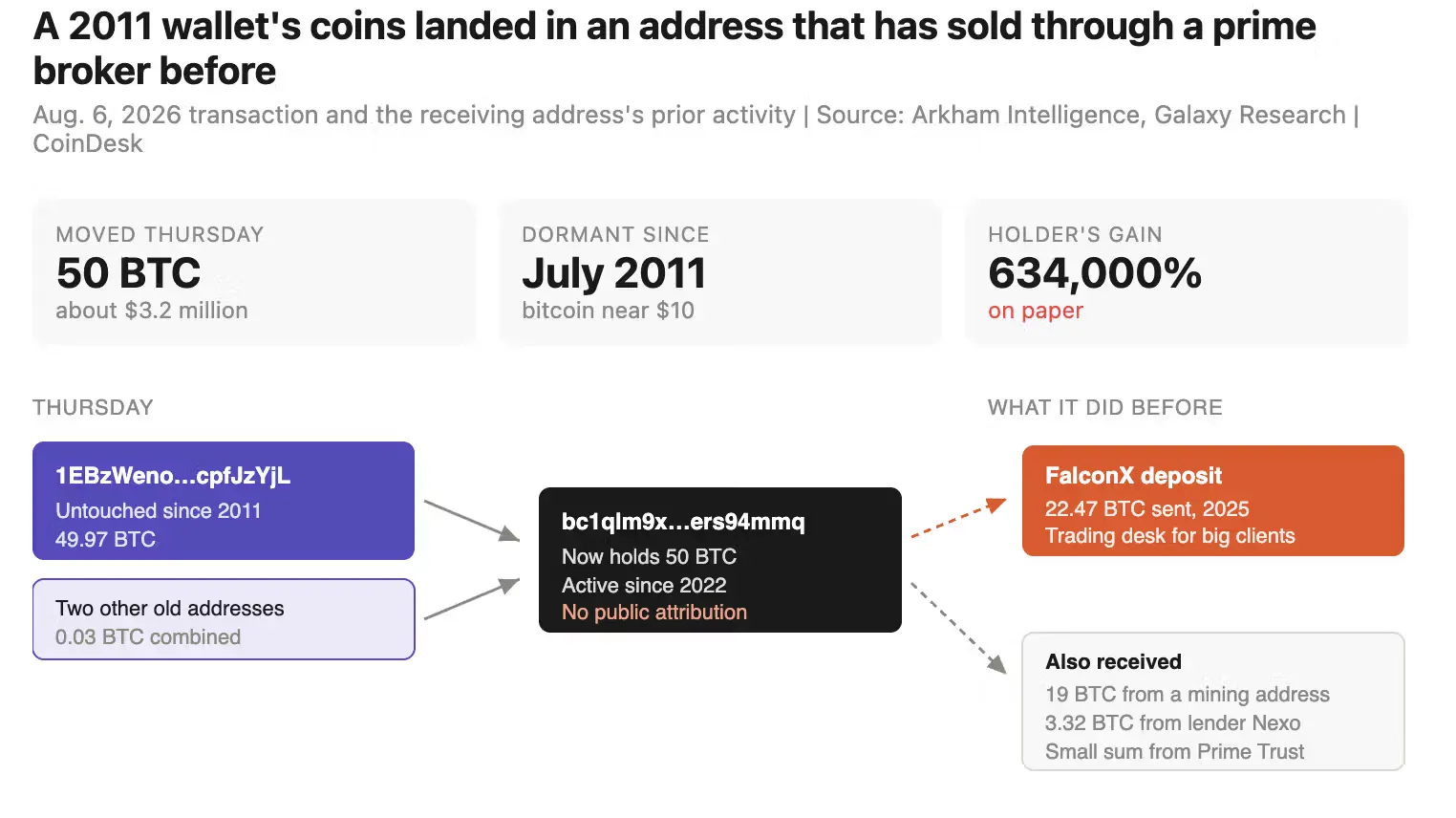
A 2011 wallet's coins landed in an address that has sold through a prime broker before. (Shaurya Malwa/CoinDesk)

Dormant wallets from bitcoin's earliest years tend to draw attention when they move because their owners accumulated coins when the asset was worth a fraction of today's price.

While movement alone gives little indication of what the holder plans to do next, and transfers can reflect anything from wallet upgrades and custody changes to preparations for a sale.

The movements come on the back of one of the worst cold-wallet exploits to hit Bitcoin in years, a reminder that coins can sit safely for more than a decade and still become vulnerable when the software protecting their keys fails.

Coinkite, maker of the Coldcard hardware wallet, urged users on Tuesday to move funds after disclosing a flaw in firmware dating to 2021 that could expose keys generated by affected devices. Attackers have swept as much as $114 million from vulnerable wallets since July 30, according to the company, in four waves of thefts.

Avertissement

Les opinions exprimées dans cet article représentent le point de vue personnel de l'auteur et ne constituent pas des conseils d'investissement de la plateforme. La plateforme ne garantit pas l'exactitude, l'exhaustivité ou l'actualité des informations contenues dans cet article et n'est pas responsable de toute perte résultant de l'utilisation ou de la confiance dans les informations contenues dans cet article.
Article précédent

JPYC lève 38 millions de dollars lors dune Série B menée par la grande entreprise logistique japonaise AZ-COM Maruwa

Article suivant

Un portefeuille Bitcoin inactif depuis 2011 déplace 3,2 millions de dollars vers une adresse liée à FalconX